The Great War: A–M · Story 36
Ralph Mayes (1881-1918)
In writing of William Mason, I told a little of the troubled story of the Cope family. In the 1901 Ringstead Census, Charles and Charlotte Mayes and their family were living at 3 Rosebery Street, next door to the family of James and Hannah Cope. Charles Mayes was born in Ringstead but he had married Peterborough girl, Charlotte Hawkins. The ceremony had been in St Mark’s Church in Peterborough on 6th December 1875. St Mark’s was built in 1856 in the Victorian Gothic style to cater for the growth in population following the coming of the railway. It is not far from the rail lines and sidings and would have numbered railwaymen and their families in the congregation.
Charles Mayes’ father, Daniel, had also been born in Ringstead and had become a railway labourer. He married Charlotte Cuthbert in 1852 in Ringstead but it may be that his work took him to Peterborough for a time where Charles met his future wife. If this was the case it happened between Censuses. Charles had been born in 1855 and in 1861 his mother, Charlotte, was with the family in Ringstead but father, Daniel, was in Northampton Infirmary. Was it an accident at work? In 1871 he was back in Shop Street, Ringstead and we know that he spent his working life on the railways and in 1911 aged 80 was a Railway Pensioner living with his daughter Eliza and her husband Joseph Cobley in Barritt’s Yard.
Charles meanwhile had become a shoemaker and after his marriage he was living with his wife, Charlotte in Oak Cottage on the west side of Lincoln Road in Peterborough. They now had two daughters, Florence (3) and Lavinia (1). By 1891 they had moved back to Ringstead and had had two further children, Ralph (8) born in Peterborough and Miriam (4), born in Ringstead. It seems that they moved back around 1885.
By 1901 they were living in the new houses of the Tilcroft Estate in Rosebery Street (named after Liberal politician and, briefly, Prime Minister, the Earl of Rosebery). Charles was a shoemaker and Charlotte a boot closer (sewing together the leather pieces or uppers before they were attached to the sole). Their son, Ralph was 19 years old, and also working as a shoemaker. As we have seen, another shoemaker, James Cope, and his wife Hannah and their family were living next door. With them were son, Harry (23), and daughter Maggie (16) with granddaughter, Coral Lucretia(13) who in 1912 briefly married William Mason before her sudden death.
Ralph Mayes (21) married Maggie Cope (18) on March 21st 1903. Both bride and groom were shown as shoemakers. Over the next decade, in the period between the Boer and First World Wars, the military boot and shoe industry around Raunds and Ringstead, went through a very difficult period. The War Office reneged on an agreement made with the union on the statemented piecework rates for the various types of military footwear. The lower rates being paid meant families were struggling to survive.
Mass meetings were held in Raunds and Ringstead and a strike was organised by the National Union of Boot and Shoe Operatives. Most of the handsewn men worked at home and kept their own hours. This had brought them into dispute with men in other areas who felt that they were being undercut by the homeworkers. Nevertheless the strike went ahead and trouble began to ferment against the strike breakers who were not in the union and continued to work. Money was raised for the non-union men’s families but the working men were followed home and threatened with rotten eggs and tin cans. It finally escalated and on 21st March 1905 the blacklegs, including Margaret Thatcher’s uncle, George Henry Roberts, were followed by a crowd beating pots and pans and their houses were stoned, breaking the windows.
Ralph Mayes was one of the men charged with harassing George Roberts and was fined 2s. 6d (12.5 pence). The strike seemed to be faltering so “General” Gribble decided, on his own initiative, to have a march to London to present the men’s grievances to the Government. He organised it on military lines, choosing the men to go, with a Billetmaster and a Paymaster. Cycle outriders went ahead to find food and accommodation, and a band (many from Ringstead) led the column.
He also had five “Sergeants” each in charge of a group of men. Ralph was one of the “sergeants” which indicates that Gribble thought that he had standing in the community. On May 8th 1905 some 115 men left Raunds for London.
The march made the national newspapers and did gain some concessions but by the 1911 Census many handsewn men were out of work. The lack of any largescale military action was compounded by the War Office increasingly using the cheaper “inferior” factory made boots. The 1911 Census also shows Ralph, aged 29, with Maggie and their children, Hilda, Louise, Edwin and Kenneth. They were living in the Bank Cottages in Ringstead. In 1913 they had a final child, Coral, named after Maggie’s niece who had died at the end of the previous year. Ralph was in work and shown as a shoemaker, but not at home. This means he was employed in a local factory.
When war came in 1914, Ralph, as a worker in the military boot industry, had some protection Also he was married with a young family. As we have seen in other biographies, however, men who had exemption at the beginning of the war, found their position was being eroded and by 1917 many had been called up in an order governed by age and marital status.
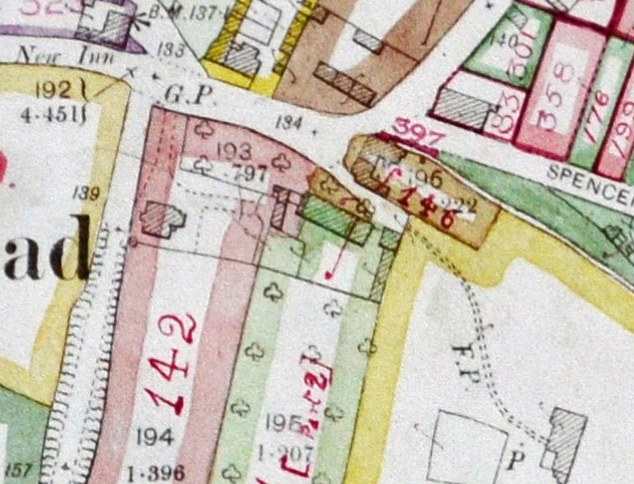
On 1st April 1917 Ralph’s appeal against his call-up was held at a local Military Tribunal and he was given a temporary exemption. We know that, at this time, he was working in the large Raunds’ factory of Adams Brothers on the corner of Spencer Street. He was a “Hand Welt Worker” there. His case was heard again on 8th May 1917 and this time his appeal was dismissed. It appears that Adams Brothers may have appealed further because of the nature of his work, for a final decision was deferred to the 25th June. At this hearing he was granted a final period of exemption until 10th July 1917.
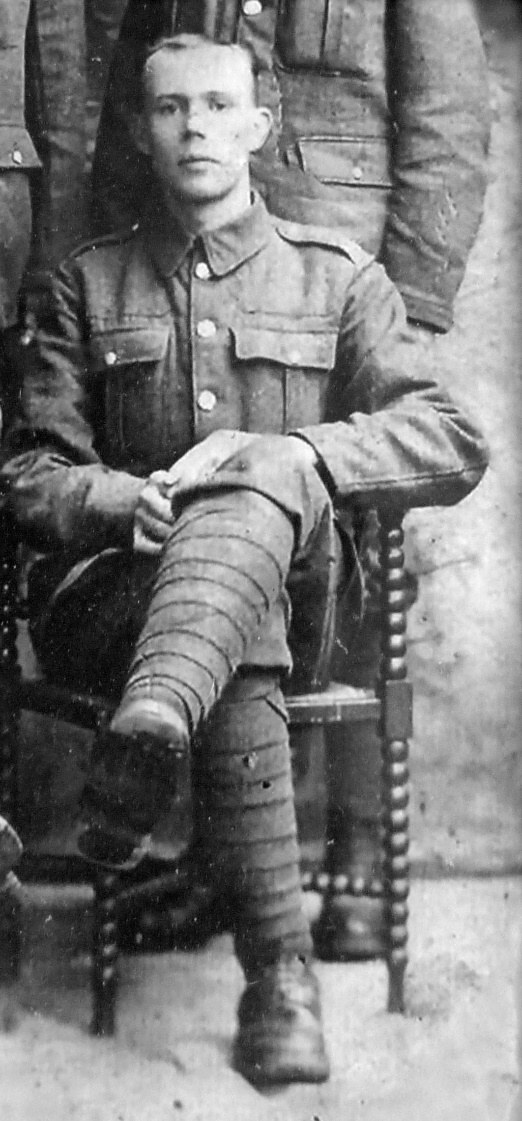
Ralph was conscripted and became a Gunner in the Royal Garrison Artillery with Regimental Number 178299. The Garrison Artillery was originally designed for home defence and many did guard the shores and important sites against enemy attack by sea or air. Increasingly, however, they became part of the heavy artillery of trench warfare. He would have undergone a period of training and may have served some time in a home-based unit. Most of his military records have been destroyed but it seems likely that he did not join the 164th Siege Battery until April 1918. At about the time that Ralph joined the Battery in the Front Line, the 164th had been made up from four to six six-inch, 26 hundredweight howitzers. It had also been attached to the 52nd Canadian Heavy Artillery Group in the Second Army and remained with it until the end of the war.
This was a critical phase of the war. The Germans had launched Kaiserschlacht, usually known as the Michael Offensive, which started on the 21st March 1918 and went through several phases over the next few months. The Allies had to give ground rapidly as the Germans broke through some sectors and threatened to surround them. It seemed for a time this could be the decisive action of the war but, as they raced forward, the German troops became exhausted and the food and armament supply chains became impossible to maintain. The tide then turned.
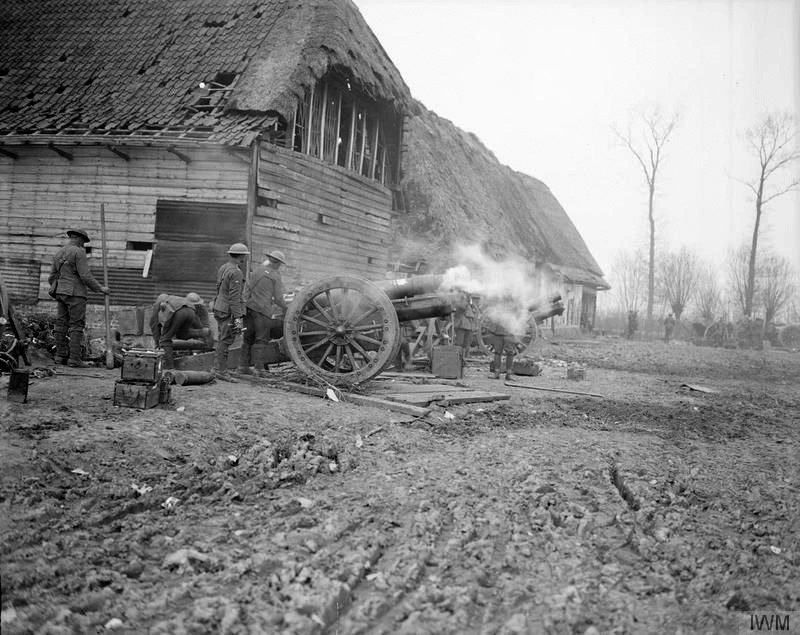
Although we cannot be certain, it seems likely that the 164th were located in the Flanders area of the battlegrounds in Northern France and Southern Belgium. Gas was increasingly being used by both sides to kill and debilitate the enemy with shells now delivering it more effectively. Ralph was gassed on 9th May 1918. Another Gunner in the 164th Siege Battery, Thomas Chillmaid, was gassed at the same time as Ralph. Both were taken to No. 1 Casualty Clearing Station by No. 16 Ambulance Train. Chillmaid died on May 12th and, three days later, at 1.30 am on 15th May 1918 Ralph Mayes died too.
He was buried at Étaples Military Cemetery, near Boulogne, which is the largest Cemetery of the Commonwealth War Graves Commission. He was 36 years old and had been at the Front for a month. He was entitled to the British War and Victory Medals and his widow Maggie, to a small pension. She would also have been sent a memorial death plaque. Over one million were issued in total.
Maggie had already endured the horrific tragedy of her brother Harry’s killing of his sons and of his own suicide. Her sister, Maud had married Raunds man, Evelyn Wood, and he too died on the Western Front on 3rd September 1918. In 1919 Maggie was still living in Bank Cottages but she moved to Gladstone Street on the Tilcroft Estate and at some point before 1939 she moved in with her widowed sister Maud Wood in a cottage in Whymans Road.
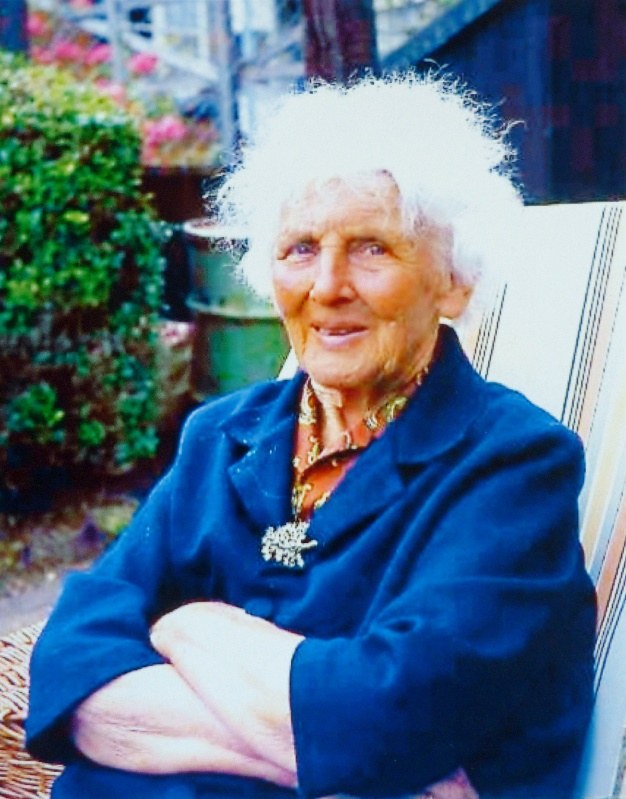
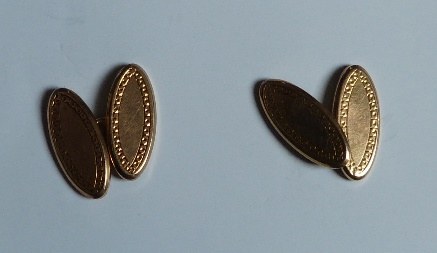
Maggie was to live for a further fifty-three years after Ralph’s death and died in 1971 aged 87. Her grandson, Alan Mayes, who served his “National Service” in the RAF, represented Ralph at the Ringstead War Memorial on Remembrance Sunday each year. He also told how on these occasions he always wore a pair of gold cufflinks given to Maggie for him, for “being a good boy” by Mr and Mrs Baxter who lost both their sons in the Great War.