The Great War: A–M · Story 15
The Bull Family
Joseph Ashley Bull (1893-1982)
William Samuel Bull was born in Oundle, the son of Isaac and Eliza. His parents moved to Ringstead and in the 1861 Census Isaac was a “Tin Plate Worker and Brazier”, born in Islip. His wife, however, had taken up the local craft and was a shoe finisher and son Benjamin was a shoemaker. Next door, William, now married, was also a shoemaker. His wife was Susannah, maiden name Dicks and they had married on 19th April 1859 in Ringstead. Isaac died in 1872 and William took over his father’s business.
He became a grocer, brazier and tinplate worker, the grocery business almost certainly managed by Susannah. If that was not enough he successfully applied in 1877 for a licence to sell beer from the shop. William and Eliza did not have any children and aged just 45 she died and was buried in Ringstead on 13th February 1886. At the end of the following year, on 19th December 1887, William, now 49, married 23-year-old Emma Titman from Polebrook. And the children came: Anne Maria in 1888; William Isaac in 1889; Joseph Ashley in 1893, Ivy May in 1896 and Eliza in 1903. [There may have been another Eliza in 1900 who died as an infant.]
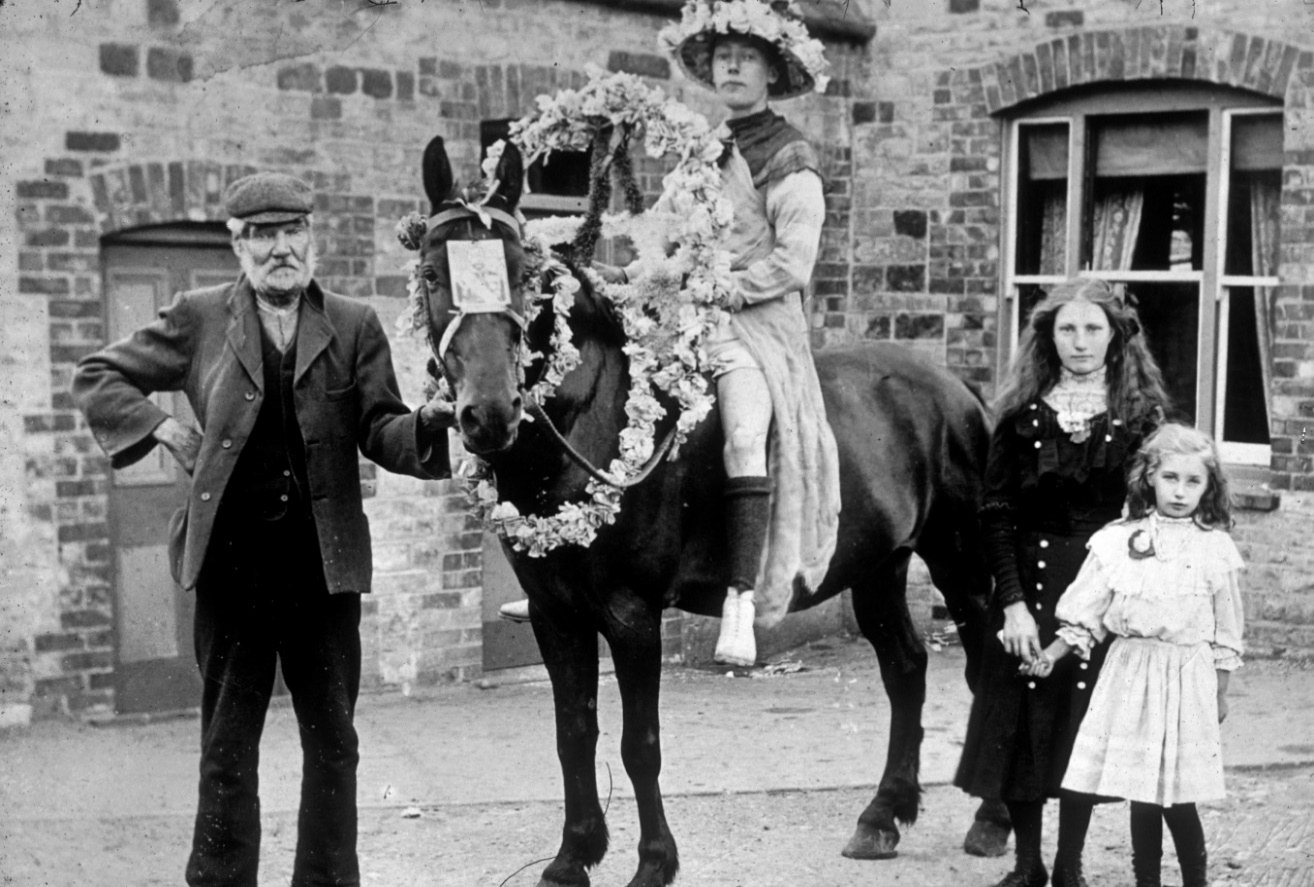
The family were living at The Swan in the 1891 Census which William probably took over in 1884/5. They now had two of their children but also William’s 75-year-old, widowed mother was living with them as well as five male lodgers. Emma had one 14-year-old girl to help her. It must have been a hard life for Emma and a news report in the Northampton Mercury of January 24th 1896, shows that that it was what would now be called an abusive marriage. They have Emma’s first name wrong but there are enough details to show that the case involves our couple.
William S. Bull, Ringstead, was charged with an aggravated assault on his wife at Ringstead on January 13th. Hannah [sic] Bull said her husband went out in the morning of the 13th without speaking to her, and when he came back in the afternoon she asked him to have a cup of tea. He then kicked her. She further said, “I have been married eight years and he has ill-treated me on and off all the time. He has drawn a knife and threatened me.”. . . Bull said in defence he had led a married life for 35 years and this was the first time he had been brought up for cruelty. His first wife never charged him and the present one would have no cause if it was not for her violent temper.
William was fined £5 with 6 shillings costs but he said that he “had no money and what was he to do?” The Chairman replied that he would have to go to Northampton Gaol for a month. He also had to get two bondmen to keep the peace for 6 months.
I think that this was probably the end of his time as a landlord at The Swan and by the 1901 Census the family, for they were still together, lived at 5 Chapel Road, which was also the workshop and shop. It is possible that he retained ownership of these premises during the time at The Swan. In 1911, William, now aged 72, was a tinplate worker and Emma a grocer. Ashley, for he was always known by his second name or “Ash” for short, was now 17 years old and a tin plate worker with his father.
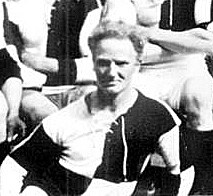
William died in 1913 and the following year the Great War began. Emma had lost her husband, which may not have been altogether unwelcome, but she had also lost the main source of income for her family. She took over the beer licence and carried on the grocery business. Then the government wanted to take away her son. Ashley was probably a painter before the war because this was given as his occupation when he was fined for “riding a bicycle without lights on 30th August 1914. Perhaps he had to go out and get a wage after the death of his father.
He had been born on 10th August 1893, so it was inevitable that he would be called up once conscription was brought in, in January 1916. Emma was a strong woman who did everything possible to keep her son out of the army. Exemption had been refused so she wrote to the Parliamentary Recruiting Committee asking what further steps she could take. She tried to lodge an appeal with the Central Tribunal but this was sent to the Thrapston Tribunal in error and was again refused. Then Ashley broke his arm and injured his nose. Was it a cycling accident? The military sent him home to await call-up. Emma again appealed but the original decision was upheld.
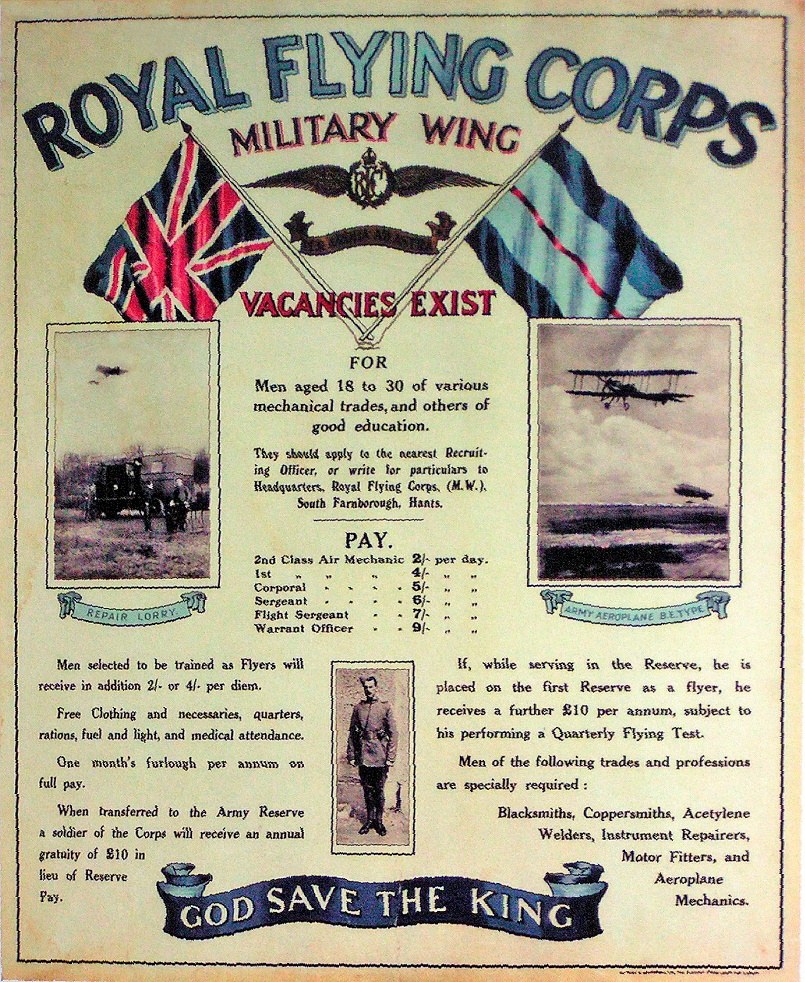
The last case was heard on 3rd November 1916 and on 11th Ashley was in the army. He was 23 years 3 months old and was 5ft 7 inches tall with a 32 inch chest. It may be that he was posted straight to the Royal Flying Corps which had been established as the air arm of the British Army in 1912. But his records are rather sketchy and it appears that he only entered the RFC on 11th December 1917 so it is possible that he was transferred from another Regiment but I have not been able to find any record of this. His official number was 108526 and he seems to have been at the School of Training at Halton Park. In 1917 a School of Technical Training was also established there for the Royal Flying Corps and Ashley transferred to that. It seems certain that he was being trained to use his tinsmithing skills in the repair of aircraft.
He was promoted to Air Mechanic 2nd Class on 11th December 1917.
On 1st April 1918 the R.F.C. and the R.N.A.S. (Royal Naval Air Services) amalgamated to form a new service the Royal Air Service (RAF). This change had been recommended by the South African, Jan Smuts, who realised the aircraft’s potential for the “devastation of enemy lands and the destruction of industrial and populous centres on a vast scale”.
Ashley was transferred automatically into this new service and became an Air Mechanic 3rd Class. This seems like a demotion but it may be due to an extension of the ranks in the new RAF. The Air Mechanics’ ranks included Armourers, Acetylene Welders, Blacksmiths, Tinsmiths and Sailmakers. When we look at these WW1 aircraft in museums such as the Shuttleworth Collection in Cambridgeshire we realise what flimsy, wood and sailcloth, contraptions they were. It is perhaps an indication of how little human life was worth that throughout the war the pilots were not issued with parachutes, although the military balloonists had them. It was felt that if there was trouble the men would bail out too soon rather than try to control the aircraft.
Ashley worked in No. 9 Aircraft Repair Depot which was in the former Eley Cartridge Factory in Edmonton, North London. These Repair Depots, started in 1917, but Edmonton did not come into action until April 1918, when the cartridge factory was closed. The depots were spread geographically and needed to be near good rail and road links as well as close to industrial centres.
On 25th January 1919 Ashley was sent to Purfleet to be demobilised. His Medical gave him an “A” fitness grade.
There may have been another reason for Ashley’s mother’s pleas, in 1916, for his exemption from military service, for in the Spring of the following year, aged 54, she died. On Tuesday 12th June 1917 the licence for the beerhouse was transferred to her eldest daughter Annie Bull.
Ashley returned to Ringstead and began a “Tinsmith and Sheet Metal Working” business in The Square in Raunds and was working there by 1924 at the latest. The tinsmith had originally been known as a tinker but this was associated with itinerant Irish workers and had become a term of mild abuse. A naughty child was often called a “little tinker”. The tinsmith made and repaired light metal objects such as pots and pans. His workshop would have been a much quieter place than the roar and banging of a blacksmith’s forge. By the 1920s it is likely that the shop would also have had some factory-made housewares.
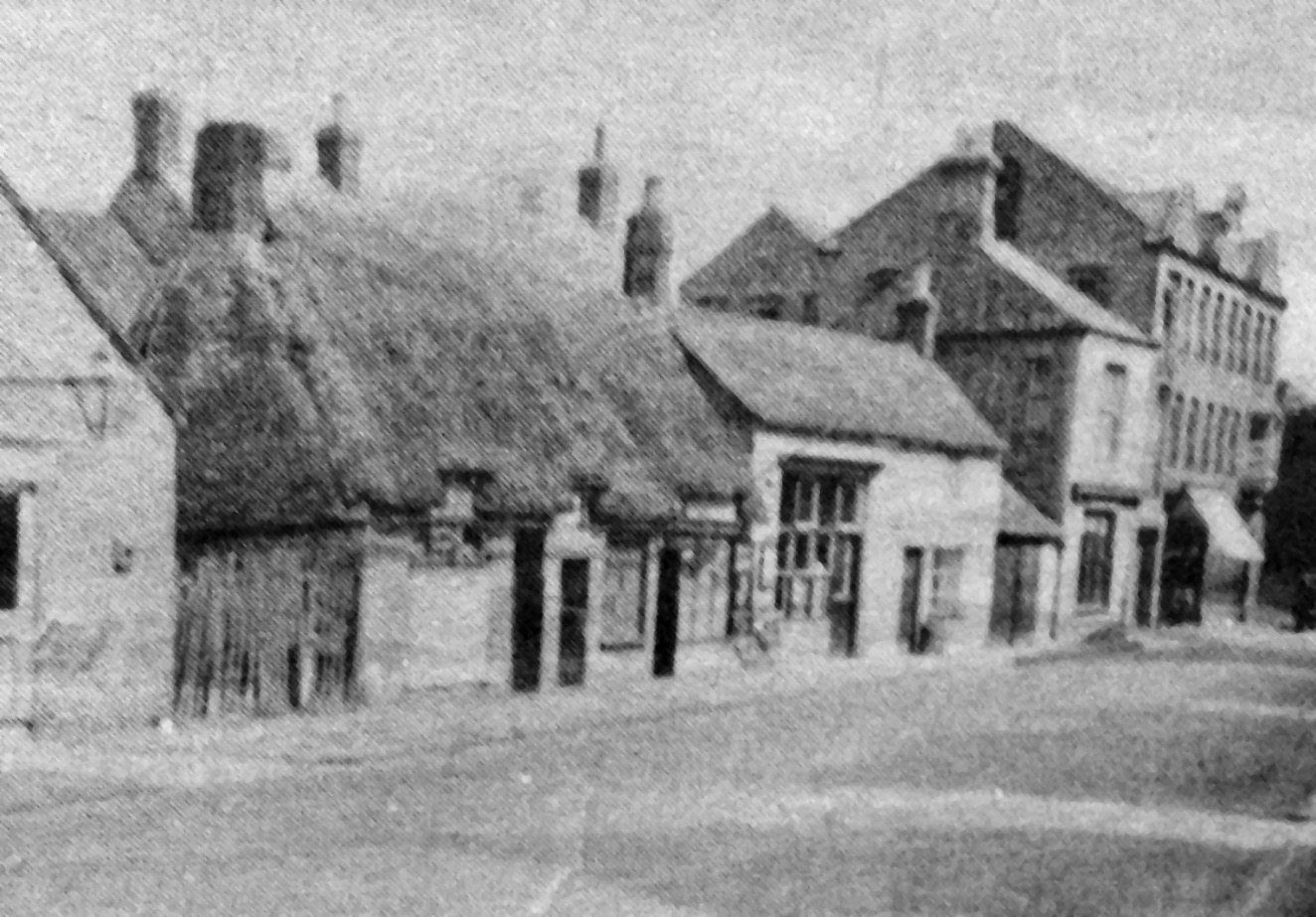
Tinsmithing was a craft which, like shoemaking, was being taken over by the cheaper factory wares but in 1939 Ashley, still single, and apparently now living in Church Street in Ringstead continued as a sheet metal worker. He never married and became increasingly reclusive.
In his youth he had been a boxer, footballer and all-round sportsman but he gradually withdrew into himself. Some say that he was unlucky in love. After the Second World War he bought a plot of wooded land down Ham Lane which had some small corrugated iron sheds on it. He began to live there, with only some chickens and perhaps the rats for company. As he grew older he became something of a person of local folklore and myth. Always a quiet man he began to live in his own solitary world. On the other hand, Jon Abbott, has told that, although the girls were a little frightened of him, he and the other boys would visit Ash in his shack in the woods. Ashley had taught himself to play the penny whistle and he would play the hymn tunes that he had sung in the Baptist Chapel.
Some of the villagers tried to look out for Ashley and left food for him. But in the winter of 1981/82 there was the severest December recorded in the 20th Century in England with a long period of snow and frost. In early January it became a little milder before once again deteriorating into blizzards and extreme cold. Jon Abbott has told how some locals became concerned and went to see if he was in trouble. Ashley was discovered, with a frostbitten leg, sitting in a chair and barely alive. An ambulance was called and he was carried, with some difficulty, out of the shack and taken to Kettering General Hospital. The affected leg was amputated but it was to no avail.
He died on 16th and was cremated on 21st January 1982. In the National Probate Calendar his address is given as 1 Back Lane. Did he own this property or was it the address of a relative? He was 88 years old. He is still remembered by many in the village as a quiet proud man who retreated from the world.
William Isaac Bull (1889-1962)
Ashley Bull’s older brother, William Isaac Bull, was not included in the Ringstead Roll of Honour. He was some five years older than Ashley, born on 29th December 1889. When he was eighteen years old he joined the newly formed Territorial Force. This had been created in 1908 and was commanded by the War Office but administered by local County Territorial Associations. It replaced the existing mixture of local voluntary and part-time groups and was originally designed to reinforce the Regular Army abroad. There was much opposition to this and its role was changed to one of wholly home defence.
William Isaac Bull joined the “Special Reserve Territorial Force” at Northampton on 4th January 1909. He was given the number 8609 and signed up for six years. He stated that he was willing to serve in the 3rd Battalion of the Northamptonshire Regiment. He was 5ft 5¾inches tall with a 35½inch chest and weighed 116 pounds. He had, like most recruits, grey eyes and his hair was brown.
Each year at the end of June, or early July, he attended annual training sessions which lasted about a month. During this time William moved to Peterborough and in the 1911 Census was lodging with Henry and Martha Bottom at 637 Lincoln Road. He was no longer a shoehand but was now working as a labourer on the railways. The following year, on 17th February 1912, he married Kate Searle at Peterborough Registry Office. There was perhaps some urgency in the marriage for their first child, Ivy May, was born on 2nd July 1912. Another child, William Ashley, followed on 21st June 1914.
With the outbreak of war on 4th August 1914, William, like many other territorials volunteered for overseas service and on 11th September 1914 he joined the British Expeditionary Force (B.E.F.) in France as part of the 1st Battalion of the Northamptonshire Regiment. His next of kin, shown in his records, was his wife Kate, living at The Grocer’s Shop in Ringstead. It seems likely that she stayed with his mother initially and perhaps, on her death in 1917, with William’s sister.
In the beginning the B.E.F. was made up of regular soldiers with some former part-timers like William. Ill-prepared for this new type of technological warfare much of the Regular Army was wiped out during 1914. They were replaced largely by the volunteers in the “Pals’ Battalions” and then, finally, by the conscripted men, as the furnace of war consumed soldiers. On 23rd August 1914 the B.E.F. was confronted at Mons by a much larger German force. It fought with courage and inflicted heavy casualties on the enemy but was greatly outnumbered. The men were forced to retreat before the German onslaught for some fourteen days. They were on the outskirts of Paris before, with the French, they counter-attacked at the Battle of the Marne.
This battle marked the end of the German sweep through Belgium and into France and the beginning of the attrition of trench warfare which characterised the war on the Western Front. It lasted from the 6th to the 10th September 1914. William arrived in France, the following day, on 11th September 1914.
His arrival was closely followed by the Battle of the Aisne which was fought from the 12th to the 15th September, with the Allies attacking after the Battle of the Marne. The Germans, however, had dug in, and it ended in a typical stalemate with defenders almost always having the upper hand. This battle was part of the “Race to the Sea” where both sides attempted to force round the opposing army’s northern (or western) flank. The North Sea was reached with no real breakthroughs. The Battle of the Yser was fought between 16th October and 2nd of November. Once again it ended in stalemate but with the loss of many more lives.
William would have perhaps been considered fortunate in that on the first day of the battle, on 16th October 1914, he suffered a gunshot wound to his left ankle. He had been in France just 36 days. He returned to England and remained there for one year 79 days.
At the end of this home service, on 3rd January 1916 (not 1915 as signed in his Medical History Form), he was discharged, perhaps surprisingly, because of the “termination of his engagement”. He had served seven years (one more than he originally signed for). Before conscription was introduced, a man who had served under a Regular or Territorial engagement and had reached the end of his agreed term could, and would, be discharged from the army. As the Long Long Trail website explains this even applied to experienced men who were serving in the Front Line trenches at the time. William was fortunate in that Army Order 202 was brought in on 8th June 1916. This stated that, except in certain specific circumstances, mainly age and length of service, such soldiers would not be discharged.
It appears therefore that William had completed his agreed military service and would not have to do further service during the war. He was awarded the usual British and Victory Medals, but he also received the 1914 Star, because he had served on the Western Front between 5th August and 23rd November 1914. In 1919 was also awarded a clasp, with two silver roses, for the Star because he had been under fire or within range of enemy mobile artillery during this period.
His military character was stated as “very good” and he was described as a “sober, honest and reliable man”. He was now 5 ft 7 inches tall with a 36inch chest.
After demobilisation he returned to Peterborough with his family. He took up again his life on the railways and, in the 1939 Register of England & Wales, he was living at 141 L.N.E.R. Cottages, New England, Peterborough. He was now a Railway Fitter’s Assistant. Living with William and his wife Kate was their son Cyril, born on 7th March 1919 who was shown as a clerk but “incapacitated”.
William Isaac Bull died, aged 73, in the April to June period of 1962 in the Peterborough District.
John Alfred Bull (1892-1977)
Benjamin Julian Bull was the son of Isaac Bull and the younger brother of William “Tinker” Bull, the father of Ashley and William. He had married Ellen Manning in Ringstead Parish church on 25th December 1881 when he was 34 years old and Ellen just 19. He was a handsewn army boot maker by trade, although he did work as an Insurance Agent for a time around the turn of the century. They had nine children, of whom seven survived infancy.: Ruth, Eliza, Joseph, Louisa, Alfred, Maggie and Evelyn.
It is Alfred, or more accurately, John Alfred, born on 14th May 1892, who became a soldier in the Great War. He was, as we have seen, the cousin of Ashley and William Bull. In 1911, his father, who seems to have preferred to use his second name, Julian was, like many in the handsewn military boot trade, unemployed. John Alfred was a leather pressman in a local boot factory. They were living in Rosebery Street in Ringstead and, what was to give the military boot trade a temporary respite, was a few years away. The Great Wat began in August 1914.
Unfortunately, almost all of John’s military records have disappeared and the couple that possibly remain do not contain enough personal detail for us to be sure that they are about the correct man. The most likely soldier is a John A. Bull whose medal card shows that he first served in the Queen’s (Royal West Surrey) Regiment with Regimental Number 17948. He then was transferred to the Labour Corps and given the number 55836. We know from the Ringstead Roll of Honour that our man served in the 94th Labour Corps and also that he was in Belgium and France. The Queen’s Regiment number indicated that he was conscripted and so served in 1916 at the earliest. This is confirmed by his medal entitlement which was for the Victory and British Medals and not the 1914 or 14/15 Stars.
Fortunately, using the excellent Long, Long Trail website for guidance we can add a little more detail. Firstly, under Army Council Instruction of 1917 men from the 13th (Labour) Battalion of the Queens (Royal West Surrey) became part of the new 94th Labour Corps and were given numbers in the range from 55801 – 56400 (John was 55836). It now seems most probable that we have the correct Medal Card for our man.
The 13th (Labour) Battalion of the Royal West Surrey Regiment was formed at Balmer in the July to September period of 1916 and it (along with the 15th) embarked for France in September 1916.
The Labour Battalions were capable of fighting as infantry but their main purpose was to do the labouring work that was needed, especially in trench warfare. Most of them would have some kind of labouring background but smiths, carpenters, bricklayers etc,. would also be included. These battalions carried out crucial tasks on the Western Front building and repairing docks, roads, railways and airfields, manning ports, stores and ammunition depots, unloading ships and trains, digging trenches and constructing camps.
John would not have been away from danger for much of the work was done within range of enemy troops and many from the Labour Corps were wounded. As the war wore on Chinese and South African Black Corps were formed to help with this work but were given little or no recognition for their contribution to the British war effort.
In 1917, Army order 85/17 authorised the formation of the new Labour Corps and as we have seen John was transferred to the 94th Labour Corps.
We know that at about this time, in the third quarter of 1917 that John was at home for he married Raunds’ girl Bertha Tebbutt. Perhaps he had been injured and was on home leave. We cannot be sure. At the end of the war John was awarded the British and Victory Medals.
After his demobilisation it seems likely that he moved to Raunds and in the 1939 Register of England & Wales he and Bertha were living there, at 39 High Street. John was a “Levelling Boots Operative” and Bertha’s occupation is shown as “Housework, Hand Closer Boot Trade”. John died on 13th November 1977 and Bertha, aged 94, on 7th July 1983.