The Great War: A–M · Story 23
The Farr Family
Christopher John Farr (1886-1968)
The Farr family had originally come from Haynes in Bedfordshire. Thomas Farr, son of William and Martha, had been born there in 1865. He had married Eliza Randall in Haynes on 18th October 1884. The couple had a daughter, Elizabeth Jane, first, who seems to have lived with her grandparents and died aged just 20 in 1905. Their second child was a boy, Christopher John, born on 2nd September 1886, (1887 according to the 1939 Register, but I think this may be wrong).
Christopher John was only known by his first name in the official records at the beginning and end of his life. This causes some problems because Farr was not an uncommon name and there was a John Farr born in Haynes in 1888. I had come across some very unflattering reports on a John Farr’s scholastic achievements at the Haynes Charity School, which I first thought were about our man but I now think are about a younger John Farr.
The family moved to Souldrop and then to Covington and John started work as a labourer. At some point, while still living at Covington with his parents, John met Mary Ann Dicks from Ringstead. She was shown on the marriage certificate to be still living there, when they married at the Wesleyan Methodist Chapel at Nether (or Lower) Dean in Huntingdonshire, on 25th December 1909. This is only a couple of miles from Covington and six miles from Ringstead.
In the 1911 Census John and Mary Ann, (“Polly”), were living in the Doddington Road Cottage in Wellingborough. He was working on a farm as a shepherd and the couple had one daughter, Elizabeth Mary, who was just nine months old. Further children followed, Gladys on 22nd July 1912 and John Thomas William on 7th June 1915.
The military records of his namesake, John Farr from Haynes (born about 1888), have survived but for our John they have been largely destroyed. We see in the Ringstead Roll of Honour that he had been in the 8th Battalion of the Royal Fusiliers, had served in France and Belgium, and had been “Released for Munitions” before demobilisation.
Fortunately, the Ringstead Absent Voters’ Lists also show that at some point, our John Farr was with the Royal Fusiliers and gives his Regimental Number as 51907. This allows us to be certain that the Medal and Award Roll and Medal Card for a John Farr who was first with the 20th Battalion of the Royal Fusiliers (City of London) Regiment is our man.
The Royal Fusiliers (City of London Regiment) had, at the outbreak of the First World War, four regular battalions but then went on to raise 43 more reserve, service, labour and garrison battalions. The 20th Battalion had originally been formed in Epsom by the Public Schools and University Men’s Forces on the 11th September 1914 but this volunteer force was taken over by the Government on the 1st July 1915 and the public school element had largely been dissipated by casualties and commissions.
There still remains difficulty in working out how his time with the 4th and 8th Battalions fit together. The 8th Battalion disbanded in France on 6th February 1918 as part of the general reorganisation of the Regiments. It is possible, however, that the “8th Battalion” entry in the Roll of Honour may be a mistake or a very temporary posting.
What we have been able to deduce, with help from Craig (ss002d6252) on the Great War Forum website, is that using his Regimental Number as a guide, John Farr was first called up around the 29th May 1916. We also know from Medal Roll that he arrived in France on the 2nd December 1916, where he joined the 10th Battalion of the Royal Fusiliers. The Battalion had been in and out of the Front line throughout 1916 and, in September, had suffered heavy casualties, losing some 375 men killed, wounded or missing at the notorious Battle of High Wood.
The Battalion had moved west to the coastal area around Bray, near Dunkerque but once more moved east to take part in the campaign known as the Battle of Arras. John would have taken part in the First and Second Battles of the Scarpe. As usual, it was a period of gain and loss with the defenders almost always having the advantage. The main purpose of the British offensive was to draw German troops from the French offensive further east but they had suffered terrible losses and were in some disarray.
The British Commander-in-Chief, General Haigh, had been long planning a Flanders Offensive and the Third Battle of Ypres was launched on the 31st July 1917. As part of this, the 10th were in the Battles of the Menin Road Ridge and Polygon Wood. The Allied tactics had now changed to one of “bite and hold” where a concerted attack was made on a comparatively small front with an agreed objective. When taken, this was to be consolidated against counter attack, before the next “bite”. The Battle was a comparative success but at the cost to the Australian, who led the attacks on Polygon Wood, of 5,700 lives.
After that, although not out of the fighting line, the 10th was being prepared for disbandment, as part of the reduction in the number of Battalions in each Brigade. During February 1918, men were posted to the 2nd, 4th and 13th Battalions of the Royal Fusiliers and by the end of the month the 10th ceased to exist.
John moved to the 4th Battalion on the 5th February 1918. They were in the Cherisy to Fontaine Sector and on the 19th March the War Diary records that they were in Shaft Trench and it was a “quiet day”. On the 21st, a massive enemy bombardment signalled the start of the German, Michael Offensive. As with many other Allied units on the Western Front the 4th Royal Fusiliers had to try to make as orderly a retreat as possible. The Germans had also evolved a new tactic where elite troops punched holes in the Allied lines and then the isolated troops were encircled and cut off. This offensive continued to make progress for weeks but eventually the Germans became exhausted of men and supplies and the decisive Allied counter-attack followed, although not without resistance and casualties, until the Armistice on the 11th November.
As we have seen, the Ringstead Roll of Honour states that he had been “released for munitions” and this appears to have happened on the 13th July 1918. We do not know the reasons but perhaps it was decided that, either mentally or physically, John was no longer fit for active service. He would not have had specialist skills for munition work but was probably part of a “bulk release” to work in the munitions factories and supply chain which was struggling to keep pace with the huge demand for ammunition for the Western Front.
After demobilisation John and Mary Ann set up house in Pearce’s Yard in Ringstead. They had two further children, Ivy in 1920, and Cyril Archibald on 24th August 1923. The 1924 Electoral Register shows the couple in the Council Houses in Denford Road during the 1920s.
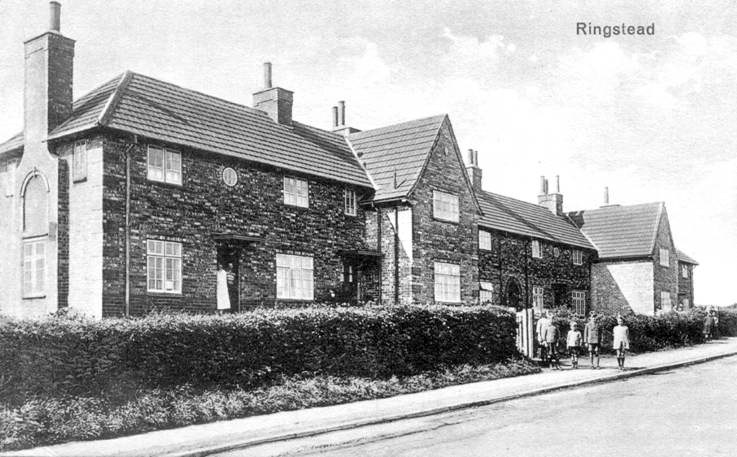
The 1939 Register of England and Wales shows John and Mary Ann still living in Denford Road. John was a labourer in a quarry and their five children were still living with them. Elizabeth and Gladys were tailoresses and [John Thomas] William was a “Tip Heeler” in Adams Brothers’ factory in Raunds. The younger two children’s records have not been “unblocked”.
There is a link between the Farrs and Ringstead’s most infamous death for, on Wednesday 31st May 1939, the Mercury and Herald reported that:
Digging a hole in their garden for a clothes-post, tenants in a house in Denford-road, Ringstead Northants, unearthed a skeleton – and they have probably solved an 89-year-old mystery. They are hoping that the remains can be identified as those of Lydia Attley, a girl who disappeared from the village after a love affair with a married man.
If that hope is realised the tenants Mr. John Farr and his son Cyril, will claim from the Home Office a £200 reward. [The newspaper thought it very unlikely that the Home Office would pay out.]
When Lydia vanished, suspicion fell on her lover, a butcher named Weekly Ball. Mr Farr’s home was built on the site of the field where Ball kept his cattle.
Christopher John Farr, aged 81 years, and still residing at 61 Denford Road in Ringstead, died on 22nd July 1968 and was cremated on 25th July at Kettering Crematorium. Mary Ann lived to be 96 years old and died on 15th June 1983.
David Farr (1894-1968)
John’s Farr’s brother, David, was born on 13th September 1894 in Haynes, Bedfordshire, the son of Thomas and Eliza. Thomas was a “horsekeeper” on a farm and it appears that he had to keep moving to find work as his family grew.
In the 1901 Census the family were living in Souldrop. There were five children now with the eldest, John (14) already working as a farm labourer and bringing in a small wage. By 1911 the family had moved again, this time to Covington, seven miles south-east of Ringstead. John, the eldest, had moved away with his wife and child but still at home were Bert (sometimes Burt - or it seems likely - Archibald), David and Persey (Percy), all farm labourers.
David may have had to go in search of work for on 14th September 1914 he married Dora Ann Robinson at Brafield-on-the-Green, some five miles south-east of Northampton and 16 miles west of Souldrop. There was a Dora Robinson, born and living in Ringstead, but she was Dora M. This Dora was from a Brafield family, daughter of George and Mary Elizabeth. Ages seem to slide a little in the Robinson and Farr Families. In the 1939 Register of England and Wales Dora’s birth date is shown as 26th October 1897, which has been later amended to 1894 and which I think was actually 1893 for she was baptised on December 3rd of that year. David’s birth year was shown as 1896 but I think was really 1894.
The First World War had begun on the 28th July 1914. At this point in time it probably seemed unlikely that it would touch David, or were they getting married, as many did, in case he was called up at some stage. At the beginning of the war, it was mainly Regular soldiers who were involved, soon to be joined by the volunteer battalions.
Unfortunately, most of David’s military records have not survived but the few that remain give a few, sometimes confusing, clues into his time in service. We must try to sew these together without stretching the fabric too far.
As usual, we will start with the Ringstead Roll of Honour which was published in Thrapston in June 1919 and so we would expect it to be accurate. It shows that David had been wounded and was, at the time of the compilation, (late 1918 or early 1919) a Private and had been in the 11th Battalion of the Suffolk Regiment. He was now in the Army of Occupation. Using these facts as a basis we can search the Medal Cards and there only seems one David Farr who fits these facts. He was a Private in the Suffolk Regiment and had two Regimental Numbers 4515 and 201520.
If we then look at the three Casualty Forms for D. Farr we can deduce that he enlisted around March 1916 (after conscription was introduced) and was with the 4th Battalion of the Suffolk Regiment. The two records for 1916 give the Regimental Number as 6515 but no medal card exists for this number in the Suffolks and we must assume that it is a clerical error. From these forms it seems that he was sent to the Western Front in June or July 1916.
It seems likely that David fought in the campaign of 1916 known by the overall name of the Battle of the Somme. At this time the 4th Battalion were in the 98th Brigade of the 33rd Division. David may have missed the opening battles of this campaign including the infamous first day of the battle of Albert, on 1st July, when the British suffered 58,000 casualties of which more than 19,000 had been killed.
Other battles followed for the Suffolks but it was not a war injury that carried David into the casualty hospital system. On the 8th December 1916 he was transferred from the 99th Field Ambulance to Number 39 Casualty Clearing Hospital which at this time was at Allonville near Amiens. He was suffering from German Measles. In the crowded quarters of army life at the Front contagious and infectious diseases spread rapidly. He was in the Hospital for 19 days but on the day of his release, on 26th December, he was re-admitted with Myalgia. This was chronic and severe muscle pain which had a number of causes and it may be that the Rubella was the main cause.
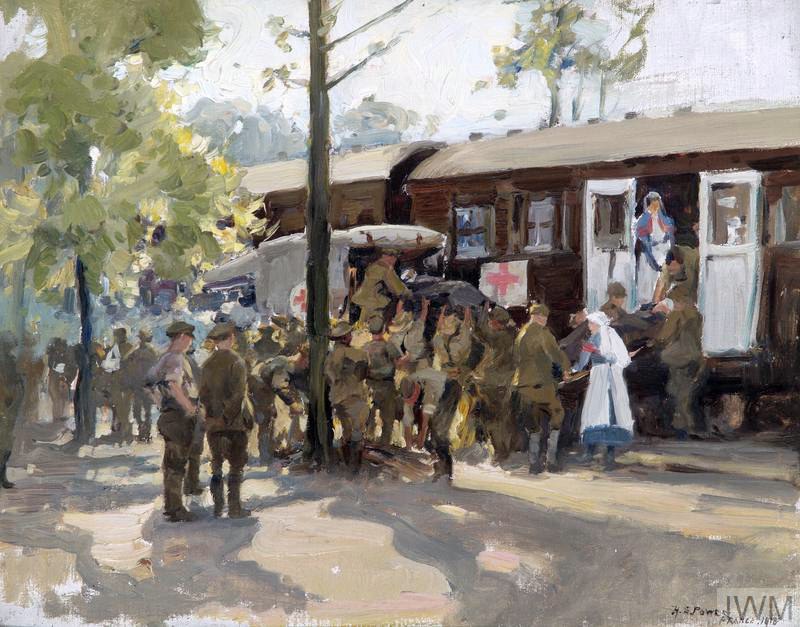
He was only in hospital for a further three days before, on 28th December 1916, being transferred to the Sick Convoy. The transcription also states that he was sent to No 3 Ambulance Train. It is not clear but this may mean that he was sent by ambulance train to the main hospital centre at Rouen for further treatment. On the Discovering Anzacs website it tells the story of Gunner Maurice Chambers who was wounded and taken to No. 38 Casualty Clearing Station at Heilly and was then transported by No. 3 Ambulance Train to Rouen on 1st January 1917. Heilly was ten miles from Allonville where David was being treated.
We know that David returned to active service but probably he was transferred to the 8th Suffolks and given a new Regimental number 201520. In early 1917 all the Territorial forces were given six-figure numbers. The Medal and Award Roll has David serving in the 4th, 8th and 9th Battalions of the Suffolk Regiment as well as the 1st Battalion of the Cambridgeshire Regiment. On top of this we know from the Ringstead Roll of Honour that he was later in the 11th Battalion of the Suffolks and was finally in the Army of Occupation, possibly with this battalion. As we have no dates for these changes, it makes tracing his service almost impossible.
What we do know is that he was wounded while still serving with the Suffolk Regiment. The “Incident Date” is given as 14th December 1917. This would usually mean that the actual date of his wounding would have possibly been some six weeks previous to this date, perhaps in late October or early November so it was probably in the last throes of the terrible Battle of Passchendaele. David was allowed a wound stripe above his left cuff to show that he had been a casualty.
The 8th Battalion was disbanded in France on 7th February 1918 and the 9th on the 16th February. This may explain the two battalion in his records, with his time in the 9th being a brief time before a more permanent transfer. On 24th May 1918 more than 400 men from the 7th Battalion of the Suffolks were transferred to the 1st Battalion of the Cambridgeshire Regiment with Regimental Number 210520. The great losses of Passchendaele in 1917 and in the German offensive of April 1918, had led to battalions having to be amalgamated and reformed and it seems that David was caught up in this confusion and change.
The Great War had finally ended on 11th November 1918 and David then served with the Army of Occupation. He returned home, probably with the 1st Cambridgeshires and by now would have been beginning to believe that he had done his bit and wanted to return to his family. It seems that he took matters into his own hands. The Northampton Mercury reported on 16th May 1919:
David Farr, of Raunds, D Co., 1st Cambridgeshire Regiment was charged with being a deserter since March 5th – Remanded to await an escort.
I have not discovered what punishment was imposed. David was finally demobilised and returned to his family. He was entitled to the Victory and British War Medals.
He continued as a farmworker. The 1939 Register of England and Wales has David born 13th September 1896 (but I think 1894) and working as a general farm labourer. Dora was performing the usual “Unpaid Domestic Duties” and there are two children Hilda, born on 18th November 1919, who was a machinist in a boot factory and Daisy, born 13th August 1926, who was still at school. They were living in Joy Cottages next to Mapleton Lodge in Raunds.
The couple later moved to 25 Hill Street in Raunds and it was there that David died, aged 73, on 16th May 1968. He was cremated on the 21st May at Kettering and his ashes scattered in the Garden of Remembrance. Just a few months later, on 23rd August 1968 Dora, aged 74, died too, and was cremated like her husband and her ashes scattered.
Percy Thomas Farr (1898-1969)
Percy Thomas Farr was the fifth child of Thomas and Eliza, born in Haynes in Bedfordshire on 23rd November 1897. He was with the family in 1901 in Souldrop and in 1911 in Covington. He was fourteen years of age and, like his two older brothers, a farm labourer. The family moved soon after to Chapel Street in Ringstead. By 1914 Percy had changed career and was working in a factory as a shoehand.
When war was declared in August 1914, he would have hoped that it “would all be over by Christmas” but it was not to be. In November 1915 Percy turned eighteen years of age and on the 5th February 1916, aged eighteen years three months he attested for the army.
He first joined the 8th Battalion of the Northamptonshire Regiment at Thrapston and was given the Regimental Number 19668. He was 5ft 2½inches tall with a thirty-five-inch chest and grey eyes (as almost all new recruits seemed to have).
The 8th Battalion never left England but acted as a reserve battalion, training the new recruits and then feeding them into the fighting units. On 1st September 1916 it became the 28th Training Reserve of the 6th Reserve Brigade. After he had completed his initial training and reached nineteen years of age, he was posted to the 9th Battalion of the Suffolk Regiment and given the new Regimental Number of 50272. He embarked for France on 6th December 1916 and joined the 9th Battalion in the field on 15th December.
The 9th (Reserve) Battalion had been formed in Bury St Edmunds in September 1914. It had been sent to France and, on the 30th August 1915, it landed in Boulogne. On 11th October 1915 it transferred, with the 71st Brigade, to the 6th Division.
On 25th November the 6th Division had taken over the La Bassée sector which included the Givenchy Ridge and the Cuinchy Brickstacks. After a month it moved to the Cambrin- Hohenzollern Front of about 5,500 yards. The 192nd Machine Gun Company joined the Division on 13th December. It was at about this time that Percy joined the Battalion in the field. Because of the terrible fighting of the earlier Somme battles this would have been a feared posting but the troops of both sided were by then so exhausted that it proved a comparatively quiet four months. It was only the raids that were ordered that caused any great casualties.
On 1st March 1917 the 6th Division took over a 11,000-yard Front from the Double Crassier at Loos, (two, hundred-foot high slag heaps), to Hulluch and Hohenzollern. Through March and into April there were raids and counter-raids and considerable trench mortar and artillery bombardments.
The role of the 9th Battalion of the Suffolks within the 6th Division is a little more difficult to establish. As we have seen, in November 1916, the Battalion had gone into army reserve at Noeux-les-Mines, south of Bethune, where they had spent Christmas. By early January 1917 it had moved to the Quarries Sector around Hulluch. From then on, they followed the usual routine of time in the Front Line, interspersed with time in Support and in Reserve, at either Philosphe, Mazingarbe or Labourse throughout the rest of the summer. Then they were ordered south to take part in the Cambrai operations.
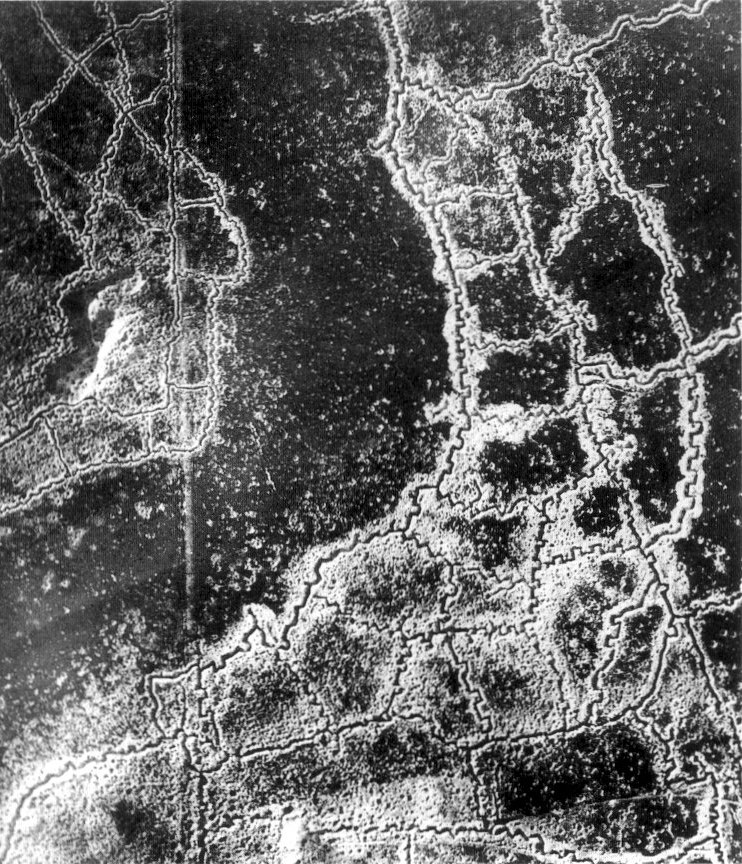
Percy did not make it to Cambrai. On 1st June 1917 he was badly injured. He received gunshot wounds to his right eye (omitted from some records), hand, shoulder and thigh. Although recorded as “GSW” it seems most likely that his wounds were caused by a shrapnel artillery shell. These were anti-personnel shells which carried a large number of bullets close to the target which they then ejected, the velocity of the shell carrying them forward. Even when not formally titled as a “battle” there was almost always some moral-sapping enemy artillery fire.
Percy would have gone through the field hospital system probably ending up at Boulogne. He was ferried across the Channel by the Hospital Ship St Patrick on 8th June 1917. Percy did not return to the Front.
We do not have any details of his time in the British hospitals but on 28th March 1918 he was posted to Felixstowe, one of the bases of the Suffolk Regiment. He would have been trained and assessed here and it was obviously decided that he was still not fit for active service.
Percy was transferred on 25th April to the 436th Agricultural Company of the Royal Army Service Corps (RASC) which, it appears, was based at Northampton. He was given a new Regimental Number, R/452130. He would have been allocated to a farm to work, possibly living there. The war ended but he continued with the Company
On 3rd June 1919 he was posted to the Eastern Command Labour Centre at Sutton in Surrey. This was the headquarters and training centre of the Labour Corps. From there he was briefly transferred to the Remount Depot of the RAMC at Romsey. The RAMC Remounts were responsible for the provision of horses and mules to all other army units. Some 120,000 passed through Romsey during the war and up to 5,000 horses, looked after by some 2,100 men, were at this hilltop camp at any one time. Soldiers who served in the Remounts usually had the letter “R” as a prefix to their number and we see this in Percy’s case. The horses and mules would have been sent to Southampton for shipment to France but this traffic was coming to an end and Romsey closed in November 1919.
On 27th September 1919 Percy was finally demobilised. His parents had moved to Raunds and during his military service, Percy had changed his next of kin from his father to his mother. I had thought, at first, that he had died but I do not think that that was the case. Percy seems to have first lived with his parents at 28 North Street in Raunds. He had been given medical category B1 and a 30% Disability Pension. Despite this he was put in Class Z which meant that he could be recalled in an emergency. [At some point he seems to have been given another Regimental Number 333200.]
In 1922 Percy married Elsie May Copperwheat. From the Electoral Rolls, it appears that he may have lived for a time with his brother John and his wife, but this is not clear. We do know that by 1931 Percy and Elsie had moved to North Street in Raunds, possibly in the house of his parents, as his mother had died in 1923. He still kept an allotment in Ringstead.
The couple had two children, Kenneth, born on 12th April 1924, who in 1939 was working in the clicking department of a local shoe factory and Lily, born on 15th March 1927. According to the 1939 Register, Percy was working on a “Brushing-Up Machine” in the Finishing Department of a Boot Factory.
Elsie died first, aged 67 on 12th April 1968 and Percy followed her, aged 71, on the 23rd January 1969. At the time of his death he was living in 20 Clare Street in Raunds.