Army & Navy · Story 13
Peacock Family
Arthur Edward Raymond Peacock (1890 – 1914)
1st Battalion Northamptonshire Regiment 3/8607 (Served 1909 – 1914)
Throughout the nineteenth century, especially when agriculture or shoemaking were suffering hard times, young men from Ringstead left to join the army, marines or navy. Some returned but many settled elsewhere or died in service. Two of the Peacock family served in the First World War but had very different experiences.
Arthur Henry Peacock was the son of John and Jane (nee Bates) Peacock and the grandson of Thomas and Sarah. He was born on the 18th August 1866 and baptised on 23rd March 1867 in the parish church. John had become a shoemaker and the 1871 Census finds the family living in Church Street with their five surviving children. Two girls called Sarah had died in infancy.
Arthur was the youngest son and by 1881, aged 14, he had also started work as military boot maker. He probably married Eliza Emma Sophia Bugby from Raunds sometime around 1890. It is a little unclear because, perhaps due to a bureaucratic anomaly, the marriage of Arthur and Emma, (as she was usually known), is not on the National Register of Marriages. On 3rd May 1890 their first child, Arthur Edward Raymond Peacock, was born. The couple only had a further two children, both sons, Leslie Montrose, baptised on 15th May 1903 and Harold William, who was born on the 14th February 1908. This would normally have meant that other children had died in infancy but the 1911 Census makes clear that they only had three children, and had lost no other children. Of course there may have been early miscarriages but as increasingly most children survived infancy, and there was greater access to contraception the large Victorian families began to decline and the small modern family began to emerge.
Arthur Edward Raymond was always known to his family as Raymond, perhaps to distinguish him from his father. The military boot industry was going through one of its periods of depression and Arthur signed up with the Northamptonshire Regiment. After the Boer War a recruit could sign up for twelve years but opt to be on active service only for the first three years. He then would have nine years in the Reservists but, in time of war, would have an obligation to return to the “Colours”. I have sought advice on the Great War Forum website and Stebieg173 advised that that Raymond was almost certainly a Special Reservist who had signed up for a “Six Year Special Reserve” term.
His Regimental Number 3/8607 is a Special Reserve number dating from January 1909 and the first letter we have from him is from “The Barracks”, which was the Gibraltar Barracks on Northampton, and dated January 1909. This starts:
Dear Mother and Father
I hope that you are in the best of health as it leaves me the same. I received your letter with love and was very pleased with it. The reason I have not written before was because I thought I would wait till I could send something. I went to the football match on Saturday, but I could not see Dad, and when he came down to the barracks with the other chaps it fair made me jump I was so glad.
This affectionate letter assures his mother that he is getting enough to eat and he is sorry that his baby brother is not well. He signs off with nine kisses and:
PS. Tell Ralph the barber his fags were alright and thank him for them.
PPS. Give my love to Rose and the others [and another seven kisses]
Raymond’s letters tend to follow this pattern but with glimpses of his army life. The letter in April remarks:
While I am writing this I am very near asleep for we are digging trenches this morning. I think I shall get a job in the sewer when I come home.
This time he fills half of the page after signing off with kisses for his younger brother, Leslie and Larry [Harold].
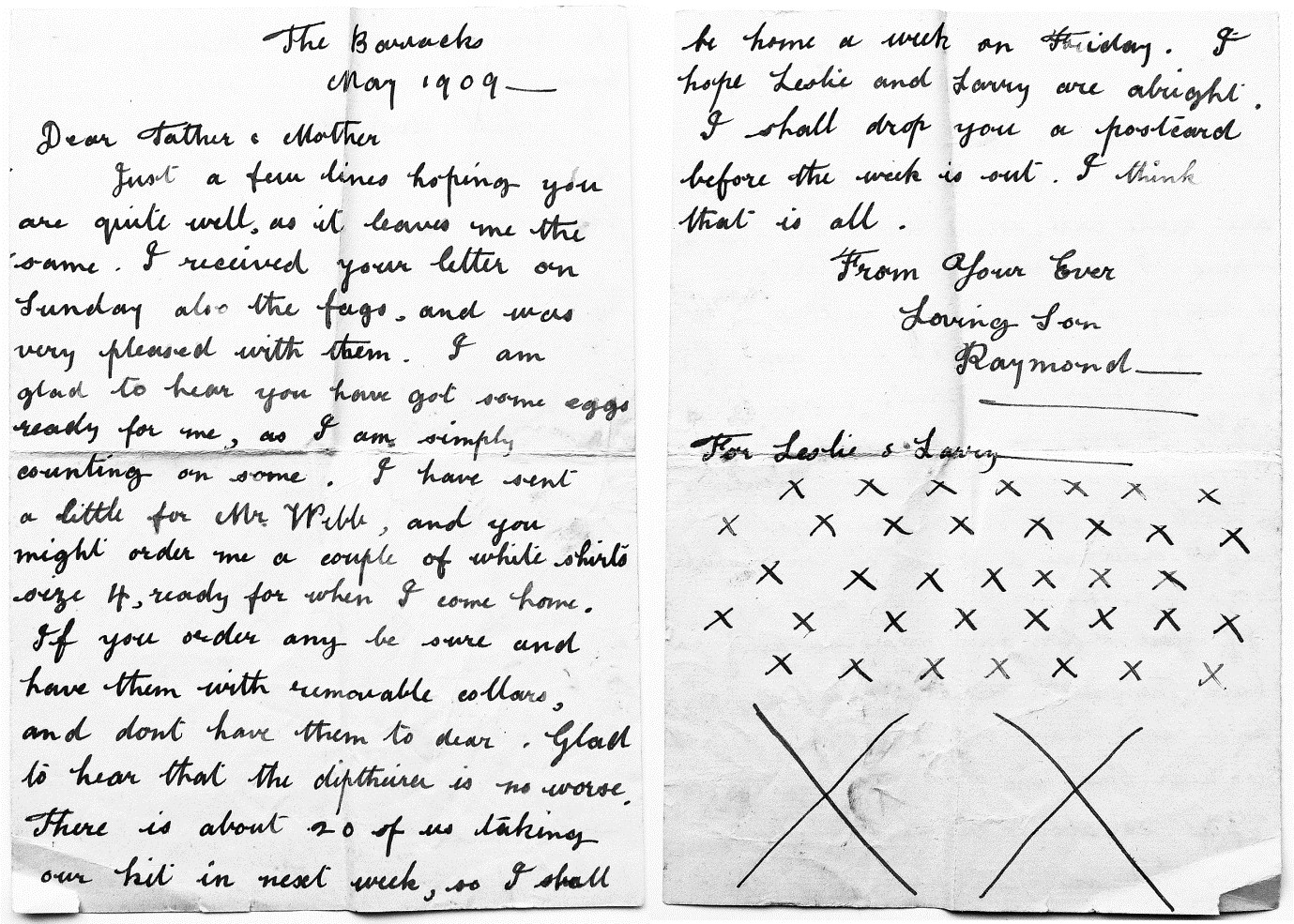
Raymond would have served a five month training period and in May he tells his parents that he has paid 2s 10d to get his boots repaired. He also fills in a little more detail about army life:
We have to get up at half-past five in the morning, and we are done for the day at 1 o’clock. But I shan’t have much more of it as we only have about a month to do.
A second letter in May tells how he is “counting the time” to when he comes home. He also adds:
I have sent a little for Mr. Webb*, and you might order me a couple of white shirts size 4, ready for when I come home. If you order any be sure and have them with removable collars, and don’t have them too dear. Glad to hear that the diptheria [sic] is no worse. There is about 20 of us taking our kit in next week, so I shall be home a week on Friday.
*This may refer to Alfred Webb, a draper in Denford.
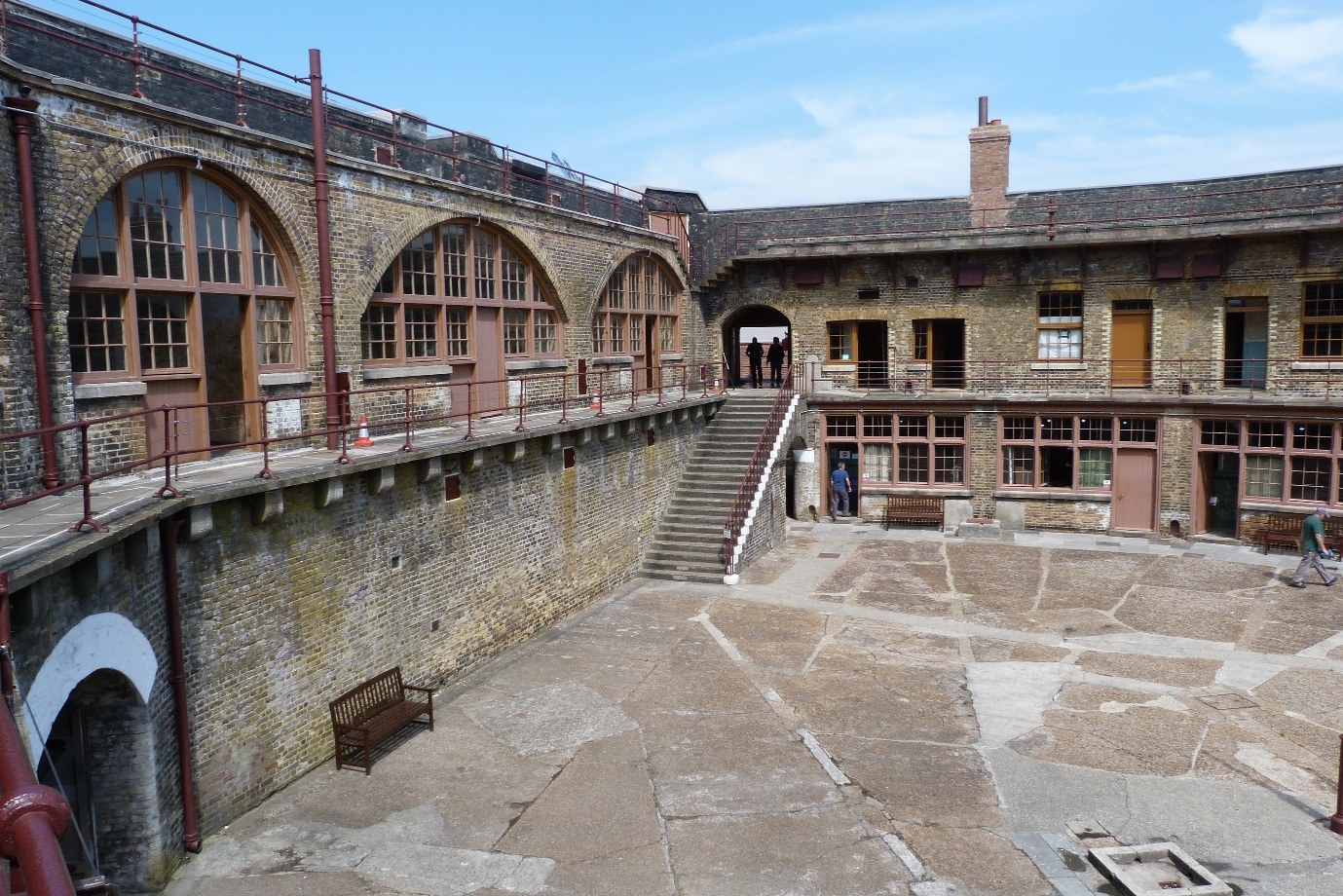
He would have attended a trainee’s musketry course from the 18th June until the 11th July 1914 followed by a summer training camp at Landguard, near Felixstowe in Suffolk until the end of the month. He was obviously looking forward to getting home for he wrote:
We shall be home a week today, so you need not trouble about that, We start from here about half-past six in the morning, and get to Northampton about half-past twelve, so that I reckon I shall be home for tea on Saturday
He also adds:
I am sorry to here [sic] about J. Scholes little girl,* and I hope that you will mind and not let Leslie go out to [sic] much. I hope that he is alright, and the Baby better. I have sent 7/6 more, so that I think I shall have a little for August. I think that is all.
From Your Ever
Loving son
Raymond
*This refers to the local baker daughter, Rita Mary Scholes, who had died aged ten years old.
Below are four rows of kisses for his young brothers. Leslie and Larry
That would have been the end of his initial full-time training and he would have been a part-time soldier from then on, rather as in the Territorial Army today. He would have had to have had a full-time job and by the 1911 Census he was back in Ringstead working in a local factory as an “Army Boot Stitcher”. The days of the home based hand-sewn army boot makers are numbered and his father, now 45, was unemployed.
There is a letter written in 1912 although the date is rather ambiguous. In it Raymond tells his parents:
They gave us our own insurance cards yesterday, and they are going to put two stamps on it, and they stop us 8d. Dad might ask Joe Smith, about me going in the Trade, so when you write let me know what he says. I hope Leslie and Larry are alright. I am sending another order for 5/- as that is better than losing it. I am glad Dad done alright at Thrapston.
It is possible that this letter was, like the others from the army while he was doing the compulsory annual training, but it may be that Raymond was working away from home in a factory, perhaps in Northampton.
The 1911 National Insurance Act introduced the idea of benefits based on contributions paid by the employed persons and the employer. Stamps were put onto a card and if a person lost their job they were “given their cards” to pass on to the next employer. At first this was for unemployment benefit only and a scheme ran alongside it administered by “approved societies” which could include trade unions. I think that the “trade” that Raymond mentions in his letter means trade union and we know that he joined the National Union of Boot and Shoe Operatives and his card for 1913/1914 seems to be filled in until the end of December 1913 but from January 10th 1914 it appears that he does not pay his eight pence weekly contribution .The collector seems to have signed each week across the Sick Pay and Unemployed Pay columns. Was Raymond out of work or was he taking part in the military training exercises of 1913?
On 8th August 1914 the Special Reservists were called up and Raymond would have reported to the Depot at the Gibraltar Barracks in Northampton. Raymond did not go with the main force of the 1st Battalion of the Northamptonshire Regiment to France. They had sailed on the S.S. Galeka, on the 12th August 1914 arriving at Le Havre on the following morning. Raymond would probably been on the second draft which was sent after the first major casualties were suffered by the Regiment. It consisted of some seventy men under the command of Lieutenant Ralph Davison. Raymond’s medal card shows that the arrived in the “Theatre of War” on 12th September 1914, although it was not until the 21st that the draft finally joined up with the 1st Battalion.
There is a tantalising note which seems to have been written by Raymond as he waited ready to go to France. Unfortunately it was scribbled on rough grey card in soft pencil and time and wear has made much of it is difficult to decipher. It appears to say:
Southampton [?]
Dear Dad [?] & Mother
Just a line hoping you are all well, as it leaves me the same.
I am writing this in the train [?] while it is in the dock [?]
We sail [?] in the morning [Rest completely undecipherable].
With Love
Ray
X X X
Unfortunately, this lack of clarity was also apparent in the official record of Raymond’s movements at the time and his mother, Emma, after his letters stopped, tried to find out what had happened to him. She received formal letters from the Infantry Record Office, the local Member of Parliament Stopford Sackville and the War Office assuring her that Raymond was not on any casualty list. This continued into 1915. Even as late as 31st March 1916 the Northampton Mercury was reporting that he was “Missing”. We are not sure when Arthur and Emma were told that their son had died just a few weeks after he had arrived in France.
Raymond would not have taken part in the early engagement with the Germans at the sugar refinery at Troyan. At this time the battles were open with only scrapes for the soldiers to lie in. It was often close quarters hand-to-hand fighting rather than the grinding stalemate of trench warfare that quickly developed. The Northamptonshires had been relieved and were resting behind the lines from 19th September and it is there that Raymond‘s draft probably joined them. There had been heavy rain and the trenches then being built were filling with mud. The terrible nature of trench warfare was beginning to dawn on the soldiers.
The 1st Battalion returned to the front on the 29th September and remained there until mid October. We can only guess at how a sensitive young man was affected by entering this terrible world of mud with the constant noise of the artillery and the sight and fear of death. Raymond was killed on the 16th October 1914. He was buried at Vendresse British War Cemetery, the neat white stone concealing the confusions of his death. Most of the bodies had been buried elsewhere on the front and were re-buried in the ordered ranks at Vendresse.
Raymond was awarded the Victory Medal, the British Medal and the 1914 Star and Clasp. His mother received the back pay due to Raymond and a small pension as the War ended in 1918. Emma died on 2nd February 1956 aged 87 and Arthur Peacock died of heart failure and old age, aged 90, in Glapthorne Road Hospital, Oundle on 12th March 1957. They are buried together in Ringstead Cemetery.
References
My special thanks to Kevin Varty for allowing me to copy the letters and other documents of Raymond Peacock and to Janice Morris for alerting me to their existence and acting as the agent in this process. My thanks also to Stebieg173 (Steve) particularly and also Grumpy (on the excellent Great War Forum website) for explaining the likely context of Raymond’s letters and adding more detail for me.
Ringstead Parish Registers (NRO and )
Ringstead Censuses (NRO and )
Raymond’s Military Records ().
Raymond’s Birth Certificate.
Record details of Arthur’s “Missing” status and death. ().
. (On the Northamptonshire Regiment at the start of First World War.)
Northampton Mercury 31st March 1931 ().
Thomas Cyril Peacock (1887 - 1964)
6th Battalion Machine Gun Corps 205101 (1915 – 1917)
Heavy Brigade of Machine Gun Corps (Tank Corps, later Brigade) 7868433 (1917 – 1920)
In telling of the life of John Thomas Peacock and his tragic death after he had been badly burnt by an upset oil lamp, we briefly mentioned his second son Cyril, born on the 1st November 1886. Cyril first followed his father into the shoe trade and is shown as such in the 1901 Census. His father died in 1896 and his mother, left a widow with a young family, had married widower Benjamin Phillips in 1902. Cyril had been baptised Thomas Cyril but., like his cousin, Arthur Edward Raymond Peacock, he was known by his middle name, probably to distinguish him from his father who tended to use his own second name. At some time after the death of his father, perhaps because of difficult times in the military boot trade, he had become a hairdresser. The 1911 Census shows him living with his mother and stepfather but a year later on August 12th 1912 he married Rose Brayfield in Raunds Parish Church.
Cyril joined up on 10th December 1915 and became part of an Army Reserve Battalion. At this time the army still was made up of regulars and volunteers with single men being used first from the latter group. In the following month Parliament introduced conscription. It was a controversial measure and some ministers resigned but the carnage on the Western Front meant that the need for new men was urgent. Cyril had expressed an interest on his Attestation Form that he would like to be considered for the Royal Flying Corps which had only been formed some three years earlier and consisted of balloons and aircraft. It seems from his later career that Cyril may have been looking to be in the ground crew but what mechanical background he had is unclear.
When he took his army medical in 1915, Cyril was 29 years old. He was 5 feet 5 inches tall with blue eyes. He had a chest size of 33¼ inches and a “range of expansion” of 1¾ inches (this was later changed to 3 inches). The minimum height for conscription was 5ft. 3 inches but even this was reduced in the so-called “Bantam Regiments” as men died in their millions. It was the revelation of the poor health and small size of many recruits in the First World War that stimulated the movement towards the Welfare State.
He was mobilised on 9th December 1916 and posted twelve days later to an Infantry Reserve or Training Battalion. On the 8th February 1917 he joined the Machine Gun Corps (Motors). This was potentially one of the most dangerous postings as the machine gunners were a vital target for snipers as well as other artillery. It looks, however, as if Cyril did not see front line fighting and served the rest of the war in England.
On the formation of the Machine Gun Corps in October 1915 the Motor Machine Gun Services was absorbed into it and became the Machine Gun Corps (Motors). It had machine guns mounted on motorcycles, cars, armoured vehicles and even trains. The real industry of war had begun.
Cyril joined the No.6 Battalion of the Machine Gun Corps which was based at Belton Park and Harrowby Camp in Grantham. On one official form (B103) it calls it, No. 6 Dominion Battalion which seems to imply that it was composed of soldiers from Canada and perhaps also from Australia and New Zealand. Cyril remained a private or gunner throughout his army career and it is not clear what role kept him away from the fighting. He had gained a “Machine Gunner First Class” qualification so perhaps he was an instructor or demonstrator to the new troops. It is also a possibility that he was a driving or motorcycle instructor. There is also the nagging thought that he was the dreaded man who gave the troops their regulation haircuts. On his discharge there is no indication of a skill that he could take into civilian life so it would seem that he was a military instructor of some sort but we cannot be sure as his army records give no clue.
On 26th July 1917 he was posted to the newly formed Heavy Brigade of the Machine Gun Corps soon to become the Tanks Corps and then the Tank Brigade. It was based at Bovington near Wareham in Dorset and Cyril became part of the Central Schools of Instruction. Originally Cyril had asked to be in the Royal Flying Corps and tanks were the other great innovation of the First World War.
The tank was based on ideas from before the war but the stalemate and terrible slaughter of the Flanders trench warfare had once more ignited interest among the military and political leaders. The tank was under development in all the main warring nations but the prototypes, often based on tracked agricultural machinery had many problems and research and progress was top secret. The name “tank” itself was part of this secrecy designed to give the idea that water tanks were being built. Some of the first British production tanks were marked with Russian lettering and the rumour was propagated that they were snow ploughs intended for Russia. It was designed as a weapon to cross the rough terrain between the opposing trenches, the “killing field”, and break into the enemy defences. Many designs were tried and failed. Eventually on 15th September 1916 tanks were used but it was only very late in the war that tanks played a decisive part in the Allied victory.
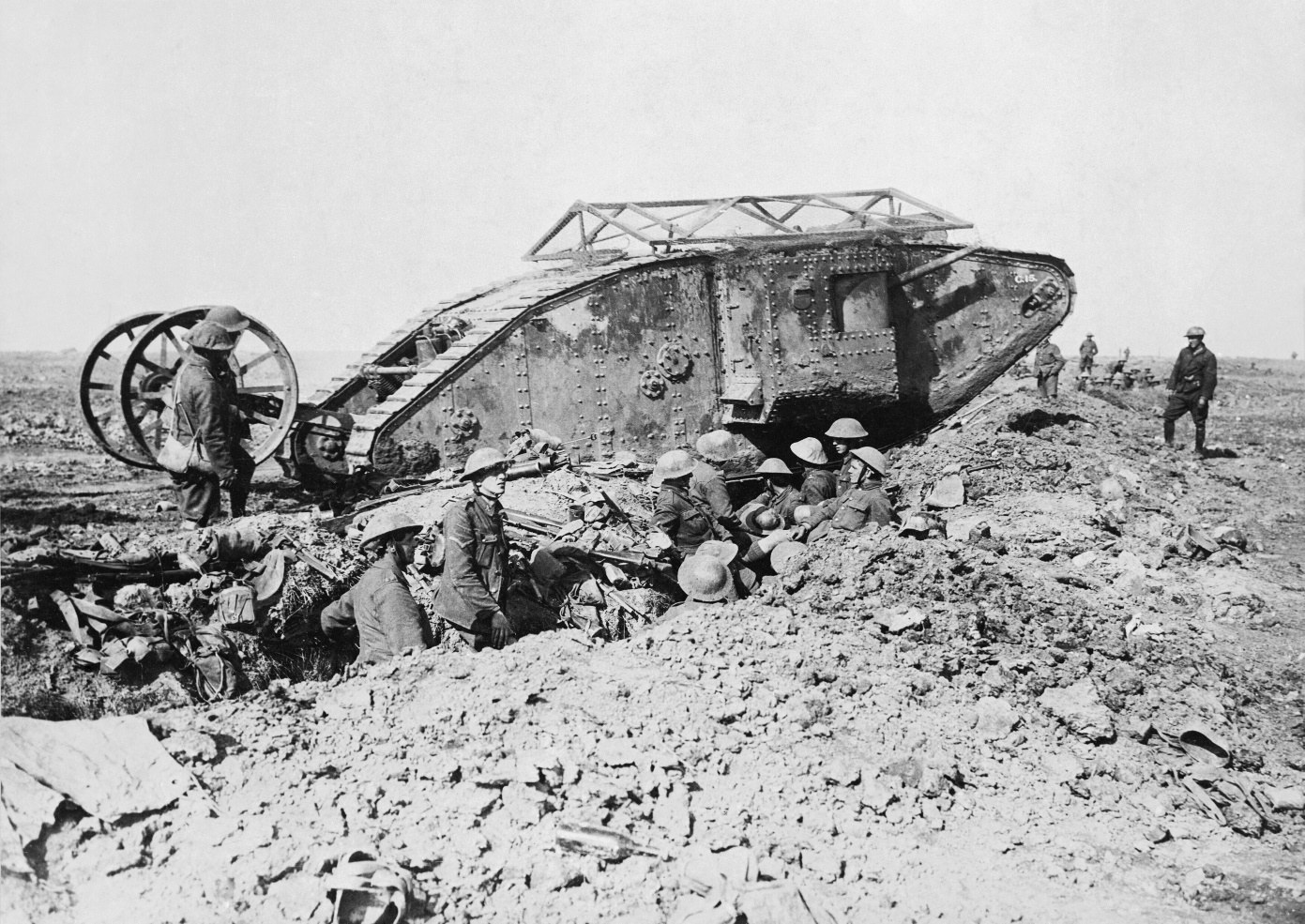
Cyril had a good army record and his only offence was to overstay his leave pass from Grantham by 12½ hours in April 1917. As his daughter Ellen Louisa had been born on the 16th March there may have been some excuse and the four days’ pay that he initially had deducted was reduced to one. His only injury seems to have been a dislocated elbow on 20th October 1920 which kept him in Wool Military Hospital, near the Bovington Camp for thirty-two days. As we can see from this date Cyril had been retained at the end of the war, first for six months and then for a further three and he was finally demobbed on 12th December 1920.
He stated on his discharge papers that he wanted to be a publican, place unknown, when he returned to civilian life. In my original biography, in my second book, Ringstead People 2, I was not sure that he had achieved his ambition but it is now clear that he did. The 1920 Electoral register for 1920 records that he was at the Red Lion, Winfrith in Dorset. The 1939 England and Wales Register confirms Thomas Cyril Peacock is the “proprietor” of the Red Lion. Living with him is wife Rose, who is doing “General Hotel Work” and daughter Ellen Louise (born 17th March 1917). There is one closed entry (which could be daughter Rita Julia). I am sure that we have the correct man but there is one concerning anomaly. When he was baptised in Ringstead on 6th April 1900 it stated that he was born on 5th November 1887 but here and in his death certificate in the USA he is said to have been born on 1st November 1886. However, the Civil Registration shows his birth was in the last quarter if 1886 so it seems certain that this was a clerical error.
Cyril and Rose sold up the Red Lion and on 12th October 1949, with their unmarried daughter Ellen Louise, sailed into New York harbour on the Queen Mary.
The family were bound for Texas and we know that Ellen, aged thirty-two arrived in El Paso after having crossed the border from Mexico. She was bound for Alpine in Texas and it seems that it was here that her parents had settled.
It may be that Alpine was chosen because they were hoping to improve the health of Rose. She died on 1st August 1956 after having lived there for seven years. The causes of death included a chronic peptic ulcer which she had also had for seven years. She had suffered as well from Hypertension for six months and was killed finally by a “Massive Coronary Occlusion”. She was sixty-nine years old and obviously had been unwell for some time.
Thomas Cyril Peacock died some eight years, later on 6th February 1964, of lung cancer aged seventy-seven and was buried in Elm Grove Cemetery, almost half a century after many of his former comrades
References
My special thanks to Jim Parker from the website, for his many helpful information sheets and his individual help with the research.
Ringstead Parish Registers (NRO and ).
British Army WW1 Pension Records 1914 – 1920: New York Passenger Lists. Border Crossings from Mexico to U.S. 1895 – 1964). ().
Texas Deaths. ().
USA Death Certificates ().