The Great War: A–M · Story 21
The Dickens Family
George Thomas Dickens was originally from Finedon but he was living in Ringstead when he married local girl, Mary Ellen Bates, on 22nd June 1897 in the Parish Church. They went on to have a large family but fortunately it seems that only the oldest two sons had to fight in the Great War. The event that would bring work to their bootmaker father , George, would also put the two boys, Horace George and Arthur in danger of their lives. The following sons, Bert, William and Ernest were lucky enough to be too young to be conscripted.
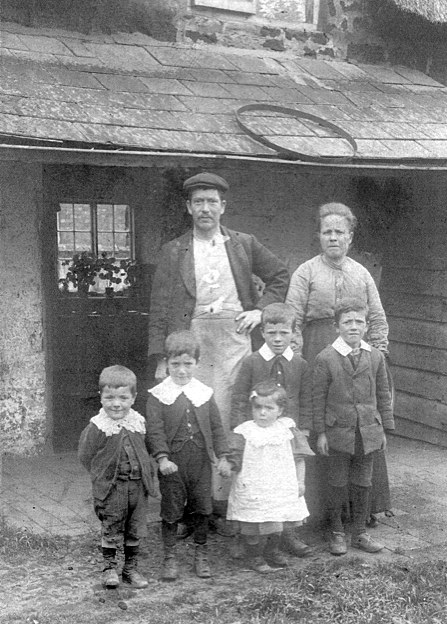
Horace George Dickens (1898-1966)
The oldest son, Horace George, was born on 27th September 1898 and baptised in Ringstead Church on 19th July of the following year. We see, in the 1901 Census, that the couple had first lived in Wellingborough, where Horace had been born, prior to moving on to Rushden before the birth of Arthur. It was in 21 Robert Street in Rushden that the family were living in 1901. George was working as a bootmaker in a local factory.
By the 1911 Census there were eight children, the youngest being just five months old. They were now living in a five-room house in Chapel Street, Ringstead and George was a handsewn army bootmaker. Horace (12) and Arthur (11) were still at the local school although Horace was also described as an “errand boy” which could be for a local shop. Certainly George, his father, was not shown as working at home but perhaps Horace was collecting boot and shoe parts from the factories in Raunds for some of the Ringstead homeworkers.
Unfortunately, once again, most of Horace’s military records have been lost. As a result we can only give some idea of his wartime service. We do know that he would have been eighteen years old on 27th September 1916 so would have been conscripted after that date. He was posted to the 15th Battalion of the Nottingham and Derbyshire Regiment, known as the “Sherwood Foresters”, and given the Regimental Number 73524.
The 15th had been formed in February 1915, by the Mayor of Nottingham and a Committee, as a “Bantam Battalion”. This was in the days of volunteer “Pals Battalions”. The Bantam Battalions were formed because it was discovered that many men were under the minimum height needed to become a soldier. Poor diet and living conditions had seen the stature of many working-class men diminish compared with earlier ages. The “Bantams” were for men between five foot and five foot three inches in height with an expanded chest of at least 34 inches. As the war progressed, and men were killed and transferred, the Bantams began to lose their unique status. On the Wartime Memories Project website it quotes that in 1916:
The division received new drafts of men to replace losses suffered on the Somme, but the CO [commanding officer]. soon discovered that these new recruits were not of the same physical standard as the original Bantams, being men of small stature from the towns, rather than the miners and farm workers who had joined up in 1915.
We know that, when the Ringstead Roll of Honour was published, Horace Dickens had been wounded and demobilised. We also know that the 15th Battalion had taken part in 1917 in the German Retreat to the Hindenburg Line, the fighting at Houthulst Forest and the Second Battle of Passchendaele. We cannot be sure that Horace was with the Sherwood Foresters during this time but it seems certain that he had joined them by 1918.
In this year the 15th fought at the Battle of Bapaume, the Battle of Ypres, the Battle of Courtrai, the action of Tieghem (near Oudenaarde In Belgium) and ended the war north-east of Renaix in Belgium.
Horace did not see this year out with the 15th Battalion. The War Office Weekly List for May 28th 1918 records in the May 23rd Casualty List that H.G. Dickens (Ringstead) of the Sherwood Foresters had been wounded. This appears to be after the great German Offensive of March and was in the “comparatively” quiet May period. Perhaps he was one of the three casualties when a Battalion working party was helping to dig a new line of reserve trenches on the 11th May or was he hit when German aeroplanes dropped bombs near the billets? We may never know but it seems likely that he came back to England and, after treatment, he was demobilised.
He returned to Ringstead and married Dorothy Lilian Hodson, daughter of a Raunds’ shoemaker, at the end of 1924. They did not stay long in the area and the 1928 Kelly’s Directory records Newsagents, Hodson and Dickens at 65 Canterbury Street in Coventry. I am not sure if the “Hodson” was because of Dorothy or if Horace was in partnership with a member of her family.
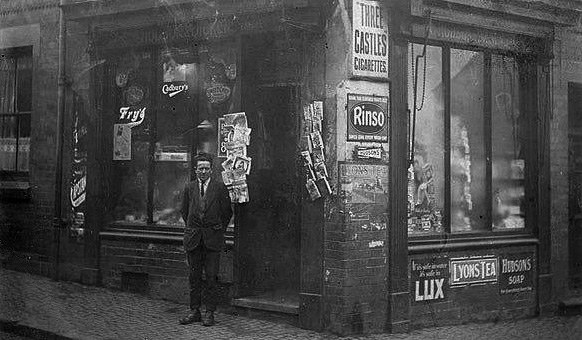
In the 1939 Register of England and Wales Horace and Dorothy were living in Colchester Street. Their newsagent’ business was on a corner, with the shop address being in Canterbury Street and their house door in Colchester Street. In the 1940’s edition of Kelly’s Directory the shop was in the name of Horace Dickens only.
It seems likely that they retired to Northamptonshire, thought to be in Stanwick by the family. Horace died on 16th August 1966, aged 67, and Dorothy in 1990 in the Wellingborough District.
Arthur Dickens (1899-1928)
The second son of George and Mary Ellen Dickens also saw action in the Great War. Unlike his older brother, many of his military records still exist but they do give a confusing picture.
Before he was conscripted under the M.S.A. (Military Service Act 1916) he was a “pressman” in a local Boot and Shoe Factory. The pressman operated presses to cut boot or shoe pieces out of the leather. My understanding is that he would have cut the “rough stuff”, the soles, insoles, heel lifts, etc., and the “clicker” would do the more skilled cutting of the uppers to make best use of the hide and ensure that the pairs of boots or shoes matched. He was only eighteen years one month when he signed up so he had quickly learnt his trade.
He enlisted on 14th March 1918 at Northampton and was 5 feet 4 inches tall with a 34-inch chest. Perhaps, surprisingly, he was deemed to have a good physical development. With unusual care, he was stated to have auburn hair and hazel eyes, with a fair complexion and first-rate eyesight. He weighed 124 pounds (56.25 kilos.).
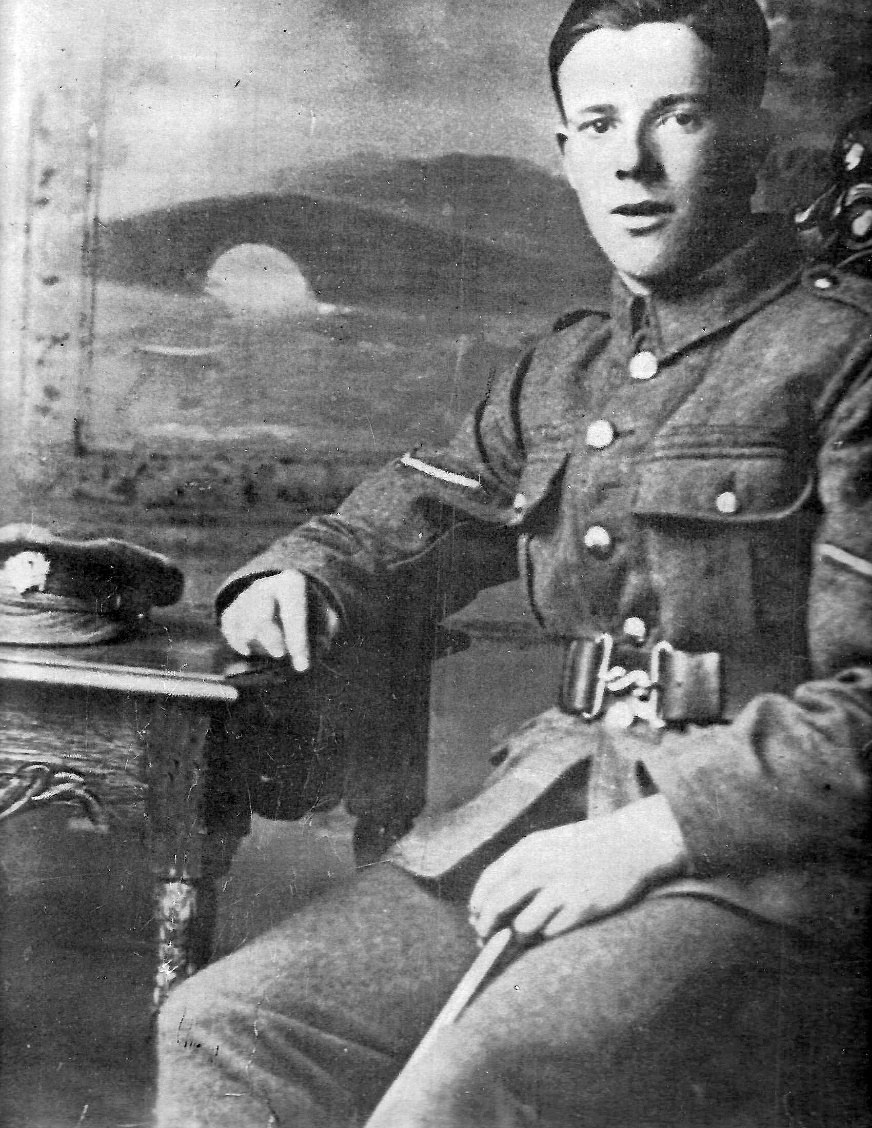
His records have survived but they are often smudged and faint and difficult to decipher. He was first posted to the 53rd Battalion of the Bedfordshire Regiment With the destruction of much of the Regular and Volunteer Battalions there was continuous reorganisation to cope with new recruits, many of them eighteen years old. It appears that he was first allocated to the 27th (Training Reserve) Battalion but this may have been a clerical error as it had been reorganised as the 53rd (Young Soldiers) Battalion.
The idea of the 53rd was to provide three months of basic training for new recruits. It was based at Brocton Camp in Cannock Chase, Staffordshire from January 1918. Brocton was one of two camps built from scratch on the estate of Lord Lichfield at the beginning of the war.
After this training he was transferred to the 52nd (Graduated) Battalion of the Bedfordshires where he would remain until he was considered ready for active service. The 52nds were based in Taversham in May 1918 but returned to its previous home base in Norwich soon after and remained there until after the Armistice. It was then sent to be part of the Army of Occupation, allowing the war-weary and increasingly disgruntled troops from the Western Front to return home and demobilise.
Arthur seems to have progressed well because he was appointed Acting Lance Corporal on 31st May 1918 which was about the time when he would have joined the 52nds. Unfortunately, on the 30th July 1918 he overstayed his draft leave from 11 pm to 12.30 am at Taversham and was “deprived of his stripe” on 3rd August. The Conduct Sheet shows the Oxford and Bucks Light Infantry rubber stamp so it may be that he transferred to them just before he sailed to France
The page of his records detailing his various moves has almost faded into oblivion. It appears, however, that he was first posted to the Infantry Brigade Depot in France as part of the 52nd Battalion of the Bedfordshires, presumably in August 1918. He was soon after transferred to the Oxford and Buckinghamshire Regiment (possibly the 2/4th Battalion). He was given a new Regimental Number 47695. Whichever is correct, it was at about this time that the transfer happened.
Again we have no dates but it seems that he was quickly transferred again, this time to the 2/5th Gloucestershire Regiment, and gained another number, 51319. As he was entitled to the British War and Victory Medals it would seem that he was in France before the Armistice was signed and was in a war zone. Without some idea of dates it is difficult to be clear about where and with which regiment Arthur saw action. The Ringstead Roll of Honour compiled in late 1918 or early 1919 shows that he was with the Gloucesters and part of the Army of Occupation. He was, therefore, with them after the war finished on November 11th 1918.
We know that Arthur was transferred one last time and became a Sapper in the 2nd CCC of the Royal Engineers. As battalions left France and demobilised, recent recruits were transferred into units still in service in France and Belgium. I believe that “CCC” stands for Canal Control Committee. This was established to operate the inland waterways in France and Belgium. The Royal Engineers during the war had, among other tasks, maintained the railways, road, water supply, bridges and transport as well as telephones, wireless and other signalling equipment. The Engineers also built the front-line fortifications and maintained the artillery and specialist units had dug the mines to allow the blowing up of enemy positions. They were also involved in the destroying of infrastructure where necessary. After the war they used their varied skills to help put the countries back together again.
We know that Arthur was in the Royal Engineers in September 1919 because he once more overstayed his leave from 6.30 a.m. on the 20th September until 6.30 am on the 23rd. For this he was put on open arrest (not locked up), given seven days Field Punishment number 2, and docked three days’ pay. At the side of the entry it appears to say, “L. Signs” and I wonder if this means he was in one of the Signals Companies of the Royal Engineers. After the war they became a separate Corps.
In spite of his run-ins with authority, he elected to extend his service until 15th February 1920. On that date he was examined at Wimereux, just north of Boulogne. This had been a large hospital complex and became the British Army headquarters in France. He returned to England on 17th March 1920 and was finally demobbed on 7th April. I am not sure if they were still being stripped and de-loused by this time.
He returned to Ringstead soon after. Also living in in Ringstead, in the Sivers Building, were Oliver John and Bertha Ellen, (or sometimes Helen), Pothecary. Oliver, who was from Woodford, had served in the Royal Army Medical Corps in the war. He had married Bertha Bates, daughter of William and Maude, in 1917. Sadly, he had contracted Pulmonary Tuberculosis (T.B.), probably during his war service, and died on 19th October 1923 aged about 26, he was one of the many unseen casualties of the war [See later biography.]. Bertha was granted a small army pension for herself and her three children, one of whom had been born a few months after her husband’s death.
In 1926 Arthur Dickens married widow, Bertha Pothecary, and they had two sons, Eric and Roy. Sadly, Arthur too did not live long. The Northampton Mercury of Friday 19th October 1928 reported:
DEATH. – Mr A. Dickens of Ringstead, died on Saturday morning in Northampton Hospital following an operation for appendicitis. He was only 26 years of age, and an employee of Mr. Child’s heel factory at Rushden.
The age is wrong but the Death Index of England and Wales confirms that he was actually 28 years old. The removing of the appendix was an operation that had been around since the Eighteenth Century but the one performed on Edward VII, that had delayed his coronation in 1902, made it an increasingly popular practice. The maxim seemed to become – if in doubt whip it out. But all surgery carries risks and it seems far less common today. It may be, however, that he had peritonitis caused by a burst appendix and this was the cause of death
Bertha, a widow twice before she was thirty and with five children married for a third time, to Percy Mayes, in 1936. The couple with their large family of mixed surnames are together, in the Sivers Buildings. in the 1939 Register of England and Wales. There are two closed records so it may be that there were two further children. Bertha E Mayes died in 1950 aged 51.