The Great War: A–M · Story 16
John Wilfred Reginald Cave (1898-1916)
The Eady family was a dynasty of millers in eastern Northamptonshire. We will start with Thomas, born in 1792, who married Ann Irons. He had North Mill in Burton Latimer. His son, Moses Irons Eady, worked this mill for some 24 years from about 1840. His father still owned the mill and, after Moses moved away, it was worked by various tenant millers, using steam as well as wind power. We know much of this from an unsuccessful action brought in 1865 by Thomas Eady against the Kettering, Thrapston and Huntingdon Railway Company, alleging that in building the new railway the access to the mill was made more difficult and so devalued the rental that he could charge.
His son, Moses had taken over the Woodford Mill, usually known as Willy Watt, in Woodford Parish (but nearer to Ringstead village). In 1879 he bought the mill, house and lands from the main local landowner, George Capron. Moses and his wife Harriett had a daughter Harriett Ann, born in 1847 and, in 1874 she married John Thomas Cave. In the 1881 Census they were living with Moses in the mill house with their sons, Herbert (5) and John George (2) both born in Little Addington. We see that John Thomas was working as a machinist but it is not clear exactly what this occupation implies.
Moses moved back to Burton Latimer, where he died in 1887 and by 1891 John Thomas Cave was shown as the miller at Willy Watt. In 1897, his son, John George Cave married Ada Mary Eldred. At about this time the Willy Watt was sold to the Dodson family although the semi-derelict Ringstead Mill was retained by the Cave family until 1912.
John George Cave and his wife Ada also moved back to Burton Latimer where their son John Wilfred Reginald Cave was born on 11th July 1898 and baptised in the local church on 3rd August. John George appears to have been something of a nomad probably exaggerated by the ten-year Census cycle. In 1901 he and Ada were living at Westbury House, Lindsay Street, in Kettering. He was still only 23 years old and was a “Corn Merchant”. A further son, Bernard Cyril Cave, had been born and was just one month old.
By 1911, in a sudden change of direction, John George was living in Hospital Drove, Long Sutton, in Lincolnshire. His occupation now was, “fruit growing, poultry keeping etc.,” They have had two further children and all the three younger ones were born in Kettering. Meanwhile his parents John Thomas and Harriett had retired to Denford Road in Ringstead.
It is John Wilfred Reginald Cave, whose short life we are following here. We left him in 1911 when he was just twelve years old and living in Long Sutton. Soon after that the family moved to Ringstead. They were living there in 1914 but it appears that in the next few years they moved.
What we do know is that John was eager to sample the excitement of military life. It was on 24th September 1914 that he enlisted in the Royal Marines Light Infantry. He joined in Birmingham which perhaps implies that his parents were in process of moving there but we cannot be sure because, in his records, his parents’ address is given as “The Hollies” in RIngstead.
John was 5ft 6½inches tall with blue eyes and brown hair. He was given number 17906 and appears to have been based in Portsmouth. His conduct was described as “very good” but he was discharged less than two months later. The reason was simply that he was underage, for he was only sixteen years old.
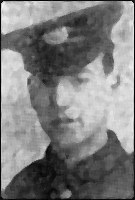
He returned to Northamptonshire and became an assistant baker in Brixworth but he had not given up on joining the military. It was at Brixworth that he joined the Northamptonshire Regiment and was given the Regimental Number 20272. We do not have a date for this but it must have been close to his eighteenth birthday if not before. He was transferred to the recently formed 44th Machine Gun Corps with the new number of 10536.
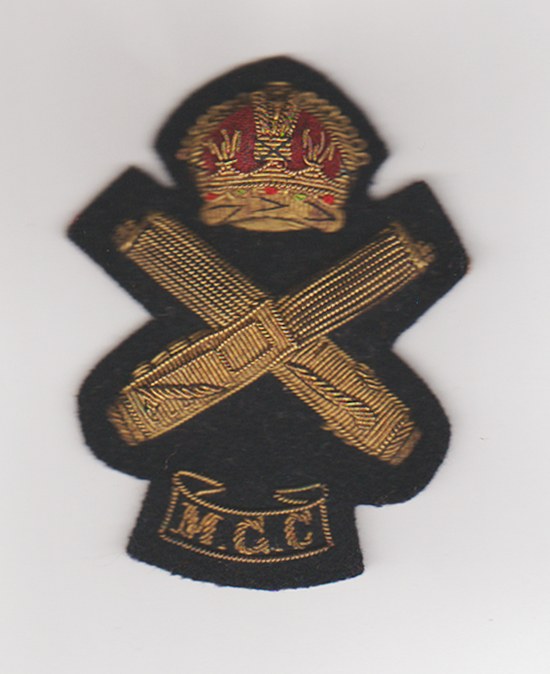
The Machine Gun Corps were set up from the various companies in October 1915 and over the next few months they were organised and in action. It was believed, by many who served in them, that the Corps was looked down on by the Regiments, with their colours and rich histories. Some ex-machine gunners felt that the fire that destroyed all their records after the Great War was suspicious. The British Army first used the outdated Maxim machine guns but in 1916 the Vickers gun replaced them. They were the weapon feared by attacking enemy troops and therefore they were specially targeted, and casualties were high.
John’s eighteenth birthday was on 11th July 1916. At this point the 44th Company of the Machine Gun Corps were fighting around Pozieres as part of the campaign called the Battle of the Somme. It was the usual story of attack and counter-attack, of gain and loss, with terrible artillery bombardments. Both sides sustained great losses, with the Australian troops being most badly hit among the Allies.
On the 25th August 1916 John was killed in action. We know almost exactly where he was first buried. During the war, using reconnaissance on the ground and with tethered balloons and increasingly with aircraft, detailed and updated trench maps were produced. These were divided into ever decreasing squares like Ordnance Survey maps but with a different numbering system. John’s grave was at 57.X.5.b.4.25. which places it near to the village of Pozieres. His body was later exhumed and re-buried in the Pozieres British Cemetery. The Burial Return Form for that cemetery has a final column headed “Were any effects forwarded to base?” For John, in this column, it simply and sadly has the single word “spoon.”
He was entitled to the British and Victory Medals. His parents had, by the end of the war, moved to 36 Henry Street, Ashted Row in Birmingham. John was described as a “native of Ringstead” and it may be that he considered himself such for the Willy Watt Mill is just in the parish and Woodford but feels part of Ringstead. His uncle Herbert Eady Cave had been ill for some time and died on 17th August 1920. There is a gravestone for him in Ringstead Cemetery and at the bottom of the stone it also remembers John Wilfred Cave. He is on the Ringstead War Memorial and is also remembered on the Brixworth Memorial which has the dedication: