The Great War: A–M · Story 1
The Abbott Family
William Abbot, a shoemaker from Ringstead, married Phebe (Phoebe) Wilson in the Parish Church on 21st July 1853. Phoebe had been a servant probably working for Margaret Ball, who had a draper’s shop in Oundle. She was the younger sister of Hannah Wilson who had married William Weekley Ball and Rebecca who had married John Ball, William’s brother. It was John Ball who was the witness who signed the Marriage Register.
The 1861 Census for Ringstead reveals that the couple had married quite late in life, for William was now 40 and Phoebe 35. They had made up for lost time, however, for with them are their children, Emma 5, Joseph 4, Elizabeth 3 and John 1. It is three of the sons of John and Joseph whose stories we are telling here.
Joseph married Annie Forscutt on 22nd April 1880. In the 1891 Census he was a grocer and coal dealer, living with Annie in Chapel Road, Ringstead. With them were children, Lilian, 9, Evelyn, 7, Olive 5, and William Henry 1. By 1901 Joseph and Annie were still at 2 Chapel Road with daughters, Lilian 19, Evelyn 17 and Olive 14, who was a pupil teacher.
Meanwhile, younger brother John had married Eliza Manning on 5th May 1884 in Ringstead. They too, quickly produced a family, Eva Emma in 1885, George, on 12th January 1888, Ted (sometimes Teddie) on 27th August 1890 and Reginald on 22nd March 1896. All were christened together on 10th May 1896. One suspects that Benjamin, was not expected to live and John and Eliza decided to baptise the other children as well. A final daughter, Kathleen was born in 1897 and her father, John, was buried the following year, aged just 38.
If we move forward to the 1911 Census we find George (23) and Ted (21) are living with their widowed mother Eliza in a four-roomed house in Allen Yard, Ringstead. In this small cottage Eliza has 3 children and one grandchild living with her. George is a stitcher and Ted a worker in a shoe factory making military boots and shoes. Meanwhile, in the High Street (with seven rooms) Joseph and Annie Abbott just have their two grown-up daughters at home. Lilian (29) was a manageress of the “Drapery and Boot Department” of the Co-operative Stores and Evelyn was a shop assistant.
In this Edwardian period of comparative peace, the military boot and shoe trade was in recession following the temporary boost of the Boer War. As we now know, just a few years later, another more terrible war was to suddenly explode across Europe and the globe. By its conclusion 8½ million people had died and some 29 million were wounded or missing.
It is the men of Ringstead who served in the First World War that we are looking at in these short biographies. The three cousins, George, Ted and William Henry Abbott are the first names on the Ringstead Roll of Honour, which was published in Thrapston in June 1919.
George Abbott (1888-1946)
George Abbott had been born to John and Eliza on 12th January 1888 so he was 26 years old when the First World War broke out. He was working as a hand-sewn boot maker and, probably, had already been captain of the Ringstead football team.
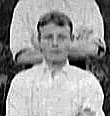
As we have seen, in 1911 he was living with his widowed mother, Eliza. At some point he enlisted in the army but unfortunately almost all his records have been lost or destroyed, like so many others.
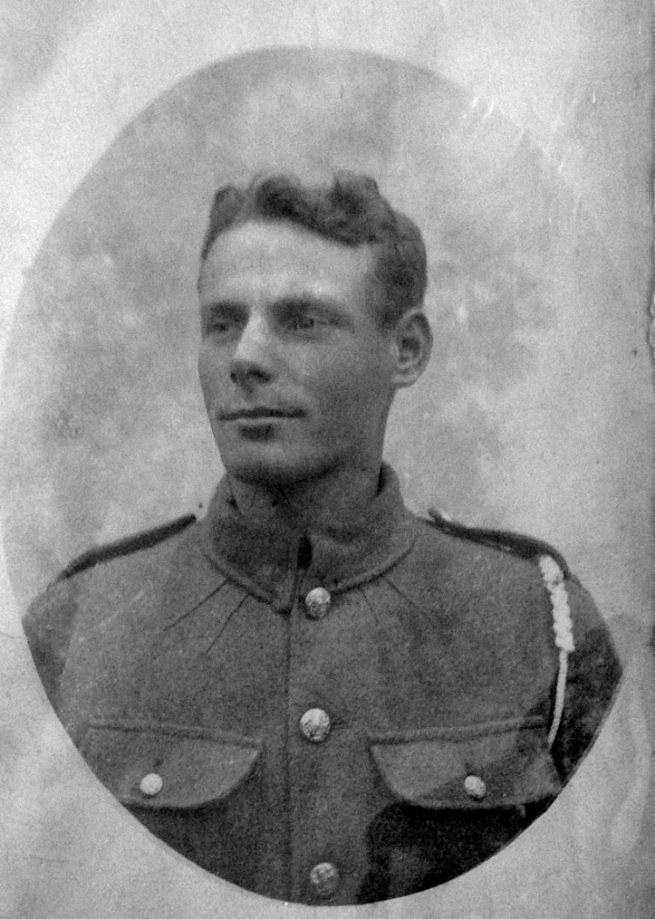
We do know that he joined the 9th (Reserve) Battalion of the Royal Warwickshire Regiment. We have his Medal Roll and the Ringstead Absent Voters’ List confirms that his Regimental Number was 12526. He entered the “Balkans Theatre of War” on 25th September 1915. He would have missed the terrible carnage that the Battalion, as part of the 39th Brigade, had suffered that summer in the Gallipoli area. He would have been part of the draft of new soldiers sent out to bring the Battalion back up to strength. Unfortunately, this was to be a recurring necessity.
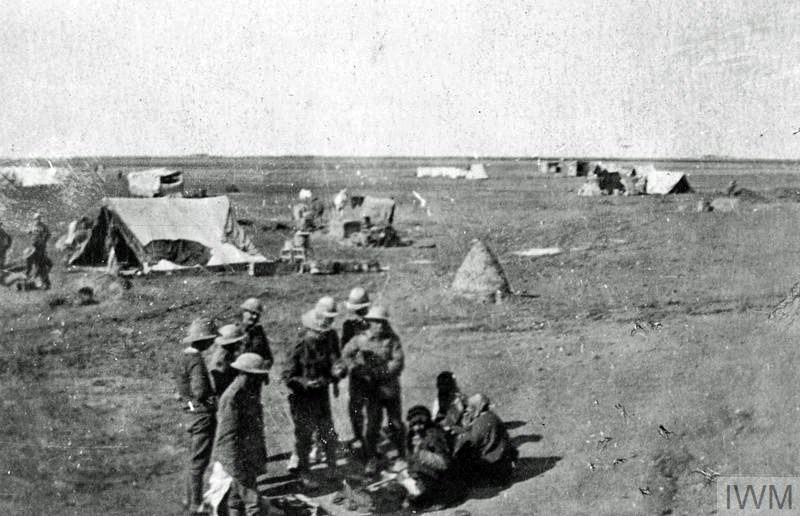
He would have joined the 9th in trenches near, what was called by the soldiers, “Chocolate Hill” because of its dark soil, where the 39th Brigade were pinned down, unable to move forward. On November 26th a torrential rainstorm broke and the trenches, cut out of the hard rock and clay, quickly flooded. At the time the 9th were resting in the reserve trenches where at least they could move around. Even here, the dugouts were flooded and washed away. Worse was to come, for the rain was followed by bitter frosts and then by blizzards of snow.
They were unable to light fires so the officers attempted to keep the men warm by marching them up and down and rousing those who fell asleep. There were many cases of frostbite and nearly two thirds of the Battalion were sick. When the weather abated it took some ten days to repair the trenches and dugouts while the men sheltered as best they could in holes and hedges.
Evacuation began in December and the whole of the battalion successfully embarked for Lemnos, a Greek island south-west of Gallipoli, and a short period of rest. They did return to the trenches again but it was realised that the enterprise had failed and the army was evacuated from Gallipoli. George would have sailed with the remnants of the Warwickshires to Port Said in Egypt, at the northern end of the Suez Canal.
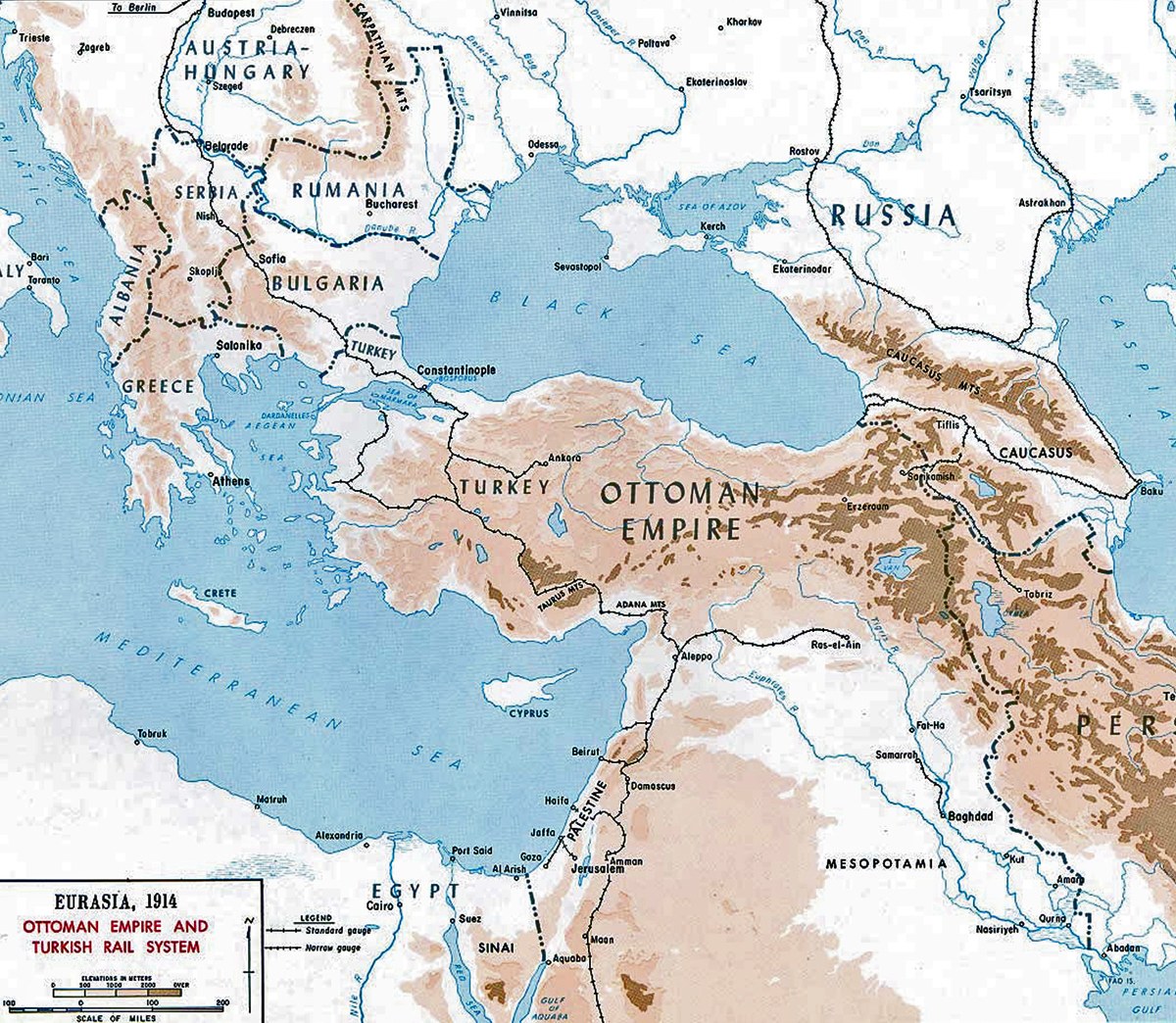
Any respite was only temporary for they moved on into the area then called Mesopotamia, (mainly modern Iraq), reaching Basra (Basrah) where they disembarked. They journeyed up the River Tigris, reaching Sheikh Saad (Shayk Sa’d) on March 21st 1916. This area had been a part of the Ottoman (Turkish) Empire but only loosely held, mainly through local tribal leaders. The focus of the fighting was to relieve the town of Kut. Within a few weeks almost all the officers and many of the troops had been killed and some were forced to surrender. This pattern continued with the Warwickshires showing great courage in the face of a much larger army. Two of their officers were awarded the V.C. in this campaign.
The Battalion moved forward as part of the 39th Brigade, finally reaching Baghdad. The relentless fighting continued, the searing heat which producing shimmering mirages which masked the enemy’s positions. As on the Western Front it was a warfare of small gains and terrible casualties often fought in almost unbearable conditions.
From late 1917 and into April 1918 the 9th, as part of the Brigade. were at Deli Abbas and Nahrin Kupri where they were victorious and took 1400 Turkish prisoners. They then moved into Summer quarters at Abu Said but on 10th July 1918 were ordered to proceed to Persia (now Iran). The civil war of the 1917 Revolution had left Russia unable for a time to maintain an organised army. As a result, the German and Turkish armies had once more moved into Persia.
The final destination on the Allies was Baku on the Western coast of the Caspian Sea, with the task of safeguarding the oil wells there from the Turks and their German masters. The Royal Warwickshires travelled by train from Abu Saida to Ruz and then by lorry over the mountain to Hamadan. After ten days rest they marched over the Sultan Bulaq Pass to Kasvin (Qazvin). There they rested before being carried on by lorry to Kazian (Qaziyn) where they embarked for Baku.
Again, it was not a successful campaign and the British suffered a number of defeats losing many men, wounded, killed and taken prisoner. Once more they were forced to make an organised retreat to waiting boats and safety. On 28th September 1918 the Battalion sailed across the Caspian Sea to Krasnovdsk in Russia (now Turkmenbashi in Turkmenistan) on its eastern shore. Here George and his comrades would have stayed until April 1919 helping to protect the railway against the Bolsheviks.
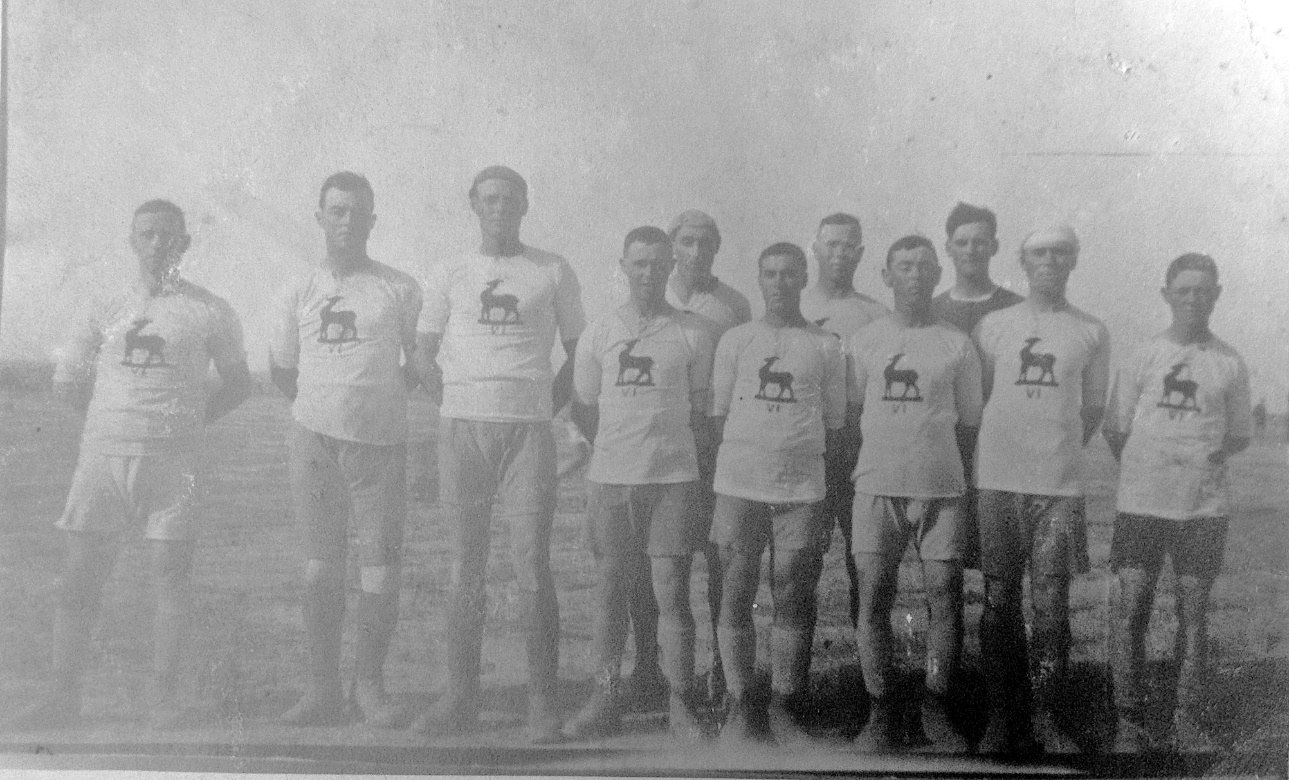
The family believe that he served in India. I have not found written evidence for this but in 1918 in the Royal Warwickshire 9th Battalion War Diary there are a number of “Leave Parties” bound for India. I think this must have been in lieu of home leave for the soldiers. Certainly, the photographs which George’s son-in-law Alan Clipston has allowed us to use confirm that George was in India with the army. One photograph shows Dagshai a hill station in Northern India which had army barracks and gaol and was built originally as sanatorium for T.B. patients. An ideal place to recuperate, away from the burning heat of much of the campaign.
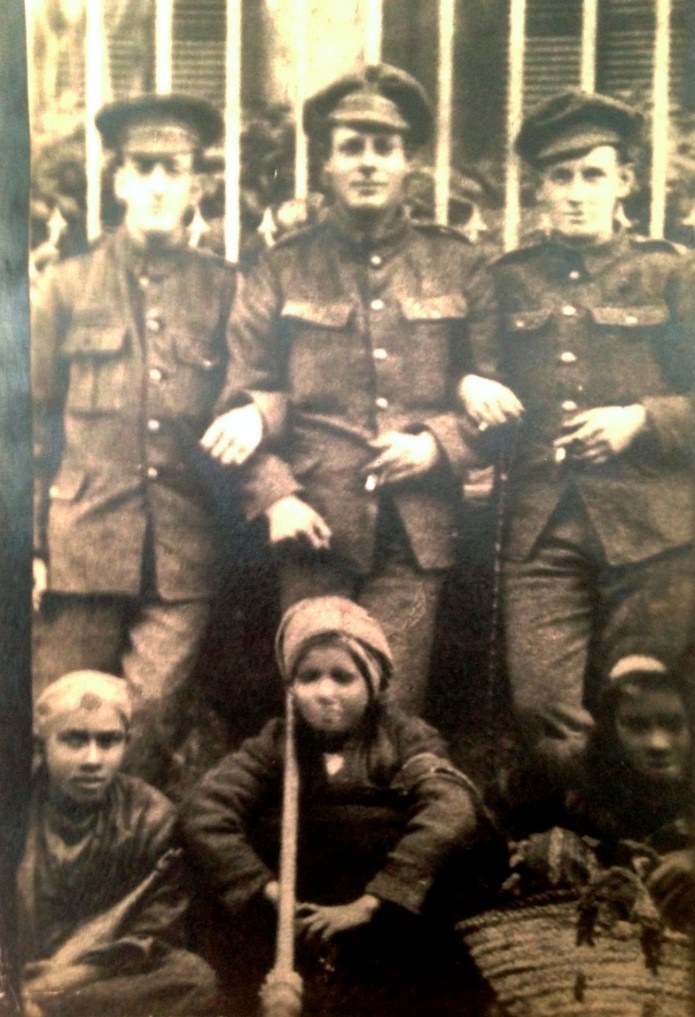
By now the war on the Western Front was over and the attritional fighting had stopped. Early in April 1919 some of the 9th Battalion started the long journey home and, although the rest continued in the area, their numbers had fallen to five officers and 67 men. These last remnants of the 9th were transferred to the 9th Worcesters and the 9th Battalion of the Royal Warwickshire Regiment was disbanded.
It seems likely that George Abbott returned with the first group. He appears to have been a brave reliable soldier and at some point was promoted to Corporal and probably to Sergeant. He was awarded the Victory, British and 1914/15 Star medals. At his demob on 31st July 1919 he was put on the “Class Z” list which meant they he might be called up if the Peace Treaty collapsed and there was another war or emergency. Fortunately for George it took another twenty years for this to happen.
George had endured 3½ years of continual warfare in burning heat and bitter cold with little respite and no chance to take home leave. He would have seen friends and colleagues in the 9th Battalion killed and wounded. The final release back to his home village and family must have been a wonderful feeling but many found it difficult to fit back into the lives of people who would have found it hard to comprehend what the soldiers had endured and seen during the war.
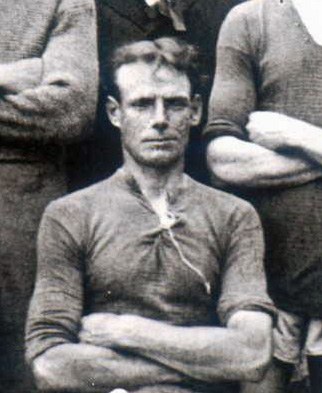
Nevertheless, he had to settle back into civilian life and early in 1925 he married Clara Braybrooke Smith. Clara had been born in Denford, on 27th April 1889, the daughter of Frederick Smith and his wife Lucy Elizabeth (née Braybrooke). Going back to the 1911 Census for Denford, Frederick had been a ganger in charge of a platelayer crew, working for the Midland Railway Company. Clara was an Elementary School Teacher.
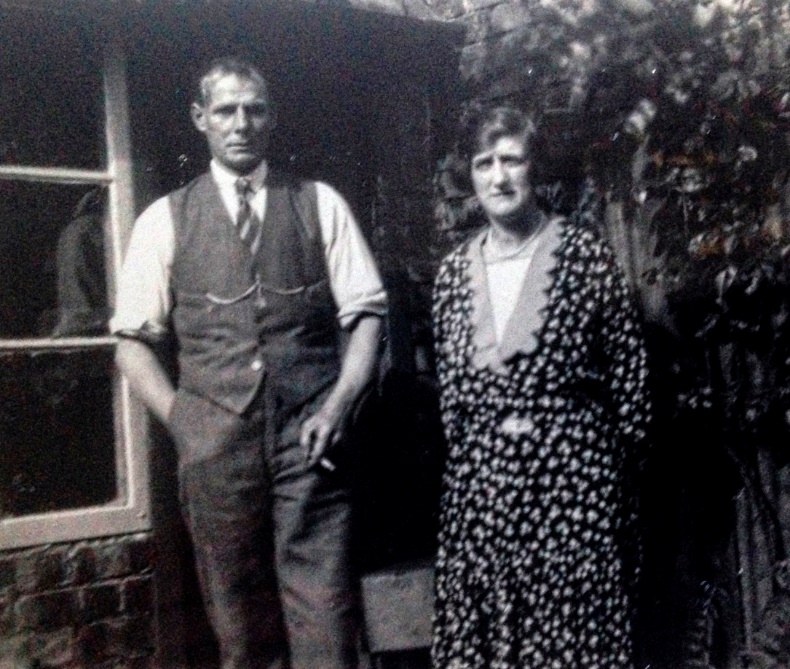
George and Clara had married late and had one daughter called Jean in 1927 who later married Alan Clipston. The 1939 Register has George and Clara in Church Street (I think the Register wrongly has Clara’s middle name as Bertha). George was a handsewn boot maker, one of a diminishing breed. Clara was still an Elementary School teacher. They were just a few doors away from Harold Coates, the Ringstead Headmaster and his wife, but Clara would bike every day to Titchmarsh to work in the school there.
George died, aged 58, on 8th October 1946 having seen another World War come to a close. Clara lived another 25 years, dying in 1971, aged 81 years.
Ted Abbott (1890-1963)
Ted Abbott was born on 27th August 1890, some 2½ year after his brother George. It seems, from the Register of Births and Deaths, that he was christened “Ted” and it was not a nickname. He attended the local Ringstead School and then went into the shoe trade, like his father and brother. In 1911, after the death of his father, he was living with his widowed mother, Eliza, and his siblings.
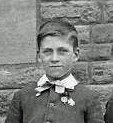
Unlike his older brother, Ted married before he went into the army, on 5th September 1914, just weeks after war had been declared. The marriage took place in Raunds and his bride was Ada Ellen Perrin, some three years his junior. Their first child, Rosalie Irene, was born in Raunds, 5 months later, on 20th February 1915. At the time they were living at 5 Wellington Road in Raunds but they soon moved to Ringstead High Street.
Ted first attested (joined up) in Raunds on 10th December 1915 and was put in the Army Reserve. He was 24 years 3 months old, 5ft 9inches tall, with a 34-inch chest when fully expanded. It was not until 15th January 1917 that he was “mobilised” and joined the Northamptonshire Regiment 7th (Service) Battalion (Regimental No. 202973). He reported three days later to the Territorial Force Depot 13 which was in Clare Street in Northampton.
The “Service” Battalions were ones raised at the beginning of the war from civilian volunteers. The 7th was known as Mobbs Own” after Edgar Mobbs, a famous rugby player, who was one of the first to volunteer and whose charisma prompted many others to join up. Unfortunately, most of these men, like Mobbs, had been killed by 1917 and the majority were, by this time, conscripts.
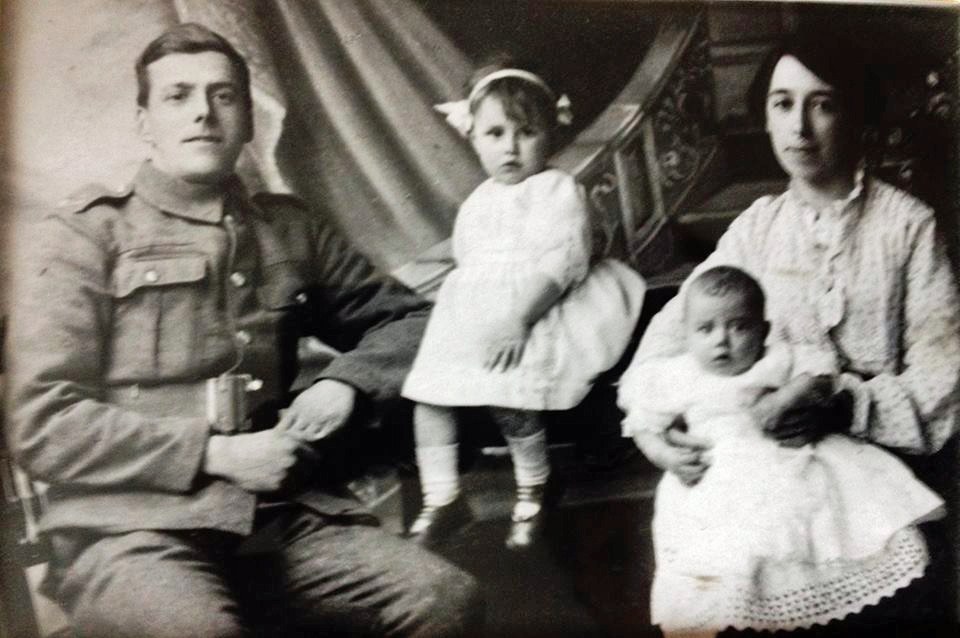
The 7th (Service) Battalion of the Northamptonshire Regiment embarked for France and, on 24th April 1917, they were at an Infantry Base Depot (IBD). This was a holding camp in northern France, near the coast where the men would be kept in training until they were moved up to the front. The 9th had been in France since 1915 so he would have been part of a draft replacing the sick, wounded and the dead. It is not clear if he had ever been moved up to the front line but he was only in France 43 days. On 3rd June 1917 he was diagnosed with an “inflammation of the connective tissue of the left heel” which could have been caused by too much “square-bashing” on hard surfaces. He was taken via the 138th Field Ambulance to No. 17 Casualty Clearing Station and returned to England for treatment.
He was back in England for 222 days before he was posted again to the Base Depot in France on 15th January 1918 before being posted back to the 7th Battalion of the Northamptonshire Regiment a day later. On his record sheet it states that he would now be in the Northamptonshire 6th “for Record Purposes” but it seems clear that he remained with the 7th and any stay with the 6th was only temporary.
He remained in France for 1 year 16 days. Returning home on 31st January 1919, some two months after the war had finished. It was in this period that Ted met Charles Laughton, who later became one of the most famous screen and stage actors of his generation. Laughton, born in Yorkshire, had originally been part of the 2/1st Huntingdonshire Cyclists (“The Gaspipe Cavalry”) but finished up in the 7th Battalion of the Northamptonshire Regiment at the same time as Ted. After the war Ted and Charles exchanged a number of letters before fame and fortune beckoned for Laughton. Ted’s descendants still treasure these letters.
In 1919, a former captain in the 7th Northamptonshires, H.B. King, wrote a history of the Battalion in the First World War in which he told of the area in front of Hargicourt where the 7th had moved on 26th September 1917:
Not a single house had been left standing for miles round, and hardly even a tree; the roads had been blown up at junctions, and all railway lines systematically destroyed by the enemy before he had withdrawn . . . except for a few huts, there was neither cover for man or animal.
It was into this scene that Ted was taken into in January 1918.
As the “Revolution” of 1917 had for the time discounted Russia as an effective ally, the Germans began to make progress again and in early 1918 an offensive was expected between St Quentin and Cambrai. The 24th Brigade worked over the first three months of 1918 trying to build up strong defensive positions in the devastated countryside but the weather was very wet and the front was too long to defend along all its length. On March 21st when the Germans attacked, in what was called the Battle of St Quentin, much of the defensive system was still in the planning stage, or as H.B. King described it:
“. . . defences existed only on maps or in tape marks over the country-side.
The 7th, as part of the 24th Division had been had not been out of the line since the previous July but when it was clear an attack was imminent they were instructed that they would not be relieved. The Battalion were held in the Corps Reserve at Harcourt, ready to move to their allotted battle positions. At 4.30 on March 21st they moved up to these positions on high ground with trenches less than three feet deep and exposed to artillery fire. The enemy attacked in heavy mist and with its flanks overrun the 7th withdrew with difficulty to Harcourt. Their position was undefendable and further withdrawals took place to the high ground on the western bank of the Somme. In this withdrawal the troops had to cross a bridge at Falvey and the 7th were the last battalion to mount a rearguard to allow the retreat to the west bank.
After a brief respite the 7th were ordered to take part in a counter-attack but they were met by a much larger German force and were forced back to a line between Hallu and Chaulnes where they were placed on Brigade Reserve. Once more, they were called to the front and were involved in hand-to-hand bombing but the battalions on the flanks of the line gave way and, in danger of being encircled, the 7th had to withdraw again and again until they were given the task with others of defending the bridgeheads at Berteaucourt and Thennes.
The 24th Division had borne the attack of eleven German divisions from 21 March for some ten days although forced to lose ground in the process. They were finally relieved on April 5th. H.B. King wrote in 1919:
The whole army had been repeatedly threatened with annihilation, but the doggedness of the private soldier and the leadership of the subordinate commanders had saved everything; and the 7th Northamptons, though reduced in numbers, survived that period of stress as a unit – individually depressed, perhaps but collectively confident of eventual victory.
The 7th went on “motor buses to Saleux and by train to the mouth of the Somme at the village of Escarbotin, near St Valery. Here they were given new uniforms. They had a day on the beach at Ault where the companies were photographed. But the time away from the front was short-lived and after a ten-hour train journey and a nine hour march they arrived at billets at the small town of Houdain. German aeroplanes flew over on April 23rd and dropped bombs on the billet killing seven men and wounding nineteen. On the 30th they marched five miles only to be recalled when an attack elsewhere was expected. Next day they marched ten miles to Les Brebis and relieved the Royal Canadian Mounted Rifles in the “Hill 70” area which had been in German hands when the 7th had been in the area earlier in the war.
Hill 70 had a network of old mining tunnels through chalk which had been opened up by the 3rd Australian Mining Company and were a great defensive position but could be a death trap if there was a successful attack by the enemy. After a time at the Front Line they moved back to the Divisional Reserve positions where they spent the time making dugouts. There was no major attack but a form of influenza, sometimes called pyrexia (fever), or Spanish flu, broke out affecting some 200 men in the battalion and several thousands in the Division. Fortunately, it also badly affected the Germans. Within a fortnight, however, the worst was over.
Time passed, and the German attack did not materialise. The men spent their time on “spit and polish”. King, in a slightly surreal report, relates:
At the 24th Divisional Horse Show held on August 8th the 7th Northamptons won first prize in the heavy draught horse class as well as the “VC race” for other ranks.
There was still night bombing causing casualties, and fighting continued among the ruins of Lens, where the Germans had taken over parts of the city.
On 30th September 1918 the 7th were relieved and marched to huts at Compigny and then by a series of train journeys and marches they reached the Front Line some four miles south-west of Cambrai. The 7th Northamptons and Canadian troops captured Cambrai. At 5.30 am on the 9th October, the Battalion moved forward against a German defensive position in the village of Cagnoncles. They won the day but with the loss of some 90 men killed and wounded. When this stronghold fell there was little further concerted opposition as they moved forward to Avesnes (Avesnes les Auber). Nevertheless, they again saw action at Rieux-en-Cambresis and Haussy while trying to cross the River La Selle.
After almost continuous marching and action the 7th they went to billets at Cauroir, three miles east of Cambrai, for a week’s recuperation. Here the battalion won seven of the events in the sports arranged by the 73rd Infantry Brigade.
They were soon in action again and the 7th were detailed to capture the village of Wargnies le Petit, which they achieved, and then went into billets there, being treated well by the few French civilians still in the village. They then moved forward to Bavai (Bavay) and on to high ground east of Marivaux. On November 11th moving back to near Bavai the battalion learned that the Germans had accepted the Allies Armistice terms. It seems it was greeted with relief and thankfulness rather than euphoria. They had been part of a war of attrition, sometimes losing ground but maintaining their discipline in the face of overwhelming odds.
Although the Armistice had been agreed, a Peace Treaty had not yet been signed and the 7th remained in France for a further seven months. The battalion made a number of marches before billeting at Bachy where, discovering that the 2nd Northamptons were a few miles away, a football match was arranged which the 7th won 1 – 0. The billets here were poor so they moved to Tournai. At Tournai, after disruption caused by an unexplained fire, they billeted in an Asylum. Classes were held in Arithmetic, French and other subjects. Christmas Day 1918 was spent in the Asylum! On January 11th the first party of other ranks were dispatched to England and then continued once or twice a week.
Ted Abbott received an advance of £2 on his pay and was given a 28-day furlough on 31st January 1919. He was given a Protection Certificate and Certificate of Identity to prove he was not a deserter. His army career was over. He signed to confirm that he had no disabilities and was formally demobilised to “Class Z” on 28th February 1919 and he remained on this until 31st March of the following year. He was entitled to the British and Victory Medals. He returned to his wife and family in Ringstead and settled down to working in a shoe factory. It may have been a difficult transition.
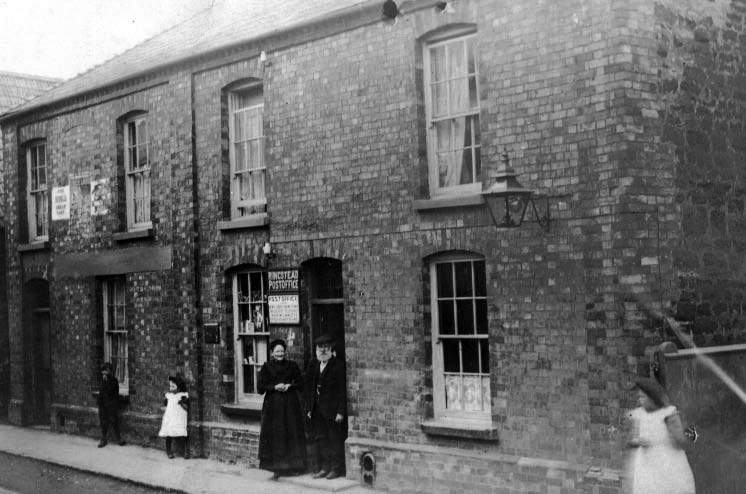
The couple had five more children after the war to follow Rosalie and Jack. They were Leonard (1919), Dora (1922), William (1927), Derek (1929) and Greta (1937).
As an aside there is a strange glimpse of him in the “Out of Town Bargain Section” of the Sheffield Independent in November and December 1930 where it lists:
£2 ELGIN WATCH silver, 8-day; Charles II 5/= 1673; two Motor Covers, Tubes hardly worn 26x3. Offers – Ted Abbott, Ringstead, Northants.
In the 1939 Register of England & Wales Ted is still a shoehand in a shoe room. He is with Ada and family in Ringstead High Street. At some point he had problems with his right leg due to poor circulation and had to have part of that leg amputated. He contacted a disease of the lung and died in Oundle Hospital in the last quarter of 1963 aged 73.
William Henry Abbott (1889-1978)
As we saw in the introduction, William Henry Abbott was the son of Joseph and Annie and cousin of George and Ted. He was born on 26th September 1889 and in the 1891 Census he was living with his parents and siblings in Chapel Road, Ringstead. His father was a grocer and coal dealer but by 1891 he had become a shoemaker so perhaps the business had failed. William’s older sister, Olive, was a pupil teacher and the other sister, Lilian was a shop assistant in the Co-op Stores.
I have not found William in the 1911 Census for he was not with his family. Also, when we look for his military career we find his records are part of the burnt papers which were destroyed in the Second World War by a German air raid. Much of William’s records did survive, however so we can follow much of his wartime life.
William signed a “Territorial Force Attestation Form” for four years’ service on 22nd November 1915 and was given the Regimental Number 5026. Initially the men signing up for the Territorial Forces were guaranteed only to serve in this country in defence of the nation. As the casualties mounted many volunteered to serve abroad and this guarantee was revoked. When William signed up he was 26 years 2 months old, 5feet 6½inches tall and had an expanded chest of 37½inches, with excellent eyesight and good physical development.
William was embodied into the 3/4th Battalion Territorial Force of the Northamptonshire Regiment. This Battalion had been formed on May 12th 1915 at Northampton, moved to Great Windsor Park and then In October 1915 to Halton Park near Tring in Buckinghamshire. On April 8th 1916 it became the 4th (Reserve) Battalion. Alfred de Rothschild had offered Halton Park as a training camp at the beginning of the war.
On the Long, Long Trail website it gives an insight into the what recruits should expect.
Training for ordinary Tommies began with basic training for physical fitness, drill, march discipline, essential field craft and so on. Later, as the soldier specialised (in the infantry, for example, as a rifleman, machine gunner, rifle grenadier, signaller or bomber, he would receive a course of instruction relevant to his role. Especially as he was approached being warned for the active fronts he would receive basic training in first aid, gas defence, wiring and other aspects.
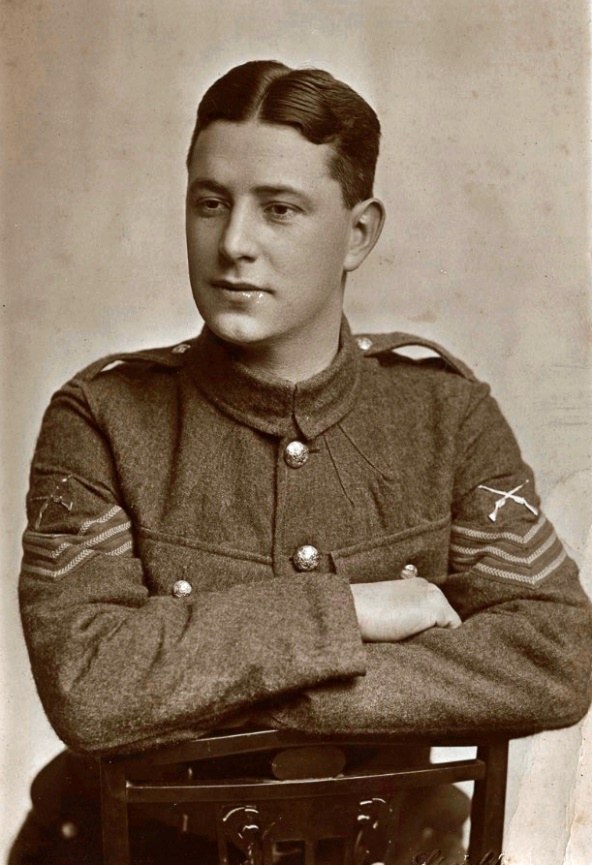
William’s fitness and leadership skills were quickly recognized and his record card shows him moving through the ranks from Lance Corporal to Acting unpaid Corporal to Acting Corporal (29th February 1916) and finally to Acting Sergeant on 22nd November 1916.
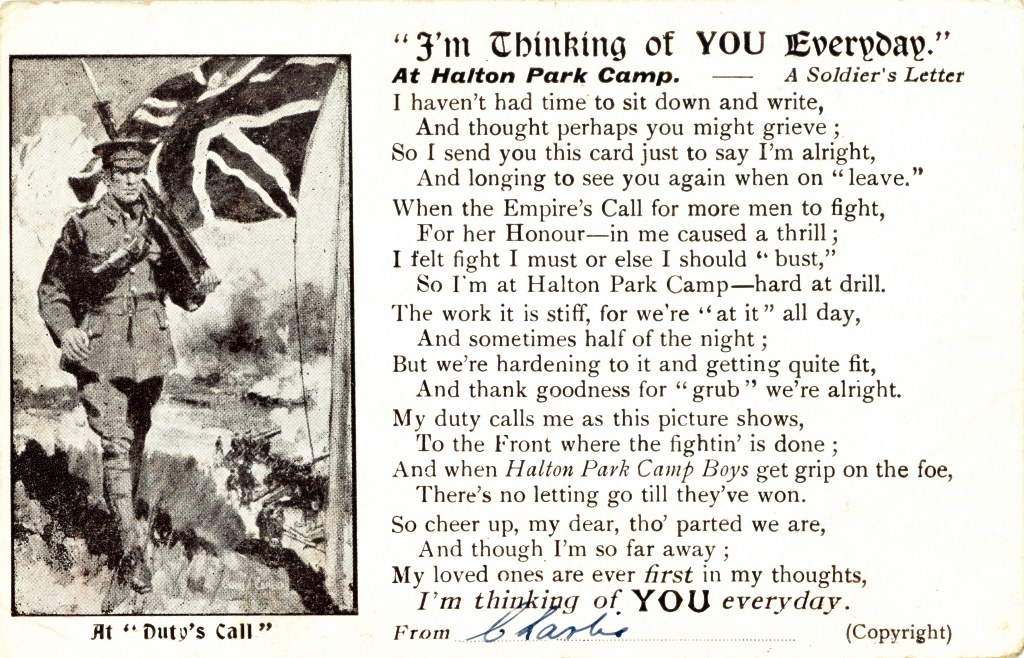
It seems likely that William’s main role was as a PT Instructor getting the new recruits fit enough for useful service at the Front. The British Establishment was appalled at the terrible physical state of many conscripts especially from the poorer areas of cities like Glasgow.
In August 1917 the 4th moved to Crowborough in East Sussex. For William, his time in the comparative safety of English countryside would soon be over. On 27th February 1918 he was posted to the Light Infantry Base in France and he joined the 7th Battalion of the Northamptonshire Regiment. His territorial promotions counted for nothing here and he “reverted to Private” on embarkation. He was given the new Regimental Number of 201286.
As we have seen his cousin, Ted Abbott, had been posted to the 7th and returned to France on 15th January 1918 after more than a year away due to an ankle injury. The first three months of 1918 were spent in trying to build up the defences in their area and it was at this time that they would probably have met up again. From then on, the two cousins would have been involved in the same military actions so we will not describe these again.
William had to revert to Private but, unlike Ted, he once more moved up the chain of command. He became an unpaid Acting Corporal on 8th April 1918, possibly helping to run the sports when the 7th had a brief respite on the coast near St Valery. For some reason, he fell foul of his superiors, for on 25th May 1918 he reverts to private “for inefficiency” the next day, however, he was appointed to unpaid Lance Corporal and on 5th December to Acting Sergeant.
William’s only injury had been when he sustained a sprain to his left ankle on 3rd October 1918 while on duty but he was stated to be “not to blame”. It was not a deliberate injury to buy him a ticket home.
The Armistice was signed on the 11th November 1918 but, as we have seen with Ted, the 7th stayed in France into the new year. William signed his Disability Statement on 20th February 1919 and on this he is shown as Sergeant, so it seems that his promotion had been confirmed. He was examined in France and signed to confirm that he “was not suffering from a disability due to my military service”. He was given a Protection Certificate and Certificate of Identity at Purfleet on 1st March 1919 and was given a 28-day furlough. He was “disembodied” on 29th March 1919.
Oddly, the Medal Roll only has him listed as a Corporal but this may have been written up before his later promotion was established. He was entitled to the Victory and British Medals for serving in active theatres of war. William’s war was over and for him there appear to have been, among all the slaughter and mayhem, some benefits. In the British Trade Union Members Service and Casualties List 1914-18, published in 1920, a W. H. Abbott is shown as a member of the National Union of Teachers who served in the Great War. The Union Board was Oundle but this probably included the Ringstead area.
William would have had to settle back into civilian life and after all his injury-free time at the Front the Northampton Mercury reported:
Mr. William H. Abbott of Ringstead, who recently suffered serious injuries in a motor accident is making good progress in Kettering Hospital.
It seems that William went into teaching almost immediately after he returned, probably as a PT Instructor in a school, although this is not confirmed. We do know that he was a teacher from the following report in the Northampton Mercury on Monday February 19th 1923 under the heading “Physical Education”,
The Elementary Sub-Committee reported that the Board of Education had intimated that the services of Mr. W. H. Abbott as Physical Training Demonstrator and Organiser could not be treated as “recognised service” for the purpose of the School Teachers’ (Superannuation) Act, 1918, and that Mr. Abbott had made application for an increase of salary to compensate him for the loss of pension rights consequent on this decision.
Mr Allebone said that the Board had treated the Committee in a mean and contemptible manner over this appointment, which was only made somewhat reluctantly, at the request of the Board. They could, of course, terminate Mr. Abbott’s engagement and let him return to his old job as a teacher, but he thought the present work should still be carried on whatever the Board might say.
It was decided that Mr. Abbot re re-appointed as from December 18th, 1922, at a salary of £303. 6s. 9d., rising as from April 1, 1923, to £325.
Perhaps William was thinking of safeguarding his future life for, in 1924, he married Kathleen Bull. In the 1911 Census, Kathleen, daughter of John Bull and Emily, was an assistant teacher. Her father was the local Ringstead tailor.
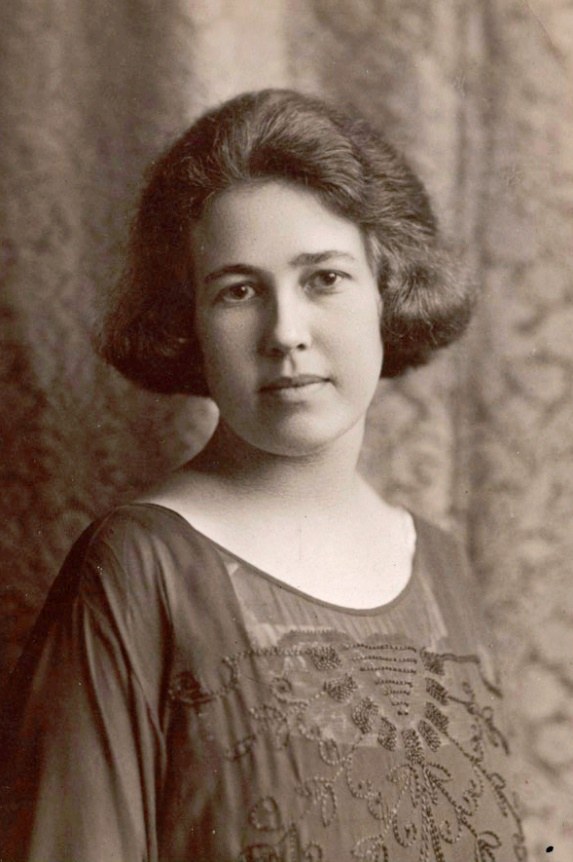
Over the next decades we see William setting up a number of successful sporting bodies and running events. He was secretary of the Leather Trades Athletic Association and in April 1927 William, as the County Organiser of Physical Training for Schools, convened a meeting at Wellingborough to form a Northamptonshire Schools Athletic Association and to affiliate to the national body. In the years that follow we see William organising an annual Schools’ Championships.
In 1939 the England & Wales Register shows that William and Kathleen, with daughter Jean were living at 44 Lime Avenue in Northampton. His occupation was given as, “Local Government Officer Physical Training Organiser”. The last mention I have found of him in the newspapers is at the Northamptonshire Schools Athletic Association’s 16th annual championship at the Richard Thomas and Baldwins Sports Ground. The Northampton Mercury of 7th July 1950 reported that the meeting “marked the retirement after 23 years of service as secretary and treasurer of the N.S.A. of W.H Abbott, County P.T. Officer”. He was presented with a cheque in recognition of all his hard work.
William would have been about sixty years’ old. I am not sure if this was also the end of his working life.
We do know that the couple moved to Mersea island, near Colchester, in Essex. William died there in 1978 aged 88 and Kathleen followed him a year later aged 87.
.