The Great War: A–M · Story 37
The Other Mayes Family
Hubert Stanley Augustus Mayes (1894-1986)
Stanley, as he was usually known, was born in Ringstead on 26 May 1894, the eldest child of Harry Abbott Mayes and Edith Ellen Mayes. His father, Harry, was a shoemaker, born in Ringstead in 1872, the fifth of the ten known children of William Farey Mayes and Mary Elizabeth Mayes (née Abbott). William, also a boot and shoe maker in the village, was the son of another Ringstead shoemaker, William Pariss Mayes.
Stanley’s mother, Edith Ellen Mayes, had been born in Ringstead in 1873, the illegitimate daughter of Phoebe Mayes, a shoe stitcher. Phoebe was the daughter of Ringstead labourer, George Mayes and his wife Ann (née Ball). Phoebe later married Joseph Rowlatt in Ringstead on the 25th December 1875 and went on to have a further ten children from this marriage.
Stanley had three younger siblings: Harry Irving Mayes, born in 1897 at Ringstead, Arthur Edward Mayes, born in 1903 at Ringstead, and Hilda Phyllis Mayes, born in 1908 at Raunds.
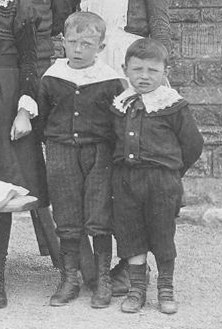
He was a pupil at Ringstead village school and was very proud of his time there. As a five-year-old, he was awarded a Certificate of Merit for Proficiency in Religious Knowledge, dated 31 July 1899, and signed by Thomas W. Johnson, the headmaster. He always treasured this and his two school photographs, one of which also featured the father and aunt of the first female Prime Minister, Margaret Thatcher.
His musical talents were apparent from early childhood. The Northampton Mercury reported, in November 1902, an evening of entertainment by the children of Ringstead Baptist Chapel at the Temperance Hall. Stanley, aged eight, sang and played a piano solo.
In the 1901 Census, young Stanley was with his parents and brother, Irving, at 9 Gladstone Street in Ringstead. One son, Arthur was born there in 1903 but by 1906, at the latest, the family had moved to Raunds. We know that, because the father, Harry, had been a Baptist, he may have had a minor crisis of faith and was baptised in Stanwick Parish Church on the 4th March 1906. The Register shows that he was living in Raunds at the time. The next month, on the 29th April, his three sons, were also baptised in Stanwick. It is in the Baptismal Register that we see that Stanley had an impressive list of names, Hubert Stanley Augustus Mayes, although, as we have said, he was usually known by his second name only.
Stanley’s enthusiasm for music continued to develop and in 1908, at the early age of 14, he had become the organist at St. Laurence’s Church in Stanwick,. This was a position he held for many years, until well after the First World War. His very first organ recital took place there in 1911. In his youth, he also achieved success at various Northamptonshire vocal and instrumental competitions - for example, at Oundle in 1909.
In the 1911 Census, the family were living at 24, Wellington Road in Raunds and Stanley, aged 16, was described as a “Clicker” and his father as a “Boot Maker”. The clickers, who cut out the pieces from the hide, were considered the most important and skilled of the shoemakers so he was very young to have this responsibility. Stanley’s work in the shoe trade and as church organist continued after the outbreak of war. However, he was soon to witness the tragic repercussions of war, in December 1914. The Northampton Mercury reported on the funeral at Stanwick of the Rector’s son, Private Frank Leonard Richards of the 12th Royal Fusiliers. Aged 20, he died of pneumonia on 11 December, following a chill contracted while in camp at Shoreham. Stanley was the organist at the funeral service.
On 24 May 1915, two days before his 21st birthday, Stanley married Pauline Farey at St. Mary’s Church, Rushden. There is a very detailed report on this “very pretty motor wedding” in the Rushden Echo on 28 May 1915. The article noted that “the happy couple left by the 2.49 train en route for Bournemouth, where the honeymoon is being spent.”
Pauline also had family ties with Ringstead. She was born in Rushden on 22 July 1892, the only child of George Farey and Jessie Mary (née Tyrer). George Farey had been born in Rushden in 1866. He was a Boot Clicker by profession, but also a very talented and well-known musician. He gave public performances from an early age, singing, piano and organ being his specialities. He was the church organist at the Baptist Church in Rushden for 20 years. In 1911, when Pauline was aged 18, her father left for Canada, to find work in Toronto, but sadly, only two years later he died there of pneumonia. George’s father, Ebenezer Joseph Farey, born into a family of Ringstead shoemakers, had moved to Rushden with his parents as a small child. On her father’s side, Pauline Farey was a direct descendant of Leonard Joseph Abington, the Baptist Minister in Ringstead from 1830 to 1842.
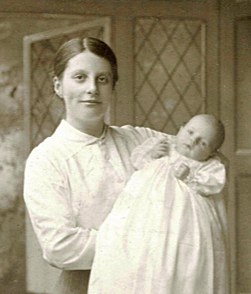
Pauline’s mother, Jessie Mary Tyrer, was born in the Liverpool area in 1863. She trained to be a teacher at Warrington Training College and her career took her to Northamptonshire, where she was Headmistress at Rushden South End National Infant School from 1886 until 1892. After her marriage and the birth of Pauline, Jessie set up her own Private School and Kindergarten in Rushden. She was only 48 when she died in 1912.
As a child, Pauline lived with her parents in Rushden, initially at 11, Griffith Street, and then by the 1901 Census at 39, Grove Street. After the deaths of her parents she lived with her paternal grandfather, Ebenezer Joseph Farey, at 14, Park Road in the town.
Following their marriage, Stanley and Pauline moved to Brookside in Stanwick, within a stone’s throw of the church where he was organist. However, the happiness of their early married life was to be interrupted by World War One.
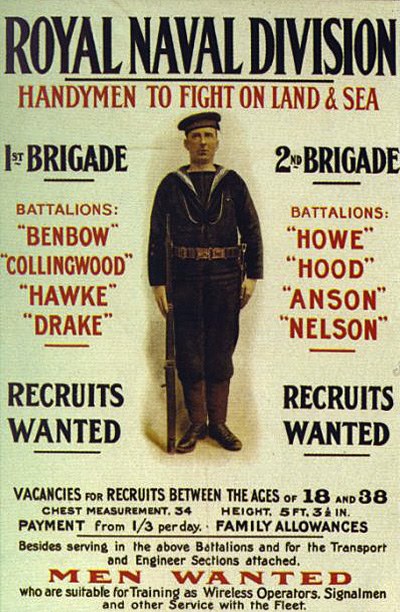
On 16 February 1917, Stanley enlisted in the Royal Naval Division. This unit had been advertising widely in the area from 1915 with a football match against “The Cobblers” and an event in the New Theatre in Northampton. An advertisement in the Northampton Mercury on 12th May 1915 also told of a list of “Separation Allowances available to the family of men who “allot at least 20s [£1] a month to their family”. His Service Record describes him as over 5 ft 7 ins in height, with a 34 inch chest, a fresh complexion, brown hair and blue eyes. Two scars were noted on the left knee and one on the right knee.
Stanley’s civil occupation was given as the “Boot Trade”, his religion was Church of England, and, importantly, he could swim. His next of kin was his wife, Pauline Mayes, and their address was Brookside, Stanwick, Northants.
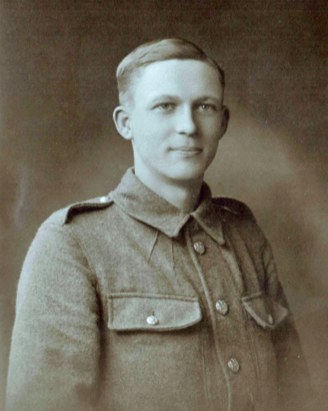
Stanley’s initial rank was Ordinary Seaman, with Service Number R/762. He was mobilised on the 20th February 1917 and attached to 3rd Reserve Battalion which was at Blandford Forum in Dorset. The British Naval Division was a strange land fighting unit made up initially from Royal Navy and Royal Marine reservists who were not needed for service at sea. In 1914 two Naval Brigades and a Brigade of Marines were hastily formed.
The first men did not have khaki uniforms and lacked basic equipment like mess tins and water bottles. They also had very old charger-loading rifles and had no artillery or field ambulances. Their first engagement was the defence of Antwerp which, not surprisingly did not go well. They did manage to withdraw successfully, but with many men captured and interned in Holland. After a proper refit and reorganisation they were sent to Egypt and took part in the Gallipoli Offensive, a terrible campaign that cost many lives. In April 1916 they were redesignated as the 63rd (Royal Naval) Division and moved to France the following month. By this time very few of the men remained who had seen sea service.
The rest of the war the Division served on the Western Front as a normal infantry unit and took part in the Battle of Ancre towards the end of the Somme Campaign. They continued in the Ancre area into 1917 and then fought in the Battle of Arras.
It was not until the 9th July 1917 that Stanley was drafted into the Hood Battalion of the 63rd (Royal Naval) Division. The following day, having been now rated Able Seaman, he embarked at Folkestone for Boulogne. On 11 July, he joined Base Depot at Calais, finally joining the Hood Battalion on the 29 July. The campaign known as the Third Battle of Ypres was about to begin.
According to his service record, Stanley very soon was given leave to the UK between 30 August and 9 September 1917. His wife Pauline had given birth to the couple’s first child, Hubert, in early 1917, but the baby later died. Stanley wrote on the reverse of Hubert’s photograph: “Hubert. Died September 1917 whilst I was in France”. Presumably, the leave to the UK was on compassionate grounds.
On his return to France, Stanley received a gunshot wound to his face and was sent to the 149th Field Ambulance on the 18th September. Luckily it was only “slight” and he was patched up, given 500 units of Anti-Tetanus Serum, and sent back to his unit the following day.
He was soon back in the Front Line and was injured again, on the 23rd October 1917, during the final phases of the Third Battle of Ypres often known as the Battle of Passchendaele. This time he was sent to the 148th Field Hospital and, after treatment, was first posted to the Depot Battalion, on the 30th October, before returning to his Battalion on the 10th November 1917, a date which is usually recorded as the end of the Battles of Passchendaele. .
In the first half of 1918, Stanley’s record shows that he was moved around several times. On 1st January 1918 he was posted to the 63rd Royal Naval Divisional Wing as an Office Orderly but rejoined Hood on 29th March. Then, on 6th April, he was transferred to Hawke Battalion. His service record states that he was cross-posted (which was an exchange of personnel) to Hawke Battalion on the 14th June.
Between 21st August and 4 September 1918, Stanley was given 14 days leave to the UK, via Boulogne, missing the Battles of Albert and Drocourt-Queant. On 21st September, he joined the 63rd Royal Naval Divisional Headquarters.
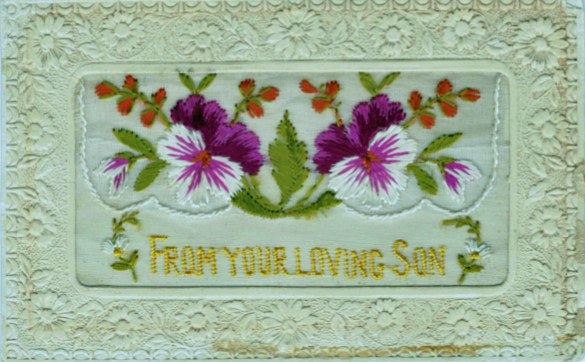
After the war ended, he remained in France until 11 February 1919. During that time, his musical talents were put to full use, when he became conductor of the 63rd Divisional Orchestra. He sent his parents a postcard embroidered “From Your Loving Son”, and wrote the following:
Am getting on well with the orchestra and are going to perform before the general tomorrow. I hope we get on well as it’s the job of a lifetime. Send me some good uptodate waltzes and ragtime as soon as possible.
He was finally demobbed on 13th February at Fovant which was a camp on Salisbury Plain. M.A. McKenzie of the Fovant History Interest Group has written:
When the fighting finished Fovant was one of three camps in the South West designated as demobilisation centres for returning soldiers. Soon trainloads were arriving to hand in their uniforms and weapons, receive civilian clothes a small amount of money and train ticket home. Some days as many as 40,000 were processed in a day. Unfortunately, more than train tickets were needed for the Australian soldiers who stayed in Hurdcott for many months. Lacking the motivation of training and the structure of army discipline, boredom quickly became a problem. Unlike the fatal rioting on the Plain there was a little “rowdyism” at Hurdcott. One farmer tells of being stopped by a barricade at the camp entrance and made to drink a pint of beer with the ‘guard’ before being allowed to continue to his home at Fovant.
Stanley received his £10 10s and, like the men in the quotation above, he returned home. He had survived the war, but the horrific memories were always with him. In 1964 he visited Ypres for the 50th anniversary of the start of the Great War, to honour his fallen comrades.
On his safe return from the Western Front, Stanley resumed his role as organist and music teacher at Stanwick for a short time. However, by 1920, his musical career had taken him in another direction. Pauline and Stanley left their beloved Northamptonshire for him to become organist, choirmaster and music teacher at Worksop Priory in Nottinghamshire.
Around 1926, the couple and their two small children moved to Derby and in 1929 they were living there, at 4 Queen Street, before moving to 46 Kedleston Road by 1931. Initially, Stanley was employed in the leather trade, although his musical interests were still a huge part of his life. Indeed, he was very proud of the fact that he was invited to participate as choral conductor in two Royal Command Concerts at the Albert Hall in 1934 and 1938. By 1938 the family were living in 53 Stafford Street and in the 1939 Register of England and Wales the couple were there and Stanley’s occupation was shown as, “Leather Warehouse Tanner – Unemployed”.
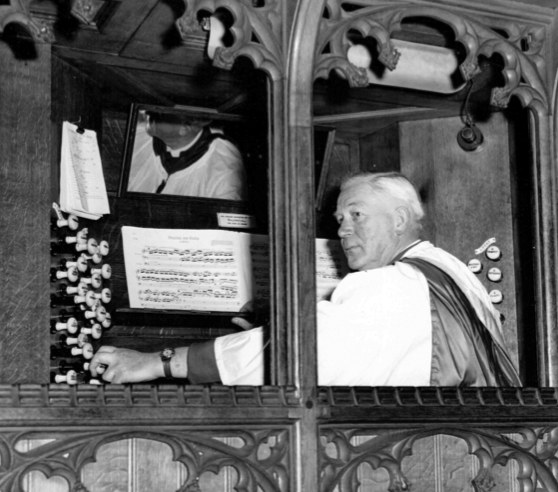
During this time Stanley held an astonishing list of musical posts in the Derby area. Besides being a private music teacher, he was Conductor of the Derby Orpheus Choir; of the Derby Co-operative Society Choir and Orchestra; of the Melbourne Male Voice Choir (eight miles south of Derby) and of the L.M.S. Choral Union and of the Operatic Society. He was also Organist and Choirmaster of the King Street Methodist Church.
Outside music, he was adopted as a Labour candidate for the local elections and was elected a Councillor in 1938. Music, however, was always his first love and, in 1942, he returned to it as his full-time occupation. He was appointed organist and choirmaster at St. Werburgh’s Church in Derby - a position he held until his retirement in 1960. In his later years he acted as an adjudicator at various festivals and competitions. He was honoured to be elected in 1956 to the Honorary Fellowship of Trinity College of Music, London, in recognition of his service to music.
The couple returned to Rushden for a brief period after Stanley’s retirement, but then moved back to Derby to be near their family. Pauline died in 1979, but Stanley lived for another 7 years. In his final years he was living in a nursing home in Louth in Lincolnshire to be near his daughter and her husband who had retired there. He died on the 29th April 1986 in his 92nd year and was cremated at Grimsby Crematorium. He was one of the lucky ones who survived the First World War and had afterwards been able to lead a long and rewarding life.
Harry Irving Mayes (1897-1970)
Harry Irving Mayes, the younger brother of Stanley Mayes, was born on the 27th July 1897 (wrongly put as 1898 in the Death Index) and christened with his younger brother, Arthur on the 29th April 1906 at Stanwick Parish Church. He had moved, with his parents, Harry and Edith from Ringstead to Wellington Road in Raunds around the year 1905. In 1911 Harry Irving, usually known by his middle name, was aged thirteen and working as a baker’s assistant.
On the 24th May 1915, he was the best man at the wedding of his brother, Stanley, in Rushden Parish Church. The terrible nature of the war was now known to everyone and the early optimism of a quick victory was dissipating. Conscription came, in early 1916, and Irving was enlisted in the Royal Sussex Regiment in the mid-May to mid-June period of that year. The 1918 and 1919 Absent Voters’ Lists for Raunds show Harry Irving Mayes home base as Wellington Road and his unit as the 1st Sussex (11788).
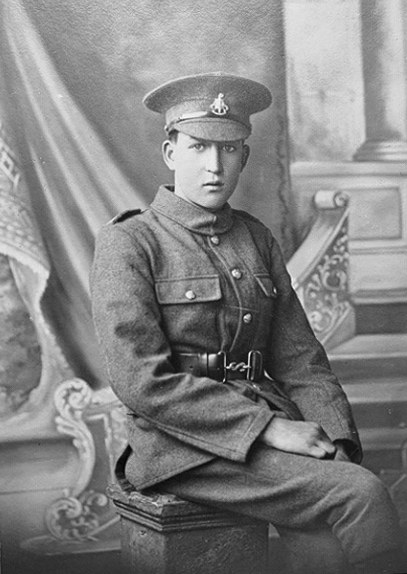
It seems that Irving was fortunate, because the 1st Battalion was the one of the few infantry battalions that remained in India throughout the war. Almost all the Regular Army Battalions stationed there, were posted to the Western Front and their places taken by the various Territorial, Volunteer and conscripted units that were raised after the beginning of the war. It is said that the 1st Battalion asked to fight alongside the other Regular Battalions but to no avail. For the few replacement conscripts, it hugely boosted their chances of survival. During the war, the 1st Battalion lost 44 men whereas the 2nd Battalion lost 1723.
The 1st Sussex was part of the 1st (Peshawar) Division of the Indian Army, moving to the 2nd Rawalpindi) Division in December 1917. There is however a problem because it shows on the Medal Roll that, although retaining the same Regimental Number, Irving was posted to the 40th Division Signal Company and then the Signal Service Company and finally the “A” Company of the Signal Company. As he retained his Regimental Number this would have been an attachment rather than a transfer. It is known in his family that he served in India, so it seems certain that he did travel there initially. He would not have been 19 years old until the 27th July 1916 so probably did not arrive there until after that date.
Looking at the Medal Roll for the Royal Sussex Regiment, the thirty-page batch of Sussex Numbers around Harry Irving Mayes show only one other man who was in the 1st Battalion and he was Sergeant, William John Herbert Black. He had been born in Burma and baptised in India in 1886, so was probably from an army family. No other of the men from this group had been attached to the Signals from the Royal Sussex. On the Brighton Roll of Honour website, there is listed a William Baker who was with the 1st Royal Sussex in the Indian Army. He was attached to the Signals Section and was captured in the Siege of Kut. He died in captivity near Baghdad. Another soldier from the 1st Battalion, Private A. Dearing, had been transferred to the 14th Indian Divisional Signal Company in March 1917 and sent to Mesopotamia. We see a pattern of men moving from the Sussex in India to the Indian Signal Corps and then seeing service in Mesopotamia and it may be that path that Irving followed.
Amanda Swain, a granddaughter of Irving has given me a copy of his Certificate of Employment During the War and this shows that he was a G.D. [General Duties] Pioneer from the 10th May 1916 to the 30th October 1919. He was in the Royal Sussex 1st Battalion as part of the 31st Indian Signal Company. This would indicate that he was attached to the Signals from the start of his time in India. Was Irving also at Kut? He later told his son that he had seen things too awful to talk about. This description would certainly apply to this siege, but the war was littered with other terrible events. It is perhaps more likely, as Vivienne Marshall has suggested, that he was part of the force that finally retook Kut.
In 1914, the Royal Engineers’ Signal Service had 12 Regular Companies and 29 in the Territorial Force. By the end of the war there were 589 companies. Add to this that the numbering and organization of these companies was fluid, responding to changing need, and we can see why it is difficult to be clear about Irving’s service.
The 40th Divisional Signal Company served on the Western Front so it is possible that he was attached to the 40th Division of the Signals in France near the end of the war, or perhaps after it. Could he have been part of the reparation of the battlefields after the Armistice?
Summing this up, it may be that Irving first went to India with the Sussex but was attached to an Indian Signals Company soon after his arrival there. He may have continued in India for some time but he then was sent to the Mesopotamian war zone. Finally, he was posted to the Western Front, near the end or after the war. We must, however, accept that some or almost all of this may be wrong. Irving was demobilized on the 30th October 1919 and returned home. He was entitled to the British War and Victory Medals.
At first, I also struggled to find him after the war but an old newspaper cutting from his granddaughter, Amanda, revealed that he had played football for Clacton Town in the 1927 Amateur Cup. A search through the newspapers shows that he was playing with them, at least from 1922 to 1930. In the traditional team formation, he would have been called a right half, or defensive midfield in today’s jargon. He also was played for Norfolk.
We can then find that, in the 1931 Electoral Register for Clacton, Harry was staying with Sidney and Elizabeth Bruce at 4a Pallister Road. Some of the Bruce family were in the grocery business and Irving worked in this trade during this period. Was it the work or the football that took him to Clacton? It was probably the work, for even though he was playing at a good standard, he was still an amateur.
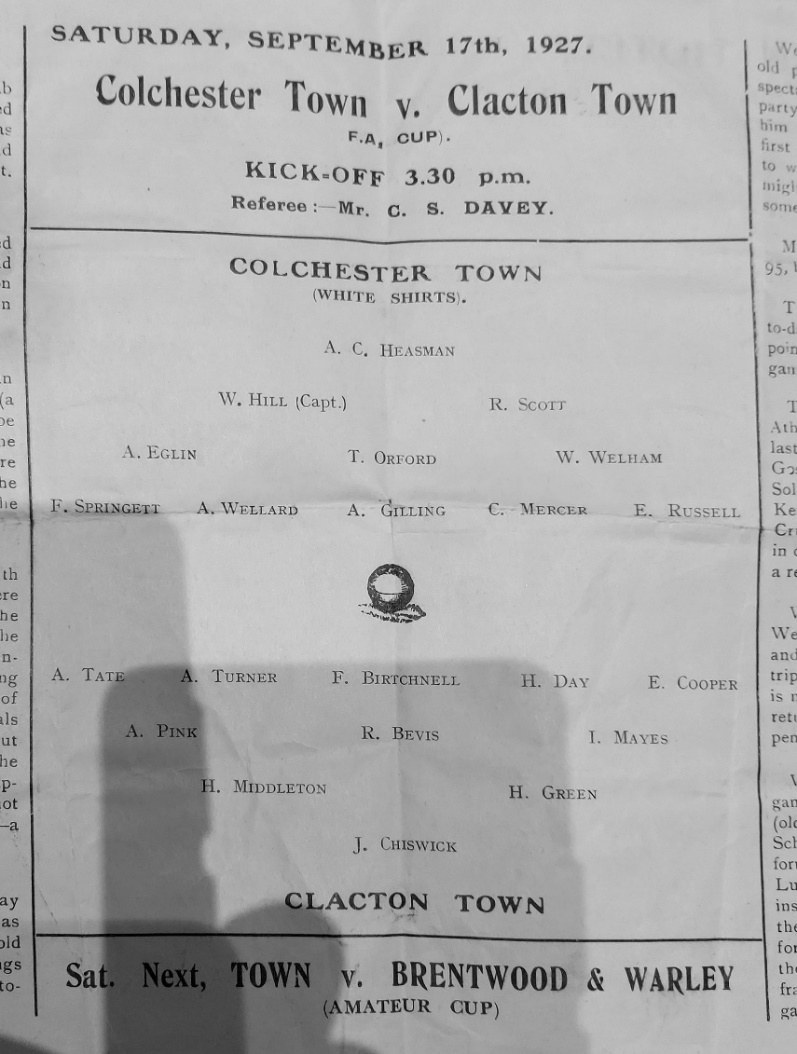
His career was ended by a serious knee injury. He then had to have a full-length caliper to keep his leg in alignment.
In late 1933 he married Eugenie Lillie Arthur and they set up home in Higham Ferrers. Eugenie, who was usually been known as Lillie, was the daughter of, carpenter and joiner Samuel, and Gertrude Arthur. Samuel had been in the Royal Air Force at the end of the Great War with the trade of “Joiner”. Lillie had been born in Rushden but in 1911 the family had been living in Thrift Street in Irchester. I had thought at first that Irving had met Lillie after he had moved back to Northamptonshire, but Amanda knows that they had met before he went to Clacton for they exchanged love letters through these years.
Lillie was something of a pioneer for Amanda was told that she was the first woman trained by Wellingborough firm, Saxby’s, as a pork butcher. It is also likely that she had the background knowledge from her mother Gertrude whose father, David Darnell, born in Irchester, was shown as a “Pie maker and Bread Maker’s Assistant” in the town in the 1901 Census. Her grandfather too, William Darnell, was a “Baker and Grocer” in the 1871 Irchester Census in a Grocer’s Shop (Co-operative’s). Grocery, and especially pies, ran in the family. Amanda believes that Lillie and her brothers received substantial legacies from a relative and she had bought a shop premises with her portion.
Lillie’s Stores was at 3 Market Square in Higham Ferrers. It was a grocery shop, but she specialised in pork pies which she made herself, buying pork from the abattoir and preparing and baking the pies in-house. Granddaughter Amanda remembers with affection, how she and her brother later helped Lillie prepare the pies. Great niece Vivienne Marshall also stayed with them during her school holidays and served in the shop.
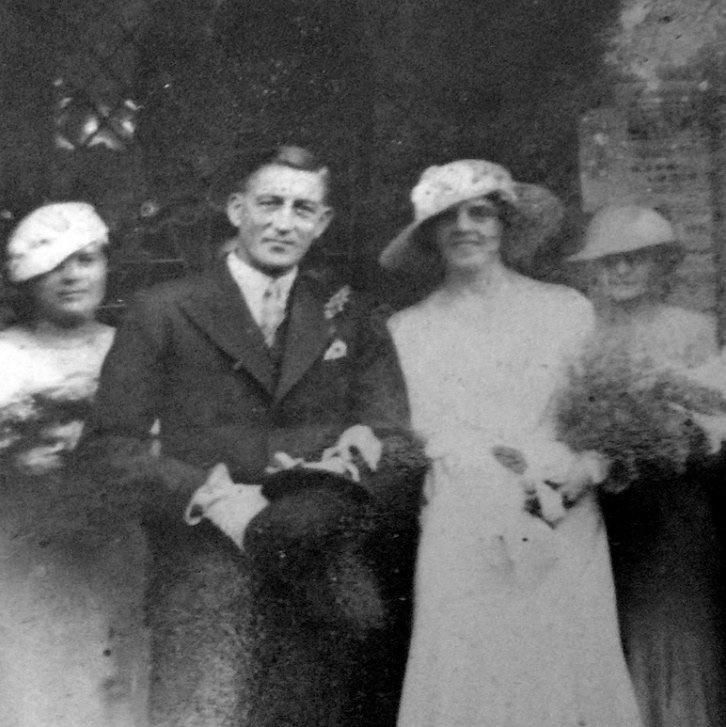
On the 23rd February 1936 the couple had a son, Paul Arthur Darnell Mayes. In the 1939 Register of England and Wales they were still living in 3, Market Square in Higham and Irving was working as a lorry driver. Lillie was shown as a “Shopkeeper-Pork and General”. Amanda has added that she was told by her father that he also worked as a coal man in the Higham area. As a boy, her father accompanied Irving into the coal yard to collect the coal on one of the horse-drawn carts that still delivered coal up to the 1950s. He would get off, however, before they left the yard. The amount taken was calculated by a weighbridge, in and out, and the boy’s weight in coal would have been free.
Despite the knee injury, Irving had continued with his sporting interest after his football career was over, for he became a keen bowls player. Harry Irving Mayes died on the 14th January 1970. After his death Lillie’s Alzheimer worsened and she struggled to run the business and it was sold to the Woolwich Building Society. She died in 1981.
Albert Edward Mayes (1896-1963)
Leonard Eustace Mayes was born in Ringstead on the 15th December 1873, the third child of William Fairey (or Farey) Mayes and his wife Mary Elizabeth (nee Abbott). In the 1891 Census, he was 17 years old and a shoemaker, like all the children above school age. It seems that Leonard wanted a little more adventure in his life. On the 29th June 1892 he attested with the North Staffordshire Regiment at Northampton. He was 5ft 5 inches tall with grey eyes, a fresh complexion and light brown hair. His Regimental Number was 3754. After his initial training he was posted to Portsmouth but on the 5th December1892 he was in hospital there for five days with “inflammation of the connective tissue”. This could point to several disorders of varying seriousness, but symptoms could include numbness and pain in the joints.
It seems that Leonard found army life was not as he had hoped, or perhaps his joint problems made it unbearable. He bought himself out for a payment of £18 on the 22nd March 1893. He had been a soldier for 237 days. Did his father have to find the money? The comparison of money values with today can vary greatly but £18 could have a buying power of over £2000 today and would be at least a month’s wages.
Leonard returned to Ringstead and became a shoehand again. On the 25th May 1895 he married local girl, Sarah Ball. The had four children, three of whom survived into adulthood. In 1901 the family were living in Abbott’s Yard in Ringstead. In 1905, Leonard was part of the Ringstead Band selected to go with the men who marched from Raunds and Ringstead to London to put the army shoemakers’ case to Parliament. This march brought some concessions to the handsewn men but the demand fell and, by 1911, many were out of work.
By 1911 Leonard and the family had moved to 18 Mill Street in Luton in Bedfordshire. Leonard was still working as a bootmaker but Albert Edward, the oldest child, born on the 12th December 1896, was now an assistant in a straw hat warehouse. Luton had become the global centre of the straw hat industry and by the 1930s it was producing some seventy million.
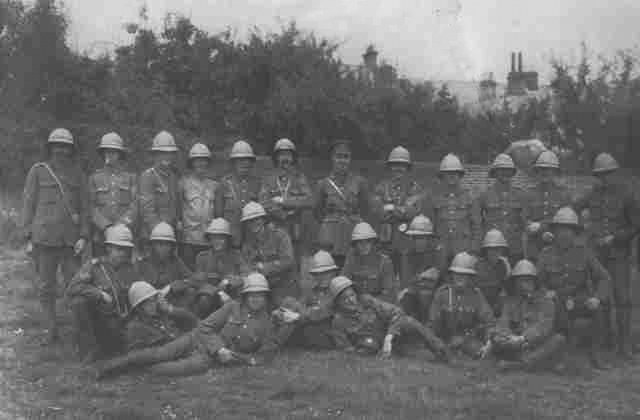
War came and Albert enlisted with the Bedfordshire Regiment. He was with the 1/5th Battalion which was a volunteer Territorial force. The 5th Battalion had moved from Bury to Norwich and on to St Albans by May 1915. On the 25th July they were issued with “hot climate uniforms”, stores and equipment were hurriedly collected and, cheered by the crowds in St Albans, they entrained for the south coast. The men were in good spirits and there were songs and cheers. They were bound for “somewhere out east” and many soon succumbed to sea sickness. They called at Malta on the 3rd August and by the afternoon of the 6th had landed at Alexandria, in Egypt. The following day they sailed for the Greek island of Lemnos, arriving at its main port of Mudros on the morning of the 9th.
The next day they sailed east to another Greek island, Imbros (now Turkish). They were bound for the isthmus at the entrance to the Sea of Marmara and disembarked in Suvla Bay on the western coast. The Medal Roll shows the 10th of August as the first day of his service in a war zone. They were now on the infamous Gallipoli Peninsular and the enemy was the army of the, once great, Ottoman Empire, who were allies of the Germans. They moved first into a rest camp and then into reserve.
Albert wrote home and the Bedfordshire Advertiser and Luton Times printed extracts from these letters on the 3rd September 1915. He is described in the article as a “Signaller”, which would usually indicate that he was in the Royal Engineers, but the Battalion had its own group of Signallers. Albert would have undergone training in signals but would have retained the rank of Private in the Regiment. “Signaller” was a description of his role.
The letter that Albert Mayes sent was some five days after they had landed at Suvla, so would have been about the 15th August 1915. It is full of the gung-ho bravado of a young man trying to face up to his first confrontation with the enemy and trying to hide his fear. He wrote:
They are good lads, and all we think about is doing the enemy in. They are a lot of l------ and squeal like women at the point of a bayonet. They are getting a rough time from the guns, which are just against us. Big things are going to happen. It almost makes me wish I was going up in the trenches with the Company’s chaps but we shall have a hot time from the shells. I had a bathe in the sea last night and another this morning. It’s just as hot in the morning but we feel a treat. Our chaps may go up any time. They are all looking forward to it. I am on Headquarters duty at present. I had a dixie full of Oxo and some biscuits in it for breakfast and it was just good. We are being well looked after and living well. I don’t mind a bit. We are all getting used to the noise. The guns did not wake me once in the night. We are not troubled with a lot of flies yet, but perhaps they have not found us yet. It is a desolate place, with lots of big hills all the way.
This was the start of the Assault against the Kiretch Sirt. When they moved forward under heavy fire, the metal flashes on their uniforms glinted yellow in the sunlight. This was seen by an observing Staff Officer through his binoculars and he is said to have exclaimed:
“By Jove! If only we had one or two more battalions of those yellow devils we should be across the peninsular by tomorrow”.
The 5th has proudly retained the nickname “Yellow Devils”. Disease claimed many of the troops but, during the campaign, the Battalion was awarded 120 gallantry medals including one Victoria Cross.
Another letter, a day or two later, was more subdued in tone after some of the company had moved up to near the firing line. He wrote:
We were shelled yesterday for nearly an hour, but they did not do any harm, only one being wounded. Their ammunition is no good. Half the shells did not explode at all, and so, if we meet nothing worse than their shells we shan’t hurt. But the boys tell us it is jolly rough up in the line. We are fighting snipers and thousands is of them at that: - mostly girls and women they seem. They are all in green: painted legs and everything green. We get on fairly well. You can’t expect a lot of fine food on a job like this. It is all biscuits and no meat – no bread – but we get Oxo and things like that to make a soup and beef tea. There is Stan, Jim and his brother George, all of us under a shelter we have rigged up, and Jim is grumbling all the while because they won’t send him up to the firing line. Nine of us are going up tonight. I don’t know whether I am going up or not. We are beginning to be worried by flies now. I think we shall be as brown as berries before another month is up. We have four or five men and an officer hurt but not badly except one. The warships, which are only a mile away, keep letting the enemy have it on the hills.
We do not know exactly what happened to Albert next. He was at some point promoted to Acting Corporal, a rank he seems to have retained throughout the war. The Gallipoli campaign which had started out with such optimism soon became a disaster and despite great bravery by the troops the Allies had to retreat from the peninsular before they were annihilated.
Descendants of Albert understood that he had suffered from gas poisoning and the Medal Roll shows that from the 27th October 1915 to the 10th February 1916, he was in Malta. Malta did not see any fighting in the First World War but was a British base for military hospitals. These took in many of the casualties, particularly from the Dardanelles Campaign. It is generally believed, however, that no poison gas was used in Gallipoli, although gas masks were issued for fear of its use by the Turks. On the other hand, the poet John Masefield, who worked in a military hospital for the French soldiers wrote in “Gallipoli”:
The trenches curved and zigzagged in the earth; the men in one section could neither see nor hear what the men in the nearest sections were doing. What went on under the ground there in the making good of those trenches will never be known. From half-past five till midnight every section of the line was searched by bombs and bullets, by stink pots, and sticks of dynamite, by gas-bombs and a falling tumult of shell and shrapnel, which only ceased to let some rush of Turks attack, with knives, grenades and bayonets, hand to hand and body to body in a blackness like the darkness of a mine. At midnight the wounded were lying all over the trenches, the enemy dead were so thick that our men had to walk on them, and bombs were falling in such numbers that every foot in those galleries was stuck with human flesh. No man slept that night. At half-past seven next morning (the 7th) a small quantity of bread and tea was rushed across the plateau to the fighters, who had more than earned their breakfast. Turk shell had by this time blown up some of the head-cover and some of the new communication trenches were still only a few feet deep.
It seems certain that Albert had been gassed, wounded, or otherwise incapacitated, so that he had to be evacuated to Malta. By December 1915, the 5th, like other battalions, had lost most of their men to disease and enemy action and had retired to Egypt to be rebuilt back to strength in the early months of 1916.
As we see in the accounts of other Ringstead soldiers, this was a posting which had its own difficult challenges, both on the battlefield and particularly because of the climate and disease. The History of the 5th Battalion of the Bedfordshire and Hertfordshire Regiment by F.A.M. Webster records that 26 Officers and 750 Other Ranks left England in 1915 but reinforcements during the war numbered 231 Officers and 4939 Other Ranks. This huge number of replacements was due to 660 ranks wounded in action, but mainly because of the 4,125 men who went down with sickness.
They 5th had been brought up to strength by March 1916 and then had a year-long posting guarding the Suez Canal. Albert rejoined the Battalion in Egypt on the 18th February 1916 and remained with them until the 31st July 1918. In March 1917 they were part of the advance through Gaza and Palestine. At the time of the Armistice with the Turks in October 1918 they were stationed in Beirut.
Before this, however, on the 1st August 1918, Albert had been transferred to the 19th Rifle Brigade and given the new Regimental Number 212316. [There is some confusion here because the Medal Roll has Albert finishing with the Bedfordshires on the 31st July 1918 and starting with the Rifle Brigade on the 1st January 1918. Looking at other men on the Medal Roll, it is obvious that it should be the 1st August 1918.] The Battalion War Diary records that two Officers and four Other ranks left the Battalion at and went to Egypt on a short leave on the 28th July. Could it be that it was decided that they were no longer required in Palestine? The War Diary does record some enemy action, but most days were labelled “Quiet”.
The 19th Rifle Brigade had been formed on the 29th November 1915 from the unused Territorials and were deployed initially to guard vulnerable places in Great Britain. In 1916 they were sent abroad to perform similar duties. The 19th were on garrison duty in Egypt and it may be that Albert were sent on leave from Palestine to Egypt and it was decided that they were more need in Egypt as the war in the Middle-East was almost over. The Medal Roll shows his service finished on the 11th November 1918 but, perhaps, this is indicating when the war ended. Albert was entitled to the 1915 Star and the Victory and British War Medals.
Albert returned to Luton and, in the summer of 1920, married Cassy Maude Heley. Her father, Joseph Heley, was a straw hat dyer from Totternhoe in Bedfordshire and her mother, also Cassy, was from Chalk Hill (now part of Houghton Regis). Her four older siblings were all involved in the straw hat trade. Like the Northamptonshire boot and shoe industry it moved from the villages into the towns as it became industrialised, before being finally overtaken by fashion and overseas producers.
At first the couple lived with Frederick Thrussell at 48 Pondwicks Road before moving to 65 Biscot Road in Luton and then 25 Hermitage Road in Hitchin. They also had a shop and commercial premises at 88 Inkerman Street in Luton.
We know from the London Gazette of the 27th March 1936 that it was hat manufacturing and millinery business that the couple ran in Inkerman Street. Unfortunately, the entry in the Gazette was because of his bankruptcy. His grandson, Tim Farr, had revealed that Albert was angry about this, because it had been enforced when the amount owed was small. He had ordered felt for hat making and because of changes in fashion had been unable to pay the account. After the loss of his business, he became depressed and worked as a bookie’s runner for a time. The Second World War changed his fortunes. The 1939 Register of England and Wales shows that Albert’s occupation, although it is difficult to decipher, appears to be “Commission Agent’s Clerk and Food Control Clerk”. I think Commission Agent here, is another name for an unlicensed Bookmaker.
Tim has confirmed that he became a local Food Officer during the Second World War, part of the rationing regime, trying to keep people fed through difficult times. Apparently, he would have been given a medal but, as an undischarged bankrupt, he was unable to receive the award.
The couple had two children, Derek Leonard had a successful acting career, under the stage name of Richard Mayes, and became a Shakespearean theatre actor. He also worked in film and television, including a part in Dr Who. A daughter, Audrey, was born on the 24th July 1928. In the 1939 Register they also had an elderly piano teacher, Florence Fitzgerald, living with them. Was she a lodger to help with the finances? Albert’s father, Leonard, had provided funds to enable Cassy to set up a Draper’s Shop and this was an important source of income.
Albert suffered from increasingly poor health. He had been a heavy smoker and perhaps this, more than his possible wartime gassing, led to his early death. He died in 1963 aged 67 but Cassy lived into her nineties and died in 1993