The Great War: N–Z · Story 7
The Phillips Family
We will be looking at three men from the Phillips family of Ringstead who shared grandparents Thomas and Mary. The oldest son of the couple, also Thomas, was born in 1852. He had married Eliza Frances Roberts in 1872. Eliza had been born in Leicester but in the 1861 and 1871 Censuses we see that she was staying in Ringstead with her uncle and aunt, William and Charlotte Baxter. William was the local “Vermin Destroyer”.
We will be looking at two of the couple’s sons, Sidney (or Sydney) Thomas born on 26th September 1888 (1890 in the 1939 Register) and Ross born in 1896.
The youngest son of Thomas and Mary, Ralph, was born on 14th July 1867. He married Sarah Ellen Fox in 1890 and they had four children. It is the second child Arthur James, born on 3rd August 1895, who was the third young man called to serve his country.
Sidney Thomas Phillips (1888-1971)
In the 1901 Census, Sydney Tom Phillips was twelve years old and living with his parents, Thomas and Eliza. Thomas was a shoemaker and the eldest daughters, Rose Maud (17) and Ida Mary (15) were boot closers, and there were two younger children, Lily (10) and Ross (8). By 1911, only Sidney (21) and Ross (15) were still in Gladstone Street with their parents. Sidney was now a shoemaker, and, like his father, his occupation was in “Hand-Sewn Government Work”. Thomas and Eliza had had ten children, seven of whom were still living.
Also in 1911, the older sister of Sidney and Ross, Rose Maud Phillips had married John Samuel Bates. He had been born in Kislingbury but he was the son of John Bates a Pastor of the Ringstead Particular Baptists for many years. John junior had not followed his father’s profession, and in 1911 he had become a butcher in Scaldwell, just a few miles west of Brixworth. This move seems to have influenced Rose’s younger brothers as we shall see.
Then came the First World War but, at first, Sidney remained in Ringstead and he, or his employers, sought to resist his call-up because he “was essential to business”. He was a “Hand Welt Sewer” and, of course, good army boots were vital in the trenches of the Western Front. He had also married Ellen Storton at the end of 1917. Ellen was the daughter of Edwin, a butcher and farmer in Harlestone, and his wife Mary. In 1911, aged 20, she had been a student in a Training College in Dudley. Harlestone is some seven miles south-west of Brixworth. We see that butchery and the Brixworth area were key factors in bringing the couple together.
It seems that, at first, the couple may have lived in Ringstead, for this was given as his address on the 4th April 1918, when his second appeal against conscription, at the Northamptonshire Military Tribunal, was dismissed. It was only at this point that Sidney was enlisted with the 3rd Battalion of the East Kent (Buffs) Regiment and given the Regimental Number 20214. Not unexpectedly, there are few other military records for Sidney. The 3rd (Reserve) Battalion was a training unit which remained in the United Kingdom throughout the war.
The Ringstead Roll of Honour shows that Sidney had been demobilised, so he would have returned home in late 1918 or early 1919. It looks as if the young couple lived in Gladstone Street with Sidney’s parents. At first Ellen does not show on the Electoral Register, perhaps because she does not have a property qualification through Sidney. By 1922, however, when she was 30 years old, she too was on the Electoral Roll.
At some point the couple moved back to the west of the county and in 1939 were living at 25 Glasgow Street, off the Weedon Road in Northampton. Sidney was still a handsewn shoe operative. Ellen was not doing paid work and their son Alan, born on 16th June 1923, was a Mechanical Engineer’s Apprentice. I believe that Ellen died in 1955 and Sidney in 1971.
Ross Phillips (1895-1974)
Sidney’s youngest brother, Ross Phillips, was born on 13th June 1895. Like Sidney, Ross was living with his parents at 7 Gladstone Street in 1901. This was one of three roads built on the Tilcroft Estate at the turn of the century as better modern housing for working families. The house had six rooms and was just up a slope from the ill-fated Britannia Co-operative Boot Factory which was built as part of the same scheme. By the 1911 Census Ross was fifteen years old and a “Butcher’s Boy”.
When war came Ross enlisted in the Northamptonshire Yeomanry and was given the Regimental Number 1074. We do not know exactly when he attested but his Medal Card does record that he first served in France on 27th March 1915 which means that he was one of the early volunteers. Checking his Regimental Number against others whose enlistment date we know, it seems that he joined up in September 1914, very soon after the start of the war.
The Ringstead Roll of Honour records that he was in “C” Squadron of the Northamptonshire Yeomanry. The Headquarters of the Yeomanry was at Northampton but “C” Squadron was based in Kettering. We have previously written about Sidney Hunt who also joined “C” Squadron but he arrived in France over a year later.
In the period before March 1915 the Yeomanry were the support cavalry for the 8th Division but, in April, the three Squadrons (A, B and C) went their separate ways. On April 11th 1915 “C” Squadron was at Nouveau Monde when they received orders to join the 5th Division as its support cavalry and the next day were on the road through Sailly and Bailleul to billets at Boeschepe. This was just on the French side of the Belgian border, some ten miles south-west of Ypres (Leper).
Ken Tout has written in his book, Yeomen of England, about the almost humiliating shock that the Northamptonshire Yeomanry had when they first arrived on the Western Front:
The NY men soon discovered the realities of the so-called Great War of 1914-18. A mounted regiment experienced very rare, if any spectacular cavalry charges and underwent much undignified hard labour; most tasks if not justified by the demands of patriotism might have been categorised as slave labour; heaving barbed wire, digging trenches, burying the dead or acting as reserve infantrymen at a moment’s notice.
The War Diary for “C” Squadron bears this out in page after page. Through the rest of April the Squadron were training, with working parties on dugouts, “traffic control” of the movement of troops and supplies and an unsuccessful patrol near Pilckem. This continued through May and June, with unglamorous trench digging, particularly in the Zillebeke area of the Front Line. This was often at night and sometimes under heavy shell fire. July saw the Yeomanry digging in the Voorzetsels trenches but still working from the Boeschepe billets.
Finally, on the 22nd July, “C” Squadron marched to new billets at Hondeghem where the routine continues for the next week. On the 29th they were on the move again, marching to Cassel Station where they entrained to Méricourt l’Abbé and then marched again, to billets and bivouacs (tents) at Bussy les Daours. At the time, the strength of the Squadron was 5 officers, 130 Other Ranks, 143 horses, 8 mules and 6 four-wheeled vehicles.
On August 4th, the Yeomanry sent out patrols to reconnoitre the area. They also acted as guides at Méricourt l’Abbé on the River Somme to prevent the French and British troops crossing into each other’s territory. The patrols and working parties continued and on 19th August they moved billets to Sailly-le-Sec. This mixture of patrols, working parties and reconnaissance continued until the end of 1915.
In January 1916, the “C” Squadron men were in a rest area at Frechencourt but on 8th January marched to Bertangles and then on the 15th on to Hangest-sur-Somme but still in a rest area. Then on the 24th January they marched to Berteaucourt-les-Dames and the following day on to Hardinval (near Doullens). The War Diary records for the 25th January:
. . . heavy fall of snow and blizzard, obliged to proceed greater part of journey dismounted.
The unit’s movement continued and on 29th January 1916 they marched to Grand Rullecourt in the Pas de Calais and then on to Noyellette, some seven miles south-east, where patrols along the Front Line went out over the next few days. There was also instruction for the men in the use of the Hotchkiss Rifle which was a lighter version of the Hotchkiss machine gun. On May 29th 1916, the Squadron marched to Harbarcq (one mile outside Noyellette) and joined up with the “A” and “B” Squadrons to become a complete Regiment once again.
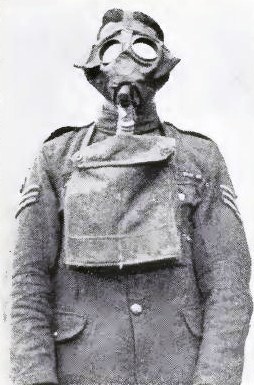
The Yeomanry Regiment was now attached to the 6th Corps at Harbarcq where they received instruction in the use of the new “smoke helmets”. An American, Arthur Empey, who joined the British Army, when the USA did not, at first, enter the war after the sinking of the Lusitania, wrote of the smoke helmets in 1917:
We had a new man at the periscope, on this afternoon in question; I was sitting on the fire step, cleaning my rifle, when he called out to me: 'There's a sort of greenish, yellow cloud rolling along the ground out in front, it's coming ---'
But I waited for no more, grabbing my bayonet, which was detached from the rifle, I gave the alarm by banging an empty shell case, which was hanging near the periscope. At the same instant, gongs started ringing down the trench, the signal for Tommy to don his respirator, or smoke helmet, as we call it.
Gas travels quietly, so you must not lose any time; you generally have about eighteen or twenty seconds in which to adjust your gas helmet.
A gas helmet is made of cloth, treated with chemicals. There are two windows, or glass eyes, in it, through which you can see. Inside there is a rubber-covered tube, which goes in the mouth. You breathe through your nose; the gas, passing through the cloth helmet, is neutralized by the action of the chemicals. The foul air is exhaled through the tube in the mouth, this tube being so constructed that it prevents the inhaling of the outside air or gas. One helmet is good for five hours of the strongest gas. Each Tommy carries two of them slung around his shoulder in a waterproof canvas bag. He must wear this bag at all times, even while sleeping. To change a defective helmet, you take out the new one, hold your breath, pull the old one off, placing the new one over your head, tucking in the loose ends under the collar of your tunic.
The working parties continued as before, much of the time spent on burying telegraph cables. Training also continued with officers and NCOs going on courses on “gas”, sniping, and trench warfare. There was also the escorting of prisoners of war, as well as having to search for escaped ones.
The War Diary reported snowfall on the night of the 16th/17th January 1917 and that the weather remained frosty for the rest of the month, so that mounted training was impossible. A month later the “thaw commenced”. On March 1st, the Diary reported:
Regiment collected for training (with exception of 24 O.R. employed threshing).
It seems that these ranks had been sent by the Regimental Purchasing Officer to a local farm to thresh corn that he had bought. Was it for the men or the horses?
What strikes you is that, certainly for “C” Squadron, there had been little Front-Line action. The Diary has little mention of action or casualties. Then things changed!
On 9th April 1917, the Regiment left Harbarcq. They had orders, as part of the 6th Corps to attack east of Arras. We now see the first account of a fierce battle since Ross had joined the Yeomanry in France. April 11th 1917 was an infamous day for the cavalry on the Western Front. The Northamptonshire Yeomanry arrived at Monchy-le-Preux to find that the planned attack had stalled because of heavy machine-gun fire. We do not get a real impression of the battle from the War Diary but, as we have seen in the stories of Archibald Dicks and Sidney Hunt, that they were under intense fire and lost a dozen men killed and fifty men wounded, shell-shocked or missing.
Just prior to this action, on 1st April 1917, all the Territorial soldiers had been renumbered and Ross’s was changed from 1074 to 145345.
On 22nd April 1917, the Regiment moved to Agnez-les-Duisans. Here they were taking turns in the Front Line, as replacement infantrymen, and were under constant barrages sustaining casualties. Ross seems to have coped well with being a soldier. Unfortunately, we do not have records of when his promotions occurred but we do know that he had become a Sergeant by the end of the war.
The Regiment then moved back into reserve and on 23rd August marched to Fort Mardyck in Dunkirk, via Savy-Berlette, Pernes-en-Artois, Wittes, Staple and Wormhout, arriving on the 30th August. Here they took over the coastal defences and it seems that they were not again involved in further enemy action. In November 1917 they left the Western Front and moved to Italy to become part of the 14th Corps. They arrived there on the 5th November.
The Italians, who were our allies in the First World War, had been routed at Caporetto by and Austro-German force on 24th October 1917 and it was thought that their resistance would disintegrate. In fact, by the time that the French and the British arrived, the Italians were retaking control of the situation. As a result, the Yeomanry found that they were largely held in reserve although the British did lose some 700 to 2000 men (statistics vary) in the campaign.
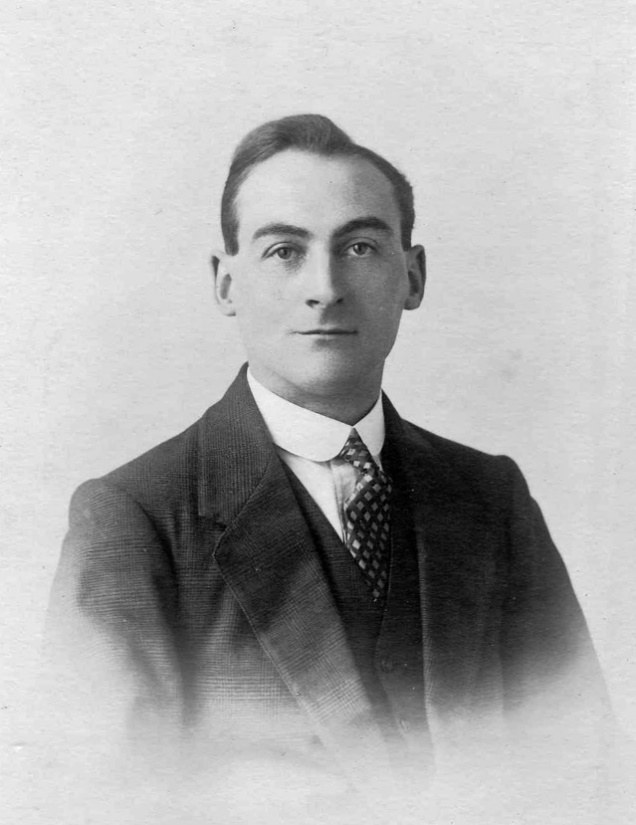
Ross does not appear in the Ringstead Absent Voters’ Lists for 1918 or 1919 but it may be that he had already moved to the Brixworth area and it seems likely that he was demobilised in late 1918 or early 1919. He returned to Northamptonshire and carried on with his trade of butchery. It seems possible that this was first with John Bates who had married Ross’s sister, Rose and become a butcher in that area.
In 1922 Ross married Lucy Margaret Williams in the Brixworth District. It may be significant that in the 1911 Census for Spratton, Lucy’s brother, John Turner Williams, aged 13 years, was working as a “Butcher’s Apprentice”. Her father was a “Stud Groom, Domestic”.
In 1939 Ross was living at 106 Milton Street in Northampton, just a couple of miles across town from his older brother Sidney Tom Phillips, He was now a “Master Butcher (Retired)”. He was only forty-four years old at the time. The corner shop still exists (June 1918) although no longer a butcher’s shop. On April 1st 1950, the couple were still living in Milton Road when their only child, June, married Noel Messenger in St Giles’s Church.
At some point Ross and Lucy moved to The Headlands in Northampton, for Ross died there on 29th September 1974. I believe that Lucy died some ten years later.
Arthur James Phillips (1895-1972)
A cousin of Sidney and Ross, Arthur James Phillips, was the son of Ralph and Sarah Ellen (née Fox). He had been born on the 30th August 1895 in Ringstead, the second oldest of a family of four. He had an older sister, Florence, and two younger siblings, Gertrude and Reginald.
We may sometimes be guilty of over-romanticising village life in the past. Its closeness could also lead to bitter squabbles. The Northampton Mercury of 16th June 1905 reported:
Lavinia Mayes, married woman of Ringstead, was summoned for assaulting Sarah E. Phillips also of Ringstead on March 25th. – Defendant pleaded guilty and pleaded provocation by the continual insults made to her by the complainant. – Defendant admitted throwing a bucket of water over the complainant. – The Bench fined the defendant 10s. and 6s. costs; in default 14 days hard labour.
It seems likely that that London End could be a rancorous place at times.
By 1911 Florence had left home and James (his second name seems to have been often used) was the oldest child still at home. He was now eighteen years old and worked as a “Fitter-up” in a local boot factory.
Arthur enlisted on the 15th January 1916 with the Royal Inniskilling Fusiliers and given Regimental Number 40755. We know that at the end of his time he was serving in the 2nd Battalion and it seems likely that this was his unit from the start of his service.
In 1916 the main battles that the 2nd Battalion were involved in were on the Western Front as part of the Somme Campaign. The War Diaries are not always easy to relate to the minor battles that were in turn part of major campaigns (also called Battles). The naming often came later and the Diary was about the actuality of small sectors, sometimes measured in yards. For most ordinary soldiers we have to make a best guess as to where they were, for they were rarely named.
It seems likely, however, that Arthur was at the Battle of Albert (1st-13th July 1916) which was one element of the opening phase of the Battle of the Somme. The 2nd Battalion were part of an attack by the British in the Thiepval area. Although planned, it became chaotic when a late change of plan did not reach some of the units involved until too late. Half of the original planned artillery barrage went ahead before it was aborted and the new bombardment on a wider front was carried out, but now with only half the ammunition available. As a result, the battle was a familiar story of hard-won gains followed by counter-attacks and forced retreats to previous positions.
The Battalion lost ten Other Ranks killed and 128 wounded, with 16 missing: 154 men in all. Eight officers were also lost, wounded or missing.
On 5th July the Battalion marched some three miles south-east, to Hedauville, for three days before moving on to billets at Bouzincourt. On 10th July they joined the 14th Infantry Brigade at Orvillers-la-Boiselle and in the attack that followed managed to advance a short distance. The ruined village was finally captured. This area, which had been ravaged by warfare since 1914, was then relatively quiet until the final German offensive in the Spring of 1918.
In this period from the 10th to 14th July 1916 the Battalion lost 3 officers killed and 5 wounded, while Other Ranks lost 34 men killed and 163 wounded with 36 missing. The summaries of the action seen by the Battalion show that they were also at the Battle of Bazentin (14th-17th July 1916). The War Diary tells that the Battalion were then on the move from Bouzincourt to Neuvillette and that this movement continued throughout July, finally ending at the end of the month at Heuchin.
Continuing into August, this movement took them 19 miles east to billets in the Tobacco Factory in Bethune. They were then in and out of the Front Line trenches in the Ginchy and Thiepval area as part of the Battle of the Ancre (13th-18th November 1916). After that, they were not part of any major action but still in localised fighting. On 23rd November, in an unsuccessful sortie, a party tried to rescue men trapped by enemy fire in a dug-out. In this action one Officer was killed and three wounded and four Other Ranks were killed and 42 wounded, with 17 missing. Apart from this assault, a further man was killed and 41 Other Ranks wounded with 5 missing. The slaughter on the Western Front was so great that such everyday losses almost went unnoticed.
The first major action of the new year was in March 1917 when the Germans began to make their planned withdrawal to the strong defensive line that they had been building. This retreat to the Hindenburg Line saw the Allied forces moving forward but against a strong rearguard action by the enemy. By April 11th the 2nd Battalion was at Holnon where they constructed a “line of resistance”.
In June 1917 the Inniskilling Fusiliers began a move some hundred miles north as part of the 32nd Division, finally arriving at Nieuport les Bains on the Belgian coast and Ghyvelde, just across the border, in France. It was still part of the Front Line with regular deaths and woundings, but not on a large scale. On 26th July 1917, however, this changed when the War Diary reported:
1 officer and 243 Other Ranks (Gassed).
It continued:
“Gassed”. Caused by Gas Shell used by the enemy for the first time and very difficult to detect. It affected the eyes in some cases causing temporary blindness as well as causing temporary loss of speech, in many cases the effect only became apparent after a lapse of a few days.
This new weapon was Mustard Gas, only detectable by smell, and of course your nose became desensitised as to any pervading smell. It was more serious than the Diary seems to indicate and could hang around in cold weather for days so was unsuitable as a “pre-attack” weapon. Vera Brittain, the novelist, who was a WW1 nurse, wrote in Testament of Youth:
I wish those people who talk about going on with this war whatever it costs could see the soldiers suffering from mustard gas poisoning. Great mustard-coloured blisters, blind eyes, all sticky and stuck together, always fighting for breath, with voices a mere whisper, saying that their throats are closing and they know they will choke.
The Battalion was in billets at Ribaillet Camp but this was not a safe haven. On August 14th they were bombed with Gas and H.E. Shells from midnight until 4.30 am. The Diary records, however, that the casualties were very small “owing to the promptness with which the men put on their Box Respirators”. They also cleared the camp during the barrage.
By the end of August, the Battalion was in billets in Canada Camp at Coxyde (Koksijde). In September the usual pattern of being in and out of the Front Line continued in the Lombartzyde sector which was just across the Rover Yser from Nieuport. Casualties continued in large numbers for, as the Diary makes clear, the area was important for both sides.
The sector that the Brigade was holding was most important as it was the main Defence of the Bridges and Locks round NIeuport. In the event of these being lost the enemy would have been enabled to flood the country for a considerable distance; it was also important as the ground just in the rear of the front line position that could have been used as the jumping off place in the event of further operations.
On 20th October 1917 J.A. Phillips (we know that he is correct man from his Regimental Number and reference to Ringstead) was in the War Office Daily List No. 5395. These lists of casualties could refer to events six or more weeks before publication so we cannot be sure of exact dates. We do learn that he had been appointed at some stage to Lance Corporal.
Arthur was discharged on 24th July 1918 because of disability caused by his wounds. He had sustained gunshot wounds to his right leg and ankle and also to his right eyelid. He received a small Army Pension. Considering the severity of his injuries, Arthur would have been taken back to England for treatment and it seems likely that he did not return to active service again. Certainly, he married Annie Laurie Haxley in the second quarter of 1918 so he was back home before his discharge.
Annie was the daughter of Harry Haxley, who was originally from Catworth in Huntingdonshire and his wife Annie who was a local Raunds girl. Harry was a “Hand Boot Sciver” (or Skiver – someone who pared or cut off excess leather) and daughter, Annie, at fourteen years of age was a “Boot Factory Bench Girl”. In 1911 they were living in Raunds High Street.
The Pension Card for Arthur shows that after the marriage the young couple were living at 36 North Street in Raunds. They had at least two children: Dorothy born on 25th April 1919 and Geoffrey on 28th September 1930. By 1939 the family were living at 3 Barn Close in Raunds. Arthur was now a “Sole Cutter” and Annie had the usual “Unpaid Domestic Duties”.
By 2nd December 1972, when Arthur died, he and Annie had moved to 43 Park Avenue in Raunds. Annie died four years later.