The Great War: A–M · Story 27
The Hackney Family
The Hackneys originally, like others, came from across the Nene in Great Addington. The men from the family who we are looking at here were descended from the sons of John and Ann Hackney. They had five sons, William (1788), Robert (1790), Thomas (1791), John (1792) and Samuel (1798). The names William, Robert, John and Samuel reverberate down the various family branches. It is the lines starting from Robert and Samuel that we will be following here. Robert’s line led to Cyril Arthur, although as we shall see there is some confusion about his birth.
The other three Hackney men descended from Samuel, the youngest son of John and Ann.
Unfortunately the military records of the Hackney men have largely been lost. The Second World War German bomb that fell on the building containing the records seems to have hit some parts of the alphabet harder than others. Nevertheless we can give some idea of the service of these men during the Great War.
We will begin with Cyril Arthur Hackney.
Cyril Arthur Hackney (1898-1985)
Cyril Arthur Hackney Allen was born on 13th July 1898 in Titchmarsh. He was the son of single woman, Kate Elizabeth Allen. Kate was the daughter of William Allen a pedlar or hawker from Polebrook and his wife Jane from Washingley in Huntingdonshire. In view of Cyril’s second and third names it seems likely that Cyril was the son of “shoe finisher” Arthur Hackney, who Kate married on the 18th December 1899 in Titchmarsh. Arthur was the son of William Hackney, a labourer from Ringstead and his wife Rhoda (née Knight)
In 1901 Arthur (23) and Kate (22) Hackney were living at 11 Carlow in Ringstead. Cyril was with them and was two years old. By 1911 Arthur and Kate were in the Bank Cottages in Denford Road, Ringstead, and had been married eleven years. They have had four children, all of them still living. The younger children, Lilian, Earnest [sic] and Bernard had all been born in Ringstead. Cyril was twelve years old and still at school.
We know, as they did not, that the Great War that just waiting for a shot to start it. In 1911 many handsewn military boot makers were out of work but in 1914 the war would give them work and take away their sons.
The Ringstead Roll of Honour records that Cyril served with the 3rd Battalion of the Queens (Royal West Surrey) Regiment and was still serving after the war had finished. He does not appear in the 1918 Absent Voters’ List for Ringstead but he was not 21, nor had he turned 19 while in service, so was not yet able to vote. He was also missing from the Spring 1919 Absent Voters’ List but was in the Autumn edition. His home address was shown as High Street and he was serving in the 19th Battalion of the Queens (Royal West Surrey) Regiment with Regimental Number 31592.
In the military records Cyril was recorded as A.C. Hackney but with the correct Regimental Number (31592). From the Silver Badge Register we can see that he enlisted on 29th June 1918 and had never served overseas. He was discharged on 26th September 1919 because he was deemed no longer physically fit for service. The reason for his discharge was a “weak bladder” which was “not attributable” to his army service. He did receive a small pension from 27th September 1919 which ended on 1st July of the following year. So it seems that Cyril joined the 3rd Battalion of the Queens and was transferred to the 19th from which he was finally discharged. His was not a glorious war but, like most of the men, his main hope when he enlisted would have been to survive.
The Pension Card for Cyril Arthur Hackney has his address as c/o Mrs. Gunn (mistranscribed Garn), Church Green, Woodford. In the fourth quarter of 1919, which must have been soon after he had been discharged, he married Kathleen E. Gunn. He gave his name as Cyril A[rthur] Hackney Allen. At first the couple lived in the High Street in Ringstead, possibly with his parents. Kathleen would not yet have had the vote as the couple did not have any property qualification and she was not yet thirty. By 1925 they had moved to Spendlove’s Yard in Ringstead. By 1929 they were both enfranchised.
During this time, Cyril was probably a furnace worker. Certainly this was his job when he was a witness in a court case reported in the Chronicle & Echo on Thursday 19th March 1925. A Raunds’ cyclist had been knocked off his bike by a hit-and-run driver. The report tells that Robinson had been cycling home from Thrapston when he was knocked down on the Ringstead side of the hill from Denford. He was found there by Cyril Arthur Hackney and Reginald Weekley who came to his aid and he was taken home in a buggy, presumably horse-drawn.
Before the 1930 Register of Voters’ List had been drawn up, Cyril and Kathleen moved to Church Green in Woodford, her home village. Now he is shown as Cyril Arthur Hackney Allen and she is Kathleen Annie Allen. Could this be related to the death of his mother who had died in 1930 or was he just being accurate for the official records? To add to the confusion in the 1931 Electoral Register for Woodford our Cyril is living in Church Green and Cyril Arthur Allen is living in The Green in Woodford.
By the 1939 Register for England and Wales Cyril’s father Arthur Hackney was living in Denford Road in Ringstead but Cyril and Kathleen were living near the White Horse public house in Woodford. Cyril was still a Blast Furnace worker.
Kathleen Emma Annie Elizabeth Allen died on 2nd October 1957 at Allege Brook in Woodford and Cyril Arthur H. Allen died on 30th January 1985, aged 86. He was living in Whittlesey Terrace in Woodford at the time of his death.
Edward Hackney (1891-1966)
We now look at the other line of the family which led to three brothers who became soldiers in the First World War. Edward was the oldest child of John William and Ellen Hackney although Ellen (née Ball) had had two children before her marriage. He had been born on 20th December 1891 in Ringstead. In 1901 he was living with his family at 3 The Terrace, High Street. His father, John William, was a bricklayer, originally from Great Addington.
By 1911 Ted (Edward) was working as a farm labourer and the family were now living in Gladstone Street which was part of the Tilcraft estate. Was his father drawn across the Nene by work on this new housing area?
The excitement of the Raunds’ March in 1905, in which Ringstead men took part, was over and many of the handsewn men were out of work by 1911. This recession in trade may partly explain why some of the proposed Tilcroft estate was never built. As we have seen before, 1914 would bring salvation to the army bootmakers but at a terrible price for some.
It seems likely that Edward and his younger brother Samuel George went to enlist together. They both joined the Royal Fusiliers (City of London Regiment) and were given consecutive Regimental Numbers. Edward was 50875 and he was first posted to the 10th Battalion.
We do not have a record of when Edward enlisted but the Medal Roll for his brother Samuel shows that he was in France from 10th October 1916. It seems likely that Edward would have had a similar start date, although as he was first in the 10th, unlike Samuel who remained in the 8th Battalion all through the war, there could be some differences. But on the same page of the Medal Roll there are soldiers in the 10th so it may be that some of them travelled together.
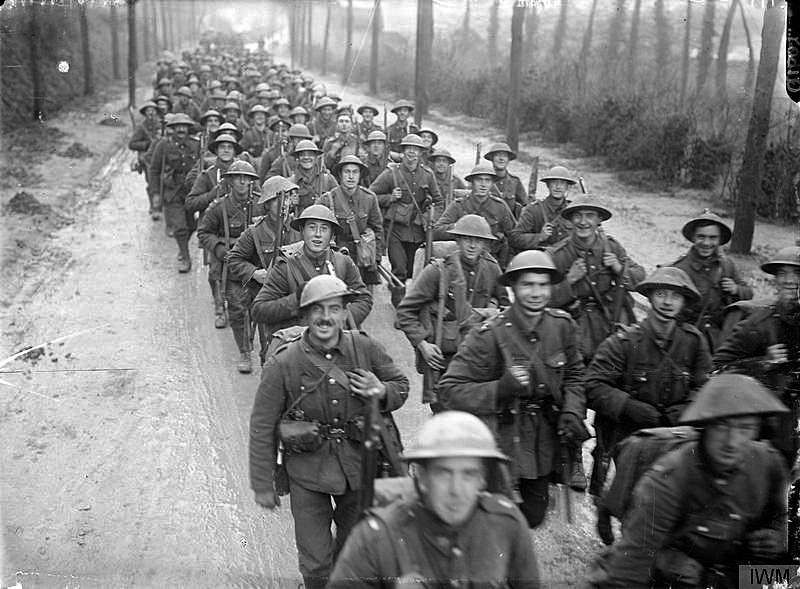
We know that at some point he was transferred to the 8th Battalion, his brother’s Battalion, although Reg Hackney was told that they were kept apart in the Front Line. The lesson of the “Pal’s Battalions” had been hard learned. It seems likely that he remained with the 8th until the Battalion was disbanded, in an Army reorganisation, on 6th February 1918. Edward was transferred to the Royal Sussex Regiment and given a new Regimental Number GS/36411. I am not sure which Battalion he joined but the 7th Sussex were in the vicinity of the 8th Royal Fusiliers in the latter’s War Diary.
While with the Sussex he suffered a gunshot wound to the left hand. As a result he was taken back to England and, when he had recovered, he was transferred to the 612 Home Service Employment Company (HSEC) which was based in the Eastern Command region. He was given a new number 459764. The HSEC would only take the lowest medically graded soldiers who were unable to serve in a warzone. It kept lists of the men under such categories as: Batman, Cook, Storeman or Caretaker, Sanitary Duty, Orderly, Clerk, Shoemaker, Salvage, Loader and Brakesman, Bath and Drying Room. They would be used to do the work once done by the ordinary soldiers, in order to keep the fighting units up to their highest possible strength,. It was a branch of the Labour Corps but the men in those units would often do dangerous work in or near the Front Line.
We have no records for these transfers but in the Ringstead Absent Voters’ List for 1918 he was shown as already being in the HSEC so it seems likely that he was not long in the Royal Sussex. He was finally discharged on 3rd October 1919.
Edward returned to Ringstead and seems to have lived with his brothers in Gladstone Street for the next few years. He married widow, Violet May Robinson, in the Spring of 1927. Violet had been born a “Lowe” and had married Harry Robinson in Woodford on 6th December 1911. Harry had been an engine driver at the Blast Furnaces and he had enlisted in the 5th Battalion of the Northamptonshire Regiment. He died of wounds on the 6th July 1916 in France. Harry and Violet had had three children, Arthur in 1912, Frederick in 1913 and Bessie (sometimes Betty) in 1915.
At some point Edward moved to Woodford and became friendly with the young widow. In a case reported in the Northampton Mercury of 26th March 1926 Edward was said to have been a shepherd but I think this may be a case of mistaken identity by the reporter. He and Violet were drinking after hours in the Baker’s Arms with the landlord and the travelling actor, Arthur Persse and his wife. They were all fined.
There were two Edward Hackneys born in Ringstead who moved across the river. Our Edward, and an Edward John Hackney, son of Robert who worked as a stockman although he lived in a cottage next to Islip Furnace House. He had married Violet E. Fleming. It seems that the Hackneys connived to make life difficult for future genealogists.
We see from the 1928 and 1929 Electoral Registers that our Edward and Violet were living in Church Street in Woodford but by 1930 they had moved to Pig’s Lane. In the 1939 Register of England and Wales Edward was a platelayer in an ironstone quarry and Violet May, besides the usual “Unpaid Domestic Duties”, was an “Ironer and Finisher at a Clothing Factory”. Living with them was Betty, who was a booking clerk at the same factory. There is another record but it at the moment it is officially closed. Living with the family was an eleven-year-old girl, Vera D. Doble, who may be an evacuee from the London area.
Edward died on 2nd April 1966 and was cremated at Kettering Crematorium. Violet followed him almost twenty years later, on 2nd June 1985.
Samuel George Hackney (1893-1961)
Samuel was the middle of the three brothers who went to war. He was born on 3rd December 1893. In the 1901 and 1911 Censuses he was living with his parents, bricklayer John, and his wife, Ellen. In the 1911 Census, which was the first one completed by an increasingly literate population, the two boys are shown as Ted and Sam which was obviously how they were known in the family. Sam was already working as a farm labourer.
When war came it was fought first by the Regular Army and then, when this was decimated, by the new volunteer battalions. It soon became clear that, although opposed by many in Parliament, conscription would be necessary. It was introduced in early 1916 for some men, and gradually the age and other exemptions were stopped, and more and more men were drawn into the military according to their age and marital status.
Samuel was a young man of about 21 years old with no wife or children so he was an early conscript and was enlisted on 15th February 1916. It seems that, unlike his brother he was posted directly into the 8th Battalion of the Royal Fusiliers (City of London Regiment). He was given the Regimental Number GS/50876 (GS just stands for General Service). The Medal Roll shows that he went to France on 10th October 1916 with the 8th Battalion.
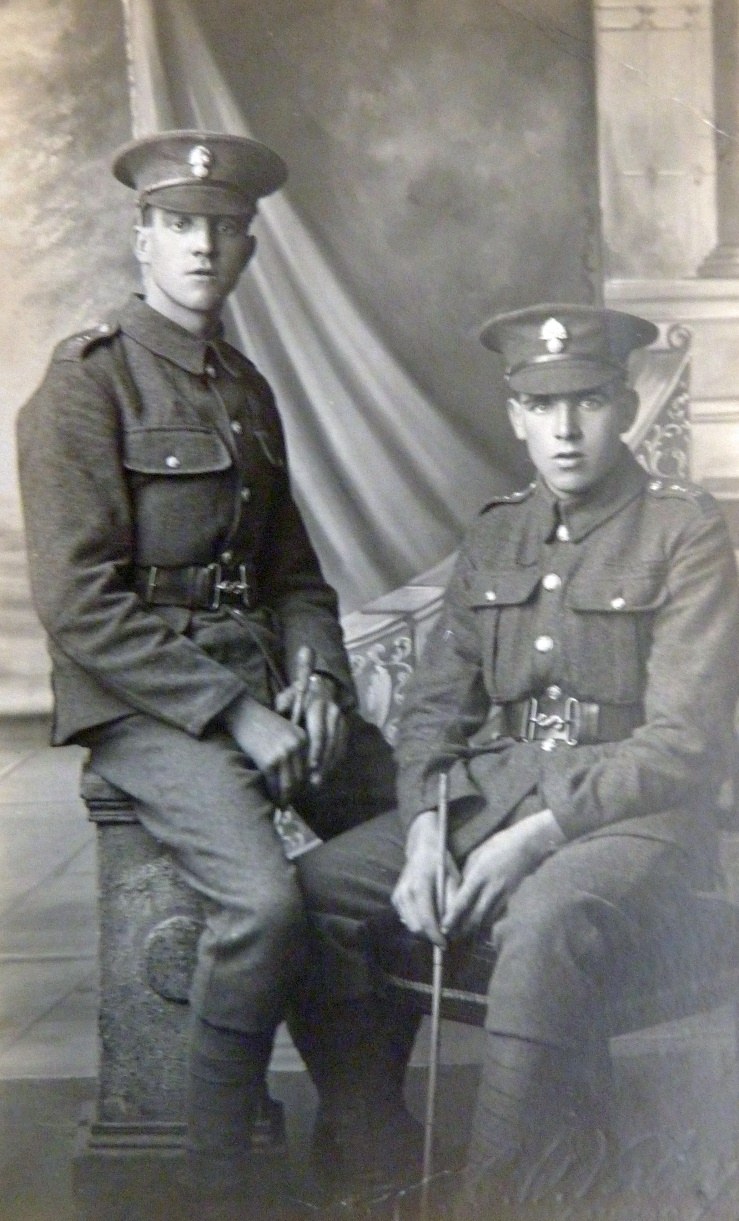
During the long series of battles that summer and autumn, collectively known at the Battle of the Somme, the 8th had lost many men, with the terrible weather being the only winner. By the time that Samuel reached the Western Front the rain and mud was bringing the campaign to an inconclusive conclusion.
Samuel soon experienced the squalor of trench life. he told his grandson, Reg Hackney, that he had been asleep in the trenches and was shocked awake when a rat bit his ear. He then struggled to staunch the blood.
The Germans had been planning and building a heavily fortified series of defences during the autumn and winter of 1916-1917. This became known as the Hindenburg Line and from February 1917 the Germans carried out a retreat to this line, destroying anything useful to the Allies as they retreated. In the Spring of 1917 the Allies carried out a planned assault, with the British troops’ attack being a diversion to assist the main thrust from the French further south. This opened with the First Battle of the Scarpe.
The 8th Battalion were billeted under Arras. There were many large old cellars beneath Arras and, under the suburbs of St Sauveur and Ronville, were caves, many very large, which had been discovered by accident in October 1916. Together they were able to house over 15,000 men. This underground world had piped water, electricity, a telephone system and gas-proof doors. Long tunnels were excavated to enable troops to travel to the Front Line in comparative safety. The Germans knew of the tunnel system and counter-mined it, causing many casualties in the New Zealand Tunnelling Company.
The 8th Royal Fusiliers were now part of the VI Corps and were given the task of capturing the enemy “Black Line” and then to try to move onto the further “Brown Line”. The Wartime Memories Project quotes from this uncredited account of the battle.
The artillery bombardment opened on 4th April 1917 and the infantry – many of whom had been able to approach the front line in the long tunnels and subways reaching out from Arras itself- advanced behind a creeping barrage on 9th April. Resistance was rapidly overcome; fine counter-battery work had stifled the German guns. The leading troops quickly captured the Black Line but German fire increased as successive waves came through to advance on the Feuchy Switch trench, notably from Observation Ridge. In places the German troops were seen retreating at a run and by noon 37th Division had pushed through with orders to capture Monchy le Preux. The 12th Division remained in position as snow and sleet fell.
On the night of 11-12 April, 36th and 37th Brigades moved up and relieved units of 8th Cavalry Brigade east of Monchy. Next day, 29th Division relieved 12th Division, whereupon the units moved back to the area between Arras and Doullens. The attack had been highly successful making an advance on the Divisional Front of some 4000 yards for a total of 2018 casualties.
We see how success had come to be measured in casualties per yard. It seems likely that it was in this attack that Samuel was first wounded. The Chronicle and Echo of 25th April 1917 briefly reported that he had been wounded on April 11th. The Medal Rolls shows two periods of service in a warzone for Samuel, the first ending on 27th April 1917 and the second starting on 24th July of the same year. This gap probably indicates the time spent by Samuel in England recovering from his wounds.
If Samuel returned to the Royal Fusiliers 8th Battalion at the end of July 1917 he would have found it in the Monchy area with little enemy action. In September, however, they moved to Wancourt in the Feuchy Line but after billeting at Achicourt the Battalion relieved the 9th Essex near Monchy again. The Battalion now followed the usual pattern of periods in the trenches followed by periods in reserve, training and having some relaxation. The weather in October was very wet and cold and windy. The 8th then marched and entrained during early December to Moulin le Comte. It seems most likely that Samuel had been wounded again before the December moves so, probably, in the Monchy area.
On 22nd December 1917 the War Office Daily List No. 5449, reported that Samuel had been wounded and was entitled to wear a “wound stripe”. There was usually a gap of at least a month between the wounding event and its report in the Daily Casualty List so we cannot be sure of the action in which Samuel sustained his second injury. It seems that he was only back at the Front for a few months before being wounded again. We know from the Ringstead Roll of Honour that he had been wounded twice. His second injury was a gunshot wound to his right leg which had fractured his femur.
From his grandson, Reg Hackney, we heard that the two wounds were in the same leg and he had difficulty in walking for the rest of his life. Reg also remembers his grandfather telling of being stretchered away from the Front Line when the enemy began shelling again. In the panic he was tipped into a ditch, in even greater pain.
From his Silver Badge record we know that he was discharged on 18th July 1918 because of his wounds. The Medal Roll gives a discharge date of 18th January. There may be error in the month, as “1” and “7” can look very similar, or the January date was when he left France and the July date was his final discharge date. He was given a pension from 18th July 1918 to 15th July 1924, which was longer than many, and indicates the seriousness of his disablement.
Samuel George Hackney was in the Absent Voters’ List for 1918, shown with his two (absent) soldier brothers in Gladstone Street but he was in the Register of Electors for 1919. He remained in Gladstone Street with his father, John William and Edward and Ernest until his marriage in the Summer of 1926 to Margery Mabel Wilson. Margery had been born on 4th February 1900, the daughter of Herbert and Emilia Wilson. Herbert was a wheelwright by trade but by 1911 the family had moved to Pearce’s Yard in Ringstead and he had become a millwright.
Samuel and Margery had two children, Wilson born in 1927 and Jean in 1929. In the 1939 Register of England and Wales they were living in High Street, some five doors from the Post Office. Samuel was working as a plumber and painter and Margery as a heel cutter and the two children were living with them.
Samuel George Hackney died on 24th December 1961 in St. Mary’s Hospital in Kettering. Administration was granted to his widow, Margery. The “Effects” were given as £840. He was living at the time of his death at 17 Gladstone Street, which may have been his old family home. Margery died on 13th March 1963, with Administration granted to her married daughter, Jean.
Ernest Hackney (1895-1978)
Ernest Hackney was the youngest of the three brothers who fought in the Great War. He was born on 21st October 1895 (19th on his death registration) and by 1911 he was 16 years old and working as a farm labourer like his two older brothers.
We do not know exactly when Ernest enlisted but, as he did not receive an 1914/15 Star, he must have been a conscript in 1916 or later. Unlike his brothers he was posted to the Machine Gun Corps and given the Regimental Number 65877.
The Machine Gun Corps (MGC) had been formed in October 1915 when it had become clear that this weapon would play a decisive role in trench warfare. Unfortunately, without the organisation and history of the old Regimental system, few of its records survive. Its members, however, looked back on their service with pride. George Coppard, a former machine gunner, wrote in his autobiography:
No military pomp attended its birth or decease. It was not a famous regiment with glamour and whatnot, but a great fighting corps, born for war only and not for parades.
The devastating firepower of the machine gun was, of course, recognised by both sides and so it was an important target for the enemy. Some 170,500 officers and men served in the MGC and there were 62,049 casualties, including 12,498 deaths. We know from the Ringstead Roll of Honour that Ernest was wounded twice, like his brother, Samuel.
The lack of MGC records make his army service more difficult to trace than most but we do know a little about his wartime experiences. Ernest was reported as wounded in the War Office Daily List No. 5415 on 13th November 1917 and was entitled to wear a wound stripe.
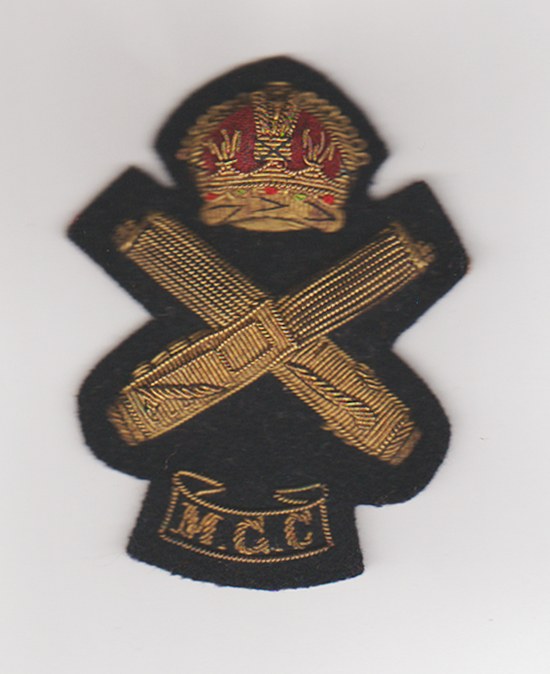
We also know that Ernest became a member of the 30th Battalion of the Machine Gun Corps. This had been formed, following a reorganisation, from the Machine Gun Companies of the 30th Division. In 1918 the 30th were on the Somme Front and took part in the Battle of Lys. They were also in the Advance on Flanders and, at the time of the Armistice, had crossed the River Scheldt with the most advanced units reaching north-west of Lessines.
Ernest was “Gazetted” on 19th August 1919 (issue 31512). He had been awarded the Military Medal which was given “for acts of gallantry and devotion to duty under fire”. His great nephew, Reg Hackney, believed that it was for his action, in destroying a machine gun nest, that Ernest received the award.
Although it is a very long time after the event, it seems most likely that it was awarded for his actions in the final advance prior to the signing of the Armistice on 11th November 1918. Certainly in the Roll of Individuals Entitled to the Victory and War Medals, Ernest is shown as being put into “Class Z” on 13th February 1919 and this would have been a part of his demobilisation.
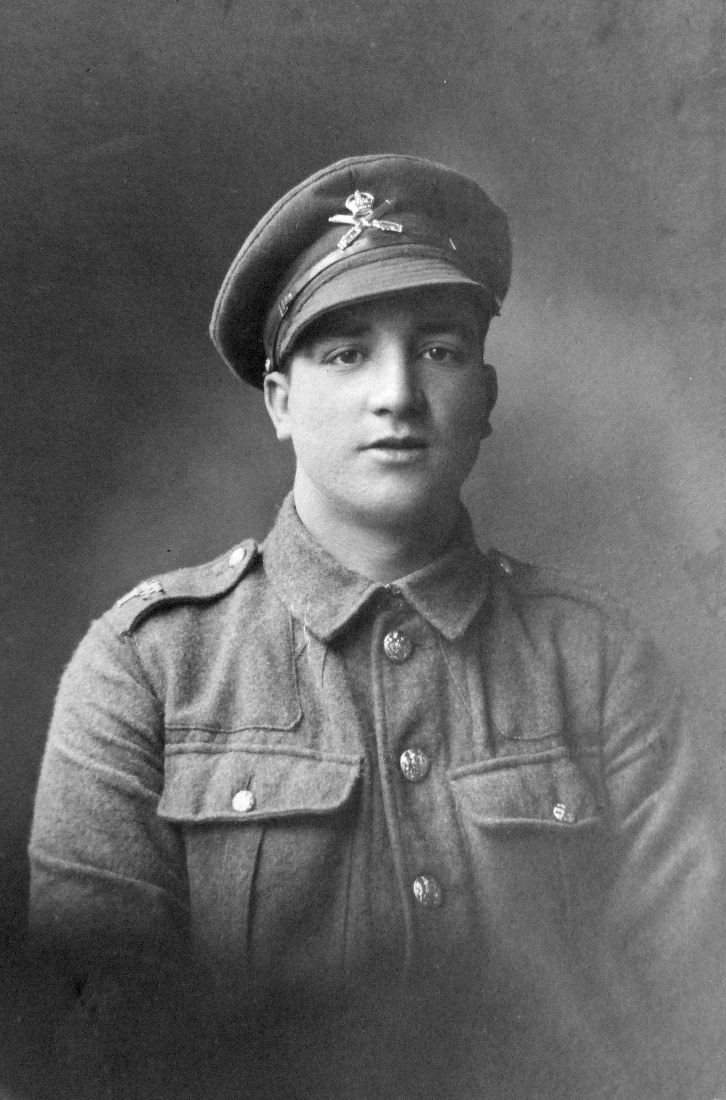
Further, we know that in January 1919 the 30th Division returned to the bases in Dunkirk, Calais, Boulogne and Étaples and began to demobilise. In the chaos at the end of the war, with the return to the United Kingdom of soldiers from Britain and the Commonwealth, the bureaucracy struggled to deal with the required records. It may be, therefore, that so long after the event, Ernest’s award slipped by almost unnoticed, and I have found no mention of it in the local newspapers.
Ernest returned to Ringstead. He was shown in the Absent Voters’ List for Ringstead in 1918 and, like his brothers, was shown in Gladstone Street in the Register of Electors for 1919.
In the last quarter of 1930 he married Florence Bannister. Florence was the daughter of Henry Bannister, a shoehand originally from Northampton, and his wife Rhoda, a local girl. In 1911 the Bannister family had been living in Carlow Road in Ringstead.
In the 1939 Register of England and Wales Ernest was a general labourer to a bricklayer. His wife Florence was hand-cutting heels. Two doors away was his brother Samuel and his wife Margery with their family. They were all living near the Post Office in Ringstead High Street.
Ernest died, aged 82, on 13th May 1978 and Florence, who lived to be 95, died in 1998.