The Great War: A–M · Story 4
Henry William Attley (1896-1977)
Ringstead is mainly remembered in history for the alleged murder of Lydia Attley by William Weekley Ball in 1850 and for Margaret Thatcher’s father coming from the village. Henry William Attley brought these two strands together. When Henry’s grandfather, John Attley, died in 1907 the Northampton Mercury again linked him back to the death of John’s sister Lydia and his belief that, although her body was never found, she had been “foully murdered” by William Weekley Ball.
John had married Sophia Pheasey at Ringstead on 17th March 1859 and among their children were Frederick, born in 1867, and Henry William, born in 1871. At first I thought that this Henry William Attley was the person I was looking for. Although he was a little old to enlist, older men did sign up and were often assigned to home defence duties..
I later realised that Frederick, who married Frances Alice Riddle on 25th December 1892 at Ringstead, had a son also called Henry William, born on 15th November 1896, and he was the man I was looking for. Some of the confusion was caused by the fact that he was born in Northampton. Frederick and Frances started their married life in Ringstead where their daughter, Lily, was born. They moved to the Northampton factories as a number of Ringstead shoemakers did in a time of hardship for the handsewn military boot industry. In 1901 Henry was four years old and living with his parents and sister at 30 Welby Street.
When Henry was five, however, the family returned to Ringstead and in the 1911 Census the family were living in Spencer Street in Ringstead. Lily was living in Finedon as a maidservant but Henry William was still at home and there were now other children; Ivy Francis (8) Bert Riddle (5) and twin daughters Iris Dora and Margaret Olive who were just one month old. It is worth noting, in view of Henry’s later career, that these Censuses show that Frederick’s wife, Frances, was born at Allahabad in India. The India Select Births and Baptisms 1786 – 1947 shows her birth was on 30th November 1871 at Saugur in Bengal. We see that, at 14, Henry had left school and was working in a local factory at “heel building”.
Henry spent most of his youth in Ringstead. In an article on Margaret Thatcher in the Chronicle & Echo in 1975, Henry recalled “blowing” the organ for Mrs Thatcher’s great-uncle, John Roberts. The article continued:
Particularly does he recall one occasion when, a bit inattentive to his job, he let the pressure drop.
“Blow, boy, blow”, old John hissed at him as loud as he dared without the congregation hearing.
The Ringstead Roll of Honour, published June 1919, listing those who served in the Great War, recorded that Lieutenant Henry William Attley served with the 3rd Battalion of the Norfolk Regiment in France and had been invalided home and was “now assisting demobilisation at Crystal Palace”. The Medal Card for Henry William Attley records that he served with the 12th (Yeomanry) Battalion of the Norfolk Regiment. There are other anomalies between the Medal Card and other reported information but the coincidences are too great to ignore and I believe that the matter is sealed because at the bottom of the card it gives two addresses: 198 Kettering Road, Northampton and Ringstead, Thrapston, Northants.
Fortunately, I also received advice through the online Great War Forum that Henry’s records, probably because of his WW2 service, were still held by the Ministry of Defence. These help fill in some of the gaps although they do not clear up all the discrepancies. One surprising fact they do show is that Henry was educated in an unnamed private school. We do know, however, that by 14 years old he was already working in the shoe trade.
In an article published in the Market Harborough Advertiser and Midland Mail on 12th February 1943, it stated that Henry enlisted in 1915 at the age of eighteen and was commissioned in the Royal Norfolk Regiment in 1917. I think that the first part of this statement is just wrong and the M.O.D. records show that he enlisted with the 13th Battalion of the Suffolk Regiment on 8th December 1915 when he was just nineteen. He was immediately transferred to the Army Reserve until his services could be used and was first mobilised for service on 26th June 1916. Two months later, on 21st August 1916 he was promoted to Lance Corporal. Perhaps his height and bearing were an advantage because he was six feet tall when he enlisted which was much taller than most recruits at the time.
It does not appear that Henry was in a war zone during this early period. The 13th (Reserve), Cambridgeshire, Battalion of the Suffolk Regiment was locally formed in 1915 and moved to Trowbridge. In February 1916 they had moved again to Leamington and then to Richmond Park. On 1st September 1916 it became the 108th Training Reserve Battalion of the 26th Reserve Brigade in Wimbledon.
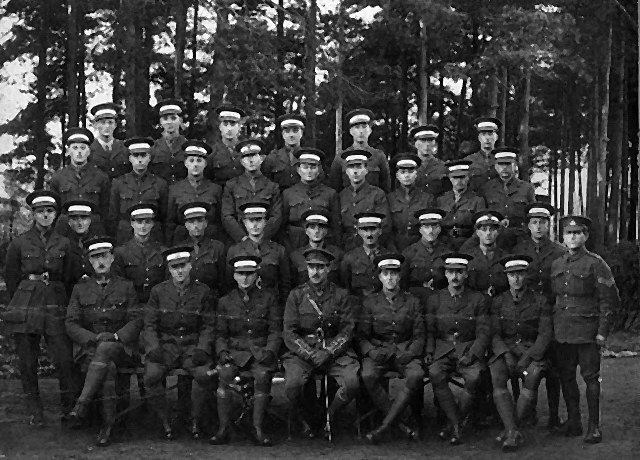
Henry must have shown some leadership qualities for he was promoted again on 17th January 1917 to Acting Corporal. He was then selected for officer training. The group picture above shows him with other officer cadets. It may seem remarkable that a working-class young man like Henry should become an officer but war and the heavy losses of young officers forced some democratisation of the army. In February 1916 a new system of training for officers was introduced. Entrants had to be over 18½ years old and to have served as a “ranker”. The training course lasted just 4½ months and, if successful, the soldier would be given a temporary commission.
It may be that, after passing out, he was with the 1/1st Norfolk Yeomanry which became an infantry regiment, the 12th (Yeomanry) Norfolk Regiment, at the Suez Canal defences in Egypt, on 7th February 1917. Certainly the 12th are the first regiment to appear on his Medal Roll, when he was a Second Lieutenant. The 12th was attached to the 230th Brigade of the 74th Division and fought in the Second and Third Battles of Gaza, including the capture of Beersheba and of the Sheria Position. They were also involved in the capture and defence of Jerusalem and the Battle of Tell’Azur
The 12th sailed from Alexandria on 1st May, arriving at Marseilles on 7th May 1918. From there they would have moved north by train arriving by June at the Western front and were transferred to the 31st Division of the 94th Brigade on the 21st.
During the “Advance on Flanders” the Battalion was involved in the Action of Tieghem and crossed the River Scheldt on the 9th November 1918. When the Armistice was signed on the 11th November the forward units had reached Everbecque and the River Dender. The Battalion moved back to Arques-Blendecques and the process of demobilisation began.
At some point in these actions Henry was invalided back to England. His son, David, has a photograph of him, with a walking stick, in a group shot with other officers at a military hospital. They are all in uniform and in the centre is a very severe-looking matron. His uniform appears to be that of the Norfolk Regiment.
Henry then went to Crystal Palace and helped with the demobilisation at the end of the war. It was probably at this point that he was transferred to the 3rd Battalion of the Norfolk Regiment (as reported in the Ringstead Roll of Honour), because this “Reserve” unit was a training battalion which spent most of the war at Felixstowe and never moved out of England.
In November 1918, the British Army had numbered almost 3.8 million men. Twelve months later, it had been reduced to slightly less than 900,000 and by 1922 to just over 230,000. The supervision of the demobilisation was not the easy cheerful posting that one might imagine. Lloyd George had promised that there would be rapid demobilisation but the transport and bureaucratic systems were overwhelmed by the numbers returning.
Writing on the Kent History Forum one of the posts by “grandarog” tells of his father who also helped at Crystal Palace:
He said that it was a real nightmare job as morale among the men was terrible. Lorry and busloads of men were arriving all the time from the holding camps so there was always a huge backlog throughout the day. The officers had extreme difficulty in keeping the men in order and fights often broke out as men tried to force their way to get to the desks. It was very bad late afternoons when new arrivals were turned away and some that had been waiting all day were sent back to the camps.
At some point, in late 1919 or possibly in February 1920, Henry sailed to India and became part of the Indian Army. It may be that there is a clue to his career direction in his ancestry. His mother’s father, Alfred Riddle, was a colour sergeant in the King’s (Liverpool) Regiment. When we look back at the 1881 Census for York we see him there in the Fulford Road Barracks. Living with him are his wife, Bridget, from Sligo in Ireland and four of their children, three of whom were born in India and span a period of 11 years. Among them is Fanny (Frances) who later married Frederick Attley. Perhaps his grandfather helped Henry with his career through higher connections? We have no way of knowing.
According to his Medal Card, Henry was posted to the 2nd Battalion of the 89th Punjabis which had been formed in 1917 and later, in 1922, became a training battalion. The Battalion was stationed at Nowshera in the North West Frontier province (now in Pakistan) when it received orders to mobilise for service in Mesopotamia (Iraq). In October 1920 the Battalion joined the 52nd Indian Infantry Brigade, 18th Indian Division in which it served until at least March 1921. There is some confusion in that the form he completed to become an “Emergency Officer” in WW2 states that he was with the 2nd Battalion of the 11th Gurkha Rifles from 1919 to 1921.
We see that Henry Attley served on the North-West Frontier of India and Iraq in 1920 and 1921 and also in Persia. From his WW2 records we know that he had a good to fair knowledge of spoken Hindustani as well as some knowledge of French.
After the Treaty of Versailles in 1919 the idea of the League of Nations was to establish Mandates in the defeated central Powers so they would move towards independence under the “tutelage” of one of victorious Allied Powers. The Iraq Revolt started in Baghdad in the summer of 1920 by officers of the Old Ottoman Empire (which had been allied with the Germans) against the British occupation of Iraq. Although the revolt was largely crushed by the end of October 1920, it festered on until 1921. Some six to ten thousand Iraqis and around 500 British and Indian soldiers died in the conflict.
The British decided to rule Iraq by more indirect means and installed Faysal ibn Husayn as King of Iraq. His family remember that Henry talked of meeting “King Faisal” in Baghdad.
We do not have absolute dating of his service but we do know that on 7th February 1920 Lieutenant H.W. Attley left Liverpool bound for Bombay on the SS Patricia. The following year he arrived in London on July 11th 1921 from Bombay on the SS Sardinia. Further, on this voyage we have the information that, on returning to England, Henry was intending to reside in Tilcroft in Ringstead, near Thrapston and was 24 years of age. It seems likely that these voyages define his service in Iraq and India, a period of about eighteen months. On 10th August 1921 he was placed on the Indian Army Reserve of Officers and retained the rank of Lieutenant.
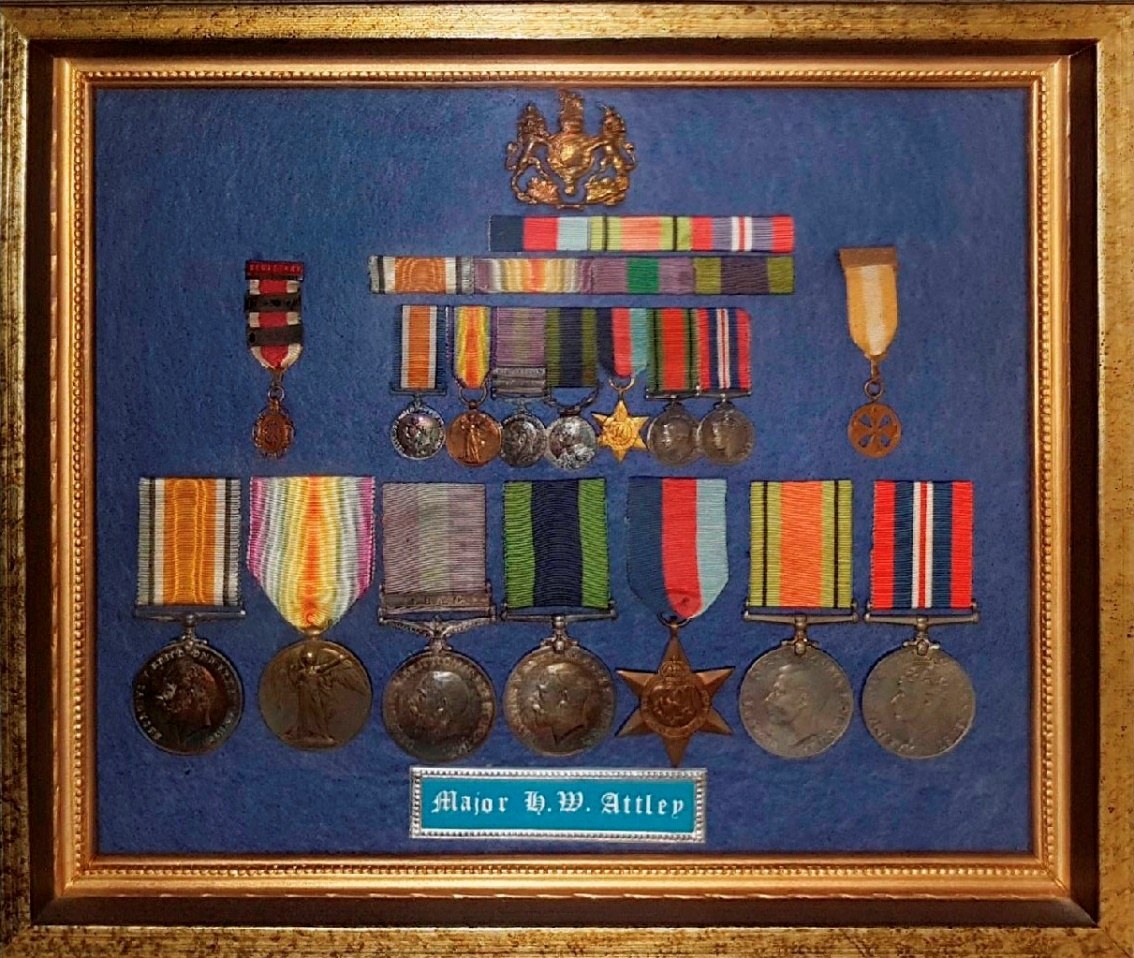
He received the Victory and General Service Medals, India Frontier Medal (1919) and Iraq Medal with bar (1921).
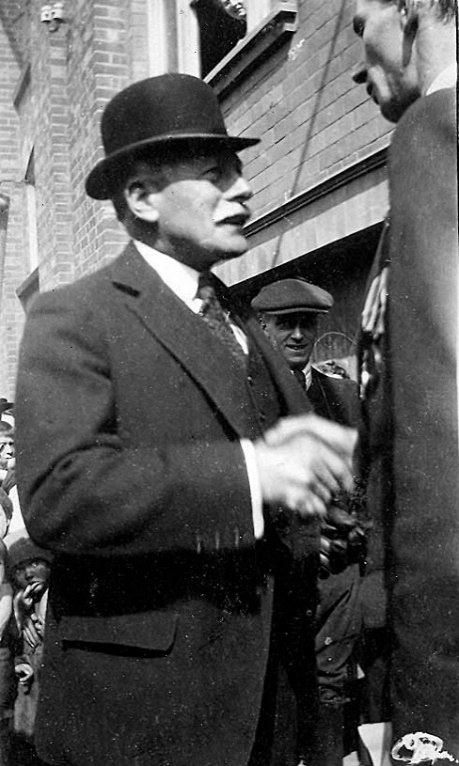
On leaving the army and returning home his work was in the leather trade. The Daily Echo on Saturday May 20th 1922 reported on a visit that Earl Haig made to “two typical Northampton factories” on that morning. One of these was the Chrome Tanning Company, Ltd, in Grafton Street. Some 60% to 70% of the staff were ex-servicemen of which 37% were in some measure disabled through war service. Earl Haig was escorted around the works by H. W. Attley and a Mr. Cross who explained the processes. It seems certain, as neither man is in uniform, that the photograph above was taken during this visit.
On 22nd April 1924 Henry married Mary Bertha Roskell, in St Joseph’s Catholic Church in Hartlepool. She had been born in Richmond in Yorkshire, the daughter of Richard Aloysius Roskell, a senior bank clerk. In 1911, aged 15, she had been attending a Convent School at East Wymer, Norwich, where her aunt was a sister and a teacher. It is not clear when and where Henry and Mary’s paths crossed.
The war memorial in Ringstead churchyard was dedicated on Sunday 29th June 1924. A procession to the site was headed by the Raunds’ Temperance band and included sixty ex-servicemen led by “ex-Lieutenant H. Attley”.
By 1939 Henry and Mary were living in Prospect House in York Road, Wollaston, some ten miles south-west of Ringstead. Henry was a Leather Trade Agent, but the Second World War had begun and, on 30th October 1939, Henry was given the “Regular Army Emergency Commission” of 2nd Lieutenant and promoted the following day to Acting Captain. He had begun his second army career. His service number on the Ministry of Defence website is given as P104483.
For two years, he was in command of “A” Company of the 4th Northamptonshire Regiment. The 4th Battalion was a 2nd Line Territorial Army formed in 1939 which never served abroad during the war. In 1941 he became Adjutant of the 8th Northamptonshires Home Guard Battalion which recruited from the Rushden area and on 27th May 1942 was promoted to temporary Captain. On 11th May 1943 he was again promoted, to Temporary Major, and posted to RAF Tempsford in Bedfordshire to undertake special liaison work with Bomber Command of the RAF. RAF Tempsford was, during the war, the base for the Special Operations Executive (SOE) which flew underground agents and their supplies into enemy occupied Europe. The station was home to “Special Duties” 138 and 161 Squadrons. Over eighty aircraft and most of their crew were lost from Tempsford during the Second World War. It was here that he met well-known people such as Odette Churchill and General de Gaulle.
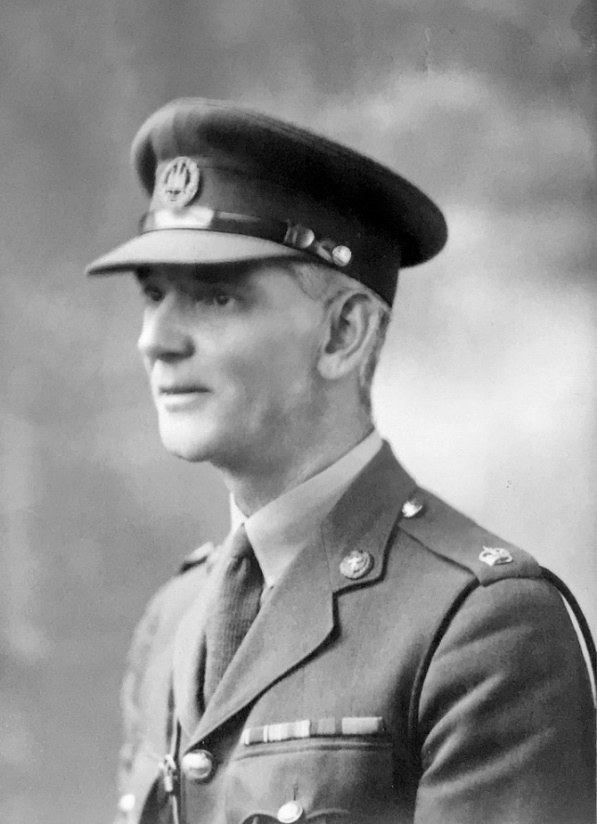
He became the Commanding Officer of Shalstone Prison-of-War Camp in Buckinghamshire. The Buckingham Advertiser and Free Press of 29th November 1947 had a letter published which showed another side to the war:
Dear Sir, - To many of us it has come as a surprise that the P.O.W. Camp at Shalstone is closing down during this week-end, those Germans not due for immediate repatriation being transferred to other camps. During the last few months many friendships have been made between the Germans and local people, and I am happy in the knowledge that some of the P.O.W.’s will return to their homes with pleasant memories of some contacts that they made in Buckingham.
Henry too made friends with some of the German prisoners, and his son remembers considerable correspondence between his father and former prisoners after the war. Henry went to Austria and Germany to visit some of them in about 1950.
Henry and Mary were involved in a great deal of community work and were particularly prominent in the British Legion which had been formed in 1921 to help look after soldiers and their families after they had left the services. Mary led the local women’s section and Henry rose to become the chairman of the Northamptonshire branch of the Legion.
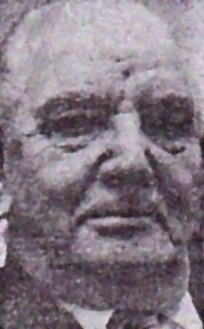
He retained the Honorary Major rank in retirement and was awarded the War Medal 1939-45 and Defence Medal for his WW2 Service.
In later life the couple moved to Midland Road in Wellingborough. Henry died there aged 81 at the end of 1977. Mary died some six years later on 17th December 1983.