The Great War: A–M · Story 35
William Edward Mason (1887-1964)
A farmer, called Amos Mason, living in Molesworth in Huntingdonshire, had 99 acres of land. He had been born in 1814 and had married Jane Howell from nearby Catsworth. For some reason the couple, who had seven children, decided to move west across the county line to Ringstead in the 1860s. He became the landlord of the Swan Inn which stood in Carlow and faced down the High Street. There were also some nine acres of land for Amos to run a smallholding.
Amos died, aged 65, and was buried in the churchyard on January 12th 1879. His widow, Jane, took over the licence but by the mid-1880s had moved to London End, in the poorer cottages at the other end of the main village.
One of Jane Mason’s children was Frederick, who had been born in Molesworth in about 1859, and moved to Ringsted with his parents. In 1881 he was living at The Swan but, aged 21, was working as an army shoemaker. On 26th February 1886 he married Denford girl, Anne Elizabeth Horne. By 1891 they were living next to Anne’s parents, Fortescue and Emilia Horne. Fortescue was 66 years old and a “cottager” or smallholder. Frederick and Anne now had two children, Amos Fortescue (5) and William Edward (4). Amos had been born on 12th April 1885 and William’s as 25th March 1887. By 1901 Amos (15) and William (14) were both shoemakers, working at home with their father at 15 Carlow Road. Frederick died in 1908, aged just 49, and in 1911 Amos (25) was shown as the head of the household and widow Annie (53) and brother William (24) were living with him.
The following year, William married Coral Lucretia Cope, just a year his junior, in Ringstead Parish Church. The Cope family was one which had, and was to have, more than its fair share of troubles. James Cope, Coral’s grandfather, had been born in Wilden in Bedfordshire. In 1861, aged 17, he had moved to Keysoe, just a few miles from Ringstead, working as a shoemaker, with his uncle, Thomas Cope. James married Jane Hillson in Ringstead on 24th December 1862.
The couple had at least six children, among them Louisa and Henry. James seems to have supplemented his income by a bit of poaching, shooting partridges. He was caught, along with nephew George and other local men on 11th February, and, as the perceived ringleader, was fined £2 with 10 shillings costs. His wife, Jane, was buried on 1st July 1881, aged 36 years. It may be that it was as the result of infection following childbirth for on February 11th 1882 Ruby Jane Cope was also buried aged just eight months.
James remarried, in early 1886, to Hannah Elizabeth Austin and had two further daughters, Maggie and Maud. At about the time of his second marriage, daughter, Louisa, left home and moved to Peckham in London. We know this from later Censuses which show that her daughter, Coral Lucretia, was born there on 7th March 1888. Was hers the fate of many young women who went into service? We do know that soon after, on 8th May 1889, she was taken into Berrywood Mental Hospital (sometimes Asylum). There were instances of women being taken into asylums because they were giving birth to illegitimate children but in Ringstead it was a far from unusual predicament and the women continued to live in the community, so it seems unlikely that this was not the cause. Whatever the reason, her time there was not long for a year later, on 19th May 1890 Louisa died of Enteric Fever, usually called Typhoid. Typhoid is caused by a type of Salmonella, often contracted from a contaminated water supply. I have not found any news item on there being an outbreak at the hospital but it was around at this time in some of the local towns such as Raunds and Burton Latimer.
Louisa’s daughter, Coral Lucretia was baptised, after Louisa’s death, in Ringstead on 1st May 1892. In the 1891 she was seen to be living with her grandfather, James, and his second wife, Hannah. Hannah too died in 1910 and, in 1911, aged 23, Coral was living alone with James in Wymans Road in Ringstead. He was still an army bootmaker and Coral was now a shoe stitcher.
On May 25th 1912 Coral, aged 24, married William Edward Mason in Ringstead. We can see on the marriage certificate that she had no known father. The young couple’s life together was short for, on 7th October of that same year, she died. She was 24, the same age as her mother when she had died. The cause of death given on her death certificate was “Acute Bright’s Uraemia, Cardiac Arrest”. Bright’s Disease was a name given to a disease of the kidneys which caused waste materials to build up in the body rather than being excreted. It could lead to further complications in the body’s organs and, as in this case, cardiac arrest. It was an unpleasant way to die with, among other symptoms, extreme fatigue, itching sensations and twitching, nausea, vomiting and diarrhoea. William was present at her death and it was to be one of many that he would witness.
Two years later, on 6th November 1916 William was with the 2nd Battalion of the Royal Fusiliers (London Regiment) and had been given the Regimental Number GS/42550. His military records have largely disappeared and it is likely that this date was when he first landed in France. He was with the 2nd Battalion for only a few weeks, possibly at an Infantry Base such as Étaples, on the French coast. On the 26th he was posted to the 20th Battalion “in the Field”.
The 20th Royal Fusiliers was one of its three “Public School Battalions” which in 1914, at a time of romantic patriotic enthusiasm, had been formed entirely from men from the British Public Schools and Universities. It was assimilated into the British Army and gradually became similar to other units with drafts of conscripts coming mainly from the working classes.
The Battle of the Somme earlier in 1916 had weakened the German Army and Sir Douglas Haig wanted to maintain this advantage so, throughout that winter of 1916-17, there were repeated raids and small actions along the Western Front. At the time that William arrived with the 20th they were in rest billets at Merlessart but, on 1st December, they moved by train and by foot into the Front Line, South-East of Grancourt, opposite St Pierre Vast Wood. In this sector the 20th saw no major offensives by either side but there was sporadic infantry and artillery fire. This was to be the pattern over the winter months with short periods in the Front Line interspersed with time in reserve or in rest billets behind the lines. It was not a pleasant time in the trenches foreshadowing the terrible conditions later in 1917. The War Diary of the Battalion reports on the period between 18th and 22nd December 1916:
. . . a hard frost was succeeded by a thaw when tracks had been [laid] became impassable in places. As a consequence movement was very slow and the relief of companies in the front line carried out nightly, occupied the greater part of each night.
Lack of sleep had to be added to the long list of privations suffered by the soldiers.
The German High Command had decided on a planned withdrawal to a fortified line which had been constructed from August 1916 and was known by the Allies as the Hindenburg Line. The withdrawal started on 21st February 1917 and as they left they destroyed buildings, bridges, road, railways and anything that might be of use to the Allies.
The first significant engagements fought by the 20th were the First and Second Battles of the Scarpe which were part of a campaign around Arras that began in April 1917. The British attacks had very limited success but, further south, the French offensive was a complete failure with 187,000 casualties leading to widespread mutinies. In the Second Battle of the Scarpe the 20th were in Divisional Reserve at first but moved up into the Front Line trenches facing Fontaine-les-Croisilles. The following day they moved back into billets. The War Diary gives little indication of the ferocity of the fighting but it does record that in April the Battalion lost 71 men killed, 111 wounded and 18 missing.
The period from May to mid-June was spent around Arras, moving for short periods into the Front line with times in reserve or training behind the lines. On 30th June, however, they received orders to entrain to Dunkerque, where they boarded a barge up the Canal de Dunkerque to Bray Dunes, and camped opposite the Parish Church.
This area of the Western Front, in the Nieuport area in Belgium, was next to the North Sea coast and was important because the ports of Dunkerque, Calais and Boulogne were essential to the Allies for the movement of troops and equipment.
On 16th August 1917 the 20th took over trenches in the marshy Lombartzyde sector of the Front. The British had planned to make amphibious landings in this area when they had achieved a breakthrough in the Ypres area but the Germans were aware of the plan and set up their own attack, using mustard gas for the first time and causing very heavy casualties. Operation Hush was abandoned.
When the 20th were in the Front Line it was still very active but once again they were on the move, 25 miles south, to take part in the Third Battle of Ypres. On 25th September they were near Polygon Wood and under the orders of the 98th Brigade. Here, they were bombed by enemy aircraft, with mustard gas becoming a common occurrence. In September 1917 the 20th lost 2 men killed, 70 gassed and one missing with 9 officers wounded.
From this point on you get an impression of a Battalion being not a Front Line force. In October they were attached to the 3rd Australian Division and spent most of their time in working parties and this continued when they moved to Ypres, reporting to the 2nd Canadian Railway Troops. We see in the Diary a hint of the old traditions that continued among all the mayhem. On 29th October 1917 it records:
3 p.m. Drums and Fifes left camp for Penzance Lines. 2nd Lt. Worley proceeded there to take command of all Bands, Drums and Pipes of the Brigade.
This campaign of the war is usually called the Third Battle of Ypres, with the final phases from mid-October to the 10th November often known as the Battle of Passchendaele, a name associated with terrible mud, and slaughter on both sides. We see the diminishing role of the 20th in the list of their casualties for October; Officers nil; other Ranks 1 killed and 10 wounded.
On 3rd November the Battalion moved up into the Front Line and three days later were relieved and marched, “via STINKING FARM – WULVERGHEM – NEUVE EGLISE – to KORTEPYP A Camp”. Passchendaele continued on its terrible progress but the 20th were mainly in carrying or supplying roles and, during the whole of November, the only casualty was one man wounded. This pattern continued into the new year and from 14th January they were billeted in the cellars of Ypres. On 1st February 1918 the War Diary records:
Orders received for disbandment of the Battalion. Personnel to be posted to the 2nd, 4th and 13th Battalions.
According to the Medal Rolls, William had already been posted to the 13th Battalion of the Royal Fusiliers on 30th January but this probably records when the order was sent, rather than acted upon. The 13th Battalion were one of Kitchener’s New Army units formed in 1914. They had landed in Boulogne on 30th July 1915. The War Diary for the Battalion records on 9th February 1918:
Draft of 8 officers and 213 Other Ranks from disbanded 20th R. Fusiliers joined Bttn.
It seems likely that this is when William joined them. In February, the 13th were in the Dickebusch area, south-west of Ypres, and then moved up into the Front Line where, initially, there was only “slight” shelling. On the 25th, however, the enemy opened up a heavy bombardment of gas shells. A captured German stated that they were about to attack.
In early March 1918 there was snow with cold winds, but it turned to rain and the 13th moved up to the Front Line astride the Menin Road. At 1 a.m. on the 8th a message was received that an enemy attack was expected and, at 6.30 a.m., heavy shelling began. A desperate message was received from No.3 Company:
Please send as many stretcher bearers as possible – only a few men left to carry on and no officers fit to carry on. 2 officers killed 2 wounded. Please send reinforcements as soon as possible. A CLARK Sergt. No 3 Company.
Reinforcements were sent and the situation saved. This seems to have been a precursor to the German, “Michael Offensive”. The 13th were in billets or on the march for the rest of March, finishing at the end of the month in billets at Rossignol Farm.
In April the German offensive gathered force, with infantry attacks and heavy bombardments. The 13th did not receive the main thrust of the attack and were able to hold their line but elsewhere the enemy were breaking through and so the Battalion was forced to retire to prevent becoming surrounded. The Allies generally had to give ground and the Germans seemed to be in the ascendancy but they too had suffered heavy losses of men and resources. The offensive dwindled to a halt and, for the 13th, much of May was taken up with training at Louvencourt and Vauchelles, south-west of Arras.
On 7th May 1918 there was an important note in the War Diary:
Capt. Cooke, American E. [Expeditionary] F. [Force] attached for instruction.
The Americans had arrived and the impetus of their troops and armaments would tip the balance for the Allies.
The Battalion was still in and out of the Front Line from Noyon to Montdidier, south-east of Amiens. It was from this point that despite setbacks and losses the move forward gained momentum and they began to find empty but booby-trapped enemy positions as on 29th July near Bucquoy Cemetery where one man was killed and four wounded in this way. There was still stiff opposition, however, as the enemy covered their retreat.
The 13th were part of the Battle of the Canal du Nord. This canal had been started just before the war and when hostilities broke out it was only partly finished. Much of the canal was empty but it was still a formidable obstruction because it was approximately 40 yd (37 m) wide, with a western bank that was between 10 and 15 ft (3.0 and 4.6 m) high and an eastern bank about 5 ft (1.5 m) high so temporary bridges were needed. In early September 1918, the 13th took part in the preparatory skirmishes but were not involved in the main attack at the end of September but were in relief in Bertincourt and then, ten miles west, in a tented camp at Warlencourt-Eaucourt.
On 8th October the Battalion, as part of the Battle of Cambrai, took part in an attack but met fierce enemy gunfire. A second attack on the 10th was successful, however, and was “without difficulty except for the supporting tanks which persistently fired at our own troops and from our own barrage which was late and short”. This included the relief of the town of Caudry and on the 27th a letter was received from the Maire, thanking the Battalion for liberating the town Over 200 prisoners were captured but the Battalion suffered many casualties. After time in billets at Caudry, on the 23rd October, in part of the Battle of the Selle, the Battalion moved to Salesches and attacked the enemy in a fierce battle around Ghissignies, leading to 102 Other Ranks casualties.
On 1st November the Battalion was at Beaurain and then moved into support as part of the Second Battle of the Sambre but were not to be tested again and on 11th November the War Diary had two entries:
Bttn formed Guard of Honour for Prince Yorahito* at Berthincourt. . .
Armistice took effect from 11.00 hours.
*Japan was on the Allies side in WW1. Possibly Hirohito who later became Emperor..
On 16th December 1918 the War Diary had a rare entry for a woman
The Military Medal was also awarded the Mme. MARGUERITE LESNE who rendered considerable assistance to the wounded of the Battalion at GHISSIGNIES during the action of 24/10/18. This lady assisted wounded in the open under artillery fire.
During December 1918 and January 1919 the Battalion were in the Naumur area and demobilisation began in earnest, although not without problems. The War Diary records:
There is a certain amount of very natural discontent, chiefly arising out of the mistakes of the Home Labour Ministry.
While William was in France seeing death as a daily occasion, another tragedy was unfolding back home in Ringstead as a result of the war. There was a postal service maintained to the soldiers at the Front and it seems likely that he would have heard of the events involving his late wife’s uncle. The Northampton Daily Echo of Wednesday February 27th 1918 reported:
A terrible tragedy was discovered at Ringstead shortly before seven o’clock on Tuesday, when Harry William James Cope, s shoe operative living in London End, was found dead in a bedroom in his house.
His throat was cut, and in the same room were found the dead bodies of his two children, whose throats were cut also.
Harry Cope’s wife had died some five weeks earlier, leaving him with three young children. He had been granted an exemption from war service but this had expired in December 1917 and he had received a call-up notice. He had appealed but had been late in returning his form which meant that the Tribunal could not deal with his case. They did, however, write to the military to ask them to reconsider their decision and it seems likely that this plea would have been successful. Unfortunately, Harry Cope was suffering from some sort of breakdown and he killed his two sons and himself. His daughter was staying with another family and so remained the sole survivor. His sister, Louisa, had died in Berrywood Mental Hospital so could there have been a genetic illness? We may never know.
William returned to his own family but the deaths in his late wife’s would have haunted him. The village had many houses where sons, husbands, fathers, brothers and lovers had been killed, or injured and returned home with physical and mental disabilities. We know that many old soldiers never talked of their war experiences, wanting it to be left in the past. As William’s army records have largely been destroyed, we do not know when he was promoted to Lance-Corporal or, more importantly, when he was awarded the Military Medal. The London Gazette of 13th May 1919 (No. 31338) listed his award for “bravery in the field”. There was no mention of this award in the Northampton Mercury. Did other villagers know of his courage?
In 1920 William was living in Carlow Road with his widowed mother, Annie Elizabeth, and brother Amos and his wife Annie Jane. It does not appear that Amos Fortescue Mason had been called up. In 1912 he had married Ann Jane Swingler from Little Addington and had sons Frederick John on 29th March 1914 and another son William Frank on 22nd May 1920. Does the gap indicate that Amos was away serving his country in some capacity elsewhere?
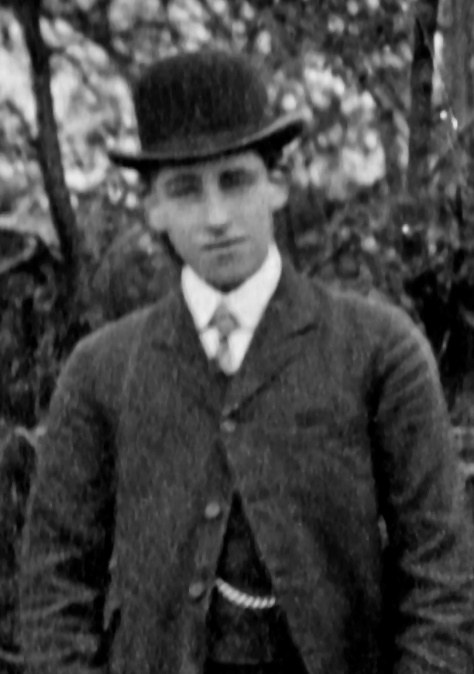
It appears that Amos and his wife were the first to leave Ringstead and move to Heckington in Lincolnshire to set up business as a boot and shoe repairer and seller. The Kelly’s Directory of 1926 list him as a boot and shoemaker with a shop in St Andrews Street in Heckington. Oddly he is in Ringstead’s Electoral Register for 1923 and in Banks Lane in Heckington in 1922. I think this is probably just an oversight in not taking him off the Roll.
By 1924, brother William had joined him in Heckington in Banks Lane. Also living in Banks Lane were Samuel and Jane Mowberry and in 1926 William married their daughter, Edith. In 1928 there was another tragedy for William for their first child, William Edward Mason, was buried in Heckington Cemetery on 10th April 1928. He was just ten hours old.
By 1930 William and Edith had moved to 118 Harrowby Road in Grantham and in the 1931 Register he is shown as having a shoe repair shop on the East side of London Road in the town. They were still in Harrowby Road in 1939 where William was a “Boot Repairer and Retail Dealer. Edith had the usual “Unpaid Domestic Duties” and living with them is son Brian, born on 29th April 1930. Brother Amos was still a boot dealer and repairer living in Banks Lane.
William and Edith moved, perhaps in retirement, to Rose Cottage in Wilsthorpe near Stamford. On 15th June 1964, that was their home when he died in the Stamford and Rutland Hospital in Stamford. He left £682 to his widow. He would have been about 77 years old. Edith followed him some seventeen years later in 1981.