The Great War: N–Z · Story 24
The Weekley Families
A Simplified Family Tree following the male line only
Esau
I
William
1751
l
----------------------------------------
l                                                    l
                                   Henry                                              Esau                             James
                                     1785                                               1789                              1790
                                     l                                                       l                                      l
              ----------------------------                                         l                                      l
               l                                    l                                        l                                      l
                  John                          William                             William                          John
                           1820                             1829                                 1819                               1837
                     l                                        l                                        l                                    l
                             l                                        l                                        l                       -------------------
                             l                                        l                                        l                       l                        l
                 William B                         William E                           Walter              WILLIAM   GEORGE
                     1847                                   1860                                  1868              WARREN  HORACE
            l                                            l                                         l                  1874             1879
                        l                                            l                                         l
                        l                                            l                         ----------------------------
                        l                                            l                         l                                     l
                 Leonard               WILLIAM GEORGE   HORACE WILLIAM    ALBERT CYRIL
                    1873                            1890                         1893                            1895
                        l
         ----------------------------
         l                                    l
HERBERT ROY         LEONARD PERCY
      1896                           1898
With approximate birth dates
I have not found the link between the right-hand line and the others but Weekley is a common name in the area and in Polebrook (where the Bradley women came from). There would be other connections through the female lines but I hope this gives a simple basis for the relationships of the WW1 men.
The Weekley Families
The Weekley family name has been in Ringstead for centuries. It may be that it originally came from the Addingtons where they are shown in the Parish Registers in the Seventeenth Century. The Warwickshire Record Office holds the deeds relating to the Manor of Little Addington for a number of properties, and included in these was:
. . . a yearly rent of 2s. of Cotton Mills in Ringstead, the property of John Weekley, whose son Thomas inherited them after his death in 1633.
The number of Weekley entries in the Ringstead Parish Registers increases through the Eighteenth and Nineteenth Centuries. We will be recording the lives of six men who saw service in the First World War.
We have looked back at some of the ancestors of the men, and found that links exist, but we cannot say definitely that they form part of one large family tree. There were farmers and butchers in the families and the land and money may have passed down some lines, leaving other to make their own way.
We will begin with two brothers who were a generation older than many of the young men who were called to serve.
Sons of John and Ann Weekley
William Warren Weekley (1874-1935)
James Weekley was born in the late Eighteenth Century and married Elizabeth Miller of Raunds on 11th December 1815 in Ringstead Parish Church. The couple had at least six children and one of them, John Miller Weekley was baptised in Ringstead on the 4th May 1837. John became a shoemaker and, in his turn married Ann Warren on 13th September 1858. Ann was a lacemaker, the daughter of Richard Warren who was to give evidence in the 1864 trial of William Weekley Ball for the murder of Lydia Attley. Both William Weekley and Ann Warren had been born in Ringstead but were both living in Raunds at the time of their marriage. Could there have been some ill feeling against the family after the disappearance of Lydia in 1850?
If this was true, by 1861 they were back in Ringstead and their two children, Thomas (1) and George (8 months), had both been born in Ringstead, as were all the rest of their children. John and Ann had at least eleven children between 1859 and 1879. The four oldest sons were past the age of call-up for the war but the two youngest, William Warren and George Horace did not completely escape.
William was born at the end of 1874 and, in the 1881 Census, his father, John, was a “Coal Hawker” and they were living in London End, a group of poorer cottages where Back Lane joined the Denford Road. William became a carrier, possibly working for a relative, Lot Weekley. He married, aged twenty, to Clara Jane, daughter of John and Jane Peacock, on the 16th September 1895 in Ringstead Parish Church. She was just seventeen years old. In the 1901 Census he was still a “Carrier’ Van Man”. He was 26 years old and Clara was 22 and they had two children, Florence (5) and Eleanor (Coral) just one month old.
We get a possible idea of what William’s “van” may have been from a report in the Northampton Mercury on the 14th September 1906.
A party of young footballers had an unusual experience on Saturday evening. It appears that they had been playing at Rushden in the afternoon and were being driven home by Mr. William Weekley of Ringstead, in a horse-drawn brake. After leaving Stanwick and nearing Westfield-road, Raunds, a collision occurred with a pony and trap coming from the opposite direction. The impact was felt most by the occupants of the trap, three in number, who were thrown out, but fortunately escaped with a shaking.
Was William blamed by his employer, although it appears that he was not at fault? All we know is that by the 1911 Census, aged 36, he was still living in Church Street but was now a farm labourer. The couple had been married 15 years and had had three children, Florrie (Florence) 15 who had become a domestic servant, Coral (Eleanor) 10 and (Oliver) Jethro, one year old.
The Mercury reported, on the 24th May 1912, that William had been summoned and fined six shillings costs for “neglecting his child”, Jethro. This was because he had not had him vaccinated and he was ordered to get this done within fourteen days. An Act in 1836 had established the compulsory registration of all births, marriages and deaths from 1837. This began to provide an accurate record of the population and enabled further legislation to be enforceable. One area was the vaccination of children which was made law in 1840, first as a voluntary, but free, service. In 1853 it became compulsory, with a £1 penalty for parents who did not comply. Further acts followed in 1898 and 1907, and although, following some opposition, “Conscientious Objectors” were allowed to not have their children vaccinated, in practice this dispensation was rarely granted by the magistrates.
Was it through conscience or idleness that William did not have Jethro vaccinated? The Chronicle and Echo reported on the 7th July 1912, that he had been s fined 10 shillings with six shillings costs for not doing as the magistrates had ordered.
When war came in 1914, William would not have expected to have been asked to serve. The war dragged on and the army suffered terrible losses. Conscription was brought in at the beginning of 1916 when William was in his early forties but eventually he was called to service. The Ringstead Roll of Honour shows that he served in the Royal Army Medical Corps in Egypt. The Absent Voters’ List for 1918 adds that his service number was 84507. We only have a few of his military records but another man named Albert Scurrell was allocated 84506, the number before William’s and he would have followed the same initial path. Albert was called up on 24th June 1916 and mobilised on the 24th August and William’s dates would have been similar. Like Albert, he probably was sent first to Aldershot initially for basic army training with some simple instruction on handling patients and stretcher bearing.
The history of the Royal Army Medical Corps (RAMC) can be traced back to 1660 when each
Regiment had its own Surgeon and Deputy appointed. Nevertheless, in the Crimean War many men were lost to disease because of the inadequacy of the medical support. On the 23rd June 1898 the RAMC was formed by Royal Warrant. Once more, in the Boer War of 1899-1902, the RAMC treated 22,000 men for wounds but 74,000 for dysentery and typhoid alone. This was mainly due to lack of water purification and poor sanitation. Lessons were learnt and the RAMC in the First World War, confronted by a volume of casualties and diseases, not seen before in the history of warfare, developed efficient systems that saved many lives.
As we have seen in the story of Albert Dicks, the main innovation was the “Chain of
Evacuation”. Casualties were dealt with close to the Front and then, as quickly as
possible, moved on through a series of hospitals with the cured returned to active service.
The men needing further treatment or rehabilitation were moved down the chain to the
larger hospitals (on the French Coast for the Western Front) and finally, for some, back to
the UK.
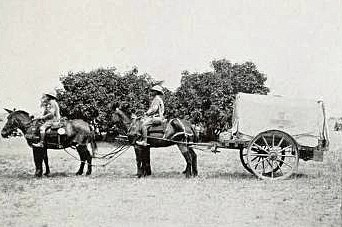
Albert Scurrell never left England but William was posted to Egypt. In Egypt there was not usually the same volume of casualties, although it was the main base that received the wounded from the actions in the Eastern Mediterranean. In 1915/16 the disastrous Gallipoli offensive filled the Egyptian hospitals, especially with soldiers from Australia and New Zealand. Besides being a base for the hospitals, the British were there to defend the Suez Canal from the Turks, it was a place from which to launch an attack on the Ottoman Empire in the Palestine area.
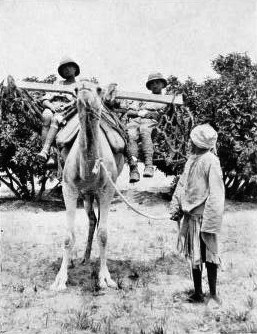
Unfortunately, we cannot give an account of William’s specific role in Egypt but we can give some idea of the work of the RAMC and the conditions there. These were very challenging for the Briton of the beginning of the Twentieth Century. The Western Front had mud, Egypt had dust and sand. A “Sergeant Major R.A.M.C.” wrote a book, published in 1918, telling of his experiences in Egypt in the first three years of the war. He wrote:
I have said that the climate has a deal of influence over hospital-work in Egypt. Only those who have lived the year through in a hospital here can fully realise what that influence is. In Egypt, even in mid-winter, the days are always warm so long as the sun is up. It is only the nights that are cold, sometimes bitterly cold. The Egyptian winter is very short, however. Both days and nights, for the greater part of the year, are hot, with a peculiar dead dry, scorching heat that is particularly trying to sick and well alike. And there is always an impalpable dust in the air that even on the stillest days steadily collects upon everything - a dust that in all probability is capable of carrying the germs of almost every known disease. When the wind gets up, the dust gets up with it; and the harder the wind blows, the more dust it brings. The dust-storms in Cairo must be classed among the most unpleasant things that it is possible to conceive.
The sand in many areas was also a major problem for the transportation of equipment and casualties, with no roads and few railways. Often motor transport was not possible and various designs were tried, such as mule-drawn sledges but in general the most useful carriers were “sand carts” and camels and mules. Specially designed “cacolets” were made for camels to carry both seated and lying patients. It still would not have been the smoothest of rides for the wounded.
The Absent Voters’ List for 1918 has William in the “MT RAMC” and although this is difficult to interpret it seems most likely that William was part of this transportation system. His experience as a carrier would lead one to expect him to be a Private, working with a Driver from the Army Service Corps. The problem is that MT usually stands for “Mechanical Transport” but this may be an error in the Absent Voters’ Lists which were not infallible. Unfortunately, except for the facts we have so far given, we know little more of his career.
The RAMC was responsible for the physical welfare of the troops and there were weekly inspections to check for any signs of disease. One important area of the RAMC’s work which might come as a surprise was dentistry. The Egypt Expeditionary Force (E.E.F.) had thirty dental surgeons. The “Sergeant Major” tells us that:
Taking a typical specific period [not given]: we find that in this time a total number of 28,300 dental cases were treated, involving some58,600 attendances at the depots. These included the cleaning and filling of about 17,000 partially decayed teeth, of which number about half required preliminary treatment in the form of nerve devitalisation and removal of septic root-conditions, thus vastly increasing the work called for in the process of filling. New dentures supplied during the period reached a total of only 4,000. . . In addition . . . over 28,000 summary extractions of hopelessly decayed teeth were performed within the same typical period, the men in nearly all cases being returned to their units forthwith.
Would the users of the service have had a different recollection of their treatment?
It is also often forgotten that the RAMC was responsible for ensuring that drinking water was not contaminated and that waste from the food, whether eaten or not, was disposed of, in a way that did not bring flies, vermin or disease. Near the main base, there was a supply of fresh water known as the Sweet Water Canal but the bacteriologists discovered that this contained many “disease germs” including the then incurable Bilharzia. It had to go through a filtration process and was then sterilised with acid sodium sulphate before it was safe to drink. For those in the desert in the area, the water was carried by camels in two light tanks on either side of their backs. Troops further out used water from local wells where possible which was then chlorinated and finally, if this was not possible, the men were issued with chlorine tablets to put in their water bottles. The problem was that the tablet needed to be in the water for at least half an hour to be fully effective and, in the heat, soldiers were sometimes too impatient.
With regard to waste, the sand provided a reasonable solution as the “Sergeant Major” described:
The disposal of urine, so formidable a task with a large force operating in ordinary country, proved a comparatively simple problem in the absorptive soil of the Desert. We found all that was necessary was to dig a fairly deep pit and fill it with drainage material such as stones or pieces of rock in which a number of light sheet-iron tubes or “trumpets” could be partially embedded. A thick layer of sand well beaten down round the bases of the tubes completed the contrivance. A precautionary spraying of the surrounding soil with an antiseptic was regularly carried out. The device proved to be entirely fly-proof, and on striking camp, nothing more was needed than to pull up the trumpets and fill in the holes with sand. The trumpets being graduated in shape, fitted one into the other, and were thus readily portable. They were also cheap, simple, and easily made. Waste water from cookhouses and ablution places were dealt with by soakage pits constructed on similar lines; but in place of the upstanding tubes, partially sunk petrol or other tins with cullender bottoms were fitted. The trapped contents of these were periodically removed and consigned to the incinerator.
In these short biographies we have, of course, concentrated almost entirely on the men but it is worth remembering that, particularly in the medical services, women also played an important part. The “Sergeant Major” writing of his time in Egypt told of the tensions that sometimes emerged between the male orderlies from the RAMC and the, much better qualified, ward sisters when they were reprimanded or given orders. Although his attitudes to women can sometimes seem patronising, and there is a caveat even in his praise, he does make it clear that the men should accept their role with good grace.
The sisters rule the wards simply because they are more competent to do so than the brothers; and any other arrangement, for the present at least, seems to be alike contrary to justice, to public policy, and to common sense.
He finishes the book by listing the honours the RAMC in Egypt gained, and states:
The women of the British Army Medical Service in Egypt have equal right to be proud of the distinctions conferred on them, as they have equally shared in the dangers and privations of the War.
We have no reason to believe that William Weekley was a Conscientious Objector but some did accept service in the RAMC, while others refused this and were imprisoned. It seems that, once in the RAMC, some men in Egypt were instructed to transfer to other units and refused. On April 15th1919, a Colonel Wedgewood asked a question of Winston Churchill, the Secretary of State for War, in the House of Commons:
. . . how many men are still imprisoned in Egypt for refusing to accept transference from the Royal Army Medical Corps to combatant units; how long have these men been in prison and whether he will now order their immediate release?
We do know that William was finally discharged on 20th April 1919 but it seems likely that he left Egypt before that date, possibly in 1918. His reason for discharge was injuries sustained in an accident. He suffered a fracture of a tibia and fibula but we do not know the cause. Was it a transport accident? His wound was declared as attributable to his war service and he received a small disability pension of five shillings and sixpence a week with an additional one shilling and fourpence for his son, Oliver Jethro.
William returned to his family in Church Street in Ringstead. He died, aged 60, in early 1935.
George Horace Weekley (1879-1960)
William Warren Weekley had a younger brother, George Horace, who was born on the 16th March 1879. By the 1891 Census he was twelve years old and living with his family in London End in Ringstead. He was, like his older brother, already a farm labourer. By 1901, however, still living at 1 London End, he was working at home with his father as a shoe riveter.
On the 16th November 1903, aged 25, he married Clara Maud Hayter, who was two years his senior, in Ringstead Parish Church. Clara had been born in Salisbury in Wiltshire, the daughter of Edward, a coachman for a wealthy family, and his wife Elizabeth. In 1901 Clara had been working as a domestic nurse for the family of retired Major General George Paxton in Midhurst in West Sussex. How did George Weekley and Clara meet? Perhaps she had moved to a new position in Northamptonshire but on their marriage certificate she is shown as a shoemaker like George. Her sister Edith Mabel Hayter, who was a housemaid at Cockley Cley in the 1901 Census, was one of the witnesses.
By 1911 George and Clara were living in London End with their three children, Minnie [Lizena] who was seven, Charles [Vivian] 5, and Hugh [Colin} who was seven months old. George’s widowed mother, Ann, was also living with them. George was a bootmaker producing military boots for the Government but, as we have seen with many others in the area, he was unemployed.
When war came, George, naturally with his young family, did not volunteer and when conscription was introduced in 1916 the needs of the army’s feet gave him some exemption. By 1917, the terrible number of men wounded and killed, led the Government to seek more recruits and the factories and farms were stripped to the bare minimum. On the 1st of April 1917 he was employed by Owen Smith in his Raunds’ factory as a “hand laster” and the Military Tribunal granted him a temporary exemption until 31st July. The Government challenged this but it appears that he was confirmed in this stay of conscription until the end of July.
At some point after that, George was mobilised and, after basic and gunnery training, he was posted to the 65th Company of the Royal Garrison Artillery (RGA) which had been based in Malta since 1904. He became a Gunner and was given the Regimental Number 198492. It is possible that he never fired a gun in anger.
Malta was, at that time, part of the British Empire and was a strategic base in the Mediterranean. In the Second World War, with Italy part of the Axis Alliance and the greater range and destructive power of aircraft, submarines and ships, Malta became a prime target and was almost starved into submission. In the First World war it did not see any significant action although German submarines were a constant threat to the Allied shipping.
I have said that Malta saw no significant action but this is wrong in one important respect. It became known as the “Nurse of the Mediterranean” because of the Allied hospitals that were based there. The worst of these times was caused by the disastrous Gallipoli Campaign which sent many casualties, especially from Australia and New Zealand to Malta and Egypt.
We do not know when George was demobilised but he was in the 1918 Absent Voters’ List but not there in 1919. Also, the Ringstead Roll of Honour which was published in June 1919 has him as already demobilised. It seems certain therefore that it was in late 1918 or early 1919 at the latest. The records seem to show that he was only entitled to the British War Medal as the Victory Medal was for those, with some exceptions, who had served in a warzone not just overseas. It was rare for them not to be awarded as a pair, nicknamed Mutt and Jeff after cartoon characters.
In the 1920 Electoral Roll he is seen living with Clara in the Sivers Building and she too was entitled to vote after the passing of the 1918 Representation of the People Act. This gave women aged over 30 who occupied land or premises with a rateable value above £5, or whose husbands did. It is usually forgotten that many men got the vote in 1918 as well as women.
By 1930 George and Clara were still living in the Sivers Buildings and their son, Charles Vivian Weekley, was also entitled to vote. By 1939 George was working as a general labourer, probably for Northamptonshire County Council. Clara died early in 1944 and on the 30th October 1945, George, now in his sixties, married widow, Gertrude Duffey (née Ginns). George was living in Church Street in Ringstead when he died in St Mary’s Hospital in Kettering, on the 4th October 1960. Probate was granted to his son, Charles Vivian Weekley who was now a Boot and shoe retailer, and William Freeman, a Council employee.
His daughter, Minnie Lizenza, had married William Sellick and died in Sidmouth on the 9th July 1947. His youngest son, Hugh Colin Weekley, married Margaret Gilbert and lived until 1999.
The Sons of Walter Henry and Adeline Weekley
We will now look at two more brothers whose line links back through Walter Henry to William and on to Esau who had been baptised on the 14th September 1789. He was the younger brother of William whose descendants we will look at next. As usual, the limited range of Christian names that most families used in the past, makes the extended tree something of a maze.
The brothers were the children of Walter Henry, often known as Harry, Weekley who had been born in about 1868 and his wife Adeline Richards, born in about 1872. She had come from Melksham in Wiltshire. They had married, however, in Woodford on the 4th May 1893 where both were shown as living at the time of the marriage. Adeline’s father, William Richards, was a furnace labourer, working in the iron ore smelting furnaces that were in the Islip parish but sited nearer the village of Woodford. It seems likely that it was this work that had drawn the family to Northamptonshire.
By 1901 the couple were living at 6 Church Street in Ringstead and the children, Horace (7) and Albert (5), had both been born in the village, so William Henry’s stay in Woodford had been brief. By 1911 Henry (as he now called himself) and Adeline had been married seventeen years and had four children, of whom Horace, aged 17, a shoehand, Albert, 15, a shoe finisher, and Reginald, 9, were still living. Henry was a foreman in a local boot factory and they were living in Denford Road.
Horace William Weekley (1893-1972)
Horace was born on the 21st October 1893 and, as we have seen, had become a shoehand by 1911. The war came but, at first, his work in the military boot trade gave him exemption from conscription. In 1911 Eleanor May Smith, who had been born in Islip, was working as a servant in a Nursing Home at 34 Billing Road in Northampton. Horace and Eleanor met, and, on the 2nd August 1915, they married in Islip. The Northampton Mercury of Friday 6th August 1915 carried a report of their wedding.
At St Nicholas’ Church, Islip on Monday, a pretty wedding was solemnised by the Rector (Rev. W. St. George Coldwell), the contracting partners being Miss Eleanor May Smith, second daughter of Mr and Mrs Frank Smith of Islip, and Mr Horace William Weekley, eldest son of Mr and Mrs Harry Weekley of Myrtle Cottage, Ringstead. The bride was attired in a silver-grey poplin dress with black hat trimmed with ostrich ruche. She was attended by Miss Dorothy Smith (sister) who was dressed in a navy costume with blue hat to match and Miss Edie Smith (niece of the bride) who was dressed in cream. The bride was given away by her father, while Mr Bert Weekley (brother of the bridegroom) was the best man.
After the ceremony a reception was held at the Parish room. Mr and Mrs Weekley received a large number of useful and handsome presents.
The protection given by Horace’s work became weaker as the demand for men grew ever greater. Horace, like George Weekley, had been working for Owen Smith in his Raunds factory. Also, like George, he came before the Northamptonshire Military Tribunal on the 1st April 1917. Horace was working as a traditional hand sewer. He gained further exemption until the 30th June and, on the 7th September, although his appeal was dismissed, he was given a further six weeks.
The reason for his further appeal had been the illness of his wife, Eleanor. It may be that she was having a difficult pregnancy because their first child, Albert was to be born on the 16th November 1917.
Eventually, however, Horace was mobilised to the Royal Field Artillery and given Regimental Number 237383. Unfortunately, there is some confusion here. The Ringstead Roll of Honour and the Absent Voters’ List for 1918 have his unit as the 18th Siege Battery of the Royal Field Artillery (RFA). The only unit of this name was part of the Royal Garrison Artillery (RGA). The military records that still exist clearly show him in the RFA. He would first have completed his basic and gunnery training and would probably have not reached the Front Line until 1918 at the earliest.
At the end of the Nineteenth Century the Royal Artillery had been divided into the Garrison and Field Artillery. At the start of the Great War there were three sections to the Royal Regiment of Artillery: the Royal Horse Artillery (RHA) with light mobile, horse drawn guns; the Royal Garrison Artillery (RGA), which had been developed from the coastal defence units and was equipped with heavy large calibre guns and howitzers; and the Royal Field Artillery (RFA), the largest group, which had medium calibre guns and howitzers. The RFA operated close to the Front Line whereas the RGA were further back sending shells with a higher trajectory, often at unseen targets.
It seems most likely that he served in the RFA, but whichever unit he was in, we know that he was in France and Belgium with the artillery. Like the machine gunners, the artillery were a prime target for the enemy because of their capability to inflict terrible damage on men and machinery. The Imperial War Museum (IWM) has collected the recollections of the various “Gunners” in “Voices of the First World War”. One of them was Tom Brennan who explained the various types of shells that they had to handle.
There were four kinds of shells. There was a DA, direct action; there was a shell they used for blowing up billets and that which didn’t go off for a minute or so, it sunk into the ground before it went off, delayed action; then the third one was shrapnel and the fourth was poison gas. They were all painted a different colour so you’d know which was which. At night time, if it was dark, you would know which shell you were going to fire. The shells were very heavy and had to be carried up by animals or men to the guns.
It was hard, dangerous work, with always the fear of a “Premature”, a shell going off before it was fired, with terrible consequences for the, usually eight-man, crew.
We do know that Horace was wounded, as this was reported in the War Office List of Casualties Number 5735, on the 27th November 1918. The date of his actual wounding may have been many weeks before that, so he was probably not in the Front Line at the time of the Armistice on the 11th November. His Pension Card shows that he had suffered a gunshot wound (GSW) to his left leg. It also records that he had Bronchitis and this had been aggravated by his war experience. One can imagine that the daily conditions, with gun smoke, together with the various poison gases would not help any man with a respiratory complaint.
He was discharged, presumably from a hospital in the UK, on the 22nd February 1919. He was said to have a 20% disablement and was granted a small pension of eight shillings, with an extra three shillings and sixpence for his child. By the 8th December 1920, his disablement had been reduced to 14% and he received a total allowance of nine shillings and sixpence weekly allowance. He was entitled to the British War and Victory medals.
Finally, Horace returned home to Church Street in Ringstead. Albert had been born in 1917 just before he left for war. A daughter, Ivy Browett Weekly was born on the 15th November 1922. In 1939, the Register of England and Wales shows them all in the old family home of Myrtle Cottage in Denford Road. Horace was now a general labourer and Eleanor had Unpaid Domestic Duties”. Their son, Albert, was a leather dresser and Ivy a machinist.
Horace died on the 14th November 1949 at Church Hill in Stanwick. Eleanor died almost thirty years later, in 1978, aged 83 years.
Albert Cyril Weekley (1895-1964)
Horace’s younger brother, Albert Cyril Weekley, was born on the 22nd September 1895 but was not baptised until the 17th June 1908, along with his younger brother, Reginald. He also went into the shoe trade and was shown in the 1911 Census as working for Owen Smith in Raunds as a shoe finisher. He was living with the family in Myrtle Cottage in Denford Road, Ringstead.
By the time that he was old enough to be conscripted he had become a pressman in a factory and, with Horace, he came before the Military Tribunal on the 1st April 1917 and again on the 15th June. Owen Smith was putting the case for retaining staff for the military boot production, but it appeared that he accepted that Albert would have be conscripted. Towards the end of 1917 Albert married Elsie Annie Christobel (she had been born on Christmas Day 1896) Mayes, daughter of Ebenezer and Ellen who in 1911, aged 14 was already a leather cutter in a village lift (heel) making factory.
What happened to Albert next? We would expect that in late 1917 or early 1918 he would have been mobilised and served at least in 1918 but I have been unable to find any records for him. This does not mean that he was not conscripted but it is possible that he failed the medical or served in a home-based unit. We cannot be sure.
After the war we can see that the couple lived first in London End and then in Gladstone Street. By 1939 they were still there and Albert was a “Pressman – Insole and Through Cutter” while Elsie had the usual “Unpaid Domestic Duties”. When Albert died on 23rd October 1964 in Park Hospital in Wellingborough, the couple were living at 37 High Street in Ringstead. Elsie lived to be 83 years old and died in 1980.
Sons of Leonard and Emma Weekley
We have seen in the last pages how two brothers linked back to Esau and Mary Bates. An older brother of Esau was Henry Weekley, baptised on the 29th May 1785. He married Eliza Goodwin and it is their line which links down to Leonard born in about 1873, who married Emma Woodward form Woodford in 1895. Leonard Weekley had become a shoemaker like his father, William. There was also a link to William George Weekley through the Bradley family of Polebrook. The Weekleys would have had brothers and sisters, aunts and uncles, grandparents and cousins living in the village.
It is the two sons of Leonard and Emma that we will be looking at in this section.
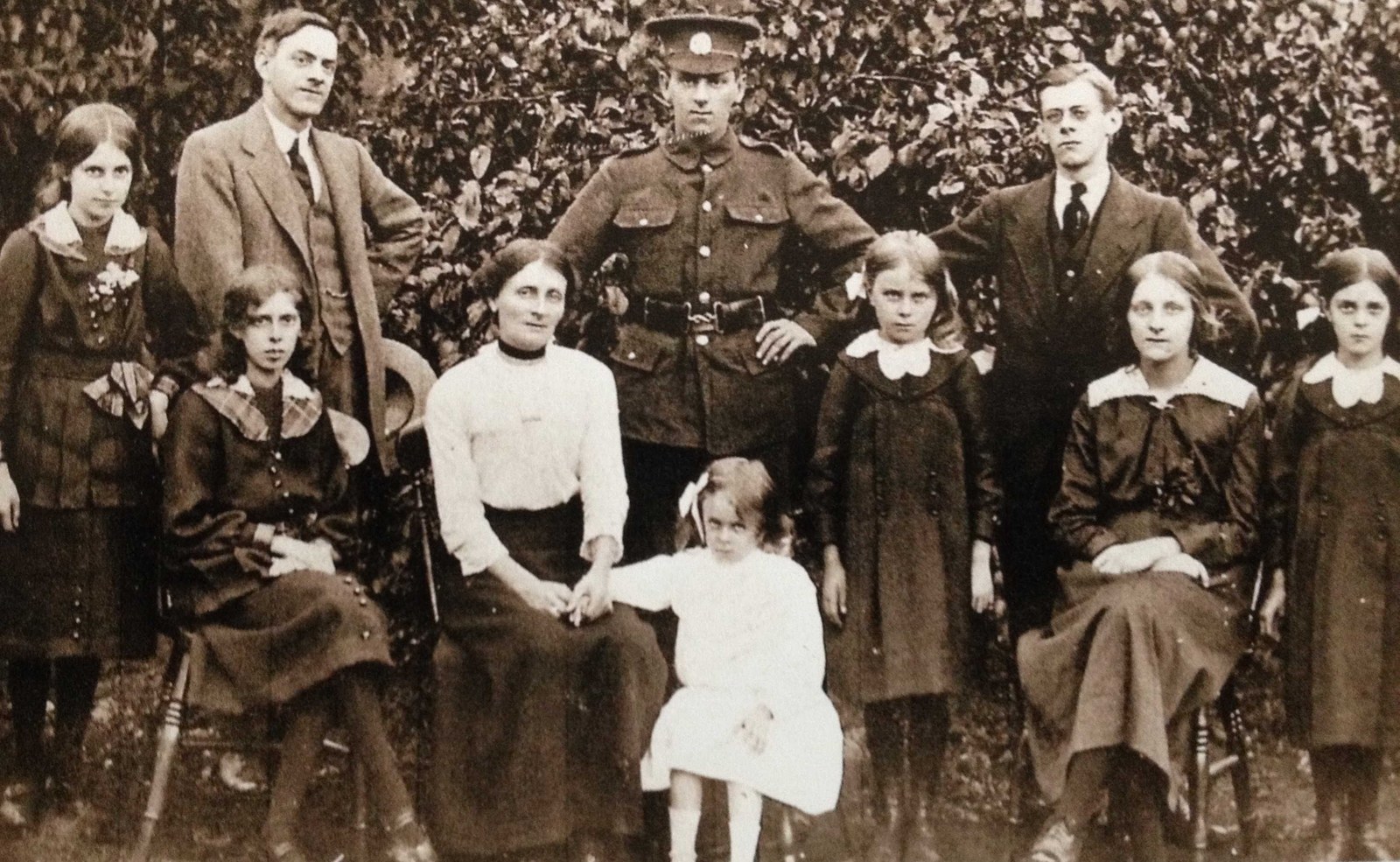
Herbert Roy Weekley (1896-1983)
The oldest son, Herbert, was born on the 11th April 1896 in Ringstead and, in the 1901 Census, we see the family of three children Herbert, Leonard and Ivy living at 3 Denford Road. Ivy was only three months old, so one-year-old daughter Carmine Olive was living with her grandparents, George and Esther Woodward In Woodford to give Emma some respite. By 1911 the family had grown again and living with Leonard and Emma were Leonard Percy (13), Ivy Ellen (10), Dorothy Maud (8), Kate (6), Louise (4) and Eva (1). Also living with them was Leonard’s widowed mother, Bessie Elizabeth (62) a sick nurse and Frank Brown, a one-year-old “Nurse child”. Leonard was now the manager of a “Lift [Heel} Making Factory.
Two of the children are missing, [Carmine] Olive was still living with her mother’s parents in Woodford. Herbert was staying with his uncle and aunt, William and Mary Ellen Neall in Daventry. Mary was Leonard Weekley’s younger sister. William was a cycle manufacturer and Herbert, aged 14, was working as a clerk in the factory. Many small local cycle firms grew up in this period. The Lightstrung Garage in Rushden produced cycles locally and I remember my mother riding an old Lightstrung sit-up-and-beg bicycle in the 1950s. Most of these small makers disappeared as the large factories came into production.
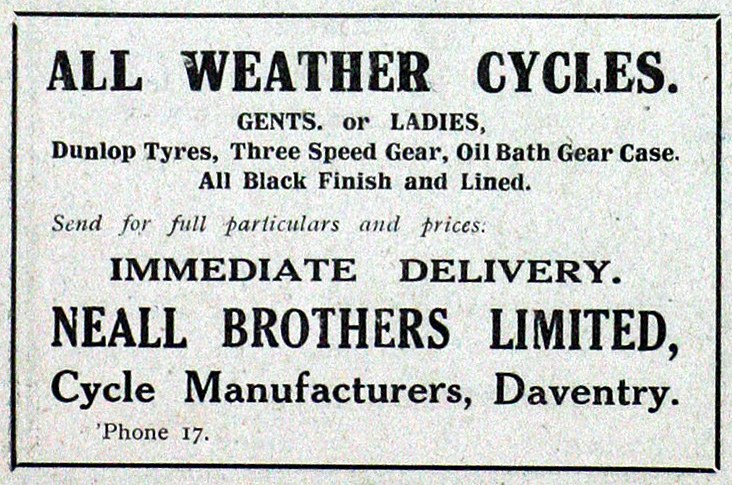
It is not clear if Herbert had returned home by the outbreak of the Great War but we do know that he enlisted and two of the major sources for our information, besides the Medal Index Card and Roll, are the Ringstead Roll of Honour and the Absent Voters’ Lists.
We see from these that he joined the Machine Gun Corps which had been created by Royal Warrant on October 14th 1915. Before this, each Infantry unit had its own machine-gun section of two teams manning Maxim guns. Soon after its formation, the Maxim was replaced by the superior Vickers machine-gun. For some administrative reason the numbering of the men started at 3000 and Herbert’s number was 3145 so he was only the 145th man to join the new Corps. At first the old system continued whilst the new Corps were trained and ready. Two training bases were set up, one at Belton Park near Grantham in Lincolnshire and one in Camiers in France.
The machine gun was the most lethal weapon of the war but the converse of this was that it was a prime target for enemy fire. It was not for nothing that the MGC was known as “The Suicide Club”. The Vickers Gun was very heavy and required a team of six men to transport and operate it.
We do not have most of Herbert’s military records but we do know a little more about a Private Charley Watts whose number was 3142, just three before his. It seems likely that Herbert, like Charley, first joined the Northamptonshire Regiment, possibly the 8th (Reserve Battalion) for his basic training, before being transferred to the Machine Gun Corps, on the 1st January 1916.
He would have then undergone intensive training for his new role, probably at Belton Park before being posted abroad. The 44th Company landed in France on 9th February 1916 and joined the 44th Brigade on the 12th February 1916 and was attached to the 15th (Scottish) Division.
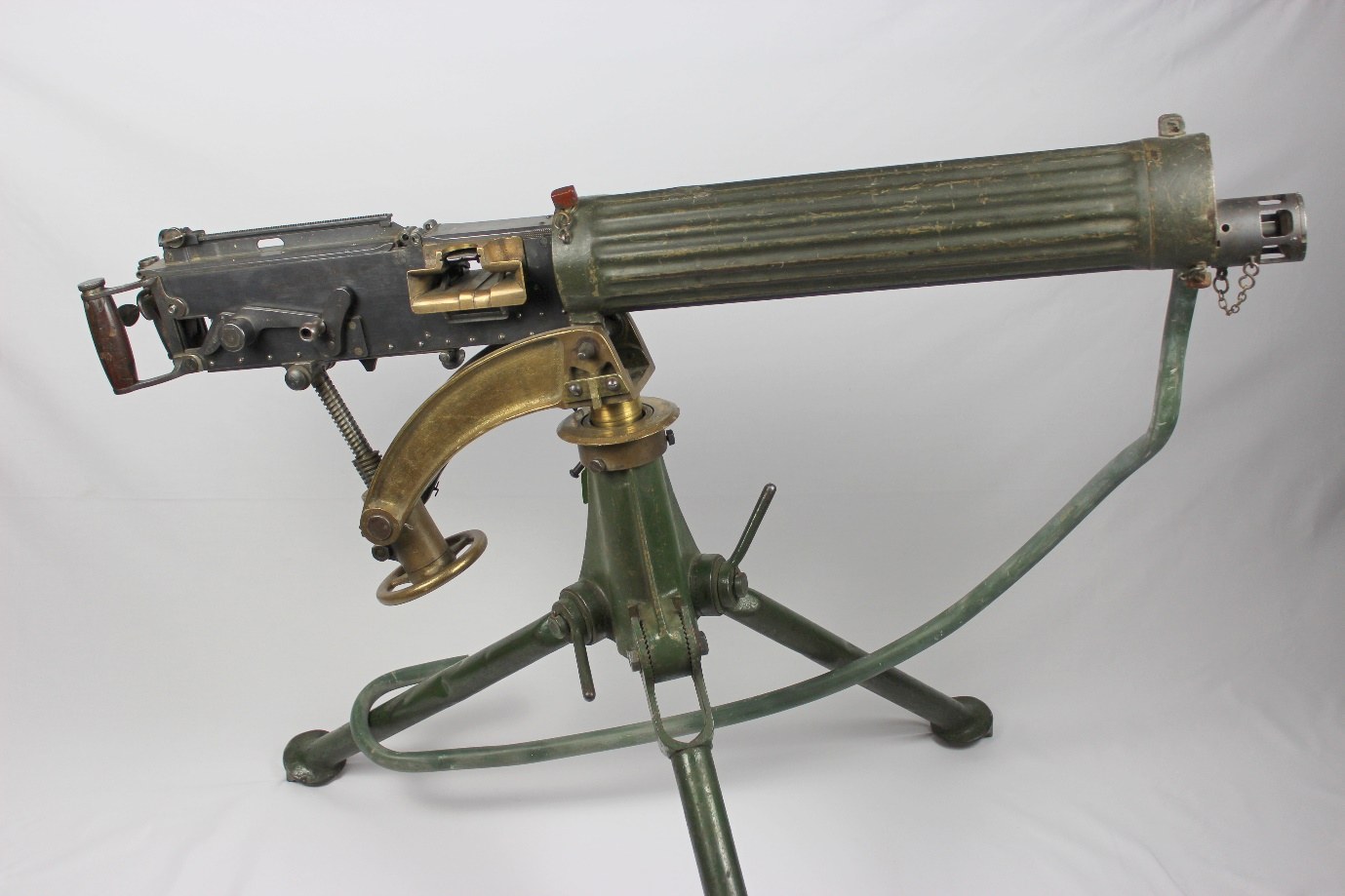
The 44th Machine Gun Company, was at the Western Front in the Battle of the Somme, fighting at the Battles of Pozieres Ridge, Flers-Courcelette in September and finishing at the Transloy Ridges in October. In 1917 the unit was in the Battles of Arras and Ypres. On March 17th1918, the companies were reorganised into battalions and the 44th along with the 45th, 46th and 225th became the 15th Battalion of the MGC. The problem is that we know that the Ringstead Roll of Honour has him in the 41st Battalion which had been similarly formed on March 17th 1918 from the Machine Gun Companies of the 41st Division (122nd, 123rd and 124th). The War Diary, however, does report that the numbers were made up to strength from other infantry units.
We cannot be sure when Herbert moved from the 44th Company and ended up in the 41st Battalion. One possibility is that he was wounded or incapacitated and went to the base at Camiers and, when recovered, was posted to another unit. Unfortunately, there is so much uncertainty that any attempt at plotting his time in the army could be mainly guesswork.
There is a gap in the War Diary of the 41st Machine Gun Battalion from the end of August 1918 to the beginning of November 1919 but they do show that it became a unit of the Rhine Garrison Troops and remained in Germany until early 1920 as part of the Army of Occupation.
There is further confusion for it is the Spring edition of the 1919 Absent Voter’s List that shows Herbert as a Corporal in the Labour Corps (607892) and the Autumn one which has him listed in the Machine Gun Corps. The Labour Corps are not on either the Medal Index Card or the Medal Roll so it may be that he was wounded or sick in Germany, was “invalided home” and was appointed as a Corporal in the Labour Corps before returning to the MGC. Of course, the AVL entry could be a mistake. The Medal Roll shows that on the 9th of November 1919 he was demobilised and placed in “Class Z A.R.” [Army Reserve] which meant that he was fit enough to be called up in the unlikely event of the war starting up again.
There are still anomalies in this explanation so all we can be reasonably certain of, is that he served with the Machine Gun Corps from early 1916 and was part of the Army of Occupation after the end of the War, before being invalided home.
There is a little confusion about what happened to Herbert after the war. He is in the Absent Voters’ List for Ringstead in 1919 but is shown in the lists for Daventry at 16 Badby Road for 1922, 1924 and 1925. In 1929 he was living in Carlow Road in Ringstead. In 1929, also, he married Rosetta Victoria Cook in Epsom. Rosetta had been born in Carshalton in Surrey on the 30th March 1901. In 1911, she was living with her parents, George, a jobbing gardener, and Elizabeth who was originally from Flore in Northamptonshire, at 33 Mill Lane in Carshalton. By 1929 she was with Edna Alice and Walter Harold Felton at 31 The Ridgeway, Carshalton. We do not know her occupation. Was she a domestic servant or a relative?
Nor do we know how the couple met. Flore is only some seven miles from Daventry, so was Rosetta visiting relatives in her mother’s home village? The couple moved back to western Northamptonshire and settled in the High Street in Towcester. They were living there, at 5 Addison Terrace, when the 1939 Register of England and Wales was compiled. Herbert had become an “Accountant and Typist” which possibly means that he worked in the office of a local company. Rosetta had the usual “Unpaid Domestic Duties”. Herbert’s mother, Emma, had died in 1936 and his father, Leonard died too, on the 6th September 1945. He was living in Carlow Street at the time and the National Probate Calendar shows that he left £1048. 9s. 11d to Herbert and his younger brother Leonard. The entry also reveals that Herbert was now working as the manager of a Tyre Depot
Herbert lived to be 87 years’ old and died in the Daventry area in 1983 and Rosetta died in 1995, aged 94.
Leonard Percy Weekley (1898-1972)
Herbert’s younger brother, Leonard Percy Weekley, was born on the 29th April 1898 and, in 1901, was with his parents and siblings in the new Ringstead housing estate at 3 Gladstone Street, the roads named after Liberal politicians. By 1911 his older brother was living away from home, but he now had five younger sisters. He was thirteen years old and was working in a local lift (heel) factory. A.E. Fox & Co. Ltd. were based in Burton Latimer where they made leather heels for shoes. For a time, they also had a factory in Ringstead, making heels for military boots, which was built on the outside of the sharp bend at the end of Church Street where it becomes the Denford Road.
When war came Leonard was only sixteen years old and it would have seemed very unlikely that the Great War would involve him. This was not to be, and he served on the Western Front. Also, like his brother, there is some confusion among the few records of his military service that do remain. The 1918 Absent Voters’ List for Ringstead has Leonard in the 25th Battalion of the Kings (Liverpool Regiment) while the Ringstead Roll of Honour (published in June 1919) also has him the same Battalion but invalided home and demobilised. On the other hand, his military records show him in the Manchester Regiment and the Labour Corps.
The following account was only arrived at with a great deal of help from the Great War Forum, especially Ken (kenf48), whose knowledge of the war records and especially the Regimental Numbers has enabled him to plot a course through the various stages of Leonard’s career.
In March 1916 Conscription was introduced for single men born in 1897, who were deemed to have enlisted and were placed on the Army Reserve. In May 1916, men born in 1898 were attested and were placed in Group A. For men like Leonard who had become eighteen this Group closed on June 7th. The men were called up when they had reached the age of eighteen years and seven months. As Harry Patch remarked in his memoir, “We all knew when the call would come” and, for Leonard, this would have been in November 1916 at the earliest, though it is possible that he was not called up until January 1917.
He would have first reported to the local regimental depot and from there posted to a Reserve or Training Battalion. It seems likely that Leonard was one of a group of men from Northamptonshire who were posted to the 4th (Reserve) Battalion of the Norfolk Regiment, which had been formed at Tring in Hertfordshire in April 1916, although definitive details of his home service have been lost. Certainly, he was in a draft from the 4th Norfolks who embarked from Folkestone to Boulogne on 28th May 1917, barely a month after his nineteenth birthday, the official age for service abroad.
The draft arrived at 32 Infantry Base Depot at Étaples and were posted to active service battalions of the Norfolk Regiment, specifically the 8th or the 9th. They would have spent a few weeks being toughened up for front-line duty. On the 19th June 1917, the men were posted and renumbered to the 2/6th Battalion of the Manchester Regiment. Leonard was allocated the number 270116 and with his comrades, joined his Battalion in the field a few days later. The 2/6th War Diary records that, while the 2/6th were in billets at Allouange reinforcements arrived: 61 on the 20th; 122 on the 21st and 85 on the 26th.
The 2/6th Battalion of the Manchester Regiment were part of the 199th Brigade in the 66th (East Lancashire) Division. Ken believes that the men were posted to bring the Battalion and the Division up to strength, ready for a planned amphibious attack by the Allies on the Flanders Coast. By the 26th June, the 2/6ths were in billets in a Corn Warehouse at St Pol near Dunkerque. On July 15th they took over the coastal defences at Dunkerke Bains and spent time working for the Royal Engineers digging defences. On July 24th they moved into Front Line trenches at Lombartsyde where they suffered many casualties, 182 suffering from the effects of a gas attack. On July 1st 1917, the actual strength of the Battalion (as opposed to the strength on paper) was 34 Officers and 927 Other Ranks. On August 1st the “Trench Strength” was 15 Officers and 405 Other Ranks.
They remained in the coastal area near the Belgian border, but the planned “Operation Hush” did not take place and, in October, they moved from their base at Heuringhem to the Front Line near Ypres. The weather was now terrible with heavy rain and deep mud and they were often employed in working parties. In December they were in the Reninghelst area south west of Ypres still suffering casualties, mainly from shellfire.
In the new year the Diary reports that the Paper Strength of the Battalion was 41 Officers and 795 Other Ranks, but the Trench Strength was 28 Officers and 589 Other Ranks. By February they were in the infamous Passchendaele area. In March the last great German “Michael Offensive” broke upon the troops and, as with many battalions, there was a sudden headlong withdrawal before the onslaught. The Diary records:
Please note that, as all records. operation orders etc. have been lost in action, this summary has been completed from memory.
Through March 1918 we see from the placenames in the Diary, Herbécourt, Harbonières, Gullaucourt, Aubercourt, Hangard Wood, a scramble south and west as they gave ground and tried to establish a holding point. Eventually the attack lost momentum as the German troops were exhausted and the supply lines overstretched. In April the tide began to turn. The 2/6th Manchesters did not see this as a unit for, in March, it was reduced to a small training cadre with the large majority of the men being sent to base to be added to other units. The Battalion was completely disbanded in July 1918.
There are now several possibilities for Leonard. He could have been wounded or sick and sent back to England and, when recovered, posted to the 25th Battalion of the King’s (Liverpool Regiment) and returned with them to France. There is also the possibility that when the 2/6th Manchesters’ men were reallocated to other units he returned to a base and, rather being posted to a combined Manchester unit was then posted to the 25th Liverpools in France.
If the posting was in England, the 25th Battalion was in Norfolk in 1917, first at Sheringham and then, from July, at Sidestrand. They left Cromer and sailed from Dover to Calais on 6th May 1918. It was a 3rd Echelon unit which meant that the men were not expected to fight in the Front Line and were known as a Garrison Guard Battalion. On arrival they were attached to the 59th Division, stationed at Estrée-Cauche where the men’s main task was digging defensive positions.
Almost as soon as they arrived the Battalion was struck down by a “Pyrexia of Unknown Origin” (P.U.O) epidemic, losing, at the peak in June, over a hundred men a day to hospital. They had to have 50 reinforcements in July, before they lost anyone to enemy action.
P.U.O was better known as Trench Fever and could affect men several weeks after them being originally infected. It had a range of symptoms including a sudden fever, loss of energy, bad headaches, skin rashes, pains in the eyeballs, dizziness, muscle aches and severe pain in the shins which is why it was also known as “Shin Bone Fever”. As in the 2019/20 Covid 19 pandemic, symptoms could be fairly brief and mild in some patients but could affect others very badly, causing heart problems and depression. In some it could lead to relapses for up to ten years. It was only at the end of the war that it was found to be caused by bacteria in lice faeces, often infecting the men while they were feeding on their blood.
The exigencies of war now forced these soldiers, not considered fit for front line service, into the trenches. They were posted to the 176th Brigade in June 1918 and, on the 25th July, they first moved up into the trenches, suffering their first casualty on the way. Although the 25th (they had dropped the Garrison Guard part of their title) saw action, most of their work was in consolidating positions taken by the advancing army.
At some point, after the 1918 Absent Voters List was compiled, Leonard had been invalided home and demobilised. It is possible that this could be as a result of the P.U.O, outbreak or he could have served with them in the subsequent action until the Armistice. In December 1918 he was transferred to the Labour Corps and given a new number 471672. Again, it may be that he worked in clearing up the battlefields on the Western front after the fighting finished which was a mammoth and often unpleasant task. The Labour Corps was not mentioned in the Ringstead Roll of Honour. This was published in Thrapston in June 1919 but the information may have been gathered some time before this date and not updated, or this may be because his time with Labour Corps was brief.
As this was his last unit, it was the one that completed the Medal Roll and gave the Manchester Regiment, his first in a war zone, as the one to go on his British War and Victory Medals. In the first part of 1919 Leonard was discharged from the army and by 1920 he was back in Ringstead, first in Gladstone Street, moving to Carlow Road by 1923. He married Elizabeth Whiteman Arnold in 1924. She had been born in Denford on the 8th February 1898, the daughter of Henry, who had died in 1914, and Annie Arnold. The couple moved to Front Street in Denford and they were there in 1939. Leonard was working as a “Boot and Shoe Operator (Pull Outs)” and Elizabeth was looking after the house.
Leonard died, aged 75, on the 19th July 1972, still living at 2, The Bungalow in Front Street in Denford. Elizbeth died on the 3rd May 1992.
William George Weekley (1890-1983)
The story of the final Weekley man from the family is very different from any of the others. He probably did not serve in the Great War although he did contribute at a distance. Nevertheless, it is worth briefly recounting, for it is one with some unexpected twists and turns.
William George Weekley was the son of William Edward Weekley and his wife Sarah, (née Povey). William Edward traces his line back on the Weekley side through William Edward, born in 1860, who was the son of William (baptised on 18th September 1829 in Ringstead) and Charlotte (née Bradley). Charlotte was the younger sister of Rachel who had married William’s oldest brother, John. The line then leads back through Henry, another William to Esau and Mary in the early Eighteenth Century.
We will start with our William’s father, William Edward who, in the 1871 Census of Ringstead, was ten years old and living in Sivers Row with his father William, aged 42, and working as a shoemaker. Charlotte the mother was not at home on the Census night but his grandmother, Ann Bradley, a farmer’s widow and now an annuitant, was living with them. Charlotte was elsewhere and in 1881 neither she nor William can be found. Meanwhile by 1881 William Edward, in one of the surprises in this story, was now a manservant at 103 Lexham Gardens in Kensington. The head of the house was John Strachey and next door lived 35-year-old barrister Sidney Woolf and his wife Maria. They have a daughter Bella and their son, Leonard Sidney, was just five months old. Leonard was to marry Virginia Stephens.
John Strachey had been a very senior Civil Servant in India and was for a short time, the acting Viceroy. He was the brother of Sir Richard Strachey whose son was author, Lytton Strachey. William Weekley was working among the children who would later form the Bloomsbury Group to surprise and shock Edwardian England. Also working for the Stracheys was a nurse, Selina Bradley from Polebroook, who was his mother’s sister. Could this have been how William came into the household?
We must beware of thinking that the Censuses always define where someone was living, rather than visiting briefly, especially when a family member, who is merely stated to be a son or daughter. In 1891 William Edward was shown back with his parents at 21 Duke Street in Kettering. The form also shows that he was married and a “Shoe Manufacturer”. Could this really be true? When we look for his wife, we find that he had married Sarah Povey in the Kensington District in 1888 and in 1891 she was living with her 78-year-old widowed father Francis Povey, an undertaker, at 23 Church Street in Chelsea. Also, with her, was her son, William George Weekley, who was just one year old. He had been born in Ringstead so it is possible that the family home of the Weekleys was in Northamptonshire rather than London and she was the one visiting relatives.
As usual in this story, the truth is a little more complicated. Her father was probably still counted as widowed from his second wife, Frances (née Holman). Even more surprising is that his full name was Francis de L’Horme de L’ile Povey. Like the D’Urbervilles in Thomas Hardy’s novel, the title was a relic of a more illustrious past. His father, John Francis Mary de L’Horme de L’Ile, had been born in Martinique and held important posts in the French military and police He had fallen out of favour, when he had allowed a prisoner to escape, and lost much of his income. He had moved to London allegedly to because it was easier to get his income from Martinique in England. His wife, and mother of Francis, was Rebecca Smith. He divorced his first wife in 1818 and his son inherited much of his name but apparently little else. He seems to have left all his assets to the six children of his sister.
The domestic arrangements of father and son have a number of twists and turns, both possibly running two households. Francis had been born in 1813 and in the 1851 Census he was living at 39 Marsham Street with his wife Frances and their young family. Also in the household was a nineteen-year-old servant called Sarah Tilley. In 1861 he was a widower, still an undertaker, at 8 Broadway in Westminster. In 1871 he was running the Boar’s Head Inn in Braintree with his nineteen-year-old “adopted daughter”, Amelia Sheates. In 1881 Sarah Povey (née Tilley) is shown as married with her five children, including Sarah, born in about 1865 at 23 Church Street in Chelsea. Meanwhile, Francis aged 68, was a master coffin-maker, still a widower, in Broadway. Sarah Povey/Tilley was buried in a common grave in Brompton Cemetery on September 5th 1881. Francis died in 1899 and left £1,280 to his unmarried daughter, Frances.
We left William Edward Weekley in 1891 in Kettering with his parents, and his wife and son with her widowed father. Soon after this, the “shoe manufacturer” and his young family had moved to Great Oakley, near Corby In Northamptonshire. William was now running a poultry business. His three children, William George, Edward and Alice, were christened there on the 24th September 1892.
By 1901 his parents were living in Anglesey and 72-year-old William was working as a caretaker. In the same Census we see that the poultry business had not been successful and William was once again a butler at Woodlands in Fulshaw Park in Wilmslow, some eleven miles south of Manchester and now, a very desirable postcode. William George had been born in Ringstead, Edward in Kettering and Alice in Great Oakley.
Once again, he was on the fringes of the famous radicals of the times. His employer was William Cobbett aged 54, a solicitor and his wife Fanny who had been born in New York. This man was the grandson of a famous William Cobbett who, in the early Nineteenth Century, had been a journalist, pamphleteer and reformer, and had been forced to flee to the United States for a time to escape a possible charge of sedition.
A County Directory entry shows that by 1905, at the latest, the family had moved again, and this is confirmed by the 1911 Census that shows that William, now 56 years old, was a milk dealer. The new home was 2 Kent Road in Birkdale just down the coast from Southport in Lancashire. The couple had been married 22 years and have had three children. Edward was working as an apprentice coach builder and William George (21) and Alice (17) were helping their father in the milk business.
William and Sarah did return to Northamptonshire and William died there, at Creaton on 17th January 1933. Both lived long enough to see a remarkable change in their eldest son’s life and career.
As in all these biographies, war came in 1914. We do not have any military records for William and it seems likely that he never served in the British services. What we do not know is what he was doing between 1911 and 1915 because he then made a sudden change of direction which later accounts seem to imply was based on his work during this time. It is possible that he would not have been conscripted because we know from a form he completed in 1917 that he had to wear glasses with “thick lenses”.
In fact, William had left England before he could be called up. He arrived in New York on the 15th October 1915 on the S.S. Lapland. It appears that from the start he wanted to become a naturalised American citizen. As part of this process, he later had to sign that:
I am not an anarchist; I am not a polygamist nor a believer in the practice of polygamy.
He also agreed that:
It is my bona fide intention to renounce forever all allegiance and fidelity to any foreign prince, potentate, state or sovereign and particularly to George V, King of Great Britain and Ireland.
When the United States joined the Allies on the 6th April 1917, Draft Cards were issued to call up men for the Expeditionary Force. The first draft was held on the 5th June 1917 for men ages 21 to 31. William had already served one month in the infantry in Plattsburg, New York in 1916. William completed his form which showed he was living at 277 Linwood Avenue in Buffalo, New York. He was already a Head Checker with the Curtiss Aeroplane Company in Buffalo. This could mean several things but according to the Dictionary of Occupational Titles produced by the United States Employment Service in 1945, it is a person who:
. . . checks requisitions for supplies for accuracy, agreement with authorised allotment and correctness of form.
It may be that his expertise was on the paper trail side of engineering but we cannot be sure. Nor can we be certain about his connections to the aeronautical industry in Britain immediately prior to his emigration. Before he formed his own company, Geoffrey de Havilland was a designer with Airco who produced some of the important British planes of the war and versions of its DH4 were manufactured in America, particularly after the USA joined the Allied cause. Was William connected to this collaboration? Again, we cannot find the evidence for this.
In the 1920 Federal Census William was living on 121st Street in Manhattan 13 and described himself as an Engineer with an aircraft company. He was lodging with Jean and Jeanne Leeman who were from Belgium. Jean was a teacher of French. An ability with languages was an important skill that William seems to have possessed.
We see that over the next decades William made several sea voyages. In November 1921 William arrived in New York from Hamilton in Bermuda on the S.S. Fort Hamilton. Earlier that year he had become a naturalised American citizen, having lived five years in the country.
In 1923 he sailed home to visit his parents in Creaton in Northamptonshire before returning to his country of adoption. He went again in 1927. It may be that there were also some work reasons for these trips.
He seems to have become a member of the Presbyterian Park Avenue Church and it was there that he met Arezona Celeste Turley. She worked in the Earth Science Laboratory of Columbia University but was also a talented artist and sculptor. The couple were married in Manhattan on the 29th May 1930 and had one daughter, Rosemary. The couple also did volunteer work in the deprived areas of New York including classes where Celeste gave sculpture workshops and William, classes in poetry.
William’s father died in 1933 and, in 1937, his widowed mother, Sarah, now 72, visited the family who were living at 3970 48th Street on Long Island. William’s aeronautical work continued through the Second World War. In 1942 he had to complete another Draft Registration Card. He was now 52 years old and was working in the Curtiss Wright Corporation – Wright Aeronautical Division. He was living in West Nyack in New York. The card also gives his physical appearance. He was 5ft 7 inches tall with black hair and blue eyes and weighed 140 pounds.
There is one more surprise in his story. On August 7th 1947 his novel, Ledger of a Lying Dog was published by Doubleday in America. One reviewer described it as:
A castaway story published for adults but my guess is that teens will adopt it as their own. A convincing story, purporting to be a log belonging to the author’s great uncle. As the story unfolds, one is convinced that here is the day-by-day record of a youth, shipwrecked with a group of cut-throats and wretches (plus a woman of uneasy virtue) and finding in himself unguessed ingenuities, skills, abilities to fend for himself and fight his own battles.
Do we see a metaphorical account of his own life?
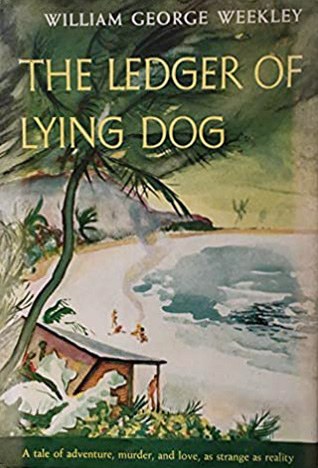
It was successful and was re-issued, as a paperback, in 1951 under the new title of “Castaway Island” which had an attractive woman on the cover to draw in the young male readers.
When William died in 1983, he was residing at 10994 West Nyack, Rockland in New York. He merited a short obituary in the New York Times.
William George Weekley, an aeronautical engineer who was author of the 1947 novel “The Ledger of a Lying Dog” died Sunday in Nyack Hospital. He was 93 years old. His book, which was well received tells the story of a shipwreck and murder in the South Pacific. Mr. Weekley is survived by his wife Celeste, of West Nyack, N.Y. and a daughter, Rosemary of New York.
Another obituary in the magazine of the Historical Society of Rockland County reveals that there is much of his life’s achievements that we have missed.
WILLIAM GEORGE WEEKLEY (1890-1983) was remembered during January in a memorial service at the Clarkstown Reformed Church, West Nyack of which he was a member. Engineer for aircraft needs during both World Wars, author (The Ledger of a Lying Dog reprinted in paperback as Castaway Island), translator for law firms of French and German scientific patents and a student in several languages of literature, physiology, interplanetary travel and development of an international language, he quietly lived most of his life in an old sandstone house on North Greenbush Rd., West Nyack. Born Jan 23, 1890, to William and Sarah Weekley of Ringstead, England, and educated in British schools, he died Dec. 11 at Nyack Hospital. Mr Weekley is survived by his wife, Celeste, a sculptor of note, and his daughter, Rosemary, of New York City.
Family remembrances seem to have expanded this background:
Bill was born in England, tutored in languages as a child and studied at Dijon University in France and Heidelberg University in Germany. He was a production engineer in the de Havilland airplane factory in England, transferring to Curtiss-Wright in the United States.
William certainly had a fascinating and full life and contributed to the war effort in World War One which justifies his inclusion in these series of short biographies. To fully research the truths of his life would need far more time than I can give. What we do know is that a man born in Ringstead had a remarkable life, achieved a little fame, and helped the Allies win two World Wars.