The Great War: N–Z · Story 18
The Other Smith Families
There were other Smith men who were in the army in the First World War who were not related to Sydney William and did not appear on the Ringstead Roll of Honour. They had left the village before the war but we will include them briefly in our life stories.
The lines of these other Smiths all lead back to William and Sarah and their two sons, George born in 1848 and William born two years later.
We will start with Frank, the child of George.
Frank Smith (1873-1942)
George Smith married Susan Ager on May 2nd 1870 when they were both living in Northampton. George was working as a shoemaker there but, by 1871, the couple were back in Ringstead, living in Shop Street with their eight-month old daughter, Lily. We see that Susan was originally from Grafton Underwood. They were still in Ringstead in the 1881 Census and now had five children. Sadly, Lily was not with them because she had died and had been buried in the churchyard on February 2nd 1872.
One of these children was Frank Smith, born on 8th August 1873, and it is his story that we will be following. By 1891 Frank was seventeen years old and working as a shoemaker, like his father. Another ten years went by and the family had moved to 47 Victoria Place in Rushden. But Frank had left home.
We can see from his later military records that Frank had joined the Regular Army a year after the 1891 Census, on the 9th April 1892. He first enlisted in the Northamptonshire Regiment and would have sailed with the 1st Battalion when they left for India on 5th October 1892. We know that the 1st Battalion was stationed first at Bangalore and then in 1897 moved through Secunderbad (now part of Hyderabad), some 356 miles due north. It continued on a further 900 miles north to Tirah in June of that year before returning in April 1898 to Secunderbad.
It was at this time that Northamptonshires were part of the Tirah Campaign against the feared hill tribes of the North-West Frontier who were in revolt. The purpose of the campaign was to restore order but also to establish control of this area which posed a constant threat to British India. It was a difficult kind of war for the British army and it was the Gurkha and Sikh regiments who really understood the terrain and the type of warfare. They were often faced by guerrilla tactics, with small ambushes and skirmishes, in the often barren, mountainous country. In November, the Northamptonshires were trying to take a mountain crest known as Saran Sar, held by the enemy. The Regiment, with the 36th Sikhs, took the ridge with little opposition as, it transpired, the enemy had vanished into the hills. It was decided that the position could not be held, and a decision, widely criticised later, was made that the Northamptonshires should retire. The enemy fighters quickly reappeared and fired from overhanging crags onto the troops as they retreated down the steep ravine.
The Northampton Mercury reported, on the 12th November1897, that most of the casualties had occurred as the men tried to save the wounded and bring them to safety. One group was cut off and had to be left behind and their naked bodies were later found. It proved a disastrous day for the Regiment and the Mercury of the 19th November recorded the names of the dead and the wounded. Among the wounded was Private F Smith of Ringstead who was twenty-three years old.
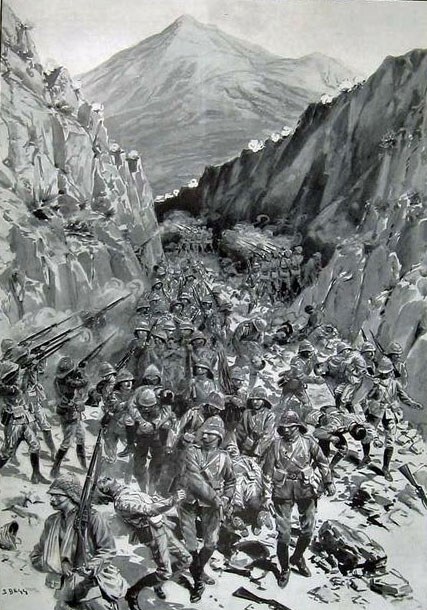
We do not know the exact nature of his wound but, judging by the total length of his service in India it seems that he recovered and did not return home.
In 1899 the Regiment were in Fyzabad, some eighty miles east of Lucknow. Finally, in 1902, it was posted to Dagshai, which was a hill station where Prisoners-of-War from the Boer War were kept for a time. We do not know if Frank was in this last posting for it was about this time that he completed his term of service and returned to England. He had served just over 11 years, of which ten years five months had been in India.
On his return to England, Frank was quick to re-enlist. In late 1903 or very early 1904 he joined the 3rd (Depot) Battalion of the East Lancashire Regiment, based at the Fulwood Barracks near Preston, with Regimental Number 7882. While based there, he must have had some home leave for, on December 28th 1907, aged 34, he married 21-year-old Ada Meadows in Rushden Parish Church.
He served ten years with his new regiment but on the 1st May 1913, aged 39, he was assessed by a doctor for his pension and discharge. Did his young wife assume that his army life was over? They moved to 32 Winsdon Road in Luton and he was possibly working as a professional musician. That was how he described his calling when he enlisted again with the 5th Battalion of the Bedfordshire Regiment on the 5th May 1914. He gave, as his employers, Messrs Carruthers Brothers who were a large company producing straw and felt hats in Luton. Was he working with them as a musician or was he having to work in the factory while he found enough work as a musician?
He was given the Regimental Number 3547 and three months later was appointed a Lance Corporal. Four days after that he was promoted to full Corporal. Nevertheless, he was not destined to go to war. The 5th was a Territorial Battalion designed for home service, and he remained in England. After 206 days in the Bedfords he was examined and found medically unfit for further military service. It appears that he had varicose veins and had refused to have an operation to correct the condition.
After his discharge he returned to life at home in Winsdon Road. I have not found any children for the couple but the Luton Reporter of 28th June 1921 reported that Frank had been summoned and found guilty of having two dogs but only one licence. His defence was that he was going to get rid of one dog but his “boy” had persuaded him to keep it and he had forgotten about the licence. The couple therefore had at least one child. In the court case he had described himself again as a musician. By 1939 he was now a “Professional Musician – Unemployed”. Fortunately, his wife, Ada, was working as a “Forelady in a Fancy Leather Goods Factory”.
Frank died, aged 68, in the second quarter of 1942. Ada married again, just a year later, to widower George Bowles on 4th April 1943. He, too died, aged 72, in 1945. She then married finally, on 23rd February 1949, to John Stevenson. I think she may have died on 26th December 1954 in Surrey.
Richard Smith and his brothers
The other son of William and Sarah, also called William, was a Raunds shoemaker who, on September 14th 1876, married Ann (usually Annie) Ball of Ringstead. Annie was the sister of my great grandfather, John Ball and he married Susannah Phillips in Ringstead Parish Church on the same day.
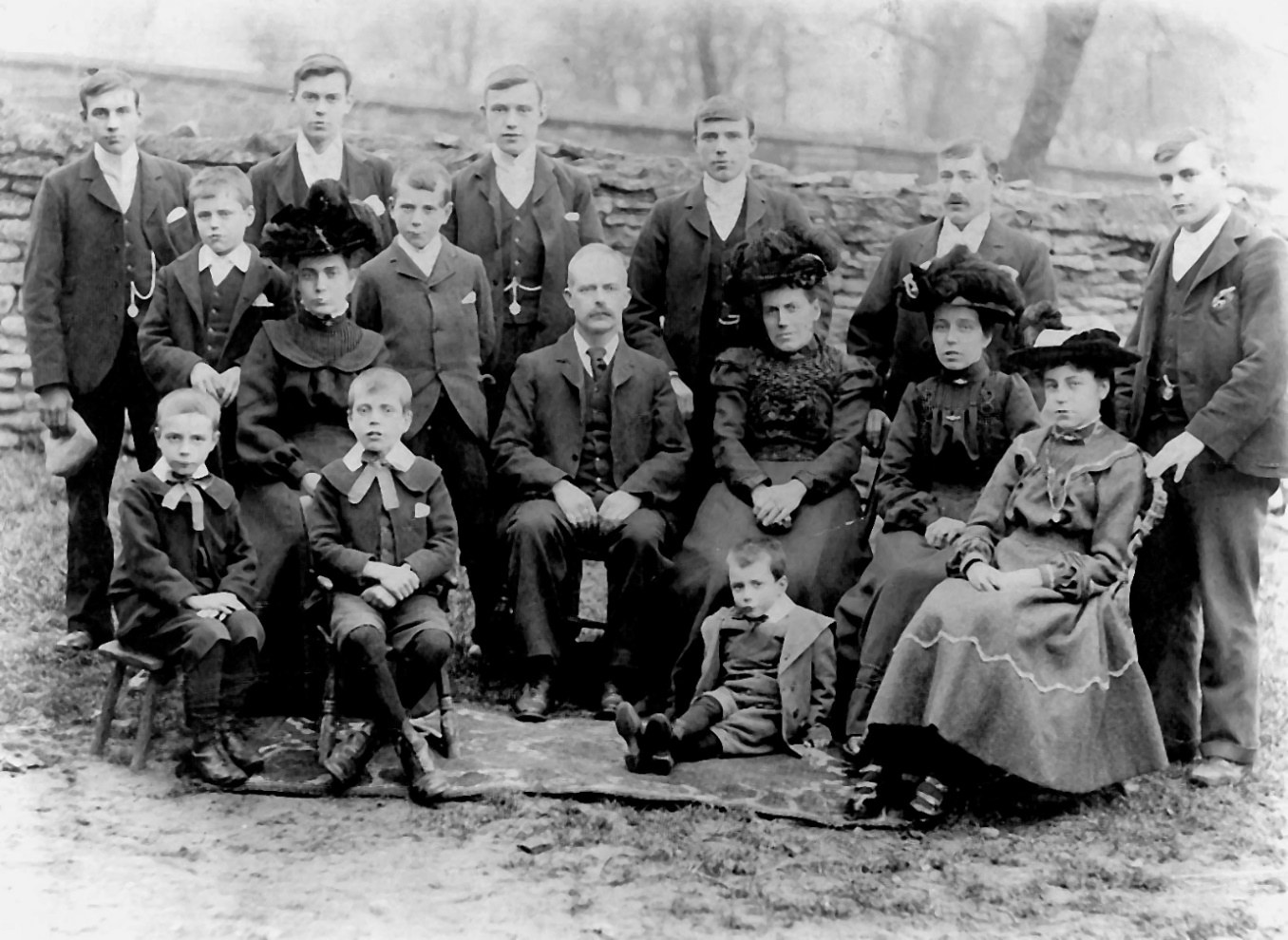
Two years later, on August 4th 1878, in Ringstead Church the Smiths had their three children, Sarah Ellen, Richard and Thomas all christened and John and Susan Ball had a son, George Henry christened. In 1886, tragedy was to befall the Ball household for John was killed by an earthfall in Peray Pit near Islip. The Smiths went on to have an exceptionally large family, even for those times. Annie gave birth to sixteen children, three of whom died before 1911.
I believe that fifteen of them (with approximate birth dates) were: Elizabeth Annie (1874); Sarah Ellen (1875); Richard (1876); Thomas (1878); John (1879); William (1881); Frederick (1883); Albert (1885); Eliza Emma (1886); Eva (1887); Walter (1889); Arthur (1890); Alfred (1893); Sidney (1896) and Ernest (1897). Even with one child missing, the dates seem impossible but Annie confirmed the number in the 1911 Census.
Annie and William must have dreaded the coming of war, with so many sons of an age likely to volunteer or be conscripted. Only the first four brothers were born in Ringstead before the family moved to Raunds and, of these, only Richard was conscripted. Thomas and John were not forced to serve by the Northamptonshire Military Tribunals and, I believe that, William may have died in 1909. There were, in total, six other sons who fought and we will briefly describe their lives later but first we will look at Richard Smith.
Richard Smith (1876-1918)
Richard was the oldest son, born on the 24th November 1876, and christened with siblings Sarah Ellen and Thomas on the 4th August 1878. By 1891 the family were living in Sanders Gardens in Thorpe Road in Raunds. Richard was fourteen years old and working as a riveter in a shoe factory.
Like many young men, he was a keen footballer and played for Raunds Town around the turn of the century. In 1901 he was still at home, aged 24, and working as a shoemaker like his father. They were now living in Brook Street in Raunds. At the end of the following year, on Christmas Day 1902, he married Lucy Ellen Stanhope, (always known as Nell or Nellie), the daughter of John Stanhope, a shepherd, born in Lincolnshire.
At this time the local military boot industry was going through a difficult time, with factory-made boots undercutting the hand-sewn men and the piece work rates being reduced for government work. Richard was one of the 115 men selected from, the 300 volunteers from Raunds and Ringstead to march to London. The Raunds March in 1905 was an eighty-mile trek, led by James Gribble on military lines, to present the shoemakers case to the Government. The men were preceded by outrider cyclists who found food and lodgings for the men at various stops along the way, and a brass band, made up mainly from Ringstead men. All along the way they were cheered by crowds and interviewed by journalists. In London Gribble spoke to huge crowds in Trafalgar Square and they came triumphantly home. The Government did give some concessions but it was the First World War that gave the industry a temporary respite.
In the 1911 Census we see that Richard and Lucy had been married eight years and had four children, Harold (7), Fred (4), Albert (2) and Doris Jane (1). Richard was working in a local factory and they were living in “The Colony”, the two facing terraces at the top of Marshalls Road. Richard was working for the Regulation Boot Company in Raunds. At some point after 1911 the family moved to 38 Albert Road in Kettering.
In 1912 and 1916 the couple had two further daughters. Richard was now forty with a large family but this did not protect him from eventual conscription. He was enlisted in the 9th Battalion of the Essex Regiment on 1st October 1917 and was given the Regimental Number 38537.
The 9th Battalion had first landed in Boulogne on 31st May 1915 and had taken part in the Battle of Loos and, the following year, in the Battles of Albert, Pozieres and Le Transloy. In 1917 they were around the Arras area and fought in the First and Third Battles of the Scarpe and the Battle of Arleux.
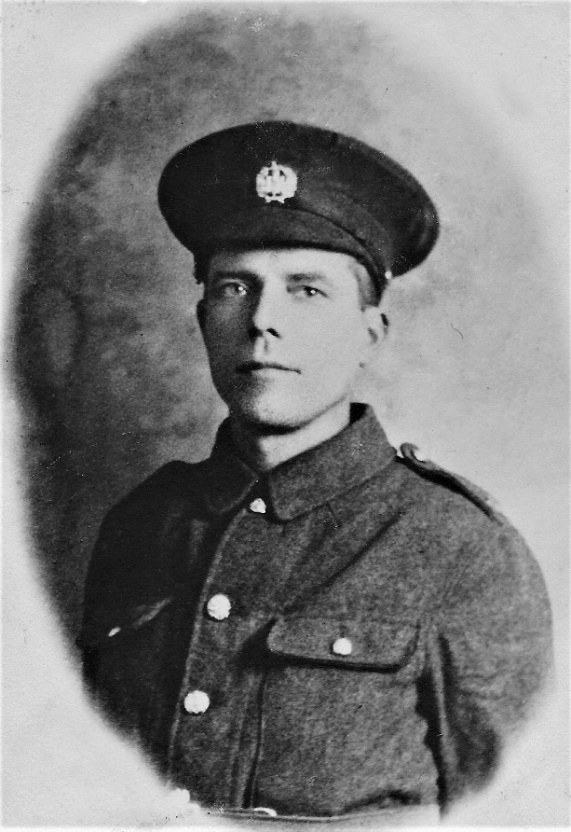
Richard did not join the 9th Battalion on the Western Front until 1st February 1918. As we now know, 1918 was to be the decisive year of the war. The Germans were aware that the Americans would enter the war in increasing numbers and that their own resources were becoming exhausted. The German Supreme Command planned a great final assault to break through the Allied lines and push the British to the coast and trap them there. The “Kaiserschlacht”, codenamed Operation Michael, was launched on 21st March 1918, between Cambrai, St Quentin and La Fère on the Somme battlefield. The British, taken by surprise, were outnumbered by the enemy, three to one, and were inevitably forced into rapid retreat. Great courage was shown, however, and the line was maintained and a major German breakthrough was narrowly averted.
The 9th Essex were at the First Battle of Bapaume (24-25th March) and the First Battle of Arras on the 28th March. It was a constant retreat as the enemy pushed relentlessly forward. The British were driven back to the outskirts of Amiens but that was the nearest the Germans came to taking the city. The line held there and the German army, exhausted and with supply lines stretched to breaking point, now ground to a halt. The pendulum swung back and they were suddenly giving ground and trying to maintain an orderly retreat until the Armistice, on 11th November 1918, ended the most terrible war in history.
Richard did not live to see this final victory for, in the defence of Amiens, he was “killed in action” on the 5th April 1918. (The Commonwealth Graves Commission’s website has the 7th April.) His death was reported in the Weekly Casualty List on Tuesday 14th May. He was buried some five miles south-west of Albert in the Ribemont Communal Cemetery Extension with the epitaph “Rest in Peace”. Richard had been at the Front for little more than two months. He was later put on the Kettering and Raunds’ War Memorials but is not on the Ringstead Memorial, the place of his birth.
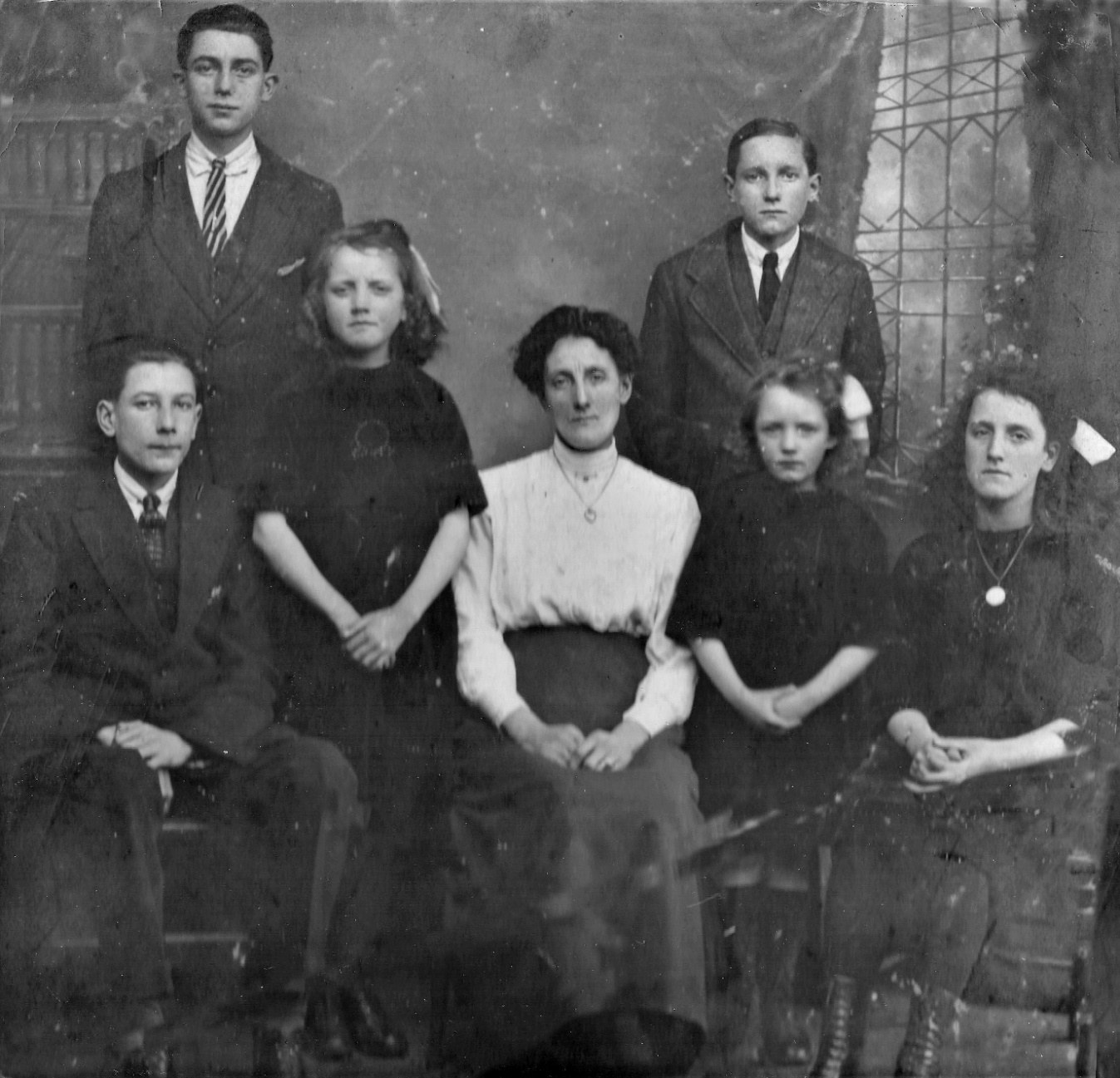
Lucy was a widow with six children aged between two and fifteen. She received an initial grant of £5 paid on the 25th April 1918 and then a widow’s pension of £1 6s 8d and a children’s allowance of £1 5s 6d giving a weekly total of £3 2s 2d.
It would have been a hard time for her and the family but she did not re-marry. In the 1939 Register of England and Wales she was living at 90 Stamford Road in Kettering and running a small greengrocer’s shop with daughter Kathleen helping in the house. [Her granddaughter, Karen Wright believes that the Census collector has mixed up the two women’s occupations and it was Kathleen who worked in a Co-op grocery in Stamford Road]. She moved to Wellingborough with Kath, her youngest daughter in 1951. In her later years she suffered from Rheumatoid Arthritis and died in the Park Hospital in Wellingborough on 27th December 1958, aged 78.
The rest of the Smith men, after John (Jack), had all been born in Raunds but because of the connections to Annie we will briefly record their lives.
Albert Smith (1885-1942)
Albert was born on the 15th August 1885 and, in the 1891 and 1901 Censuses, we see that he is with his family and working as a shoemaker after he left school. When he was twenty-two years old, he decided that he would try his luck in the New World. He sailed from Liverpool and arrived in New York on 20th October 1907. His final destination was Buffalo, a city of some 400,000 people, in New York State. It is on the eastern shores of Lake Erie, sixteen miles south of the Niagara Falls. Buffalo is also only a few miles from the Canadian border.
It appears that he did not marry and was possibly staying with his Aunt Sarah who lived at 343 New Abbey Street in Buffalo. I think that she may be have been the wife of Walter Smith who was born in Raunds in about 1862 but had lived in Buffalo for many years. Walter seems to have continued to work as a shoemaker in his own shop.
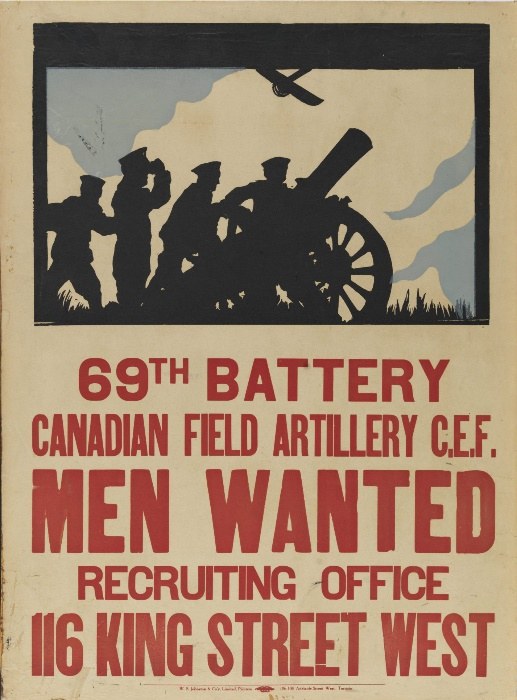
On February 25th 1918 he crossed the border into Toronto in Canada and attested with the Canadian Expeditionary Force (CEF). He was now 32 years 7 months old and was five feet five inches tall with brown hair and blue eyes. He had an appendix scar and his left hand had been stiffened as the result of a burn. He became a gunner with the 69th Battery of the Canadian Field Artillery and was given the service number 340544. The 69th did not see action but it provided reinforcements for other CEF units.
I have not found any military service in Europe for Albert but we do know that he arrived back in Buffalo on 13th December 1918 and that his passage was paid for by the army. On return he became a labourer at an oil refinery and had moved to Baraga Street in Buffalo but still staying with his aunt, Sarah Smith.
There was another voyage when Albert arrived back in New York on S.S. Adriatic from Southampton on 17th October 1919. Was this a visit home to see his family in Raunds and Ringstead. We do not know what happened next and many Ancestry.co.uk family trees have him dying in England but an Albert Smith died on 17th July 1942 in Buffalo aged 56. Was this our Albert?
Walter Smith (1889-1970)
Walter, the next soldier son, was born on the 20th May 1889 [His passport application has 24th May 1890]. The 1911 Census shows that he had left the family home and was a servant living with Milk Retailer, William Mitchell and his wife, Minnie. The house was in Brick Kiln Road in Raunds and Walter was helping with the milk delivery.
The following year he followed his older brother to America. He was on the S.S. Mauretania which arrived in New York on December 12th 1912 en route to Buffalo. He did not have a shoemaking trade but became a worker in a steel plant. Unlike Albert, he became a naturalised American which meant that he would become part of the American army in Buffalo rather than cross the border to join the Canadian force in the First World War.
His Draft Registration Card shows that he was living at 343 New Abby Road in Buffalo in New York State. His trade was described as “Pipe Fitter” for Contact Processes”, in Albert Road in Buffalo. There was a slightly chilling instruction on the Registration Card which stated, “If person is of African descent tear off the corner”
Walter was 28 years old when he started his service on 26th May 1918. Unfortunately, I have not found if he was actually sent to Europe to fight with the Allies. Nor have I found his marriage for certain. A Walter Smith married Florence Jaspers on the 8th September 1919 in Manhattan. Could this be the right man?
Certainly, we know that his wife was called Florence and the 1920 Federal Census records them living at 201 Baraga Street in Buffalo. On the 8th November 1923 Walter applied for a United States passport. On the application form he wrote:
I, Walter Smith, a naturalized and loyal citizen of the United States, hereby apply to the Department of State of Washington for a passport.
I solemnly swear that I was born at Raunds, England on May 24th 1890, that my father is William Smith and now residing at Raunds, England that I emigrated to the United States, sailing from Liverpool, England about December 7th 1912 that I have resided uninterruptedly in the United States from 1912 to 1923 at Buffalo, New York, that I was naturalised as a citizen . . . on 5th July 1918.
He wanted the passport to visit the British Isles to see his parents and intended to return within six months. He had already booked to sail on the 15th December 1923 on the S.S. Majestic.
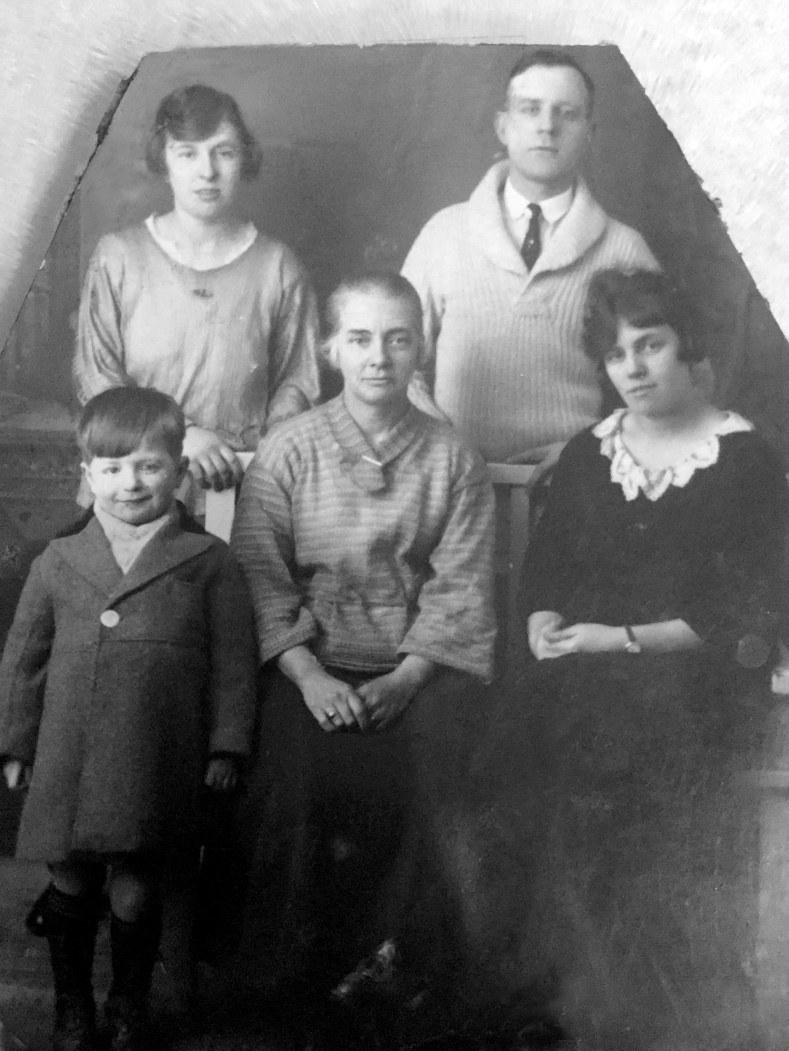
By the 1925 New York State Census they are in 670 Hopkins Street and have three men lodging with them. Walter’s job appears to be an “awning maker”. I have not found the birth of their three children, but there is a later photograph which shows the family visiting Walter’s older sister Sarah Ellen who was some fifteen years his senior. In the picture appear to be two of Walter’s children.
We must leave his life there. I think he may have died in Buffalo in 1970 aged 81 but, like much in this life, this has to be confirmed.
Arthur Smith (1890-1987)
Arthur, the next in line of the Smith soldiers, was born in Raunds on the 2nd October 1890. By 1911, he was a shoemaker, probably working for Owen Smith and was living with his family in Marshalls Road,
Certainly, he was working for this firm as an “Army Welt Sewer” when he signed his Short Service Attestation Form on 11th December 1915. He would soon be wearing the military boots that he had been making. He was still living with his family at 84 “Fairlawn” Marshalls Road. He was also a member of the Rechabites which was a popular temperance organisation but also acted as a friendly society giving sickness and death benefits.
He would have been attested by the Northamptonshire Regiment but was sent first to the 5th Battalion of the Royal Fusiliers which was a training unit, based at Dover from the 26th June 1916 to the 17th October. On the 18th October 1916 he was posted to the British Expeditionary Force in France and joined the 17th Battalion of the Royal Fusiliers.
The 17th had fought in the Battle of the Somme which finally ended with the battles in the Ancre area. These continued sporadically into 1917 when the Germans carried out a planned retreat to the fortified line that they had been building, usually known as the Hindenburg Line.
In 1917 there followed the Battle of Arras and then the Battle of Cambrai. It was in this latter battle, in the Bourlon Wood area of the Front in the Battle of Cambrai that the 17th were in a long trench called the Rat's Tail which took the brunt of a huge attack made by four German Divisions. The Battalion fought heroically and helped prevent the Germans from breaking through. During this battle on the 30th November 1917 Captain Stone was ordered to withdraw and he sent three platoons back but remained behind with a rear-guard to give them time. The British Empire website records:
His last stand was one of the great heroic feats of the war. He and his men fought with rifles bayonets and grenades while Captain Stone stood at the forefront, with telephone in hand to report back vital information. It was a suicidal act of defiance and they were all killed. The battalion was, for the most part, withdrawn to a safer part of the line but C Coy remained in the Rat's Tail behind a block and fought throughout the day.
It was during this ferocious battle that Arthur received a gunshot wound in his left hand. He had been previously wounded by a gunshot in his left arm on 2nd May 1917 during the Battle of Arras. This time, however, his time in the Front Line was over.
He returned to England to be treated on the 6th December 1917 and on 10th April 1918 was declared no longer fit for physical service. He was also “permanently excluded from liability to medical re-examination” which shows that his wound had left him with a permanent disability. He was entitled to the British War and Victory Medals.
He would have suffered the deaths of his brothers, Richard and Sidney in 1918 and in 1919 and his sister, Eva also died. He decided to follow his older brothers, Albert and Walter, to seek a better life in America. He was not alone, for he travelled with his younger brother, Alfred and his wife Rose, on the S.S. Mauretania. They arrived in New York on 16th May 1920, bound for Buffalo. Both the men were “bootmakers”.
In the 1930 Federal Census, Arthur, still single, was staying with his Aunt Sarah Smith and her sister, Ellen Nugent, at 351 Baraga Street in Buffalo. He was now 38 years old and working as a cobbler, repairing shoes.
In about 1980, Lilian Coggins of Raunds went to America to visit relatives and while there met Arthur, who was now ninety years old. He gave Lilian the photograph of the family shown at the beginning of this article and asked if she would try to trace his relatives in Raunds. He told her that he went to America because of the difficulty of finding work in England. I am not sure if she managed to find any long-lost relatives.
I have not found him after that but some Ancestry.com family trees have him living to be 95 and dying on 22nd June 1987 in Hamburg, on the shores of Lake Erie, some fifteen miles south of Buffalo.
Alfred Smith (1892-1976)
Alfred Smith was one of three sons of William and Annie who joined the Royal Fusiliers. In 1911 he was eighteen years old and working as a “Milk Hawker”, presumably trying to sell milk around the streets of Raunds. He had been born on 11th May 1892.
He was close in age to his brothers Sydney and Arthur and all three were posted to the Royal Fusiliers. Arthur had the Regimental Number 49444, Sydney 50873 and Alfred 50877. We see that the last two must have signed up at the same time. The old “Pals Battalions” which could see whole families or villages’ young men being wiped out in an engagement had been abandoned so although they were all in the Royal Fusiliers (London Regiment) they were posted to different Battalions.
It was to the 8th Battalion that Alfred was sent. The 8th had been raised in Hounslow as part of Kitchener’s First New Army. They first landed in France between the 29th May and the 1st June 1915. Alfred, probably, would not have joined the Battalion until late 1916 at the earliest.
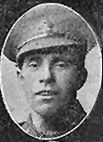
At the end of 1917 Alfred was wounded and was entitled to wear a wound stripe on the sleeve of his uniform. He was wounded again and this was reported on 25th September 1918, although the next of kin were living in High Wycombe. The initial and Regimental Number are correct so perhaps this is a mistake.
On the 6th February 1918, the 8th Battalion were disbanded in an army reorganisation and it seems that Alfred was transferred to the 23rd Battalion of the Royal Fusiliers which was known as the “1st Sportsman’s”. It had been raised in the Hotel Cecil in the Strand in London on 25th September 1914. We see the patriotic fervour of the times reflected in this extract from a later poem by “Touchstone” in the Daily Mail, quoted in the Battalion’s History:
Sportsmen of every kind,
God! We have paid the score
Who left green English fields behind
For the sweat and stink of war!
New to the soldier’s trade,
Into the scrum we came,
But we didn’t care much what game we played
So long as we played the game.
By the time that Alfred joined the personnel would have been different and it would not have been looked on by any of the men as a “game” of any kind.
We also see in the Gazette published on 13th June 1919 that Alfred had been awarded the Military Medal. At this time there was often a long delay in the announcements of the Military Medals, and I think it may refer back to the action in 1918 when he had been wounded.
He was discharged from the army and possibly, immediately after that, or during his sick leave, he married Rose Annie Bailey in September 1918. She was a Raunds’ girl, daughter of George and Mary.
After the war, Alfred and his new wife, Rose decided to follow his brothers to America. On May 8th 1920, together with brother Arthur, he arrived in New York on the S.S. Mauretania, bound for Buffalo. Both men were given as bootmakers. In 1925 the couple were living at 10 Boone Street in Buffalo. Alfred was working as a wheelwright and they had a three-year-old daughter, June.
Unlike his brothers, Alfred did not settle in America and on 18th November 1927 the small family arrived in Southampton, on the S.S. Homeric, bound for Red Row in Raunds and their intended country of residence was shown as England. By 1939 they were living in 68 Alexandra Street in Kettering and Alfred was a “Dairyman and Retail Grocer”. Rose was shown as having “unpaid domestic duties” but one suspects that she would also have taken some part in the small business. Rose died on the 1st August 1966 when the couple were living at 79 Brook Street in Raunds and administration was granted to Alfred, a “retired dairyman”. Alfred was living in Red Row when he died on 12th April 1976 aged 84.
Sydney Smith (1895-1918)
Sydney, the fifteenth of sixteen children for Annie Smith, was born in 1896 and in the 1911 Census was fifteen years old and was already earning a living in “shoework”. He was with the family in “Fairview”, 84 Marshalls Road in Raunds.
When war came, he did not volunteer, like some of his brothers, and his parents would have prayed that the war would be over before he was called up. This was not to be, and he was conscripted and called up to the Depot of the Northamptonshire Regiment around the 26th June 1916. He was then posted to the 28th Royal Fusiliers (London Regiment) and given Regimental Number 11409. This was a Reserve Battalion which trained the men for transfer to a fighting unit abroad. He would have been renumbered when this unit became the 104 Training Reserve. Sydney landed in France on the 10th October 1916 and was posted to the 8th Battalion and was given a new Regimental Number GS/50873 (“GS” is short for General Service).
It seems most likely that he was finally with his battalion in the Front Line on 19th October 1916 when a draft of sixteen men arrived at Bernafay Wood, located near Montauban village, which had captured by the 9th (Scottish) Division on 3-4 July 1916 during the opening days of the Somme offensive. On the 22nd, the 8th marched to Ribemont and were taken by buses to Fosseaux. After a brief spell settling into billets, they marched to occupy the same trenches they had been in September at Agny. The Somme campaign was stuttering to a close and there was comparatively little artillery fire and few casualties through to the end of the year where they were finally behind the lines, training at Moncheaux. This lasted until the end of January 1917 when the Battalion moved to Noyelette and Habancy and continued with their training and working parties.
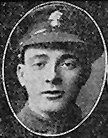
On 7th February they moved again to billets in Arras and on the 11th were once more in the Front Line. Again, it was a quiet time and in March the Battalion moved back to Beaufort for training and working parties. They were now mainly providing working parties, for other Regiments and the Royal Engineers, improving trenches.
On the 9th April the 8th received attack orders and they “went over the top” and secured their allotted targets but at a great cost. The War Diary reports that 40 men were killed, 2 died of wounds, 119 were wounded and 7 were missing. There was no immediate respite and they received orders to move up again and sustained further casualties before being relieved and moving back into “the caves” to rest and clean up. On the 14th they moved back to Grenas for training and reorganisation. It was not for long, for, on the 26th April they were once more in the Front Line at Feuchy near Arras.
The 8th were next sent to near Monchy and on the 3rd May they attacked the enemy positions but were met with heavy machine gun fire. During the action 40 Other Ranks were killed, 144 wounded and 92 were missing. The Battalion moved back out of the line to Arras and trained and reorganised again, finally at Sus St Ledger.
By the 26th June they were back in the trenches at Monchy-le Preux and they were in and out of the line for most of the rest of 1917, mostly described as “quiet” in the War Diary, but still regularly sustaining casualties. They moved back to St George for rest and training before, in November, moving into the Front line at Gonnelieu where they were part of an attack which cost 15 Other Ranks killed and 78 wounded. Another attack at Balouzelle added more wounded and killed.
At the end of November 1917 the Battalion was in the trenches east of La Vacquiere when, on 30th November the enemy “opened a violent bombardment” and by the end of the day the 8th had ten officers and 247 Other Ranks as casualties. The 8th were finally allowed back for rest and reorganisation until the end of the year.
1918 found them in billets in Bannigues and, on 5th January, they celebrated Christmas Day as they had been in close support on the 25th December. The moved to “Dirty Bucket Camp”. There was one final spell in the Front Line before the moved back to Hospital Camp at the end of January. Sydney had been with the 8th until 29th January 1918 but the Battalion was to be disbanded under an army reorganisation, and, a week later, Sydney joined the 7th Battalion.
The 7th Battalion War Diary tells that 6 officers and 180 Other Ranks joined the 7th from the 8th on the 5th February 1918 at Beaulicourt where they were furiously digging revetements. They moved into the Front Line at Ribecourt but with little action and few casualties. In March they were in Havrincourt Wood in the reserve trenches carrying out wiring and digging duties before moving into the Front Line. They were attacked with gas shells and 250 men were affected.
The great German, Michael Offensive began and the 7th were part of the British retreat. In March, 4 Other Ranks were killed, 40 were wounded and in the chaos 104 were missing. April found them at Forceville as the British began to try to hold the line and force a counter-attack. In May the fighting continued and 30 Other Ranks were killed, 95 were wounded, 8 were poisoned with gas and 8 were missing. Among the wounded was Sydney Smith. He had shrapnel wounds to his right chest, back, right arm and right foot. He was taken to the Casualty Clearing Station and given 750 units of Anti-Tetanus Serum. It was put on his casualty sheet that “he could be put forward as an eligible candidate to be awarded a wound stripe”. He was sent on to a hospital but he did not survive his wounds and died on the 27th May 1918.
Sydney was buried, aged 23, in the cemetery at Doullens Communal Cemetery Extension (I. C. 21). He was entitled to the British War and Victory medals. His mother, Annie, received a five shillings a week dependant’s pension.
Ernest Smith (1897-?)
Ernest was the youngest of the children born on 28th October 1897. In 1911 he was with his family in Marshalls Road and was thirteen years old.
War came, and Ernest would not have been eighteen until the end of 1915. He enlisted with the Bedfordshire Regiment and was posted to the 6th (Service) Battalion with Regimental Number 33577. We do not have his Attestation papers but, from later records, we see that he enlisted around September 1916 and joined his Battalion in France in December 1916 or January 1917.
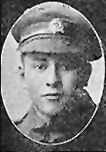
The 6th were one of the Battalions raised for Kitchener’s New Army (K1). They had first landed in France on 30th June 1915 and had suffered terrible losses in the Battle off the Somme, particularly at the Battle of Bazentin Ridge.
Ernest joined them as one of the replacements after all this carnage. In 1917 they were in the campaign known as the Battle of Arras, specifically in the First and Second Battle of the Scarpe and the Battle of Arleux where, in the assault of Greenland Hill on 29th April, they finished with only 58 men standing.
Later in the year they were engaged in the Third Battle of Ypres, a campaign which ran from the end of July until November 10th and is now best remembered for the terrible mud and slaughter of the last phase in that Autumn, often called the Battle of Passchendaele. Ernest was wounded in the head by gunshot. He was taken to 140th Field Ambulance on 23rd September 1917 and transferred by the Sick Convoy to No. 21 Ambulance Train. The wounding was reported in the War Office Daily List on 22nd October 1917.
We are not sure of the seriousness of the wound or whether Ernest was treated in one of the hospitals on the French Coast or returned to England. We do know that by the time that the local newspapers reported on the seven sons, in April 1918, that Ernest had been transferred to the Machine Gun Corps and given new number, 139381. Looking at other numbers in the Corps it looks as if his transfer would have probably been not long before the articles were published. Nor do we know if Ernest entered the war zone again or when he was discharged.
He returned to civilian life but I have not yet clarified what exactly happened to him. There were a surprisingly large number of Ernest Smiths around, of about the same age, at that time. I believe that he married late, to Ringstead woman Gertrude Phillips in 1935 and in the 1939 Register of England and Wales they were living in West End, Chapel Lane, in Ringstead. Gertrude is shown as a heel builder and Ernest as a boot and shoe finisher. I do not think that they had any children.
Afterword
What about the parents of the sixteen children? William died in 1926 but I believe Annie lived to the good old age that she deserved. In the 1939 Register of England and Wales she is shown widowed and now living on her own in 19 Red Row in Raunds with her date of birth shown as 7th May 1855. Annie had been baptised on 8th November 1863 in Ringstead Church, aged eight years. I have not yet confirmed the date of her death.
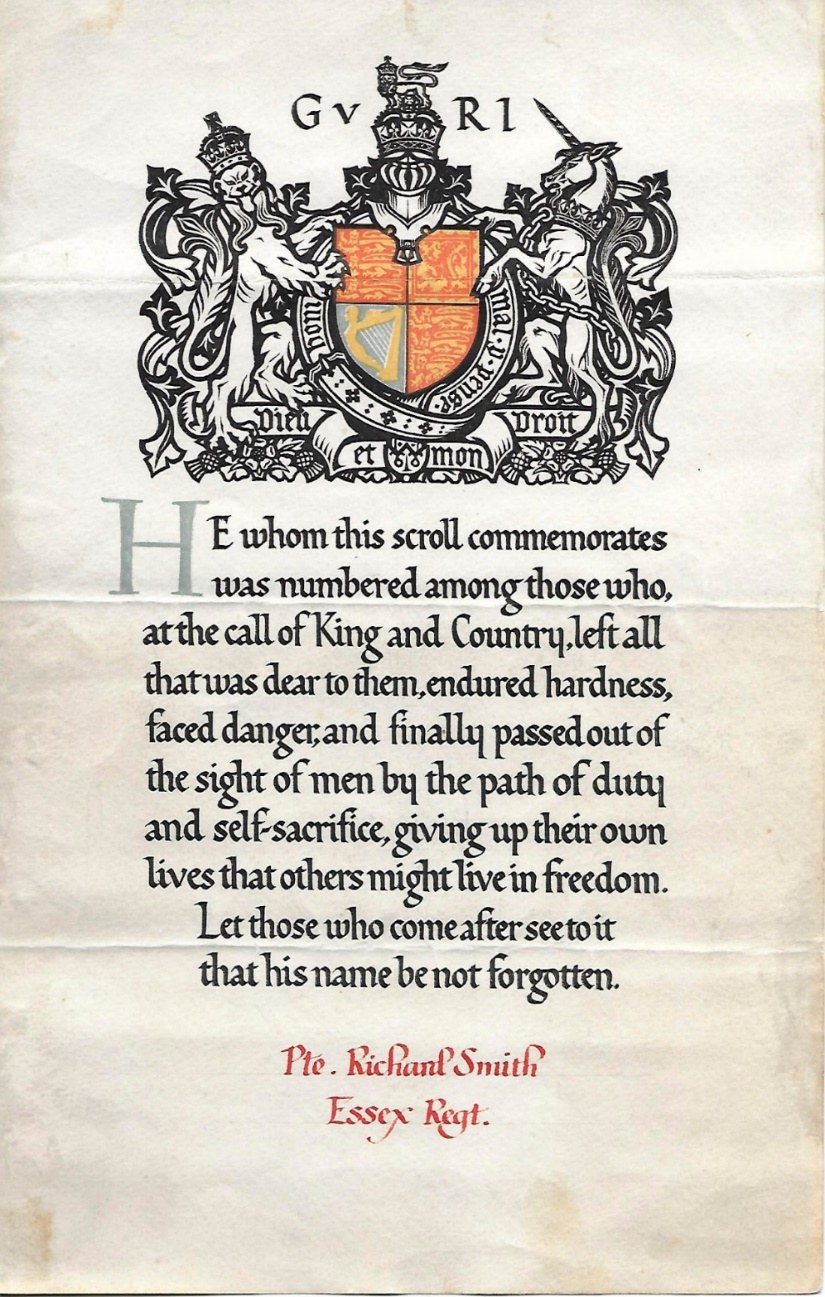
The Death Scroll that was sent to the next of kin of men killed in WW1
With thanks to Karen Wright