The Great War: N–Z · Story 13
Alfred Edward Shaw (1897-1917)
Alfred’s grandfather, William Shaw, was a basket manufacturer in Raunds and his son, George, carried on this trade, making domestic and industrial baskets, until his death in 1954. Another son of William, called Thomas, became an army bootmaker and married Ringstead girl, Martha Jane Tilley, on January 25th 1894. The couple lived at No.5 London End in Ringstead, next door to Martha’s parents, Samuel and Catherine (Kate) Tilley.
Thomas and Martha had four children, Martha, Alfred Edward, Ellen Bessie and Thomas. In the 1911 Census they were in Spendlove’s Yard and the oldest child, Martha was a leather heel builder, almost certainly working in the heel factory nearby, at the bottom of Denford Road. Alfred, aged 13, was working as an assistant baker. He had been baptised in the parish church on August 13th 1897 although Alfred, at least, had become a Wesleyan as a teenager.
Alfred first enlisted in the month from October 24th 1914 when he was just seventeen years old. It would have been in one of the Territorial Battalions of the Northamptonshire Regiment which volunteers could join at this earlier age. He was given the Regimental Number 3201. The men trained at weekends or in the evenings and went away to a summer camp. Territorials were not obliged to serve overseas but enlisted knowing that, in the event of war, they could be called upon for full-time service (“embodied”). In theory, no men could be sent to serve abroad until they were nineteen years old and, although some did, it appears that Alfred was posted when he had just reached this age.
He was sent to the 17th Infantry Base Depot (IBD) at Étaples near the French coast. The IBD was a holding camp for receiving men on arrival from England. Some of these camps were not liked, especially by the New Zealanders, because of the harsh discipline. The men were kept in training while awaiting being sent to a unit at the front. Alfred was posted to the 6th Northamptonshires on 28th September 1916 with a new Regimental Number, 40292.
The Medal and Award Roll shows that a draft of men transferred from the 6th Battalion of the Northamptonshire Regiment to the 32nd Battalion of the Royal Fusiliers (City of London Regiment) on the 10th October 1916. The 32nd (East Ham) Battalion of the Royal Fusiliers had been raised by the Mayor and Borough of East Ham in London on 18th October 1915 and had first landed in France on the 5th May 1916. On the 12th October the 32nds were in Becordal Camp and the War Diary records:
Draft of 1 officer and 60 O.R. arrived.
Further large drafts arrived in the following few days and the number of these replacements show the size of the casualties that the Battalion had suffered. Figures in the War Diary show that that at the end of the month there were 971 Other Ranks and 25 Officers but at one point before the replacements arrived there were only 493 men and 15 officers. Alfred was one of these new men. On 16th October they marched to Mericourt and entrained for Longpré where the new arrivals were trained, alongside the old hands, in company drill with bayonet fighting and rifle exercises. They then moved to Ridge Wood, a few miles south-west of Ypres, where they were trained in the routines of life at the Front in old trenches.
On the 28thOctober 1916 the men experienced trench life for real when they relieved the 10th Queens. There was heavy rain and little enemy action so the men repaired the trenches during the lull in the fighting. The Battalion followed the usual pattern of periods in and out of the line. On 6th November the men were given the new “box respirators” which gave better protection against chlorine and phosgene gases that were being used by both sides.
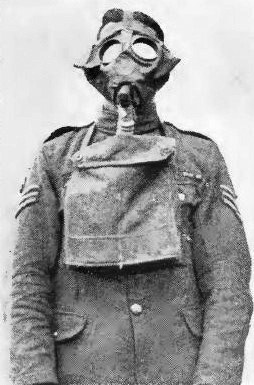
They were now in the La Clytte (De Klijte) and Vierstraat area, providing working parties for the Front Line through November. For the most part, December continued with exchanges of artillery fire and on the 9th they were bombed with “Tear Gas” In January 1917 the activity slackened but, in February and March, the fighting became fiercer again. On the 22nd March they moved into billets at Steenvoorde
In April they were in the St Eloi section of the Western Front before moving to Houle and on the 20th May they bathed in the lake, with the weather warm and sunny. The weather remained fine in June when the battalion was based at Elzenwalle (Elzenwallekasteel). At first, they were in support, but the enemy’s artillery was very active in Ravine and Deny’s Wood.
A British offensive had been planned and, following a week-long barrage by the Allied artillery, on the 7th June 1917 the Battle of Messines began. The objective was the capture of the Messines-Wytschaete (Wijtschate) Ridge which overlooked the British positions and made any further progress in the Ypres sector hazardous and difficult. It had been gradually transformed into a German stronghold. The Royal Engineers, however had been mining beneath the German positions and 21 large mines had been laid. At 3.10 am these were detonated and 19 of them exploded. It was the largest explosion before the nuclear explosions later in the century and was said to have been heard by Lloyd George in Downing Street. It is now believed that the Germans suffered far fewer than the 10,000 men later said to have been killed, but it was a morale shattering experience and made the task of the Battalion and the other troops, from Ireland and the Empire, much easier.
The 32nd were on the left in the initial night attack. The infantry had, as usual been preceded by a moving artillery barrage ahead of the attacking troops. The War Diary noted:
The whole ground and enemy trenches in this neighbourhood were so ruined by our shell fire as to be practically unrecognizable and a part of the Battalion in the excessive keenness which they showed throughout went on with the 26th Bn. Royal Fusiliers right up to the Dammstrasse [name given to a sunken road] and took part in the assault of it. The Stream marking the right of the RED LINE had been converted into merely a string of shell craters having more water in them than those in the neighbourhood.
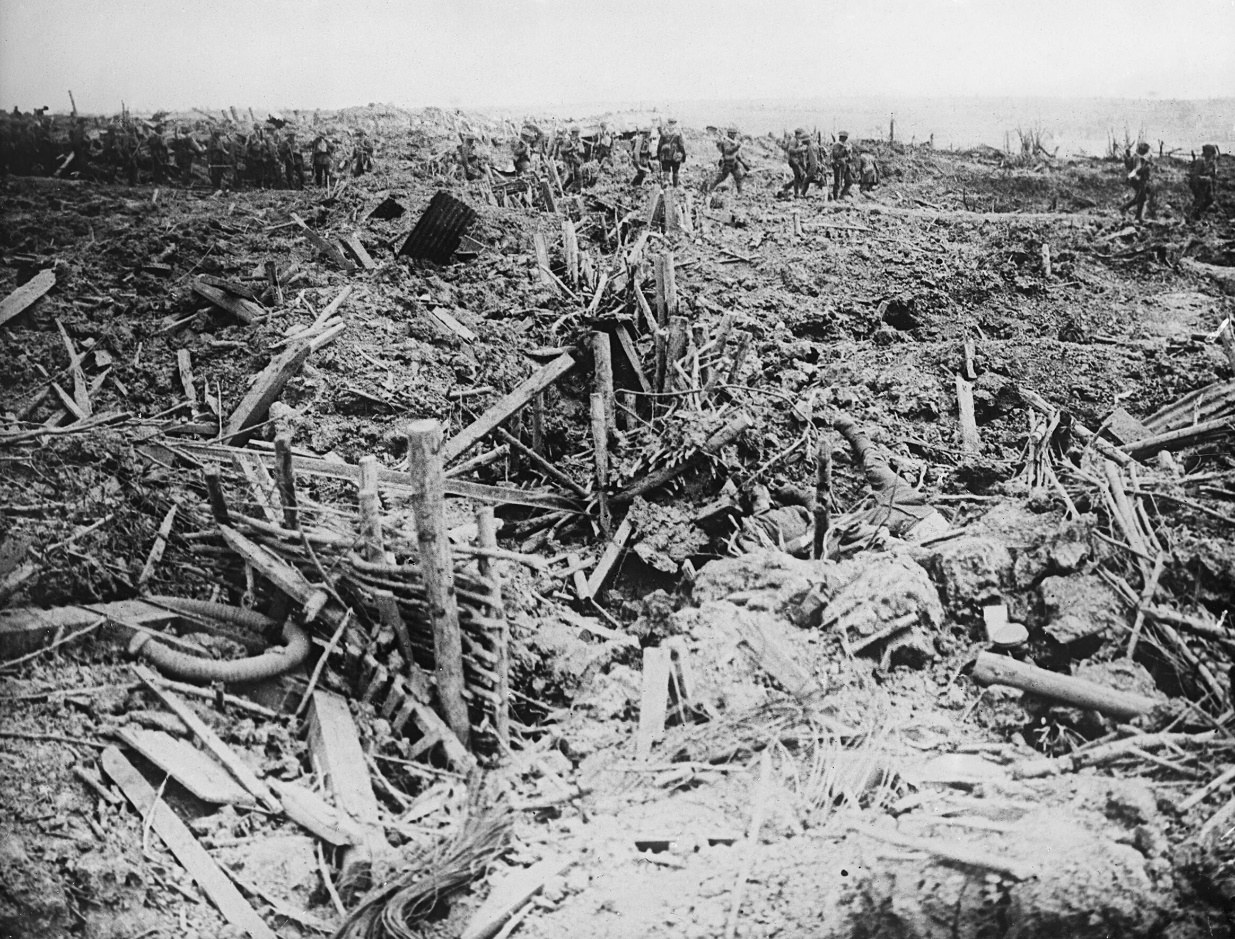
The raid was successful and most of the Germans had fled. By 8.10 am the work of the 32nd was over except for consolidation and organisation of the positions. Many men were killed but the battle was considered one of the few clear successes for the Allies until the last months of the war. Unfortunately, it was followed by a continuation of the terrible war of attrition in the mud of the Third Battle of Ypres (Leper) often called Passchendaele.
Through July, at La Clytte, the Battalion was mainly engaged in working parties, digging trenches for cables. Nevertheless, there were actions on the 31st July and 7th August in which 43 men were killed and 7 died of wounds and a further 90 were wounded. On the 5th August the Germans had attacked the line at Klein Zillebeke (four miles south-east of Ypres) held by the 32nd and temporarily broke through in one area but they were soon repulsed, and the line held.
September came with the Battalion in training. On the 14th September they began to move up to the Front Line, marching 12½ miles to billets at Zuytpeene and then over the next few days reaching the Canada Street Tunnels, near Zillebeke, by the 18th. The War Diary reported:
Battalion Concert Party gave a performance prior to the Battalion moving to the forward area.
On the 19th September the Battalion moved forward to its assembly position for an attack on “Tower Hamlets”. A new world of Anglicised French place names mixed with British names for features in the landscape had been laid over the map of the French countryside. August had seen a reduction in action because of the rain and mud but there was better weather in September. The British re-launched their attack with an assault on the German positions on the vital high ground of the Gheluvelt (Geluveld) Plateau astride the Ypres-Menin Road. This offensive became known as the Battle of the Menin Road Ridge.
There had been, first, a tremendous bombardment of the German front. The plan was called a “bite and hold”, to take a position and then consolidate it before moving to the next objective. The Tower Hamlets sector held by the 32nd was just west of Gheluvelt village The Battalion made repeated attacks but by nightfall, the Germans still held their positions.
In the period from 20th to 25th September the British lost 20,255 wounded, killed or missing. One of the men who died between 19th and 22nd September (dates vary in the records) was Alfred Shaw. The page of the Service Medal and Award Roll which shows the transfer of Alfred from the 6th Northamptonshires to the 32nd Royal Fusiliers on 10th October 1916, shows four other men who followed an identical path. Of these George Trenwith was killed on 7th August 1917, Arthur Sargison was killed on 22nd September 1917 and Albert Waterfield died on 19th September 1917.
Alfred was entitled to the Victory and British War Medals. At some point he had been appointed a Lance Corporal. He was twenty years old and his parents received his small war gratuity. He is commemorated on the Tyne Cot Memorial (Panels 28-30). Like William Sawford, William Sibley, Edward Roberts and Percy Wilson he was also remembered as a member of the Wesleyan Young People’s Class on a tablet which is now on the back of the former Cemetery Chapel (now the Heritage Centre). Along the road from there, into the village, he is also on the war memorial outside the parish church.
Alfred’s mother, Martha Jane died in 1922 but the family continued to live in Spendlove’s Yard. In 1934, his father was attending to a dog whose sores, it was thought, came into contact with a scratched pimple on his arm. He developed blood poisoning and died in Northampton General Hospital a week later.