The Great War: N–Z · Story 14
William Sibley (1894-1917)
William Sibley was born in 1863 in Old Bolingbroke in Lincolnshire. His father, Daniel, was a bricklayer’s labourer, who had originally come from Crouchfield in Hertfordshire. In 1881 William was a labourer on the railways, lodging in the Nag’s Head in Helpringham, a few miles south-east of Sleaford. In the same Census, Clara Childs, aged 17, was a domestic servant living in Leveratt’s Row in Ringstead with her parents, Robert and Mary Ann and her six siblings.
Soon after this Census William moved to Ringstead, probably to find work in the ironstone quarries of Northamptonshire. On 25th December 1883, he married Clara Ann and by 1891 William aged 30, and Clara, aged 27, were living in Carlow Street with their two children Harry, four, and Marge, one. William was working as a labourer in a local quarry.
In the 1901 Census William was still working in a local quarry but eldest son, Harry, now 14, was a “shoemaker” although this probably exaggerated his role. Besides Margie there were now three more children, Bertie (Bertram Frank) aged 9, William aged 7 and Kathleen – Mary Katherine aged 3. By 1911 there were three more children, Florence, Olive Frances and Gladys. The Census also shows that Clara has had 12 children four of whom had died.
The oldest son still at home, Bertram Frank (19), was a farm labourer, and William (17), born on 25th March 1894 had become a porter on the railway.
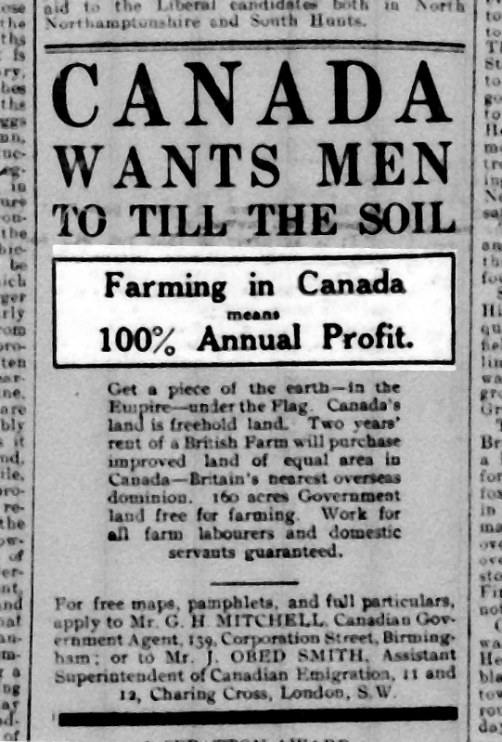
At this time there were many advertisements in the local and national newspapers encouraging people to emigrate to Canada. There were also very well attended lectures, on the benefits of the new land, by representatives of the western Canadian states. Agents for the assisted travel were in towns like Northampton. In 1913, 158,398 people emigrated to Canada and from 1912 to the start of the Great War, the number was over a million.
One of these emigrants was Bertram Frank Sibley, William’s older brother. He took one of the subsidised tickets on offer from the Government and the promise of free land and sailed in “Steerage” on the S.S. Southwark, arriving in Montreal on 4th May 1911. He was bound for Alberta and Saskatchewan. It was the end of Southwark’s career because she was scrapped in that same year.
Bertie became established in Hacke in Alberta. The settlement was named after William Hacke who was appointed postmaster of the post office there on 1st June 1914. We can imagine a small number of strung out homesteads with the post office becoming the point of reference to enable mail to arrive once a week from Magrath. It was not a village in the same way as Ringstead with shops and houses, church and chapels huddled together. Hacke later became known as Twin River.
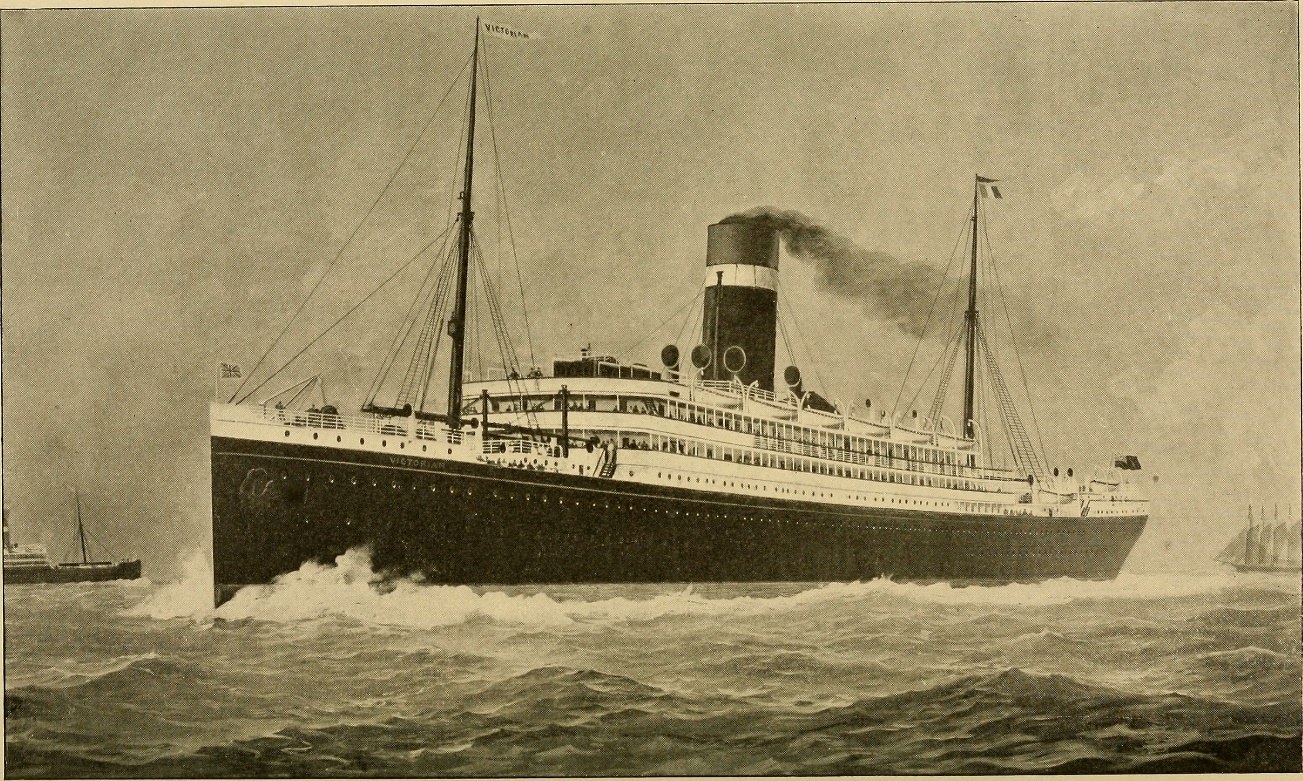
He would have written back to his family telling of his good fortune and William decided to also try his luck in the New World. He left Liverpool on the 16th July 1913 on the RMS Victorian, travelling Third Class. It was the first large civilian ship propelled by steam turbines and had been launched in 1904. In these large ocean liners 3rd class cabins had replaced the public dormitory conditions of “Steerage”.
The family believe that the two brothers had been granted 50 acres of land each and that men with 75 acres were not conscripted. They tossed a coin to see who would have both lots. William lost and joined the army. The problem is that William volunteered before conscription and it seems that the two men lived some distance apart. This does not mean that these events did not happen in some form.
War came to Europe in July 1914, and the attitude in Canada to the conflict was very mixed. At first, large numbers of men volunteered, so that in the first two years 300,000 men signed up from a population of about eight million. By 1916 the terrible toll of soldier’s lives meant many new recruits were needed but few came forward. Conscription was mooted but the French-Canadian population, particularly were opposed to it and there were riots in Quebec. Nevertheless, on 29th August 1917, it was introduced for all male citizens between 20 and 45 years old. It was evaded by many and most claimed exemptions of some kind so that the first conscripts did not reach Europe until 1918.
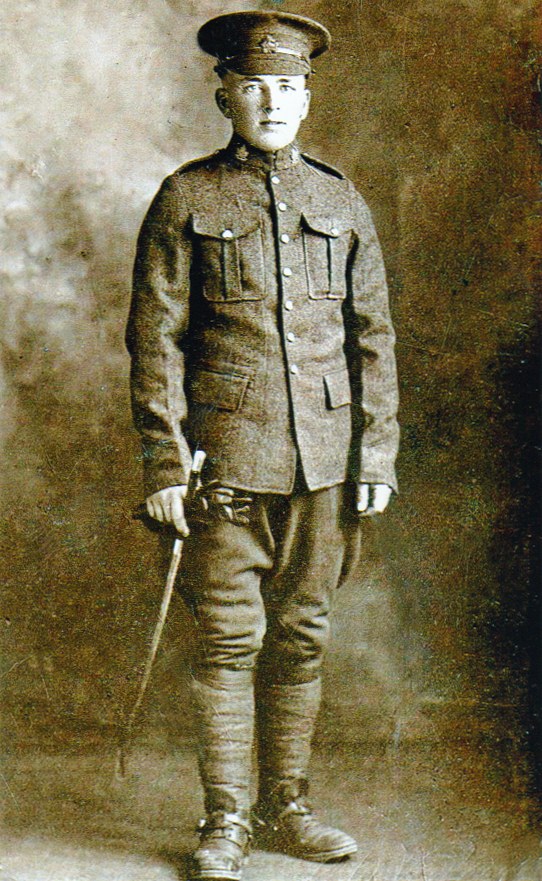
William, however, was a volunteer. He attested at Cardston on April 20th 1916 and was enlisted in the 13th Canadian Mounted Rifles (CMR but sometimes copied as OMR) and given Regimental Number 228244. At the time he was farming in Mountain View in Alberta, which was a hamlet some sixteen miles west of Cardston and sixty-five miles south-west of Twin River. Mountain View had originally been called Fish Creek and had been founded by the Church of the Latter-day Saints (Mormons) in 1890. In 2016 it had a population of ninety people. At enlistment, William’s occupation was shown as “farmer” so it seems likely that, like his brother he did have a land grant from the Government.
We know that the Sibleys were Wesleyan and William had been a member of the Bible Class in the local chapel. From his Attestation Paper we can see that he had converted to the Mormon faith which was a popular sect in southern Alberta and had a large church built in Cardston.
William was 5ft 6 inches tall with a 34½ inch chest. He had a fair complexion with light brown hair and blue eyes. The Attestation Paper used in Canada was a little different to the one used in Great Britain. The recruits agreed:
To serve in the Canadian’s Over-Seas Expeditionary Force and to be attached to any arm of the service therein, for the term of one year, or during the war now existing between Great Britain and Germany should that war last longer than one year, and for six months after the termination of that war provided His Majesty should so long require any services, or until legally discharged.
William embarked in Canada on the RMS Olympic on 28th June 1916 and disembarked in England on 4th July. Olympic was the older sister of the ill-fated RMS Titanic and she could take nearly 6000 troops on each sailing.
At first, he was sent to the Canadian Cavalry Depot (CCD) and became, briefly, part of the Fort Gary Horse Reserve Regiment at Shorncliffe. The reserve provided officers and men for the Regiment on the Western Front. These barracks had first been chosen when the British volunteer battalions had vacated them. The first Canadian troops had been housed in tents on Salisbury Plain and had suffered many illnesses and deaths. As a result later Canadians went into quarantine barracks on Dibgate Plain for 28 days on arriving. Did he get a chance to visit his family in Ringstead before he left for France?
On the 27th September 1916 he was taken on the strength of the 11th Battalion at Shorncliffe and from there he was sent overseas on the 13th October 1916. He would have been marched with his fellow soldiers, from the barracks, the few miles to Folkestone to board the troopships. On the 31stOctober he joined the 8th Battalion in the field.
There is some confusion about the naming of the 8th Battalion and it is sometimes called the 8th Battalion Canadian Infantry (Manitoba Regiment). Certainly, he was in the 8th Battalion which had been in France from 13th February 1915 joining the 1st Canadian Division of the 2nd Canadian Infantry Brigade.
William joined the 8th after they had endured heavy action at the Battle of Ancre Heights in the last actions at the end of the long, bloody campaign 1916 known as The Battle of the Somme. He was one of 262 Other Ranks who joined on the 31st October. On 1st November the Battalion moved billets from Bonneville, finally reaching a relief campsite in the Bethonval Sector some 30 miles north before going up to the Front Line. Intermittent fighting continued before they moved back into billets in Chateau Cauvet at Gouy Servins. The War Diary reported:
. . . hot tea for all on arrival, this is immensely enjoyed by all after the march out.
Amid all the death and terrible living conditions the small things held more importance. On the 20th of the next month the Diary states:
A Drying Room for rubber boots is in the trenches close to the Bttn Headquarters, a great boon.
They moved on to a rest area at Bruay (Bruay-la-Buissière ), six miles south-west of Bethune, where they remained for a month, with lectures such as “Christianity and War” in the Grand Theatre. The War Diary on the 23rd records:
British Columbians meet at Battalion H.Q. to vote on the question of WOMAN’S SUFFRAGE AND PROHIBITION.
In 1917 some women in British Colombia did get the vote.
On the 13th December 1916 William was admitted to the Canadian No.1 Field Ambulance, (which was a mobile front-line medical unit not a vehicle), with an infected eye and discharged three days later
On 24th January 1917, the Battalion moved to Brigade Support at Bully Grenay where they remained during February. It was very cold and frosty with intermittent bombardments and raiding parties. On March 2nd 1917 they moved to Ecoivres and up into the line. It continued comparatively quiet. On March 17th the Diary has the entry:
One of our planes brought down in Afternoon by a German Plane known as the “Red Fellow” who appeared to have a remarkable speed.
This was probably Manfred von Richthofen, usually known as the “Red Baron”, who was the scourge of the British pilots. He was eventually shot down and killed near on the 21st April 1918.
April 1917 saw the Canadians involved in the Battle of Vimy Ridge and the two Battles of the Scarpe. The 8th Battalion was not one of the lead battalions in these battles but during this time in the first half of April they still lost 19 men killed and 90 wounded. After the battle they rested up in the Douai Tunnels.
On 26th April they moved up into the Front Line in Brigade Support at Farbus Wood in the Battle of Arleux. During early 1917, the Germans carried out a planned retreat to the line of fortifications that they had been building which became known by the Allies as the Hindenburg Line.
During May and June, the 8th Battalion moved to Haillcourt and into the old British Front Line trenches at St Vaast. The Germans were still moving back but the Canadians found that the enemy trenches were still heavily defended. On July 1st they were based in the Railway Area of Vimy Ridge.
On July 16th 1917, the Battalion was instructed to move their camp forward from Fosse to Hersin, ready to move up to the Front Line. During the night of 20th/21st July they relieved the 5th Battalion in the trenches. The changeover was a dangerous operation, with the German artillery shelling the Canadian lines intermittently during the night. William was one of three men who never made it to the Front Line but were killed during this transition on 21st July. A soldier, who knew William, was reported in the Rushden Argus in August as saying that he had been killed instantly by shrapnel from a shell.
He was twenty-three years old and was buried in Loos British Cemetery near where he fell. This cemetery was begun by the Canadian in July 1917 and, after the Armistice, was filled up with the graves of men from battlefields all around the village of Loos. He is recorded in the Ringstead Roll of Honour and on the War Memorial as well as on The Canadian Virtual War Memorial. His British War and Victory Medal, and his Memorial Scroll were sent to his mother in 1920.
Before he left Canada, like most soldiers, he made a Will in case of his death in action. His brother, Bertram was one of his trustees. We see from the Will that William grazed cattle on his small farm. He had bequeathed his property to his mother in England. This consisted of:
One Red Cow & Calf Branded KS Left Ribs, Calf Branded on Right Ribs, Four Yearing [sic] Heifers Branded KS Right Ribs, One Yearing Holstein Heifer Branded Left Thigh, One Steer Calf Branded KS Right Ribs and all other property accruing from the other said property.
He also gave to his brother and J.S. Parker, as his trustees, all his estate and effects although it is not clear exactly what this means.
In Canada, his brother, Bert, had been granted his homestead at Hacke on 9th August 1915. In 1918 he married Pauline (or Paulina) Elvira Lewis at Cardston when she was only seventeen years old. Her parents, Jesse Jerome and Elvina (née Fredericksen) Lewis, also had obtained a homestead in Hacke in 1913. The couple may have been of Norwegian origin although this would have been some time back in their family’s history.
Bertram and Pauline had eight children. The second oldest, Floyd, became a ranch hand in Montana. In the 1921 Census Bertram was 30 and Paulina was 19 years old and they already had two children, Stanley (2) and Roy (6 months). It appears that on 16th October 1928 Bertram was granted further land. From 1951 to 1965 Pauline ran the Twin River Post Office. Bertram died on 26th February 1974 and Pauline in 1985. Both are buried in Milk River Cemetery.
Back in England, William and Bertram’s father, William, died in 1932 and after a ceremony in the Wesleyan Chapel, he was buried in Ringstead Cemetery with most of his family still around him. In the 1939 Register of England and Wales, Clara was still living in Carlow Street with her unmarried daughters, Florence and Gladys. She died, aged 85, in 1949.