The Great War: N–Z · Story 27
A Few Other Men that the Ringstead Roll of Honour Missed
The Ringstead Roll of Honour published in Thrapston in June 1919 included most of the men who served in the Great War. Some, however, for a variety of reasons, were missed. We have covered a few of these but we will now briefly tell the stories of the rest of the ones who appear on the Absent Voters’ Lists for 1918 and 1919 but were not included.
John Harold Allen (1894-1991)
John Harold Allen is one of the men who is not on the Ringstead Roll of Honour but is shown in the Absent Voters’ List and Electoral Roll for the village in 1919 and has “NM” beside his name which indicates that he was a “Naval or Military Voter”. There is not a military unit beside his name, however, and, like some other men we need more information to be sure of his military service. It also appears that he did not live in the village for many years. We will give a very brief account of his life in the hope that others may be able to fill in the missing details.
He was born on the 14th August 1894, in Maidwell, a small village, some ten miles north of Northampton, between Lamport and Kelmarsh and, significantly, not far from the Northampton to Market Harborough railway line. This had been built in 1859 by the London and North Western Railway Company and finally closed in 1981. His father, Jesse, had been born in Maidwell in1851 and was, in the 1901 Census, a “Platelayer” on the railway. His wife was from Bourne in Lincolnshire and, in this Census, they are shown with six children. They were living In Railway Cottage at Lamport Station. By 1908 John, aged 14, was also on the railways and we see him at Lamport and Ditchford (once famous for its Treacle Mines) learning his trade.
By 1911, he was sixteen years old and lodging at Seaton with a young married couple. He was working as a station porter. Seaton was again a small village in Rutland but in 1911 it was a junction on the Rugby to Peterborough line and had branch lines to Stamford and Uppingham. A 1910 Timetable shows over 25 trains a day called at the station.
When the Great War came, it appears that John served in some capacity but, as yet, this has not been discovered.
In 1918 he married Mabel May Page at Uppingham in Rutland and, as we have said, in 1919 John was an absent voter from the High Street in Ringstead. We must presume that Mabel was living there at this time.
By 1939 John was still a station porter and Mabel had the usual “Unpaid Domestic Duties”. They had three children with them, Cecil, at 18, was a railway cloak room attendant and Dorothy was an apprentice in the “Drapery Trade”. The youngest, Christine was just five years old and still at school. They were living at the Station House in Twywell, just three miles west of Thrapston. It was on the Kettering to Huntingdon line which was in danger of being closed in the late 1930s but the needs for munitions traffic in the Second World War gave it a reprieve.
John’s daughter Dorothy Mary married Reginald Childs and in the 1980s she recalled her time living at Twywell Station in Strapetona, the magazine of the Thrapston District Historical Society and which is now on the Thrapston Heritage Group website. It is a wonderful account of the life of a rural station. She tells that John first came to the station in 1929 and lived in the local pub until his wife and children arrived. She described him as a station master which may have been a later promotion but perhaps the station did not warrant a man of “stationmaster” grade, even if performing those duties. She remembered that he earned 32 shillings (£1. 60p.) a week.
The station closed in 1964 and Dorothy Childs recalled:
Now the activities and the station garden for which my father won prizes are only a memory.
Mabel Allen died on the 20th April 1970 but John lived another two decades and died on the 17th December 1991.
Christopher Baseley (1882-1932)
George Basely (or sometimes Bazeley) was a yeoman farmer in Staverton, a small village a few miles south west of Daventry, in the west of Northamptonshire. He was born in 1836 and married Selina Marriott on 13th April 1857 but less than two years later she was buried aged 23 years old. In the 1861 Census he was living again with his parents. He was 25 years old and shown as a farmer of 80 acres (his father had 35). It was not until the 21st November 1878 that he married again, to Frances (Fanny) Adkins in St Sepulchre Church in Northampton. The couple continued to live in Staverton and had a family of eight children. The youngest, Anthony, was born in 1887 when George was 51 years old.
It is the fourth child, and oldest son, Christopher, who found his way to Ringstead and served in the First World War. He had been baptised in Staverton Church on the 25th May 1882 and by 1901, aged 18, was described as a “Farm Manager”, presumably for his father who was a “Grazier and Farmer”. In December of the following year George died in “Northampton Station”. Was it suicide or an accident? There is nothing in the local newspapers so perhaps it was from natural causes.
This seems to have led to the dispersal of the family, although they were also of an age to begin setting up by themselves. By 1911 the widowed Fanny was living on her own private means. Only four daughters, all aged between 25 and 32 and single, were now at home. Two were teachers and one a dressmaker.
But what of Christopher, once the farm manager? In the 1911 Census he was 28 years old and working as a butcher for Charles Coombs with whom he was living in High Street, Finedon. The 1915 Electoral Roll has a section on “Lodgers” and from this we see that he was paying 12s. 6d. a week, including board for a single one-room on the first floor of the house of T.H. Walters in Finedon High Street. Early that same year Christopher married Alice Georgina Weekley.
Alice was the daughter of the Ringstead Sexton (and Carrier), Amos Weekley and his wife, Ellen. Alice had been born in Wellingborough on the 23rd September 1892, but this seems to have been a brief stay for the family, and, in 1911, they were living in Ringstead High Street. The next few years are not clear but it appears that Christopher and Alice first moved to Peterborough and were living at 180 Oundle Road. This is from the Absent Voters’ List so it was Alice who would have been there, presumably on her own. It then seems possible that she moved back to Ringstead and the Absent Voter’s List shows the absent Christopher there in the Spring of 1919. It is likely that there would have been a delay in the bureaucracy catching up with this move to Ringstead which was in 1918.
Unfortunately, there is the same lack of information about his army career. He was not entitled to the 1914/15 Star so would have not entered the warzone until 1916 at the earliest. We also know that he was first with the South Lancashire Regiment with Regimental Number 45251 before being transferred to the Army Service Corps (255462). He was then moved again to the King’s Shropshire Light Infantry (28404). While serving with this unit he was wounded. The report was on the 2nd July 1918 but probably happened in May or June. The next of kin are shown as living in Ringstead.
We later see from his Pension Card that he had suffered from multiple gunshot wounds. It appears that he recovered and was posted to the Royal Engineers (366959) and was discharged on the 23rd February 1919. He was entitled to the British War and Victory Medals.
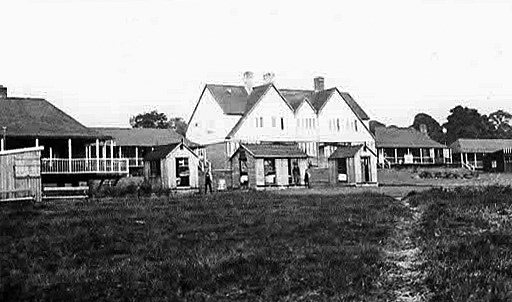
There is one last confusing Pension Card which is almost certainly for Christopher which shows that he had spent time at Creaton Sanitorium, some ten miles north of Northampton. It had been opened in 1910 as the first sanitorium in the county for Tuberculosis patients. We know that he had suffered from Pulmonary Tuberculosis. The confusion is that he is shown in the Royal Garrison Artillery with service number 160199 which may be a mistake.
I suspect that his time in most of these military units was brief and crammed into the last months of the war and its aftermath but, without more information, it is not possible to give a clear idea of his service.
Christopher returned to Alice in Ringstead with a small pension, because of his wounds and T.B., which were “attributable to his service”. The couple took over the licence of the Axe and Compass public house in 1924. They were not there for long for, by 1928, they had taken up the licence of the Melton Arms in Melton Street in Kettering.
They were still there when Christopher died, aged 49, on the 29th January 1932 and was buried in London Road Cemetery. Alice kept on the licence for a few years but in November 1936 it was transferred to Charles Reuben Panter. In the 1939 Register she was shown living at 34 Paradise Lane in Kettering and described as a “Licensee Retired”. The following year she married Frank Holland. He was a single man living with his two sisters and was a boot manufacturer. The marriage may have been one of friendship and comfort but it was not without incident.
On the 2nd March 1943 he was fined £10 for “importuning male persons at York Way in Kings Cross”. He had pleaded not guilty and said that “he had trouble with a surgical belt”. In July 1946 Alice, who was driving, parked on the Leicester Road near Market Harborough so that Frank could buy an ice cream. An RAF lorry and trailer, part of a convoy, skidded and ran into the side of the stationary car. Alice received slight injuries and Frank’s two sisters in the back were unhurt.
Alice died on October 15th 1967 and is remembered on Christopher Baseley’s gravestone.
Charles Leonard Bedford (1890-1960)
In the life story of John Harold Allen, we saw how it was the railways that brought him to the Ringstead area. Charles Leonard Bedford was some four years older than John but his early life followed a similar course. He had been born in Cogenhoe (surprisingly, to the outsider, pronounced “Cuckner”) on the 29th July 1890 and was baptised there on September 7th. His father, Thomas, was a labourer and we see in the 1891 Census that he was fifteen years older than his wife, Sarah, and besides baby Charles, they had four older siblings.
In the 1901 Census Charles, along with his younger sisters, Hilda and Kathleen, were in the Fever Hospital in Hardingstone near Northampton. They were the only patients, being looked after by the Matron, Susan Mills. and her husband, George, who was the caretaker. Looking at the local newspapers at the time it looks most likely that it was Scarlet Fever that had taken the children there. The next year it was smallpox that caused most concern, but it was a time of many epidemics, with greater world travel and few effective treatments. We see the same concern about the need for separate isolation hospitals, the listing of annual cases and deaths from the various fevers and the concern by an affected community that it would not be avoided by others that we see in 2020 with the Corona Virus Pandemic.
All three children survived and in 1911, Charles was twenty, still at home, and working as a “Courier’s Carter”. Soon after that Charles joined the London and North Western Railway Company. He was employed on the 16th May 1911 and became a porter at Ashley near Market Harborough. On the 17th November 1913 he moved from Ashley and Weston to Ringstead and was now shown as a signalman and porter.
War came, and Charles volunteered for the army. We do not know his first training regiment but, on the 4thOctober 1915, he landed in France as part of the Royal Engineers. He was given Service Number 105822. He seems to have been a reliable Sapper and was promoted to Corporal. The Long Long Trail website lists the many ways in which the work of the Royal Engineers underpinned everything else in the army.
The war of 1914-1918 relied on engineering. Without engineers there would have been no supply to the armies, because the RE’s maintained the railways, roads, water supply, bridges and transport. RE’s also operated the railways and inland waterways. There would have been no communications, because the RE’s maintained the telephones, wireless and other signalling equipment. There would have been little cover for the infantry and no positions for the artillery, because the RE’s designed and built the front-line fortifications. It fell to the technically skilled RE’s to develop responses to chemical and underground warfare. And finally, without the RE’s the infantry and artillery would have soon been powerless, as they maintained the guns and other weapons. Little wonder that the Royal Engineers grew into a large and complex organisation.
At some point he was posted to the Waterways and Railways section of the Royal Engineers. Considering his previous career, he was almost certainly in the railway section. There were a number of different types of company within this heading. Some engaged in the construction of standard gauge lines so that goods and men could be taken as close to the Front Line as possible straight from the ports. There were also temporary light, narrow-gauge, railways to take arms and men on from there. Of course, the Front was not completely static, even in the years of comparative stalemate, and the enemy artillery were intent on destroying these lines of communication.
It is possible that Charles Bedford did not join the Railway Companies until the end of the war and was concerned with repair and salvage work. In the 1918 Absent Voters’ List for Ringstead he was shown in the High Street and his Service number was 105822. This shows that he was posted to the RE’s Railways Section late in the war.
After the war it seems that for a short time he returned to Ringstead for he was still in the High Street in the 1920. He had returned to his work for the London and North Western Railways. By the following year he had moved back to Cogenhoe. I do not think that he ever married and he continued to live with his family. By 1939 he was working as a Railway Signalman. Living with Charles in 8, The Council Houses in Cogenhoe were his widowed mother, Sarah, and sister, Kathleen, who was a shoe machinist.
Charles died in 1960 in the Brixworth District.
Thomas Charles Garland (1891-1970)
Thomas Garland is one of the men who appears in the Ringstead Absent Voters’ Lists because his wife had returned home while her husband was away during the war rather than because of his own residency. He was born on the 27th October 1891 in Leighton Buzzard, son of Henry, who became a grocer is Linslade in Buckinghamshire, and his wife Minnie (née Bugg). By the 1911 census, Henry had moved back to Leighton Buzzard. He and Minnie were living at 48 Dudley Street and he was now a “Musical Instrument Merchant”.
Minnie is shown to have had four children, three of whom were still living but only Henry James was still at home. He was 23 years old and a student working towards a Wesleyan Ministry. In the same Census, Thomas was boarding with Henry Littlewood, a labourer in a blast furnace, and his wife Alice, in Asfordby near Melton Mowbray in Leicestershire. He was working as an assistant in a Grocery Shop.
At the same time, some fifty miles due south, in Upton Hall near Northampton, Frances Roberts and her older sister Eleanor were working as maids. These two young women had been born in Ringstead, the daughters of Benjamin and Ellen Roberts. Their younger brother, Alfred, also become a grocer in Grantham in Lincolnshire.
Thomas enlisted on the 7th September 1914 with the East Surrey Regiment at Harringay and was given the Regimental Number 1915. From his Army Medical we see that he was 5ft 7½ inches tall, weighed 132 pounds with a 35½ inch chest. Soon after he enlisted, on the 23rd September 1914 he was diagnosed with Cowpox and spent four days in Dover Military Hospital.
It appears that he first became a drummer. Was he part of the recruitment drive for volunteers to fill the depleted ranks of the British Expeditionary Force? We cannot be sure but, at some point, his and Frances Roberts’ paths crossed for they were married in Upton village church on the 23rd February 1915.
He remained with the Dover command until the 18th May 1915 when he was posted to Purfleet and he remained there until the 21st September 1915. These movements seem to indicate that he was in the 10th (Reserve) Battalion. This had been formed in Dover as a Service Battalion. On the 10th April 1915 it became a Reserve Battalion and moved to Purfleet. Then, it appears, Thomas moved with them to Shoreham on the 21st September and remained there until the 20th January 1916.
The Medal Card only shows the units in which a soldier served in a warzone and in Thomas’s case this was the 9th Battalion of the East Surrey Regiment. They had first arrived in France at the end of August in 1915 but he would not have joined them in the field early 1916, possibly after crossing to France on the 20th/21st January. The War Diary does not record any drafts of men arriving but the diaries are quite different in the information that they report. This one does record, for much of the war, the names of all the soldiers who are killed or wounded, not just the officers, as was usually the norm.
In the early months of 1916, the Battalion was in and out of the Front Line in the Zillebeke dugouts and Hooge trenches, a mile or so apart and a similar distance East-South-East of Ypres. We see the reports of whizzbangs, shrapnel and H.E, shells and the continual drip of casualties.
The Diary on the 21st February records, whether with glee or sadness, the death of one of the enemy:
Our snipers killed a German who was waving his hat.
Enemy shouted several times from his trenches “Tommy” and “Friend”.
There was also the provision of working parties to repair damaged trenches. On the 30th March the Diary records:
Our artillery retaliated making some excellent practice at enemy front line trenches opposite D.4. Groans were heard by our detached post in that trench. Sniping was fairly brisk during the night.
They had moved to near Wulverghen and were, once more, sometimes in the Front Line trenches and sometimes in Reserve at Dranoutre. This continued through May with a relentless daily exchange of fire and men being killed and wounded. By the beginning of June the Battalion was in Brigade Reserve but also sending out men for working parties, a job that was not without risk. It was on the 3rd June that Thomas Garland was wounded and it seems likely that he was part of one of these working parties.
He had received a gunshot wound in his left side. He would have been first examined in the Aid Post or Field Ambulance (a unit not a vehicle) and then sent through the casualty evacuation chain to the coastal hospitals and back to England. He finally arrived at the 2nd Western General Hospital in Manchester on the 19th June 1916. The bullet was extracted but the operation wound became septic and he had to undergo another small operation to clean the wound area. In all he was in the hospital for forty days.
Following his operation, he probably had some home leave for his first child, Edward Charles was born to Frances on the 11th April 1917. It is not clear when he returned to France but we do know that on the 2nd May he was admitted to the Beaufort Hospital in Bristol with “enlarged tonsils”. When the Bristol Hospitals could not cope with the influx of war casualties the Bristol Lunatic Asylum had been converted into a Military Hospital. Some of the male patients stayed and worked in the gardens. In 1915, the artist Stanley Spencer spent a year there as an orderly, and incorporated scenes from the hospital in the panels of the Sandham Memorial Chapel in Hampshire. Thomas’s tonsils were extracted and he was declared “cured”. He was a patient for 35 days, leaving on the 5th June 1917.
On the 12th August 1917 he was again in France, at the 39th Infantry Base Depot, which, like many of them, was at Étaples. From there he was posted to the 8th Battalion of the East Surrey Regiment. They were in camp at Dicklebusch as part of the Divisional Reserve and the Battalion was, as usual, having spells in the Front Line and in Reserve. They were in the Front Line near Zillebeke, an area that would have been familiar to Thomas and his unit. The routine continued after the move to Beaulincourt and Vendelles.
On the 8th October 1917, he was sent to the “55th Trench Mortar Battery School” in the field. As the 55th Trench Mortar Battery was in the same Brigade as the 8th East Surreys, he would have still retained his Regiment and number. The 3-inch Stokes Mortar and its larger brothers were simple but potent weapons designed to match the German “minenwerfer”. In the hands of a well-drilled crew, it could deliver mortar bombs at a very fast rate, taking out a machine gun or sniper post, or deliver a coordinated barrage. It appears that soon after his training he returned to England on leave on the 19th December 1917.
It may be that he served with the 13th Battalion as this is shown on his records but it was probably brief because he was with the 8th Battalion when, on the 11th April 1918, he was first reported as missing. On the 6th May he was “presumed dead” and his wife Frances, living in Carlow Street, was recorded as his widow.
A List of Prisoners-of-War was received from the International Committee of the Red Cross and Thomas was on the list. It shows that he had been captured at Fort Vendeuil, south of St Quentin in France, on the 22nd March 1918. This was in the chaos of the Allied retreat in the face of the Michael Offensive, Germany’s last big throw of the dice before the Americans came into the war in force. The Germans largely destroyed the fort when they had to abandon it as they withdrew before the later, decisive, Allied counter-attack.
We cannot be sure when Frances received the news that her husband was alive but the page from the Red Cross form was stamped (in France) 22nd August 1918. POWs were not supposed to be used for work directly connected to the enemy’s war effort but this was not always adhered to, and Thomas was one of the men who were used for labouring work behind the lines.
In the last months of the war, the Germans were almost on starvation rations as the Allies’ net tightened, and their POWs suffered badly. On the Imperial War Museum website are transcribed conversations with WW1 soldiers, including the POWs. Private H Turner, a POW, who laboured for the Germans near the Front Line recorded:
We worked from early morning ‘til dusk and were then marched back to the compound and given our daily ration of bread. A small loaf, but this was for three men. The bread we thought was made from potato meal and probably a little flour added. We prisoners used to say it was 90% sawdust. Daily, we became weaker and weaker. By this time, we were seeking other sources of food supplies than that issued to us by the Germans and which appeared to be getting less and less. We found in the early morning a snail-like creature, stuck to the bark on the willow trees. We gathered these, and also some nettle leaves. On getting back to the camp at night, we would boil the snails and chop them up with boiled nettle leaves, making a sort of paste to spread on our bread. I can’t say that the snails had any particular taste, but they did at least supplement our scanty rations in some small way.
When Thomas was finally liberated, he recorded similar treatment, which had been the cause of his dysentery.
Semi starvation. Bad food and treatment while working behind the German lines.
He had had some treatment in a German hospital. His military records show that he had been nineteen months in the line and nine months a prisoner-of-war. We see that it was not for some time after the Armistice that he was liberated. On the 23rd December 1918 he arrived back in Dover and was posted to the Regimental Depot. The records are not clear but he would have been treated for the dysentery that he had contracted as a result of his bad treatment and also had some convalescence time.
He was finally discharged on the 28th March 1919. On the 3rd August 1919 he was assessed, at the 5th Northern General Hospital in Leicester, for an army disability pension and he was stated to still have:
. . . post dysenteric diarrhoea at intervals of about three weeks.
He had “some debility and anaemia” and was assessed for a 20% disability pension. He was also entitled to the British War and Victory Medals.
He returned home but, either immediately or soon after his return, “home” was Asfordby not Ringstead. His children Kenneth (1919) and Doreen (1922) were born there. They were first living at 3 Church Lane but by 1930 had moved to Ivy Villas in Main Street. Thomas became the Sub Postmaster for the village. Their eldest son, Edward attended Melton Grammar School and in 1935 was admitted to St Mark’s, a religious college, in Chelsea. By 1939 he had gained an B.Sc., having studied at University College and the London School of Economics. His cousin Margaret Hilda Roberts, daughter of another shopkeeper, graduated in Chemistry in 1947.
In the 1939 Register of England and Wales, Edward was a student and telephonist, Kenneth was a clerk and telephonist and Doreen was a shorthand typist. Thomas was still a Sub Postmaster and one suspects that his wife, Frances, also helped in the business, as well as carrying out her “Unpaid Domestic Duties”.
Frances died in 1964 and Thomas followed on the 11th March 1970. At the time of his death he was living at 87 Thorpe Street in Melton Mowbray.
George Thomas Green (? - ?)
George Thomas Green is in this account of the men of Ringstead who served in WW1 but I am not certain that he ever lived in the village. He was an “Absent Voter”, with his army unit and number given in the 1918 and 1919 Lists. I think that he may be included because his wife, who came from the village, and their child were living there while he was serving.
On the 23rd June 1917 in the Wellingborough Register Office, he married Jail (Jael) May Bull, the daughter of William Samuel (deceased) and Emma Bull. Jael was an unusual name but came from the Old Testament and refers to a woman who killed an enemy of the Israelites by inviting him into her tent and, when asleep, she drove a tent peg through his skull with a mallet. I wonder if her mother Emma (nee Titman) chose the name. She was William Bull’s second wife after the death of his first wife, Susannah. The first marriage appears to have been childless but Emma had six children, five of whom survived infancy. It was not a happy marriage, however, and in 1896 William was accused of assaulting his wife. He had kicked her and she alleged:
I have been married eight years and he has ill-treated me on and off all the time.
William in his defence replied that:
. . . he had led a married life for thirty-five years and this was the first time he had been brought up for cruelty. His first wife never charged him and the present one would have no cause if it was not for her violent temper.
Did Emma choose Jael as a name, and did William sleep easy at night? William, who had taken over his father, Isaac’s, tinplate business, also worked as a pub landlord and had an off licence and grocery shop, at the bottom of Chapel Road, which Emma probably ran. When William died in 1913 the licence had been transferred to Emma and, when she died in 1917, her daughter, Annie, took over the business.
In 1911 May who, unsurprisingly, seems to have used her second name was fourteen years old and still living at home but working as a domestic servant.
If we return to George Thomas Green, we know that he joined the Bedfordshire Regiment with Regimental Number 21470. Few of his records remain but he would first have been sent to a Bedfordshire training battalion before being posted abroad, This was to the 1/5th Battalion and we know this partly because men with similar numbers died while with the unit but also because he contracted malaria and the 1/5th were the only Bedfordshire Battalion who fought in a region where malaria was endemic.
The 5th (Territorial) Battalion had left Devonport on 26 July 1915, bound for 'somewhere out East' and, after a brief stop-over in Egypt, disembarked at Gallipoli, serving there between 10 August and 4 December. The online history of the Battalion tells that:
During their on 15 August 1915, an observing Staff Officer observed their progress through his binoculars and saw the battalion's metal flashes glinting yellow in the sun as they doggedly advanced. He remarked "By Jove! If only we had one or two more battalions of those yellow devils we should be across the peninsular by tomorrow". With that, the battalion's nickname - the 'Yellow Devils' - was born. A pitifully small number of them remained by December 1915 and they were moved back to Egypt to be rebuilt between January and March 1916.
It may have been that during this “rebuilding” in Egypt that George joined the Battalion. The War Diary for the 12th February 1916 records:
Draft of 1 Officer Capt Miskin & 420 O.R.s arrived from ENGLAND. Men not very fit, suffering from old wounds etc. Mostly 1st & 2nd Battn Bedford Regmnt. Men.
For the next year the Battalion regrouped and guarded the Suez Canal. In March 1917 they, as part of the British and Commonwealth forces, were involved in the advance through Gaza and into Palestine. By the end of the war they were stationed in Beirut. This was not a soft posting. As we have seen in the biography of William Warren Weekley, intense heat, sandstorms, disease and lack of good drinking water made it an unpleasant and dangerous experience for most of the soldiers, even without the occasional bouts of fighting. Many more men were lost to disease, to which the men had little immunity, than enemy fire.
It was in October to December 1918, when the Battalion was in Palestine, that many soldiers were struck down with Pneumonia, but more often with Malaria, and it may be that it was then that George contacted the disease. We cannot be sure when this occurred and it is possible that it was in 1917 and he returned to England for treatment and it was after this that George had home leave during which he married in June 1917. Certainly, his address when he married was Oxford Street in Wellingborough, but he was a Private in the Bedfordshire Regiment.
Among the uncertainty we do know that, on recovery, he was posted to the 804 Area Employment Company (AEC), a unit of the Labour Corps based in Cairo and given Service Number 622668. The AECs were formed to do salvage work and any general duties assigned to them.
George was not discharged until the 24th April 1920. He was assessed as having disablement because of his Malaria and received a pension of 16 shilling with an additional seven shillings for his wife and possibly one shilling for a child (although this is not clear).
There is, somewhere, at least one twist in this story that I have been unable to find. At the marriage of George and Jail on the 23rd June 1917 there were two witnesses, William and Samuel Barratt. On the 7th August 1917, at the Thrapston Divisional Sessions, shoe operative William Barratt, was accused of stealing on July 23rd, money, gold rings and a purse from May Green. He was lodging with May and her sister Miss Bull in Ringstead. He was caught trying to pawn one of the rings in Northampton and had already pawned another. May is referred to as Miss Green. Was this the same William Barratt and should May have been referred to as Mrs Green? What happened to Thomas and Jail May Green after the war?
We must leave his story there because I have been unable to positively locate George’s background before the war, although there are a number of possibilities, or for the couple after the war. A later member of the family believes that she visited her aunt, May Green, and her husband had the Christian name Donald. There are again a few possible explanations and it may be that others will unravel the puzzle.
It is with this unsatisfactory final biography that we must finish our stories of the men of Ringstead in the Great War.