The Great War: N–Z · Story 17
Sydney William Smith (1897-1947)
Although village populations were more settled in the past, it would be a mistake to believe that they were completely static. In the biographies of various Ringstead people we have seen emigration to the rest of the world as well as movement, in and out, from all over the British Isles. Mostly, however, this migration was comparatively local as men, for the most part, followed the work. As a result, there was a steady influx of newcomers into the village.
John Smith was one of these incomers. He had been born in about 1864, in Harpole in the west of the county. On 4th August 1890 he married Annie Hephzibah Barrs in Ringstead Parish Church. Annie’s father, James, although he appears as Charles in the 1871 Census, was also an incomer from Spaldwick in Huntingdonshire. He had married a local woman but had been living in Holbeach in Lincolnshire, when he married Elizabeth Saddington in Raunds on August 10th 1856.
John Smith became a shoe riveter and, in the 1901 Census, the newly married couple were in Irthlingborough High Street. Living with them were their children, Esther and Sidney, born in Harpole and John, four months old and born in Irthlingborough. By 1911 they had moved to Ringstead where John was a boot laster. They were living in Carlow with children Hester (Esther) 18, a boot heel builder, Sydney William (14) an errand boy, and John Arthur (10) who was still at school. Living with them was Annie’s father, James Barrs who was a seventy-eight-year-old widower but still recorded as a farm labourer.
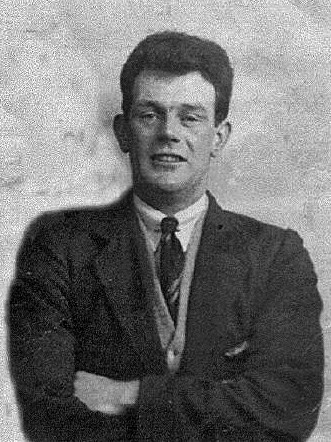
It is Sydney William (sometimes shown as Sidney), born on 3rd February 1897, who the Fates had chosen to be male and of the right age to go to war.
Very few of Sydney’s military records have survived the Second World War German bombing raid, but we do know that he joined the 1/4th Battalion of the Northamptonshire Regiment and at some point, was given the Regimental Number 200638. This was a Territorial Battalion originally formed in 1908. The minimum age of enlistment for the Territorials was seventeen and, with the help of the experts of the Great War Forum, it seems that he joined up in October or early November 1914. These units were made up of part-time soldiers who, after an initial training period, would have an annual camp. They were designed for home defence in case of war but the Regular Army, who made up the first British Expeditionary Force, suffered such unexpectedly high casualties that replacement soldiers were needed almost immediately. Most of the territorials signed up for overseas service and, although, at first looked down upon by the regulars, they soon became an essential part of the wartime army.
The official age for overseas service was nineteen so Sydney would not have been considered for overseas service until his birthday on 3rd February 1916. It seems likely that sometime in the months after this date he was sent abroad to join the Battalion.
The 4th had been at Gallipoli but moved to Egypt as part of the Egyptian Expeditionary Force. In February and March 1916, they were at Mena Camp near Cairo. New drafts from other Regiments as well as from home brought them back up to strength after their losses. It is possible that Sydney joined the 4ths at this point as part of the 162nd Brigade of the 54th (East Anglian) Division. The Battalion, however, suffered many casualties over the next six months and there were further drafts brought in as replacements.
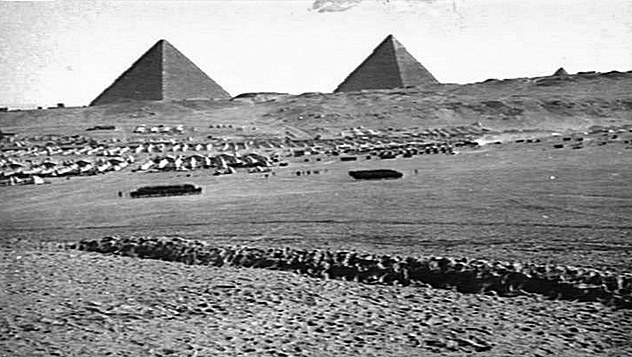
In April 1916, the Division moved to the Suez Canal. The Northamptonshires marched into the desert and manned the defence posts at Darb el Haj, Halfway House and the Kubri Railhead. They remained there throughout the rest of 1916, improving the defences and sometimes forming part of the columns that marched into the hills leading to small skirmishes with enemy troops.
It was blisteringly hot with the May temperatures reaching 122 degrees Fahrenheit (50 Celsius) in the tents. This almost unbearable heat was only relieved by rest periods in Alexandria.
In January 1917 the 4th were in camp before entraining at Kantara (El Qantara). They then marched across the Sinai Peninsula and prepared to move into Palestine. Although unopposed, the Battalion had to endure some sixteen days marching, to Bela, south-west of Gaza, which was the objective. On March 26th there was a general advance on Gaza, held by the Ottoman (Turkish) troops, with the 4th in trenches along the Gaza Road. Suddenly it was realised that the Turks were advancing and the Northamptonshires were in grave danger of being cut off by the enemy. They had to retreat across a country without roads, trees or landmarks to rejoin the safety of the rest of the Brigade. What became known as the First Battle of Gaza was over, ending in an ignominious retreat. For three weeks then, the whole Division held their line awaiting orders.
On April 17th 1917 the Second Battle of Gaza began with the Northamptonshires in support. By the 19th they were in the Front Line but, in a battleground devoid of trees and covered in barley only nine inches high, they were totally exposed to enemy fire and some 80% of the Battalion were casualties. When dusk fell, they were forced to retire to some shallow trenches dug a thousand yards back from their original positions. When the position was finally taken in November the dead were found lying on the Turkish parapet.
There followed a comparatively quiet period, during which the Battalion was, once again, built up to strength. Another attack was launched, this time from Beersheba to the sea, with the Northamptonshires in the coastal section. At first there was some success although the tanks, which it was hoped would play an important part in the attack, mostly broke down. Then the Turks counter-attacked and forced the Allies to withdraw. The Northamptonshires lost five officers killed and three wounded and 45 Other Ranks killed, 129 wounded and 33 missing. During the retreat most of the badly wounded soldiers had to be left to their fates.
There had been some success on the Beersheba flank of the attack and the Turks had been forced to withdraw along the whole front. The 4th held part of this new line at Wilhelma which was a German colony so the inhabitants, rather worryingly, wore German hats and spoke German.
On November 27th1917, the Turks advanced, dug into their positions and started shelling the Allied line. The Turkish troops then launched an attack but, as so often in this war, the defenders were at an advantage and the enemy was repulsed, suffering many casualties. There were two further attacks and the second one did make some headway, threatening the Allies’ position. A counter-attack stabilised the line and the threat was averted. The Northamptonshires suffered badly again with 69 men wounded and 20 killed.
The Battalion was then relieved and moved back out of the line. Its next action was on December 22nd 1917 with an advance on Ras-el-Ain in which they encountered little opposition. Heavy rains set in, stopping any further significant action, and they camped in the neighbourhood of Mulebbis.
On 12th March 1918 the 4th were part of an advance to near Mejdel Yarba, by the River Jordan and there followed a period of desultory trench warfare. At one point the Division was ordered to proceed to France but, after packing up and travelling to Kantara by train, the order was cancelled and they returned to the Palestine force.
On September19th the final attack began, but in very hot conditions, and with little drinking water available, it was an exhausting march for Sydney and his fellow soldiers and, again, they suffered badly, with 75 casualties. The Turks, however, like the Germans on the Western Front, were now broken and they retreated in disorder. The fighting for the infantry in the area was over. They marched through Haifa, Acre and Ras el Ain to Beirut. On the day of their arrival there, the Armistice with Turkey was signed. On December 4th1918, the Battalion embarked at Beirut and travelled by sea and rail to Helmich, outside Cairo.
The men must have thought that at last their fighting was over but the Egyptians wanted the British out of their country and 1919 began with Independence riots which the Northamptonshires had to suppress. Order was restored and, finally, demobilisation began.
Sydney was in the Absent Voters’ List for Ringstead in Spring 1919 but he was missing from the Autumn list so was obviously back home with his family in Carlow. We also see him in the early 1920s in the Electoral Rolls with his parents, John and Annie. In late 1926 Sydney married Annie Redhead. Annie had been born on 10th April 1901 in Peterborough, the daughter of John and Bertha. They had been living in 1911 in 9 Gladstone Cottages in Water End in the Woodston area of Peterborough. We see in the various Censuses that John had worked as a coal porter on the barges and in 1939 was a Coal Wharf Foreman.
We cannot be sure of Sydney’s work after his demobilisation but in the 1939 Register of England & Wales his occupation, which is something of a scribble, looks like a “Chrome Calf Tanner – Pit and Lime Worker”. He would have worked in a local tannery, probably in the Wellington Works in Raunds, preparing the hides for tanning. The lime pit was the first process where the hides were de-haired and cleaned before the tanning began.
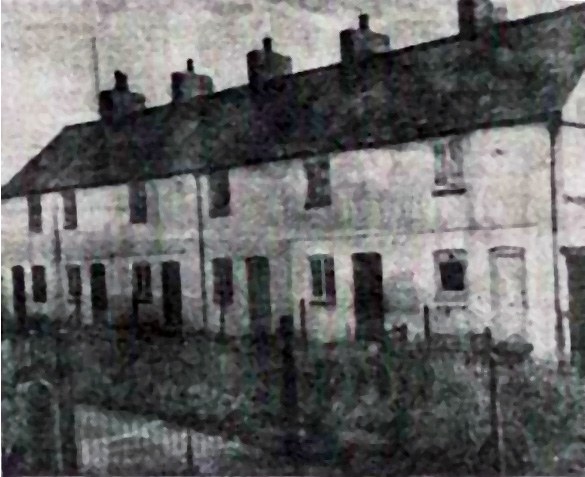
Sydney and Annie had three children, Edith Margaret Annie (Peggy) born on 14th February 1927, Jean Elizabeth, born on 11th June 1928 and Sydney William on 14th November 1931. Sydney, the youngest child has written a fascinating account of his childhood in Ringstead. He tells how the family lived in Leveratt’s Row which was a terrace of six two-bedroomed cottages in Carlow. During his childhood in the 1930s they had no electricity, running water or indoor toilets. The bucket toilets were a little distance from the end of the terrace and had to be emptied regularly into a hole dug into the garden. This was far from uncommon in the village at this time.
Soon after the war Council Houses were built in the High Street with, as Sydney the son recalled, bathrooms, electricity and hot and cold water. Homes fit for heroes! Unfortunately, one reason for the family being allocated a house was, besides the overcrowding, Sydney’s illness. Sydney William, the subject of our story, died suddenly, on 30th March 1947 when he was fifty years old but Annie lived until 1981.