Army & Navy · Story 8
William Atkins c1818 - ? (Served 1839 – 1841)
29th Regiment of Foot
William Atkins was another soldier whose life outside his army service seems to have eluded the parish and other records. There are some eighteen entries in the Ringstead registers for the name Atkins stretching back to a marriage in 1576. At the time of William’s birth there are a number of baptisms, all the children of Smart and Ann Atkins. There is no baptism for a William but it seems most likely that Smart and Ann were his parents.
Smart Atkins had been baptised at Buckworth in Huntingdonshire on 27th February 1792, the son of William and mary. He had married Ann Turner on 5th September 1811 in Great Stukeley near Huntingdon. They had a daughter, Sophia baptised on 8th December 1811 in Alconbury Weston and then four other children baptised from 1816 at Ringstead. In 1838, we know from a property sale that Smart is still a tenant in Ringstead. But still no sign of William.
Looking at the military documents we know that a William Atkins, born in Ringstead in Northamptonshire, enlisted with the 29th Foot Regiment in Kings Lynn on 15th January 1839 and that he was 21 years old and had been a labourer. He was given the service number 1288. He was 5ft 8½ inches (1.74m) tall with hazel eyes, dark brown hair and a fresh complexion.
After enlisting William went with the 29th Foot to the Plymouth Citadel. Soon after he arrived he contracted a severe case of small pox and this seems to have had a debilitating effect on his constitution. He was, after that, “very delicate” and subject to “coughs and other pulmonary signs”.
In May 1839 the 29th Foot were marched to South wales via Exeter. They were destined to the towns of Monmouth and Newport. The Exeter and Plymouth Gazette, on Saturday 11th May 1839, reported that they had been sent to Wales:
. . . in consequence of the daring conduct of the Chartists in the counties of Monmouth and Glamorgan who have enrolled themselves in military array and are publicly arming in large numbers, threatening open insurrection.
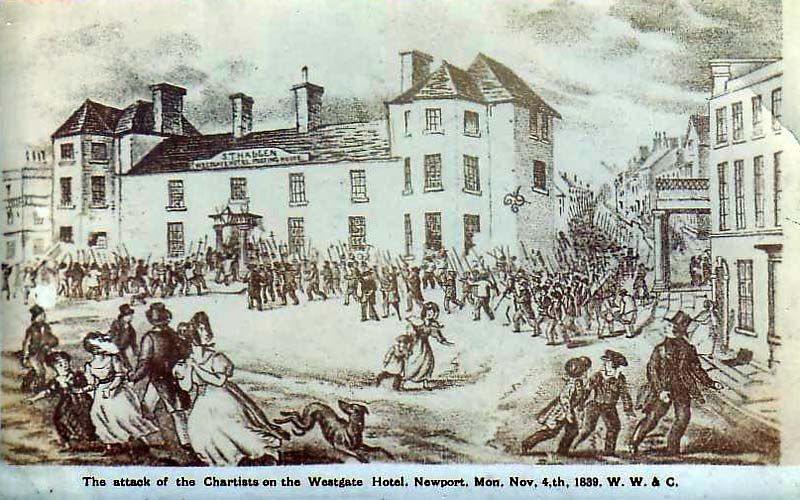
The arrival of the regiment may have quietened the disturbances, but unrest simmered, and the 29th had marched back to Bristol and then on to Weedon Barracks in west Northamptonshire before the real confrontation. By October 1839 they were in the barracks at Woolwich and probably remained there until August of the following year. Meanwhile, back in Newport, on November 4th 1839 10,000 Chartist sympathisers, including many miners, some of who had armed themselves with home-made pikes, bludgeons and firearms, marched on the town. It was reported that they had been drilled by a deserter from the 29th Regiment. Three columns of protestors converged on Newport. They had marched overnight but rain and the non-arrival of one group delayed them and they arrived in daylight, losing the element of surprise. The real battle happened outside the Westgate Hotel and the outgunned protestors lost some 20 dead and 50 wounded. The ringleaders were tried, found guilty of treason and sentenced to be hung drawn and quartered, the last time this barbaric punishment was ever meted out. After a furore of protest and petitions, some say including from the young Queen Victoria herself, the sentence was transmuted to transportation.
As we have said, the 29th had marched to Woolwich and they were there for the celebrations of Queen Victoria’s wedding to Prince Albert on 10th February 1840. The West Kent Guardian, on the 15th February, enthused:
Her Majesty’s nuptials were celebrated, we are happy to say, by the inhabitants of Woolwich, in a manner worthy of the joyous occasion. From an early hour in the morning the streets were crowded by holiday-folk, all anxious to witness the busy preparations. The whole of the public departments were closed during the day and the vessels in the river, their rigging gaily decorated with the flags of all nations, aided by their appearance, the aspect of almost universal rejoicing. Many pleasing and elegant devices were displayed in the windows of the principal residents; but as there were exceptions to the general feeling, it would be invidious on our part to enter into details. The front of the Commodore’s house in the Dock-yard was handsomely decorated with the words, “God save the Queen” in variegated lamps presenting a beautiful appearance. The Royal Artillery Barracks was not illuminated but this was more than atoned for by a splendid display of fireworks in the barrack-field. Nearly 700 rockets with a proportionate number of other the pyrotechnic art were expended upon the occasion. The west wing which is occupied by the 29th Regiment was, however, well lighted up.
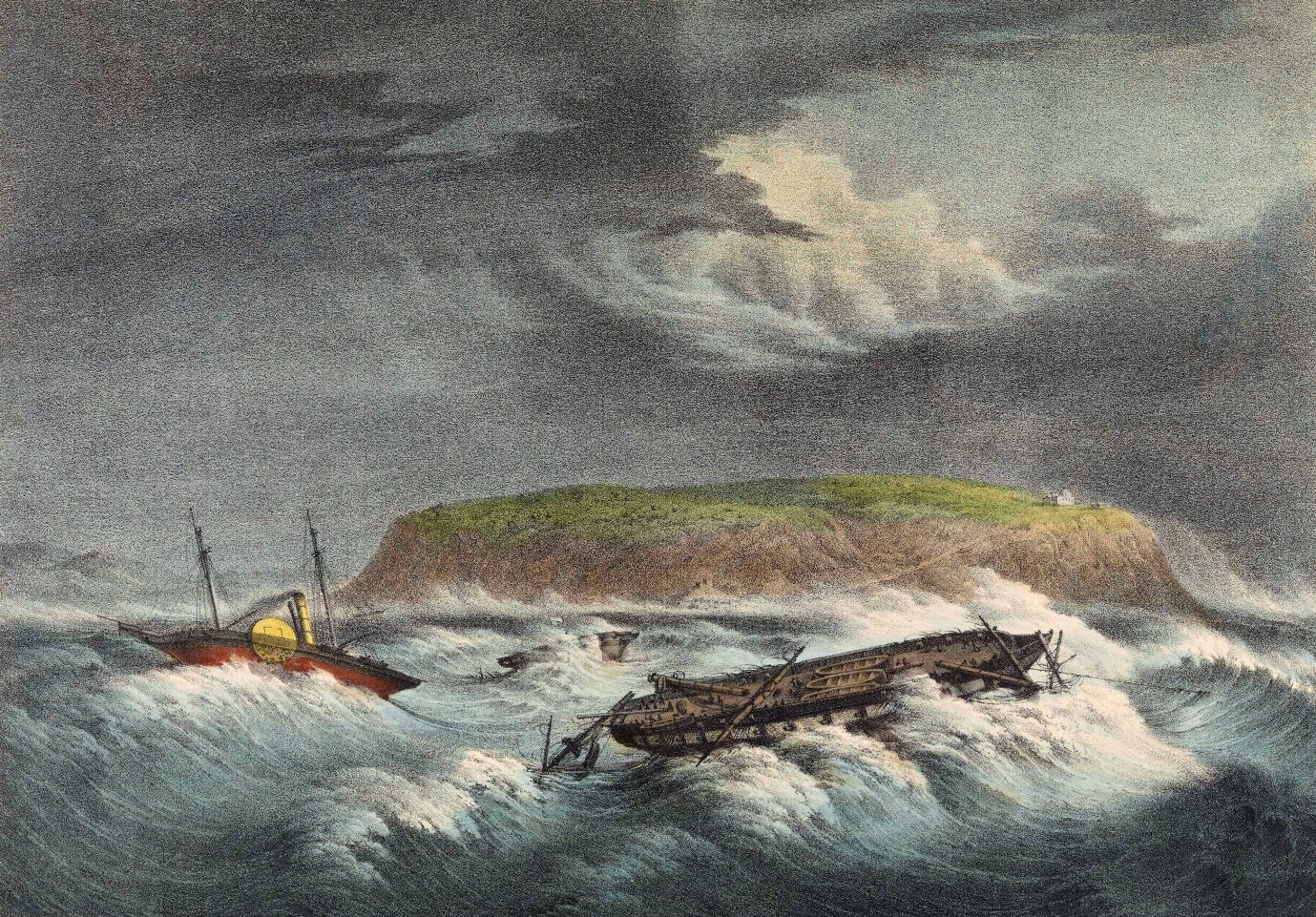
In August of 1840 the 29th took up their post in Leith (Edinburgh), some by the steamship Vesuvius (aptly but perhaps worryingly named). The Regiment remained there until the following June when they moved on to Belfast and on to Dublin.
We cannot be sure how much of this action William Atkins took part in for, on 23rd October 1841, at Kilmainham Hospital in Dublin he was discharged from the army. He had served two years and 320 days. It is the record of his examination there that reveals the ongoing battle that William had had with ill health. He was adjudged to have a “disease originating in constitutional causes”, (i.e. not caused by his treatment in the army), that made him unfit for service. He had a chronic swelling on the anterior side of his chest and was subject to frequent attacks of “catarrh” and there were also “symptoms of incipient consumption”.
All this, (and including his bout of smallpox), had meant that he had been unfit for service ten times during the last two years, for periods ranging from one to four months. He was now “unable to march or wear his belt across his chest or perform any active military duty”.
As a result of all this ill health, he had often been in hospital and received the painful, but ineffective treatments of the day including the use of “blisters” and expectorant squills. A blister was usually made by applying a caustic powder and the theory was that the body could not contain two ailments at once. Squill, made from the bulb of a plant, is still sometimes used today for loosening phlegm in the treatment of asthma and coughs.
From the diagnosis of tuberculosis, it would seem unlikely that William had much time left to live, He had said that he had intended to live in Ringstead after his discharge. He had been of good character and was granted a pension of sixpence a week for six months.
At first, I could find no proven sighting of him after his discharge but following a lead on an old RootsChat thread I looked at some Ancestry trees and there is a possible sighting of William although the age does not match and most of it is from secondary sources.
A William Atkins, son of Smart Atkins, married Elizabeth Hales (sometimes Hailes) in Leighton Bromswold in Huntingdonshire (old county) on 13th February 1843. In 1846 the couple and Elizabeth’s widowed father, Thomas Hales, emigrated to South Australia. William Atkins died in Adelaide Hospital on 23rd June 1852 aged 39 years, four months later, Elizabeth married Richard Fox on 13th October 1852 at O’Halloran Hill in South Australia. She died, aged 87, on 23rd February 1897 at Carey Gully, South Australia, some 54 years after her marriage to William.
References
William Atkins 29th Foot Regiment 1839 – 1841 (National Archives WO97/477/23): Also List of the Invalids admitted to the Pension List 15th December 1841 (N.A. WO23). .
Northampton Mercury 9th June 1838:Exeter and Plymouth Gazette 11th May 1839; Monmouthshire Merlin 25th May 1839 & 13th July 1839; Reading Mercury 12th October 1839; West Kent Guardian 15th February 1840; London Evening Standard 28th August 1840; Warder and Dublin Weekly 26 June 1841; The Atlas 28th August 1841: Freeman’s Journal 3rd September 1841. .
Ringstead Parish Registers; Censuses. ; .
29th (Worcestershire) Regiment; Newport Rising. .
Family Trees. .
“Tigerlily” and “bedfordshire boy” 2009.