Ringstead People · Story 9
Quarries & Closing
John Ball (1852 – 1886) and Susannah Phillips (1855 – 1944)
Susannah Ball was one of those nineteenth century women, not uncommon, for whom marriage was a short interlude between maidenhood and widowhood. Her husband was born and died in the heart of Victoria’s reign but Susannah lived to see another, more terrible, world emerge.
John Ball was the grandson of the other John Ball who had been killed in a fire in farm buildings in Denford some thirty years before his birth. He was baptised on the 16th January 1853, the fifth of seven children of Thomas and Ann Ball. His father was an agricultural labourer.
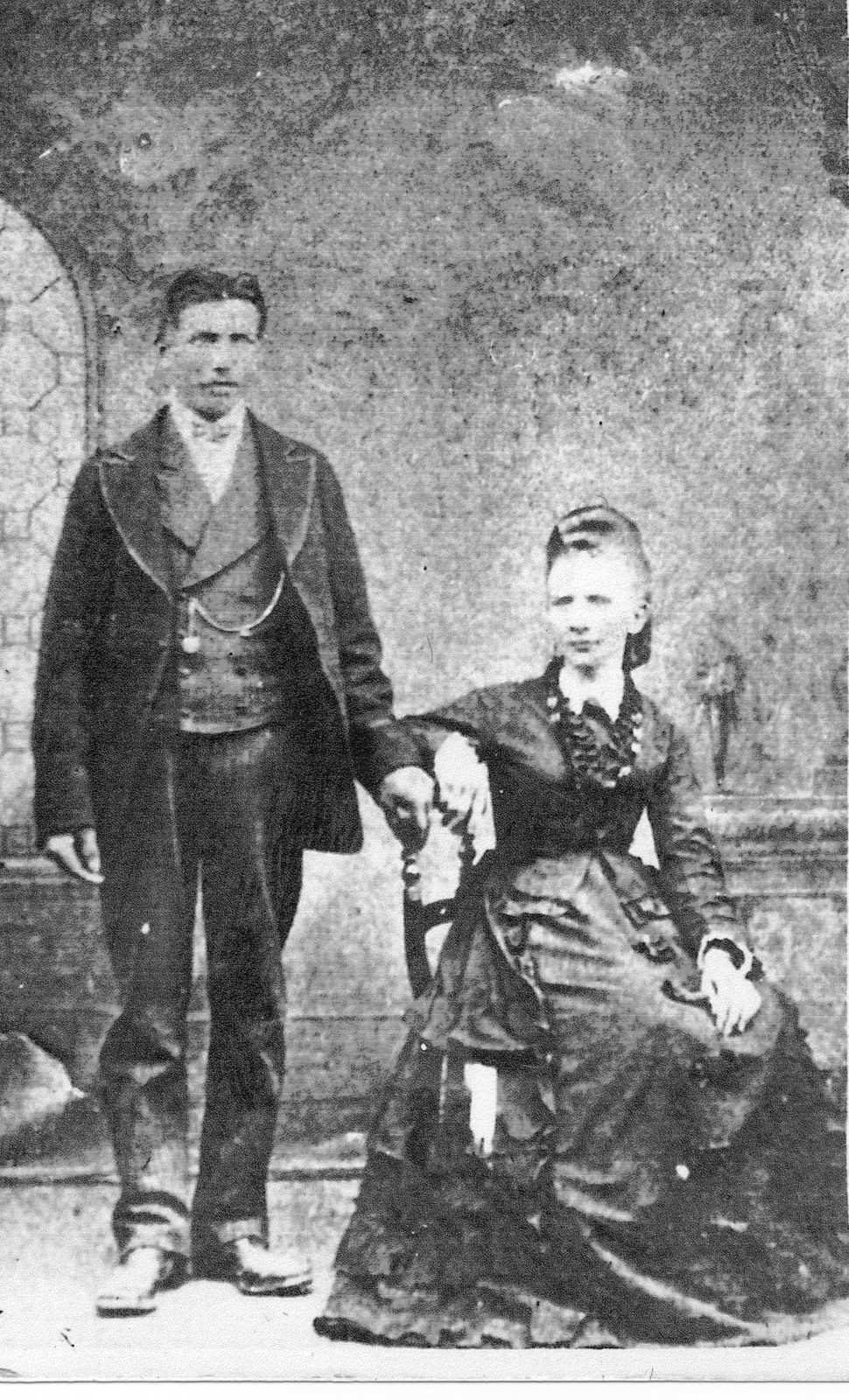
In the 1861 Census he is living with his family in Ringstead; parents, Thomas and Ann Ball and his six siblings, Sarah, Hannah, Esther, Rachel, Anne and Susan. Next door is another namesake, the butcher John Ball. Again in 1871 he is there in Carlow Street, now an agricultural labourer, with his parents and siblings. The older girls of the family who were doing lacework in 1861 are now doing shoe work.
On 14thSeptember 1874 John married local Raunds girl, Susannah Phillips, in Ringstead Parish Church. Neither can write their signatures. He is stated to be a labourer which probably means he is still an agricultural labourer but at some point over the next decade John becomes a labourer in one of the limestone quarries in the area.
Limestone and ironstone quarrying had been carried on in the Nene valley since Roman times. There were quarries in the parishes of Ringstead and Woodford but it was at Islip that John seems to have obtained work. How and when this happened we do not know. Many agricultural labourers left the land at this time. Pamela Horn gives figures of a decline in agricultural workers for the forty years from 1861 of between 8.9% and 19.5% per decade. There were many reasons including mechanisation and a decline in agriculture leaving many farm workers without a job. Also important was that jobs in the new industries were often better paid and less tied to the whim of the ‘master’. Education was slowly raising the aspirations of the rural working class.
So John walked each day, we must presume, from Ringstead to Islip , a distance of some three-and-a-half miles each way. The first thought would be that the quickest route would be along the road through Denford to Thrapston and across the old stone bridge to Islip. We must be careful, however because the Islip quarries covered a wide area and were not in the village itself. Eric Tonks tells us that there ‘was also a little quarrying in the middle 1880s between Thrapston Road and the main tramway - possibly when the Slipton area was difficult to access in winter storms - and a branch of the tramway was laid under the road to a limestone quarry on the north side. This was worked generally clockwise from 1883 onwards up to 17th January 1934 and was referred to as Peray Pit or Peray Hole.’ It seems likely that John was working in the quarries close to the furnace and possibly in Peray Pit. He would have probably gone to work via Woodford, perhaps using the railway viaduct to cross the Nene. He would have often had smoke from the furnaces belching across the skyline to guide him on his way. It would have been a weary trudge home at the end of the day after a hard shift moving earth at the quarry.
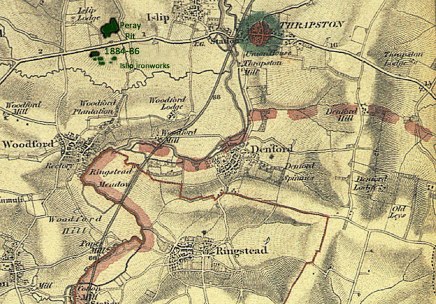
As I have said, iron ore was mined in the area in Roman times but the cutting of the railways showed clearly to the mining engineers that good seams of ironstone lay close to the surface in the area. Also the railway gave another, easier, route for the ore, other than the poor roads and the Nene barges. There were a number of small local quarries including one at Ringstead owned by Thomas Walters. This, like many others, was soon exhausted and was only active from 1873 to 1881. The Islip area, however, contained good deposits and, but for the opposition of the local major landowner, it could easily have replaced Corby at the major steel town of the region. The Islip Iron Ore Company had a number of quarries in the Islip, Slipton, Lowick area. A Derbyshire coalmine owner, C. H. Plevins with his partner, John Kidner, formed the Islip Iron Ore Co. Ltd and four blast furnaces were planned. The coal came from Plevins' mines in Derbyshire using the new rail system. At first, the ore was transported also by rail, to be smelted elsewhere but quite quickly, by 1873, the first two blast furnaces were built and two more were added later. They were open-topped furnaces and only made pig iron in sand casts, 200 tons at a time This became a real industrial site with, finally, 10 locomotives and 10 miles of track.
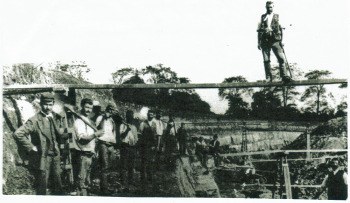
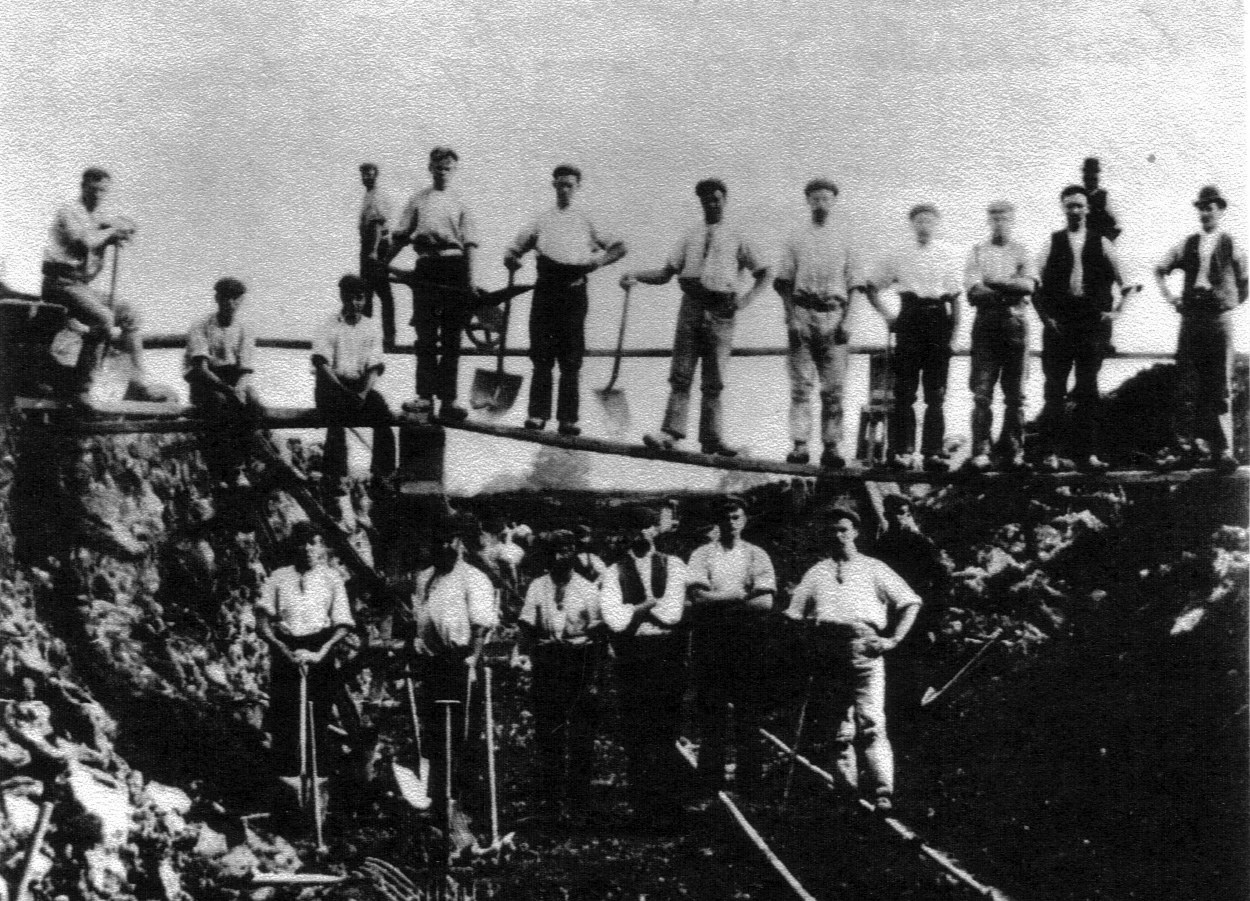
Mechanisation changed the work dramatically over the next fifty years but, at the time John was working, it was very labour intensive. In this period, as we have said, the main quarry was up the Slipton Road in Islip. After the initial trench or ‘gullet’ the gangs would work along the face removing the overburden, limestone and ironstone keeping a ‘batter’. The overburden would be barrowed off across planks to the back of the gullet and dumped. Once an area of limestone or ironstone had been uncovered by the labourers it would be broken up by a mixture of mechanical means and explosives and then loaded into narrow gauge horse-drawn trucks to be taken to the iron smelting. furnaces.
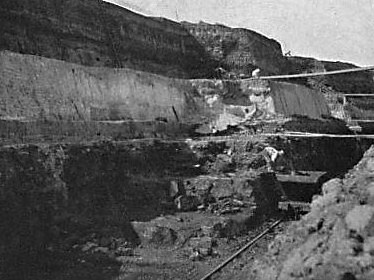
It is likely that John was part of a gang removing this overburden. The simplest, quickest way of doing this was to undermine the soil with picks and shovels rather as the sea undermines a cliff. Then the soil above would slip and fall and could be shovelled up and carted away. It was an easier as well as being a faster method of working, and the labourers would almost certainly be on very hard piece rates. In 1930, although working practices were safer, workers were still paid by how much they moved in a fortnight and if it rained, and they could not work, they would be sent home and were not paid. It was an inherently dangerous way of working forced on men trying to make a living. It is easy to see how there was always the temptation to remove too much from the foot of the overburden. Bill Warren, who has helped me with this chapter, has told me that his great grandfather's nephew, Lewis Warren, was killed on the 6th June 1881 by a fall of earth in the Slipton quarry. He was only 22 years old and he is remembered on a gravestone, in Twywell churchyard, erected by his fellow workers. We also know, from his death certificate that, on the 21st September 1886 at Islip, John Ball was ‘accidentally killed by a fall of earth in a limestone pit’.
Searching the Northampton Mercury we find on October 2nd 1886 that a brief paragraph reports the Inquest. It was held just one day after his death. It states:
ACCIDENTAL DEATH. – An Inquest was held at the Bakers Arms, Woodford on the 22nd inst., before Mr. Parker, on the body of John Ball, labourer, who was accidentally killed by a fall of earth. It appears that the deceased, who was 34 years of age, was engaged in removing earth in a pit, in the parish of Islip, along with several other labourers. On the morning of the 21st he had undermined a piece of earth and several tons fell suddenly on him, killing him on the spot.- A verdict of accidental death was returned.
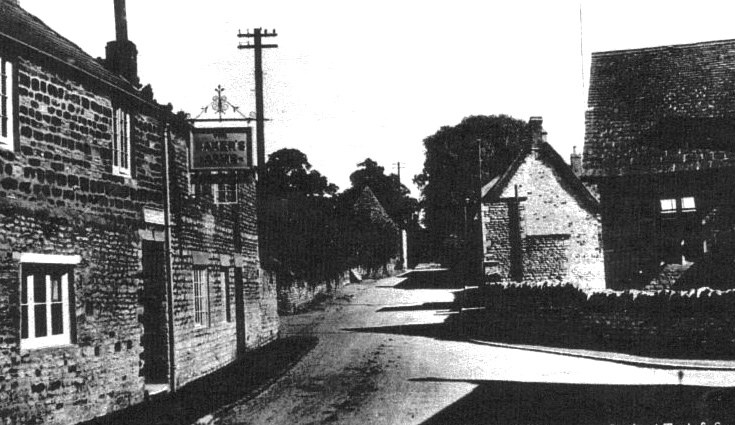
The Baker's Arms is not far from the church in Woodford. There was a bakery in the building adjoining it. Today it is a private house but can be picked out by the large boulder, which was used for mounting horses, which stands beside it. There is also a large barn where, into the early twentieth century, drowned bodies found in the Lower Shott between Denford and Woodford would be brought by four men on a sheep hurdle ready for the Inquest. [Information given to Bill Warren by his father.]
Is this how John Ball was brought there? It seems more likely, given the distance, that he came on a cart but he too may have been left in the barn for the doctor's post mortem examination.
John, in his quest to better himself and his family had lost his life. For his wife Susannah there was not only the grief and emotional loss of a young wife with a young family but also the prospect of grinding poverty with the spectre of the workhouse hanging over their lives. It is her life we must now follow to see how she coped with this tragedy and its financial consequences.
In 1881 Susannah, or Susan, as she usually calls herself in the Censuses, had no paid job recorded but by 1891, some five years after her husband’s death, she is an Army Boot Closer. In the early part of the century it was to lacemaking that the women looked to help them avoid the workhouse. As this declined they went on to the tough work of closing boots, for the Raunds and Ringstead area’s main work was for the army and navy.
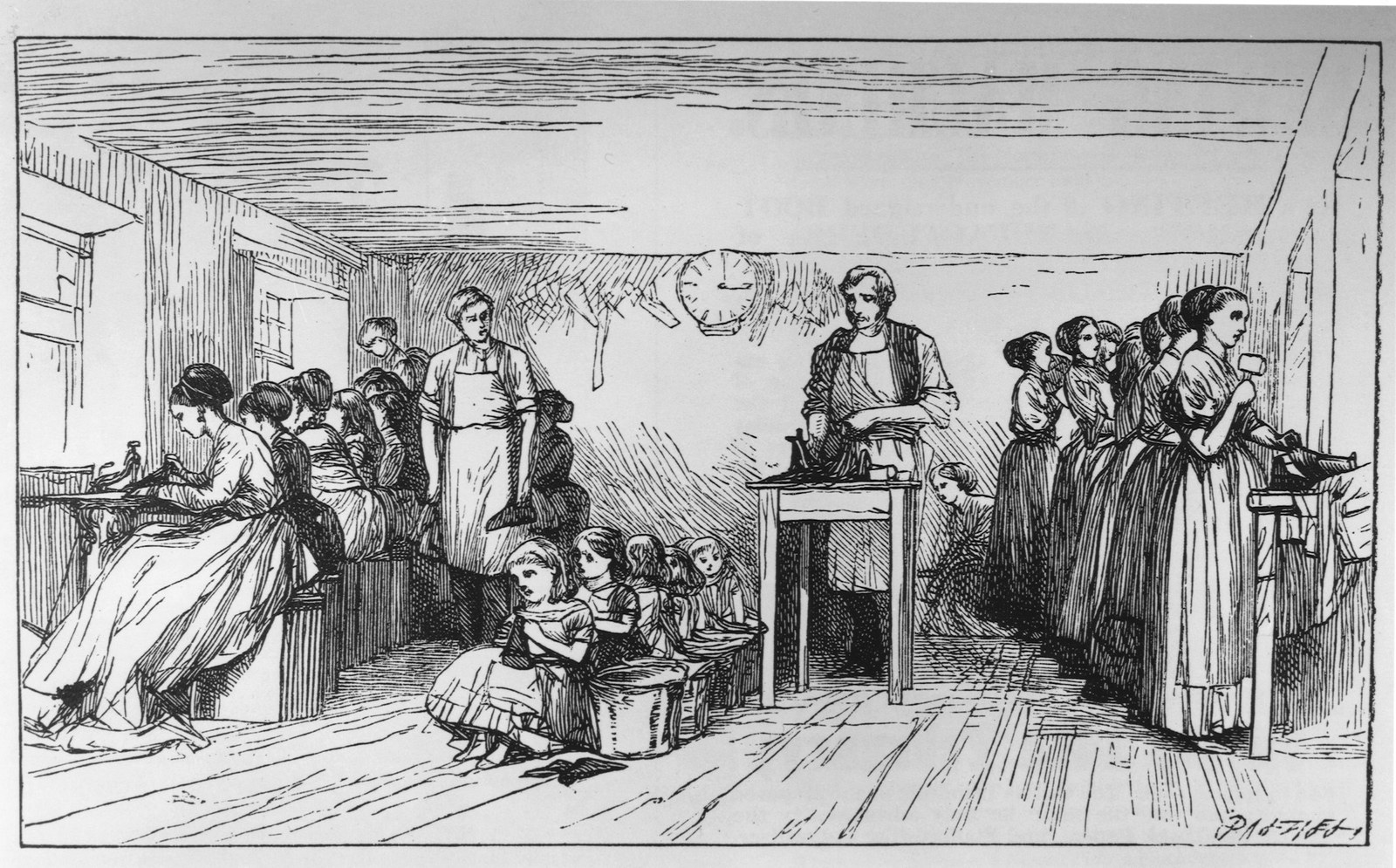
She had moved back to Finding Terrace, Raunds, where she lived with her three sons. George Henry, at 13, was an errand boy, but Thomas, aged 12, has as his occupation ‘Rivetter and school’ and John is at school. Her daughter, Eliza, is away in Knotting Bedfordshire where she is listed as a visitor and an ‘Army Boot Closer’. It is likely that Susan, like most of the women would collect, or get one of her children to collect, the cut leather pieces, or perhaps they would be brought by a sort of outwork agent, and the completed uppers would be taken back to the factory.
H.E. Bates writes of this period in The Feast of July. He tells of family competing with family to get the available work in one of the depressions that the industry suffered between conflicts. The father sends his daughter to find them work:
By chance, every few days, Wainwright would hear of a hope of work in towns across the Valley: a pair or two in Orlingford, a dozen at Nenborough, something at Evensford, A chance at Addington, nine miles away. ‘Git the truck out. Nip through Chapel Yard. Go down by Long Hedges or somebody will twig you. And git back before dinner if you can.’
There were factories that began at six in the morning and sometimes she was out in the darkness running with bread in her hands.
Bates was writing of the Higham Ferrers/Rushden area so we can only guess that it was a similar story in Ringstead and Raunds. Certainly, in Woodford, Richard Roe, who was born in 1826, was a ‘sprigging boy’ for his father at the tender age of 6, he was flat-seam sewing at 8 and putting tongues in jockey boots when nine. He walked each day to collect his work. Incidentally, Eric Humphries tells us that, later, Richard became a prominent politician in Northampton.
Susan continues until 1911 in Hill Street Raunds as a boot closer living with her two unmarried children Eliza, 36, a closer, and George, 33, a clicker and nephew Harold aged 9. Susan worked ‘at home’ but her two children worked in Boot Manufacture in one of the nearby factories.
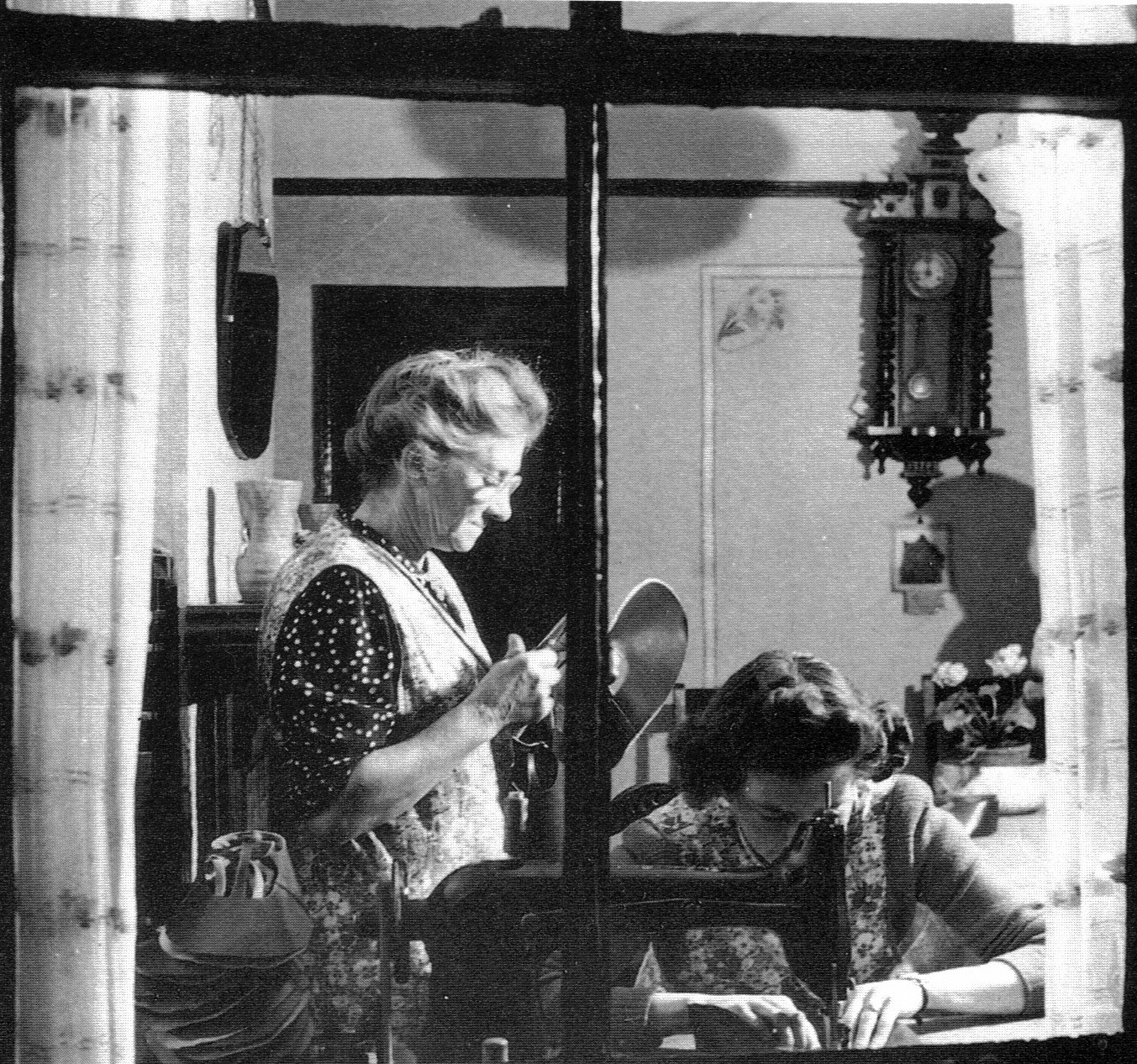
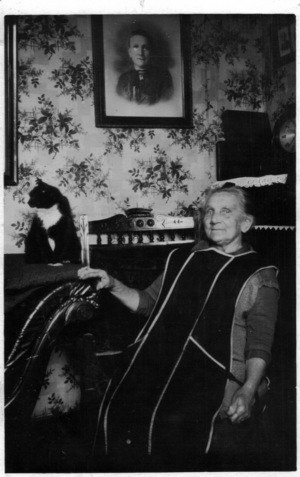
She lost her son Thomas, who was killed in the First World War in Belgium, on Tuesday 15th October 1918 aged 38. George also died in 1932. Susan was my great grandmother and was known in the family as ‘Little Granny’ She died on 19thJuly 1944 and is buried in Raunds Cemetery with her son George. Her husband was buried in Ringstead but is remembered on the gravestone at Raunds. She lived with John for some ten years and without him for a further forty-eight.
References.
Supplement to the Northampton Mercury Oct. 2nd 1886. (Northampton Central Library).
The Ironstone Quarries of the Midlands: History, Operation and Railways. Part V The Kettering Area. Eric Tonks. (Runpost Publishing, Cheltenham) pages 89-108.
The Changing Countryside in Victorian and Edwardian England and Wales. Pamela Horn. (The Athlone Press). Pages 89- 108.
Northamptonshire. Malcolm William Brown. C.U.P. (1911) (out of copyright at .
Islip Northamptonshire. Allan Gray. (1993).
The Feast of July. H.E. Bates. (Michael Joseph 1954).
Richard Roe - Shoemaker. Eric Humphries (Woodford). (Northampton Museum).
My thanks to Tom Love of Islip and Bill Warren of Barton Seagrave for all their help.
Postscript
Bill Warren has kindly sent me some photographs of the quarries and furnaces which are a little later than the period covered in this life story but show the conditions that the men worked under. The captions are from Bill.
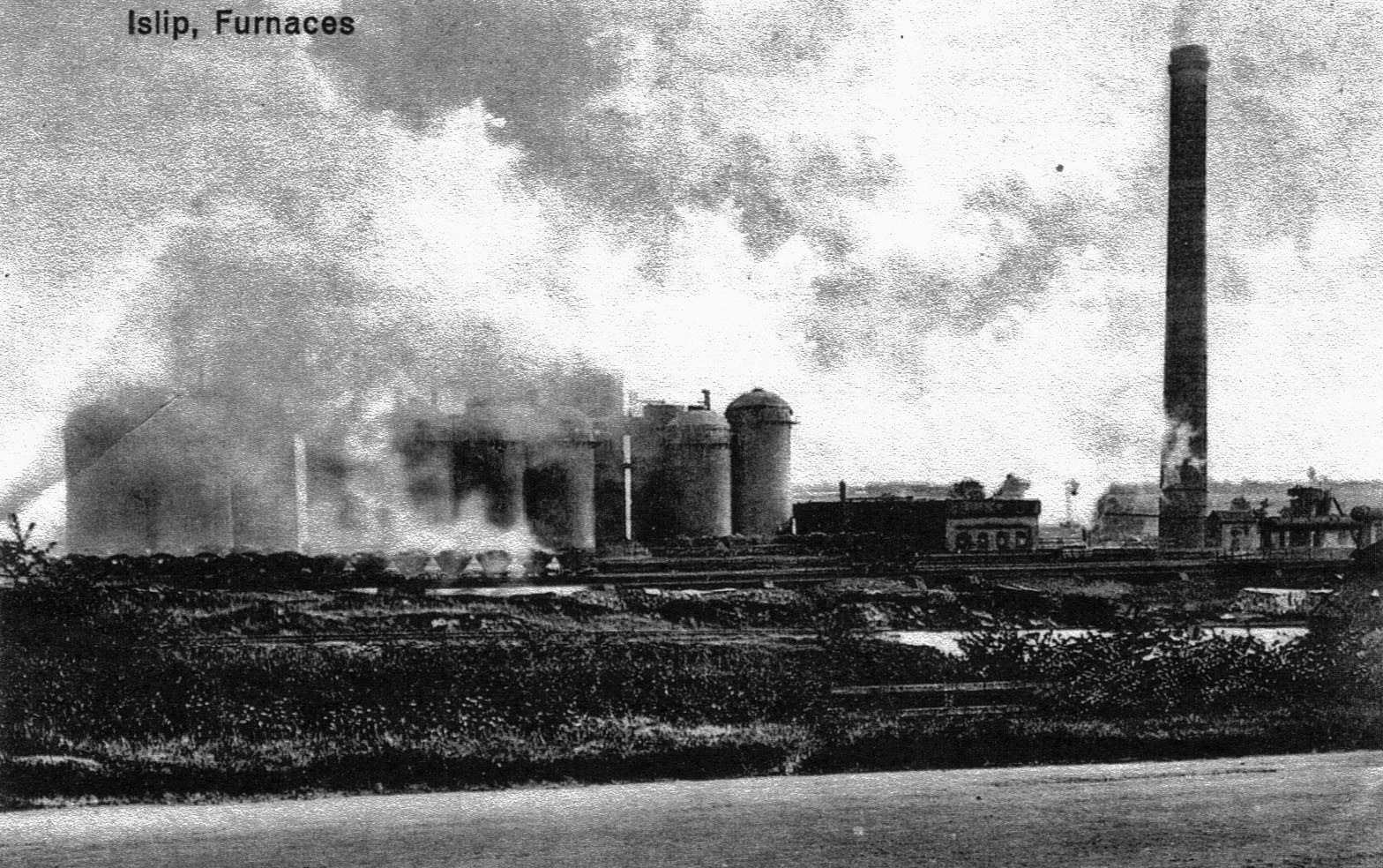
Islip Furnace in the 1920s taken from the Thrapston to Kettering Road. The small 3 ft. gauge wagons loaded with ironstone were parked on top of the bays where they are tipped. The view shows the eight stoves with the four furnaces and two lifts behind them. The building to the right with the large water tank above is the blast furnace engine house.