Ringstead People · Story 3
Hard Times?
Jedidah Louisa Abington (1837 – 1914)
Jedidah is something of an enigma. Her Christian name caused Census officials, and more recently Ancestry.co.uk transcribers a good deal of trouble. It is only with some effort that we can recover her from the official records and then we only get hints of the turmoils of her life. She saw the life of a shoemaking village with its gossip and interbreeding where most people had a reason to like or dislike a neighbour. She also saw life in one of the first great industrial cities of the world visited by people from all over Europe to study this wonderful but terrible new phenomenon.
She was born in Ringstead in 1837. The 1841 Census shows that her father, Herbert J Abington, was a tea dealer. [See a later chapter]. He had been born in 1809 in Sommerstown in Middlesex but her mother Kezia Bull was a local girl born some two years later. By 1851 there were five other children besides Jedidah: Leonard (abt 1839), Edwin (abt 1841), Mary Jane (abt 1843), Edmund (abt 1845), and Herbert (abt 1848).
Already in her first Census she is causing trouble for she is recorded as Julidah Abington but by 1851 she is transcribed by Ancestry as Isdadah although the Census writer has her right. We will use Jedidah in this story, the name that was mainly used and the one that is on her tombstone. Her father is recorded as a tea dealer and grocer and all his family is still around him. There are signs of the modern world intruding into Ringstead. The old system of parish constables was not able to cope with the ever more mobile criminals of the railway age and, in 1839, County Councils were allowed to form their own police forces. It was opposed by many because of the perceived great cost to the ratepayers but it survived. Superintendent Knight was appointed to the area which included Ringstead and he obviously took his role seriously.
One of his tasks was the important one of making sure that shopkeepers were not cheating their customers. Imperial standard weights had been introduced in the 1825/6 period and County Inspectors had been appointed in 1834/5. The new police force gradually took over this function. In 1843 alone four Ringstead shopkeepers were fined at Wellingborough Petty Sessions for ‘deficient weights’. These included Thomas Lee, the baker; Henry Weekley, butcher and James Whiteman, grocer. Also fined twelve shillings was Herbert Joseph Abington, grocer, Jedidah’s father. It was likely that some of the lawbreaking was caused by the sellers not keeping up with the legislation and not using the properly approved and stamped weights. There must have been much grumbling about government interference by the small shopkeepers of the village. Nevertheless some of them were not fined but only had to pay the ‘cost of the summonses in cases where the deficiencies were trifling’ which implies that the people fined were selling seriously short measures. Herbert’s fine of 12s was small, however, compared to his grocery competitor in Ringstead, James Whiteman, who was fined £3 12s.
The same report, on the Wellingborough Petty Sessions, does give a small insight into the way standardisation was rapidly entering villagers' lives but, as yet, lack of access to the technology was still a defence:
Mr. Hill, a beer-shop keeper, at Ringstead, was charged with keeping his house open after ten o'clock. It was proved that the church clock at Ringstead was not going on the night in question, and the Magistrates gave Hill the benefit of this circumstance and dismissed the charge.
By 1861 Jedidah Abington had disappeared from Ringstead and it seems from England. Her sister, Mary Jane has become a servant to an old farmer John Williamson, who was 83 years old, and his three daughters. She has not moved far for the house is only three doors away from her parents. Herbert is now a plain ‘grocer’ and his wife a dressmaker. Herbert, their son, is, at thirteen, a baker and there are two more sons, Joshua, nine years old, and Samuel just four. Kezia had her last child when she was 46 years old. There is a gap of some five years so there is just the suspicion that Samuel could be the son of Jedidah and that is why she is away from village and the gossip.
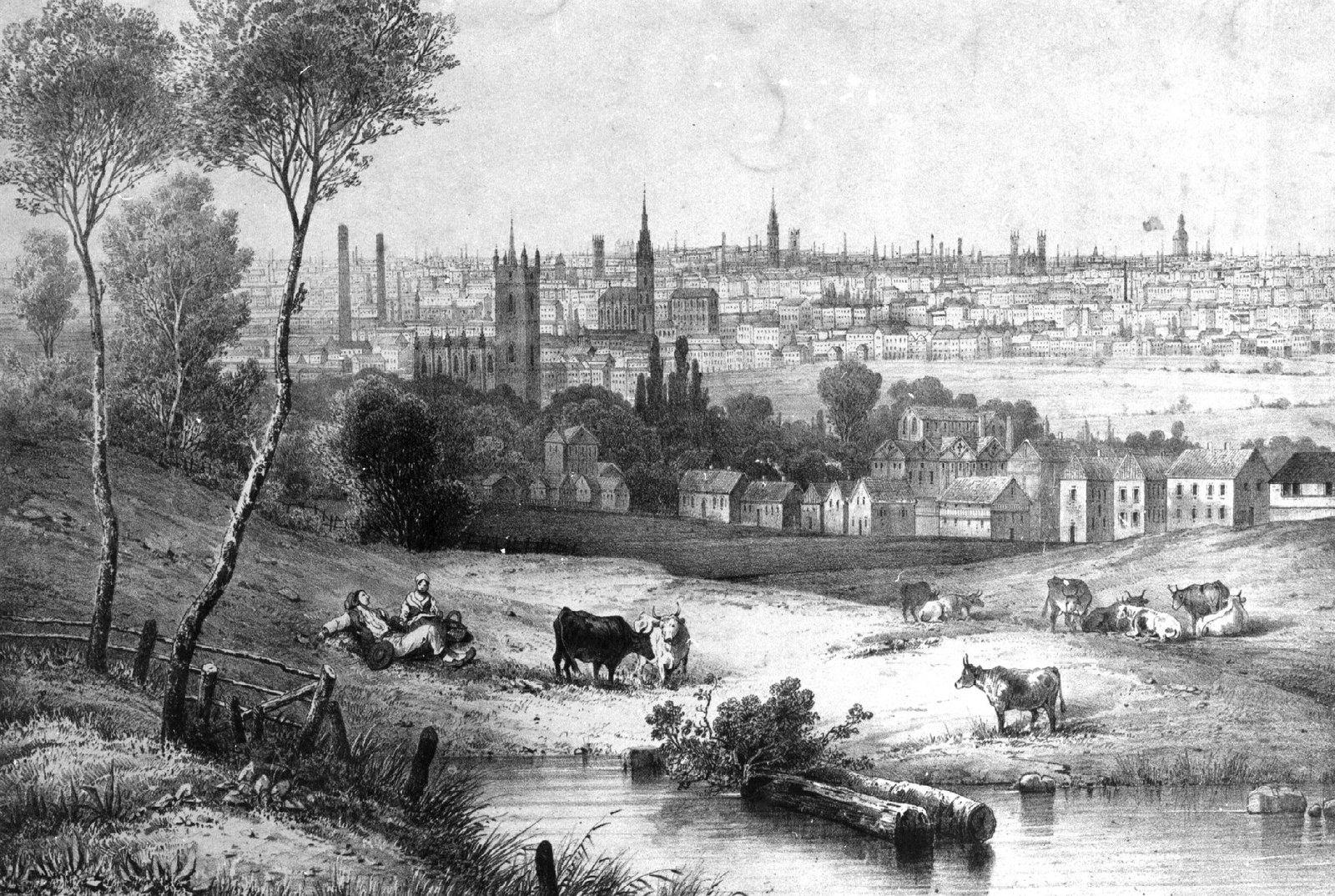
This shows the countryside and the old country ways about to be swallowed up by the industrial city, the smoking chimneys of which can be seen in the distance. It does recall the first chapter of Mary Barton by Elizabeth Gaskell, where the Wilsons and the Bartons meet, away for the grime of the city, before tragedy strikes.
Finally, in the 1861 Census, we locate Jedidah in Manchester. Well not Jedidah but Louisa J Abington a servant at the house of Carlos Chamberlin. Manchester had become one of the first great industrial cities. In 1861 the parish of Manchester had a population of 529,245 people and the borough had some 300,000. Engels, who later helped write the Communist Manifesto, and many others came and wrote about this city where the sun never shone through the smoke pall, and cotton specks clouded the air: where the noise of the cotton mills started up at 5.30 in the morning like the boom of Atlantic breakers. A place where working people, crammed into substandard housing with little or no sanitation, lived in poverty and died young: where typhoid and cholera and infant diarrhoea meant that life was cheap. Elizabeth Gaskell wrote about it in Mary Barton and Dickens in Hard Times. One of the places where modern capitalism, as well as English socialism, was born.
It was also a time when men made great fortunes and gated estates of large villas were built for this new class of factory owners and professionals. One of the first to be built in the world was the Victoria Park Estate in the Rusholme area of Manchester. It was in parkland on the edges of the city, away from the prevailing smoke stream from the mills. The first residents moved in, in 1837, and in the 1861 Census we see living on the Victoria Park Estate, Henry Salomonson, a shipping merchant born in Holland, William R Callender, a JP and merchant, George Hadfield a Member of Parliament, Arthur Sief, a cotton manufacturer employing 950 men and women. Here also we see Richard Cobden the Chartist politician and Charles Halle, the German born founder of the famous orchestra. It was a radical stronghold where members of the Anti-Corn Law League and Whig politicians lived. Later, Emmeline Pankhurst and her husband lived in a Victoria Park villa. It was to here also that a wealthy American called Carlos Chamberlin and his family moved. He was a ‘Commission Agent’ buying and selling commodities for people and taking a percentage as his fee.
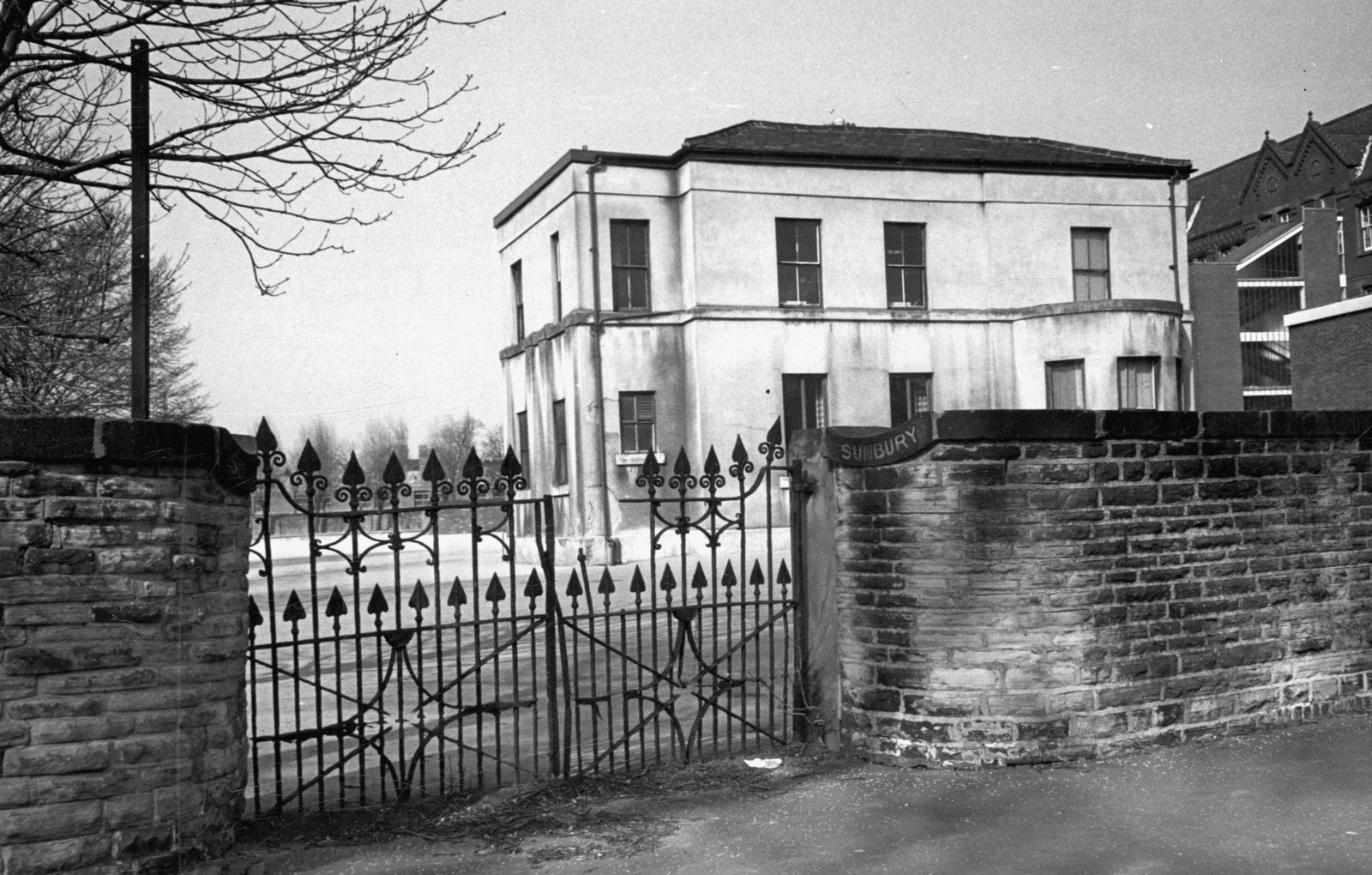
Carlos had been born in Vermont, USA, in 1811 and lived with his wife Elizabeth and their seven children in Sunbury from 1856 to 1875. I think that he re-named it Vermont House for so it is named in the 1861 Census. He had just become a naturalised British citizen in 1860 and business was doing well for he had five servants, including Louisa, living on the premises.
How do we know that Louisa Abington is our Jedidah? Well, she is shown as having been born in Ringstead, Northamptonshire, she is the correct age and, when she appears again in Ringstead with her father after missing two Censuses, she calls herself Louisa. It seems proof enough but we also have the diary of her younger brother Herbert [see later chapter] to confirm it as fact. One may also ask, how did she get there? We hear of the poor being shipped by canal boat up to Manchester for work. There would also be stage coaches which would take some twenty-four hours. It is more likely that she went by one of the wonders of the steam age, the new railway system which was becoming affordable to all but the poorest. The London and Birmingham Railway Company had built a line between Blisworth and Peterborough and as part of this Ringstead had its own station which was opened on the 2ndJune 1845. A little earlier the London Euston to Manchester route had also been built by the same company and, bypassing Northampton, had a station at Blisworth. Lord Grafton had agreed to fund a new station at Blisworth as long as it was ‘first class’ which meant that all trains stopped there. In 1846 it had become part of the London and North Western Railway.
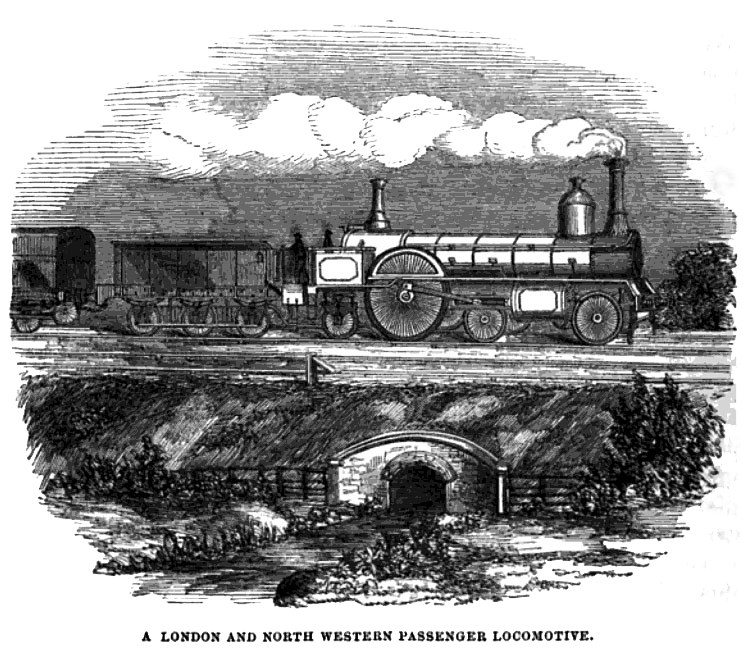
In 1850 she could have left Ringstead at 7.35 am and, if travelling 2nd class, after changing at Rugby, would have arrived at Manchester London Road at 4.45 pm. Third class, which stopped at all stations, would have not arrived until 9.15 pm. By 1863 the times had been reduced by some two hours and three-and-a-half hours respectively. Second class would have cost her some 20 shillings (£1.00) and third, 13 shillings (£0.65). To give some comparison £1.00 is roughly equivalent to £43 today (but five days of an 1860 craftsman's time because wages have risen more than costs). By this time the carriages were roofed and glazed although the third class would still have had plain wooden seats. The picture shows the type of engine, painted green, which would have pulled the train in 1852. One can only imagine that, although a long and wearisome journey, it would also have been an exciting one for Jedidah.
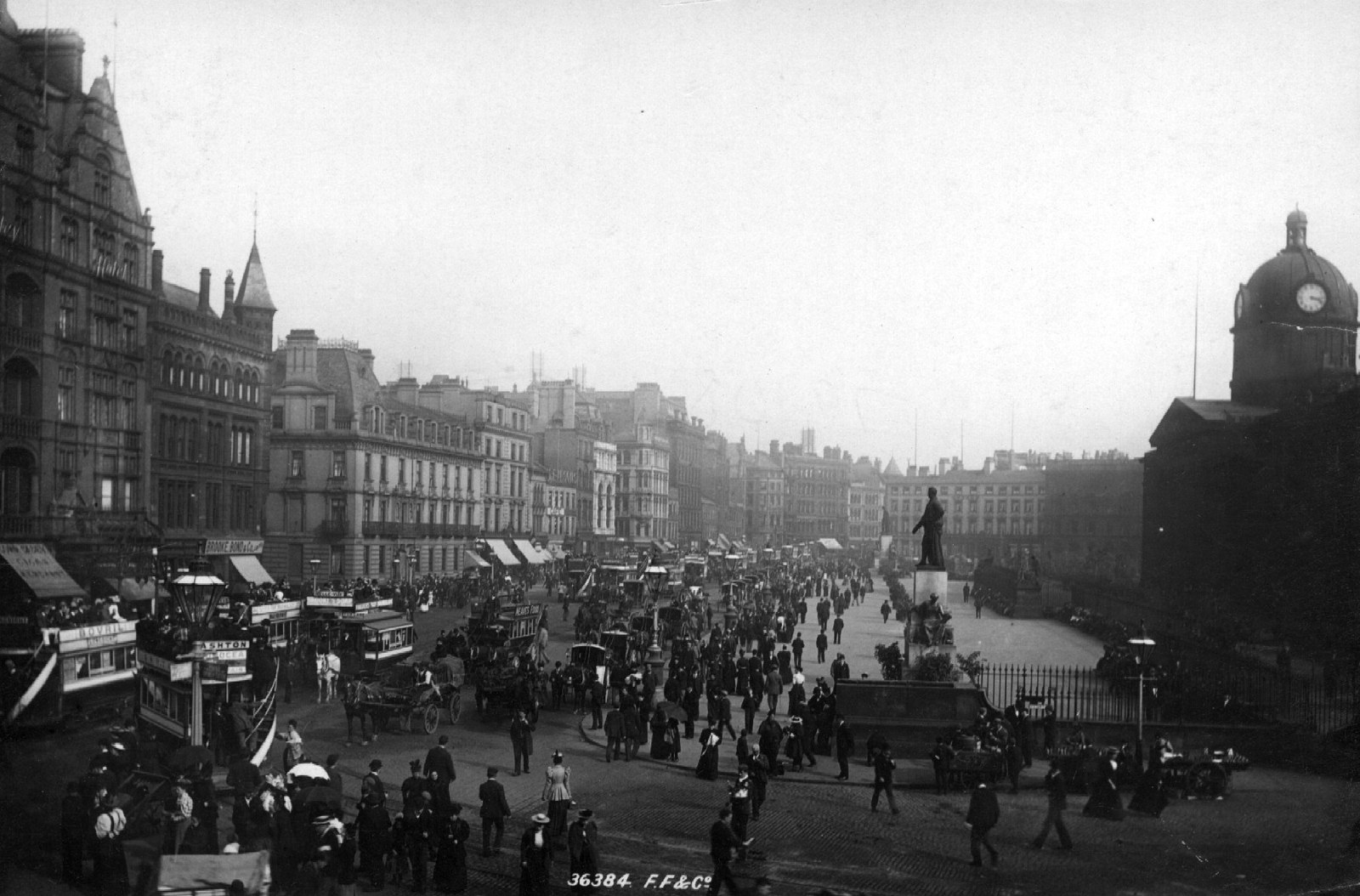
As we have said, Jedidah would probably have arrived at London Road Station, which was later rebuilt and renamed Piccadilly. Perhaps her new employer had arranged for someone to pick her up or arranged for a cab. Otherwise she would had to walked nearly two miles or used one of the horse-drawn trams that you can see in the photograph of Piccadilly, below, taken towards the end of the century. Her route would probably have avoided the worst of the industrial and slum areas, with terraced houses giving way to the spacious surroundings of Victoria Park. She would have had to get past the gate keeper and then been confronted by the grand villas, including Vermont House.
She had been fortunate in reaching Manchester after the building of Longendale reservoir and the provision of relatively clean water which had begun the elimination of the waterborne diseases, such as cholera, from the area although it was not until the end of the century that they were virtually eliminated. Manchester was also a place full of people equally as radical as the shoemakers of Ringstead. From 1845 there had been Ladies' Day Classes at the Mechanics' Institute for intending governesses, young wives and the daughters of respectable artisans.
Ten years later, 1871, the Census shows Carlos Chamberlin was still living in Vermont House with four of his children but there were only three servants and none of them remained from the original group. Louisa however, as she now is, is not far away. She is living with one of the older servants from her former employment called Elizabeth Spence who came from Dalton-in-Furness, and her daughter Mary Ellen and a one year old visitor Fanny Watterson. Elizabeth was the widow of William Spence, who had been a groom at Clayton Hall. She had become a grocer and around her small shop, at 45 Wilmslow Road Rusholme, are a basket shop, and an ironmonger and gas fitter. These were small local shops, a world away from the grand department stores and warehouses that were growing up in the centre of Manchester. Elizabeth Spence's shop is just a stone's throw from Vermont House but the two younger women are not shown to have any work. This would be a little concerning for her father and mother but, as we gather from Herbert's diary [See later chapter], they are progressive women who take part in the intellectual life available in Manchester. We also know from the diary that this was a time when she was constantly visiting her sick brother. It may be that the Census just comes at a time when she is not working and we know from the same source that Elizabeth Spence and her daughter were good friends to Jedidah and her family.
Herbert' diary tells us that in the1869-1870 period Jedidah, usually with Herbert and the Spences, went to Belle Vue Gardens, Manchester Flower Show at the Botanical Gardens, saw A Winter's Tale and Richard III at the theatre, attended the Royal Institution and probably many other events where her brother just puts 'We went to . . . '.
At the same Census her father, Herbert, is shown as a grocer in Shop Street [High Street], Ringstead. He is now about sixty-two years old and his wife is a couple of years younger. Not far away, in Shop Street, John Ball is living with his wife and granddaughter, Florence E Smith. He is still a butcher but is also a farmer of 43 acres and has a labourer working for him. The troubles of the fifties and sixties, when his brother William had brought scandal to the family with his accusation and finally acquittal of the murder of his pregnant mistress Lydia Attley, are now in the past. John's wife, Rebecca (née Wilson), was the sister of William Weekley Ball’s wife, Hannah, so it would have been difficult for the whole family. But William now lives and prospers as a butcher in Ramsey in Huntingdonshire and John too is doing well.
In 1879 Kezia Abington, Jedidah’s mother, dies, but it may be that she has already moved back to look after her two brothers’ last years as well as her ageing father. In 1881 Herbert is shown as a Chemist and lives in High Street with his daughter Louisa, as she is still calling herself. In the same Census John Ball is still living with Rebecca but she is shown as an invalid and there is a live-in nurse, Sarah Hackney, as well as a servant, Louisa Truelove. In the few months following the Census Rebecca died aged 62 years.
The grieving was not long for John because, that same autumn, he married 'Edidah' Louisa Abington. Her father dies a few years later in 1884. It seems that the newlyweds settled down for a comfortable retirement together. An advertisement in the Wellingborough News on 4th October 1884 gives notice of an auction on the Wednesday 15th '. . .upon the Premises at Ringstead, the property of Mr John Ball, who is giving up his land.' The sale gives some idea of what a small farm would have looked like. It lists:
SHEEP - 30 half-bred two-shear down ewes, 13 theaves, 42 lambs.
BEAST - Three cows in-calf in-profit, I barren cow, ditto heifer, 1 heifer in-calf, 1 21/2 year-old steer and 2 calves.
HORSES- Two active powerful cart mares.
IMPLEMENTS - Two Scotch carts, 1 cart, 1 narrow-wheel wagon, 2 ploughs, 2 set iron harrows (Page), Scuffler, 5-coulter drill, horse hoe, 12 doz hurdles, 10 sheep troughs, 2 turnip mills, cake mill, etc etc.
We see the end of one of the small farmer-butchers who were a feature of many villages. In 1891 John and Jedidah are still living together in High Street in Ringstead.
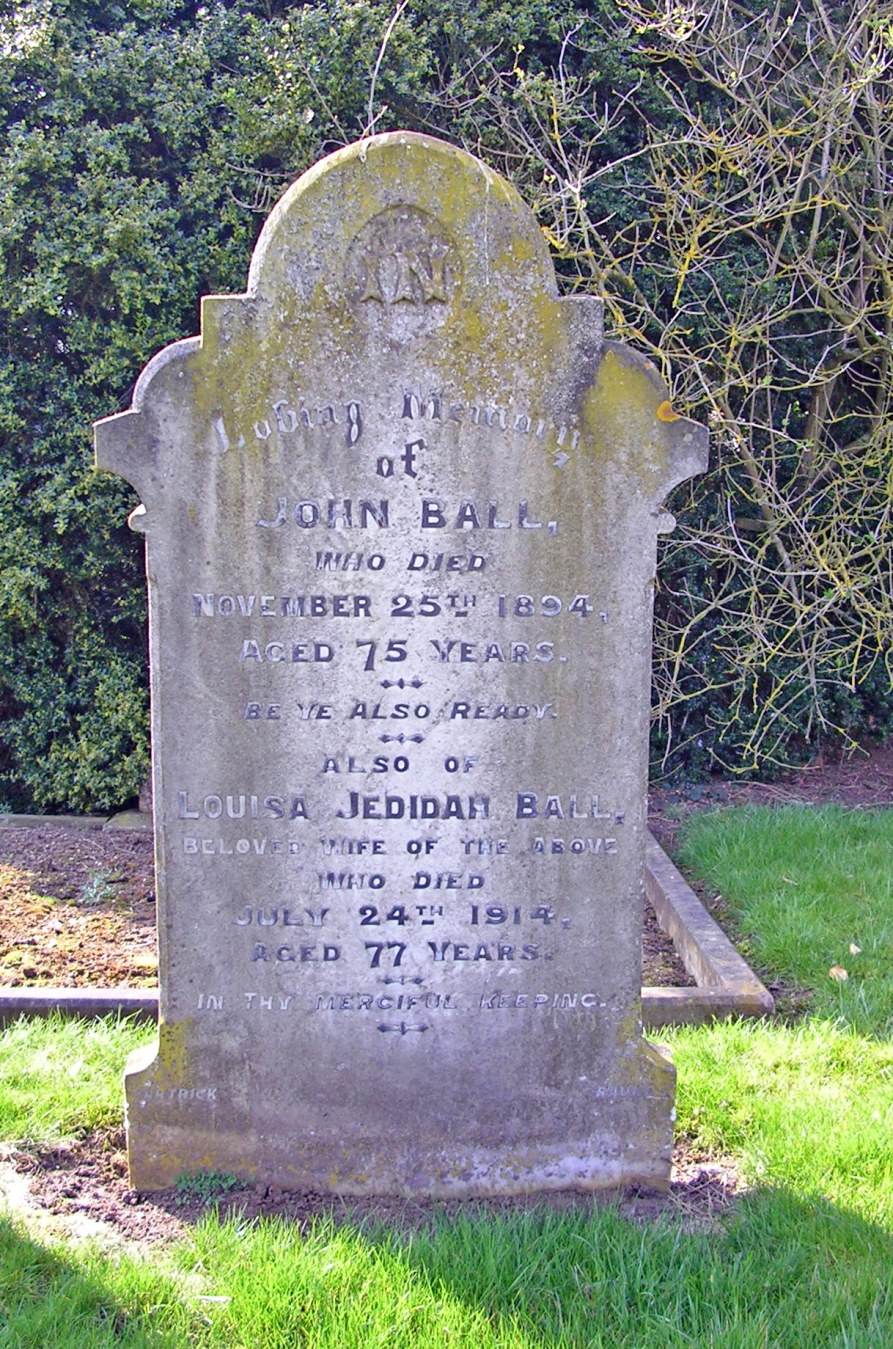
The Register for the Ringstead Cemetery shows the death of John Ball on the 26thNovember 1894 aged 75 and the burial some two days later. The service was conducted by the Baptist Minister, the Reverend J. Bates and under the heading ‘Trade’ he is classified simply as ‘Gentleman’. On the same solid, respectable grave it also remembers ‘Louisa, Jedidah Ball, beloved wife of the above who died on 24th July 1914 aged 77 years’. There is no sign of Rebecca. The Baptist Minister again took the service.
The two Wilson sisters who married John and William Ball were not productive by nineteenth century standards. Rebecca had two children, Hannah and Joseph and her sister, Hannah, had no children as far as we can tell. William, it appears had at least one child, (although it disappeared before birth with its mother, Lydia Atley). Jedidah also appears to have had no children. She, of course, married very late. Such things are not uncommon but one senses that there is somewhere, perhaps other unrecorded sadnesses.
What about Carlos Chamberlin, or 'Chamberlain', as he is named in some Censuses? He was part of the American 'aristocracy', one based on chronology rather than English bloodline, although perhaps both emanate from the claims of the principal invaders, one Norman, one English. His grandson, George Howard Chamberlin, was an architect in Yonkers, New York. George is listed in the Roll of Associates of The Order of the Founders and Patriots of America Register of 1911. To be an associate one had to trace ones ancestry back to the first colonists and to have forefathers, in the same male ancestral line, who served in the American Revolution. The qualifying generations are given, including Carlos and then back to William and Rebecca Chamberlin who must have been those 'first colonists'. Why someone in that revolutionary line should become a naturalised British citizen and live out his life in England is another story to be told.
By 1881, now some seventy years old, he is living in Dunham Road Altrincham in Cheshire with his wife Elizabeth and their daughter Mary now a spinster of thirty three. They have three servants, once again all different. It may be that they were bad employers but servants, because they had to live in, tended to be younger women. When they married they moved out and found other employment. It seems that he died in Hastings in 1890 and by 1891 his widow, Elizabeth is living at 39 Harrington Road, Kensington.
Although worlds apart both mistress and servant became the widows of ‘gentlemen’ who could live comfortably in their old age.
There is one final small mystery. If you walk down the cemetery toward the road from the fine headstone of John Ball and Louisa Jedidah (as she now finally is) you come to the grave of Benjamin Lovell and Mary Jane, his beloved wife. At the bottom of the gravestone it also remembers Louisa Jedidah Ball. Mary Jane was Jedidah’s sister, who she is shown living next door to, in the 1901 Census. Benjamin Lovell died a few months after Jedidah and Mary Jane died some 7 years after, in 1921. Who wanted her remembered again?
References.
My thanks to George Turnbull, Co-ordinator of Heritage Information at Manchester Archives and Local Information (2006) for his help with the travel in Manchester and other local details.
My thanks to Harry Jack, via Simon Fountain, of the LNWR Society for all the information on Jedidah's possible rail journey.
Northampton Mercury 13th May 1843.
Victoria Park Manchester. Maurice Spiers (printed for the Chetham Society 1976).
Building Jerusalem: the rise and fall of the Victorian city. Tristram Hunt (Weindenfeld and Nicolson 2004).
Mary Barton, Elizabeth Gaskell (Oxford World Classics). First published 1848.
The Condition of the Working Class in England. Friedrich Engels. (First pub. 1845. Penguin Classics1987).
for the Currency Converter. {But beware it does not work below £1.00 in old money in either direction so £1.00 (1860) = £43.16 but £43.00 = £1 19s 11d (1860)}.
.
article on London and North Western Railway.
Wellingborough News 4th October 1884 transcribed by Kay Collins ( ).
.
The Order of the Founders and Patriots of America Register 1911. ().