Ringstead People · Story 22
The Railway Children
William Leveratt (1813- 1893) & family
The railway, along with the bicycle, the great enlarger of many villages’ gene pools, came quite early to Ringstead. The Liverpool and Manchester Railway, the first really successful railway opened in 1830. In the next twenty years railway fever laid an irregular web of lines across the country, with London at its centre. Ringstead became part of this network just fifteen years later.
Not every landowner was pleased to see this new driver of trade and prosperity cross his land. Many saw it as a noisy, dirty despoiler of their view and, without the sepia glasses of nostalgia, one can understand their concern. It was rumoured that the large landowners around Northampton forced the railway around the town so that Blisworth, some five miles away, became its nearest station on the Euston to Birmingham line. In fact, opened in 1838, it was engineered by Robert Stephenson and he by-passed Northampton because it would have involved steeper climbs than he thought that the locomotives of the time could bear.
Northampton businessmen realised that, without the railway, they would not be able to compete with other towns. Accordingly, in the autumn of 1842 the London and Birmingham Railway Board was approached with the idea of a line from Blisworth, via Northampton, Thrapston and Oundle to Peterborough. The first notification of the intention to build the line was in November 1842. Events then moved with an astonishing speed.
It was realised from the start that the line would not be profit-making by itself but it would give the LBR a way into the east of the country as well as feeding traffic into its main line. Surprisingly, Peterborough was not yet part of the network but it was obvious that it would be on a major line from London to the north very soon as well as being a possible hub for traffic to the East Coast.
There was, initially, strong opposition by some local landowners, including Lord Lilford and Mr Archbould, the Thrapston solicitor who had steered the Ringstead Enclosure through only a couple of years earlier and who was also a landowner. The six main objections included one which modern day protest groups against new developments may have some sympathy with. They argued that:
The aim of the proposal was not really to benefit the area but to produce more profit for the London and Birmingham main line.
Nevertheless, The Times could report on January 1843:
LONDON AND BIRMINGHAM RAILWAY. – On Monday a special general meeting of the proprietors was held at the Euston Hotel, Euston-station, for the purpose of authorising the directors to make a branch line from the Blisworth-station in the county of Northampton, to the city of Peterborough………..All the large landowners were in favour of the line…. A series of resolutions was then passed to carry out the objects of the meeting.
By the 4th July 1843 the necessary Bill had passed through three readings of the House of Commons, the Committee Stage and a further three readings in the House of Lords and had received the Royal Assent. Of course the fast movement of stock, agricultural produce, iron ore and limestone from the area and the transport in of coal, fertilizer, oil and other goods must have been a great incentive to the business side of a landowner’s thinking.
Construction on the line, under the overall control of Robert Stephenson, started almost immediately. The level route along the Nene valley was a comparatively simple engineering task although it did include 26 level crossings, 13 bridges and a 616-yard tunnel at Wansford. By the summer of 1844 there were some 1000 navvies working on the line many of them on the construction of the tunnel. This of course caused local problems but it was over remarkably quickly.
The speed of construction came at some cost and injuries and deaths were not uncommon in the rush to complete in an age of few safety rules. Ringstead lost one of its sons to the line before it had opened. William Wittering (Whittering) was killed on the 6th March 1845 at Titchmarsh. He had been a shoemaker but is shown on his death certificate as a labourer. It seems likely that he had taken the opportunity of the building of the line to earn more money. The cause of death is just listed as, 'Accidentally killed on the Railway'. At this late date, with the opening of the line just two months away, it seems most likely that he was killed by a train or truck rather than a fall of earth. He was 44 years old and the 1851 Census finds his widow, Mary, aged 58 and daughter, Ruth , 16, trying to survive as washerwomen.
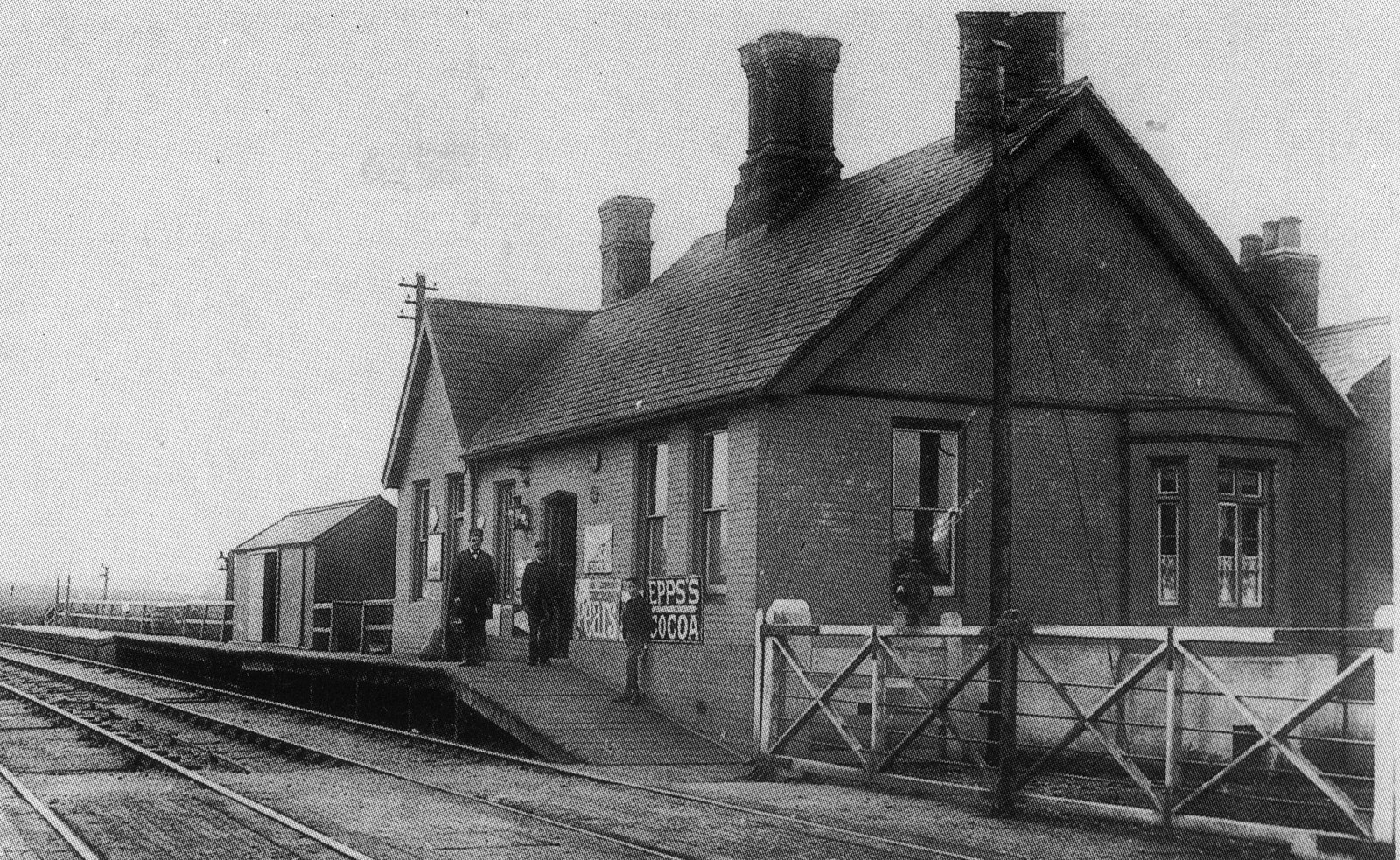
The 38-mile line had twelve stations and Ringstead, as one of the lesser stops, probably had only a wooden building, in the Tudor style. If this was the case, it was quite soon replaced by a substantial brick building. The whole branch line cost some £70,000 under the original estimate of £500,000 and. on the 3rd May 1845. a special train, carrying company directors and other officials, made an inspection tour of the line.
The Times of June 2nd 1845 reported that on the previous Saturday (30th May):
A special train conveying a party of the directors and their friends left the London terminus on Saturday morning at half past 9 o’clock for the purpose of opening and inspecting this additional line of traffic which is, we believe, the longest branch yet made from any trunk-line.
At Northampton the party:
. . . received an accession by the arrival of the mayor and other corporate authorities; and the train, now increased to 15 first-class carriages, proceeded on its route.
The article also describes the route in glorious terms but also reveals that not everything was yet completed.
By a rather circuitous course, following the meanderings of the beautiful river Nene, through a country picturesque and highly cultivated, studded with pretty villages and churches of architectural pretension, we passed unfinished stations at Castle Ashby, Wellingborough, Ditchford, Higham Ferrers and Ringstead and again paused at Thrapstone.
The Northampton Herald of 7th June, rather disparagingly, states:
Between Wellingborough and Thrapston, a distance of eleven miles, there are three stations. Ditchford, which may be called a third-class station, or mere booking office, at which trains only stop when there are passengers to be taken up . . . and Ringstead, another third-class station.
The Grand Opening of the line to general passenger traffic was just three days later on Monday 2nd June 1845. This was a chaotic occasion because of the large numbers wanting to travel on the line as well as the throngs of sightseers on the platforms. Some did not relish the heaving mass of humanity and had their ticket money refunded. All along the line were crowds of people cheering and waving flags.
The Herald again reported that:
It would seem too, that along this new line the population, men, women, and children, do not yet stand sufficiently in awe of the terrific monster steam. They have the hardihood to gather directly in his path, as if his dashing among them would not, before you could say Jack Robinson, crush every bone in the skins of rash hundreds.
The speed, with which the project was conceived, designed and built, using only explosives and manual labour is astonishing. It was less than three years between the company being approached by the landowners and the railway being open for traffic.
The canal and river authorities realised that the railway posed a threat to their livelihood. The same edition of the Northampton Herald that reported on the opening of the new branch line also had an advertisement from the Commissioners giving notice of a ‘Reduction of Tonnage River Nen Navigation’ between Thrapston and Northampton. It gives the cost per ton at each lock, including:
                                                                                    s.           d.
Cotton Mill Lock                0           2
Paper Mill Lock                   0          2
Woodford Mill Lock          0         2
The railway line passed some distance from the main village at Ringstead but one suspects that many villagers would have walked down past the church to see the progress, especially during that spring of 1845 when the line and the station were being completed. Among those interested onlookers must have been William Leveratt, his wife Mary and their young family.
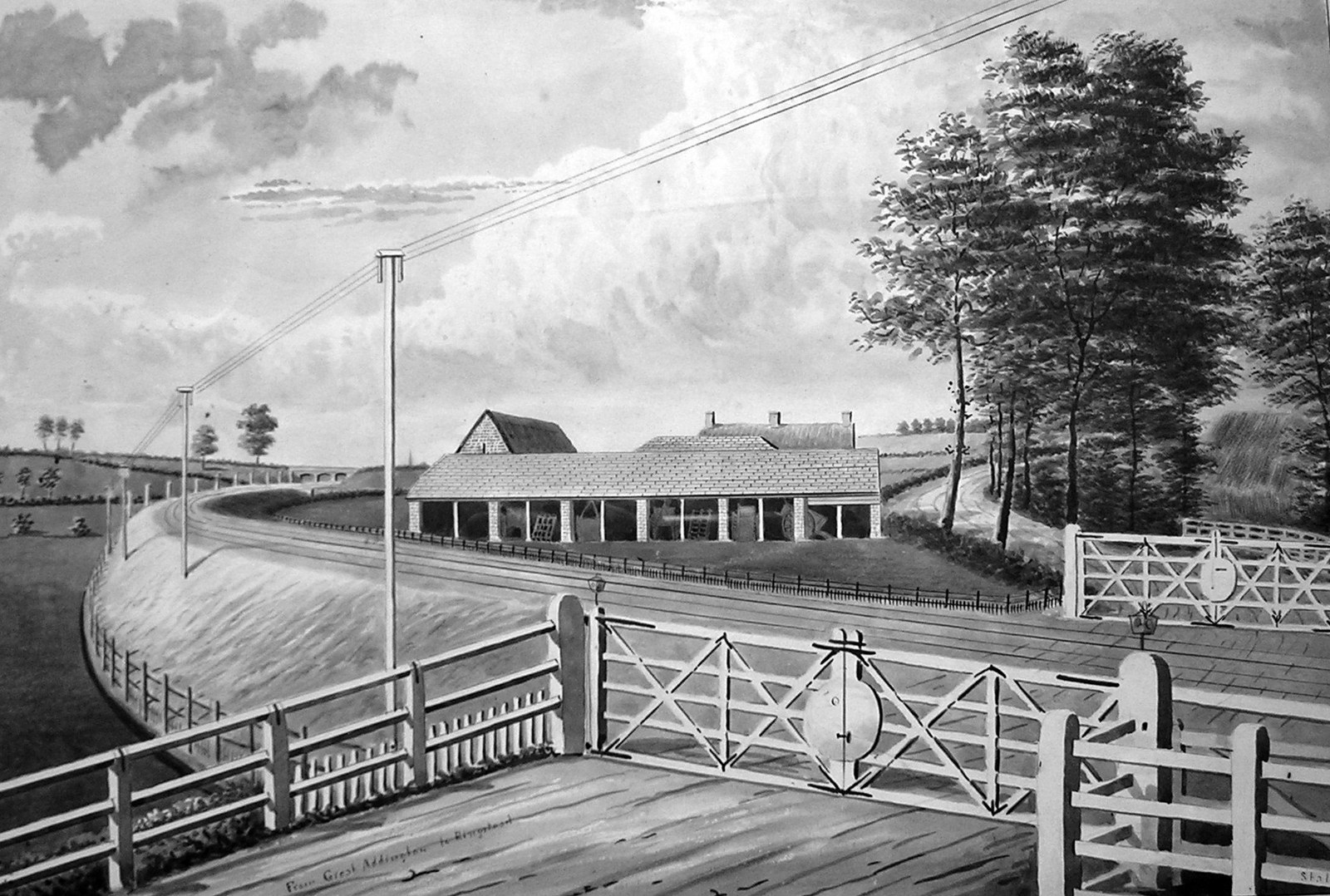
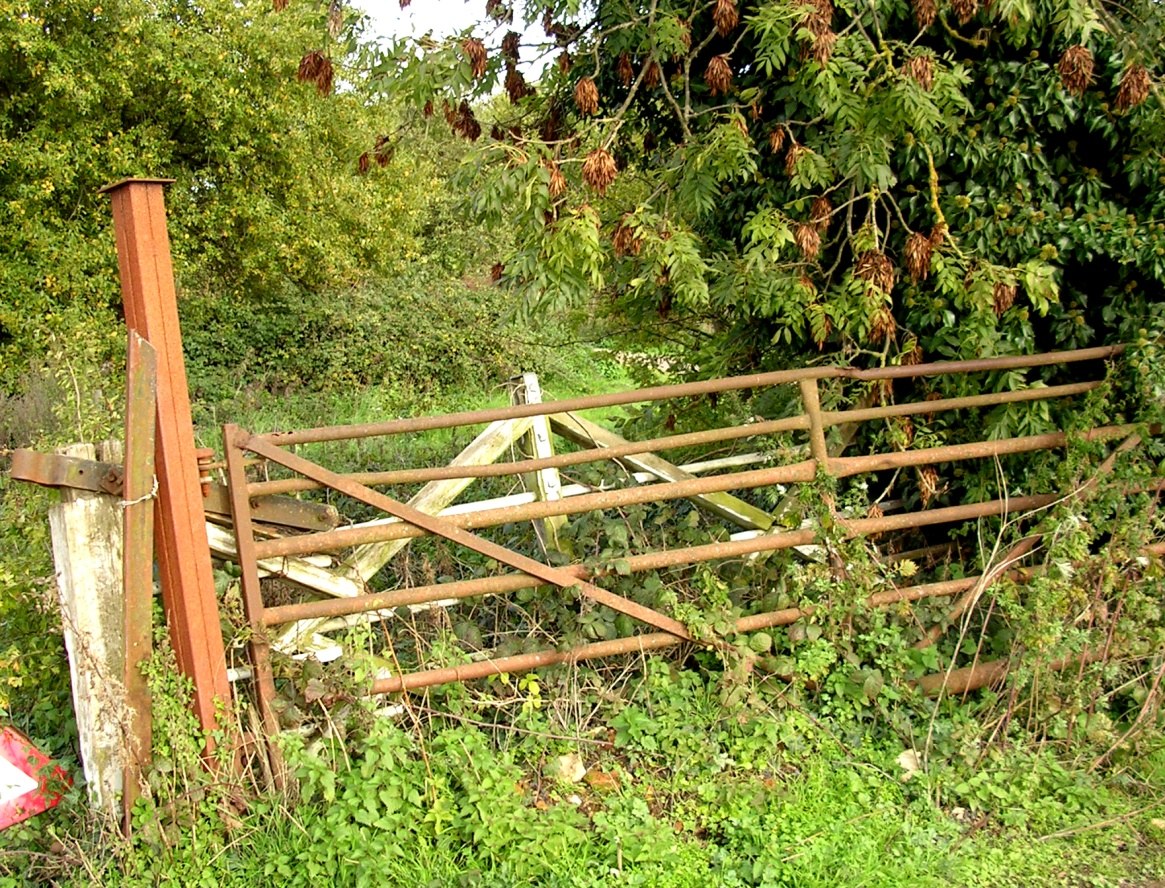
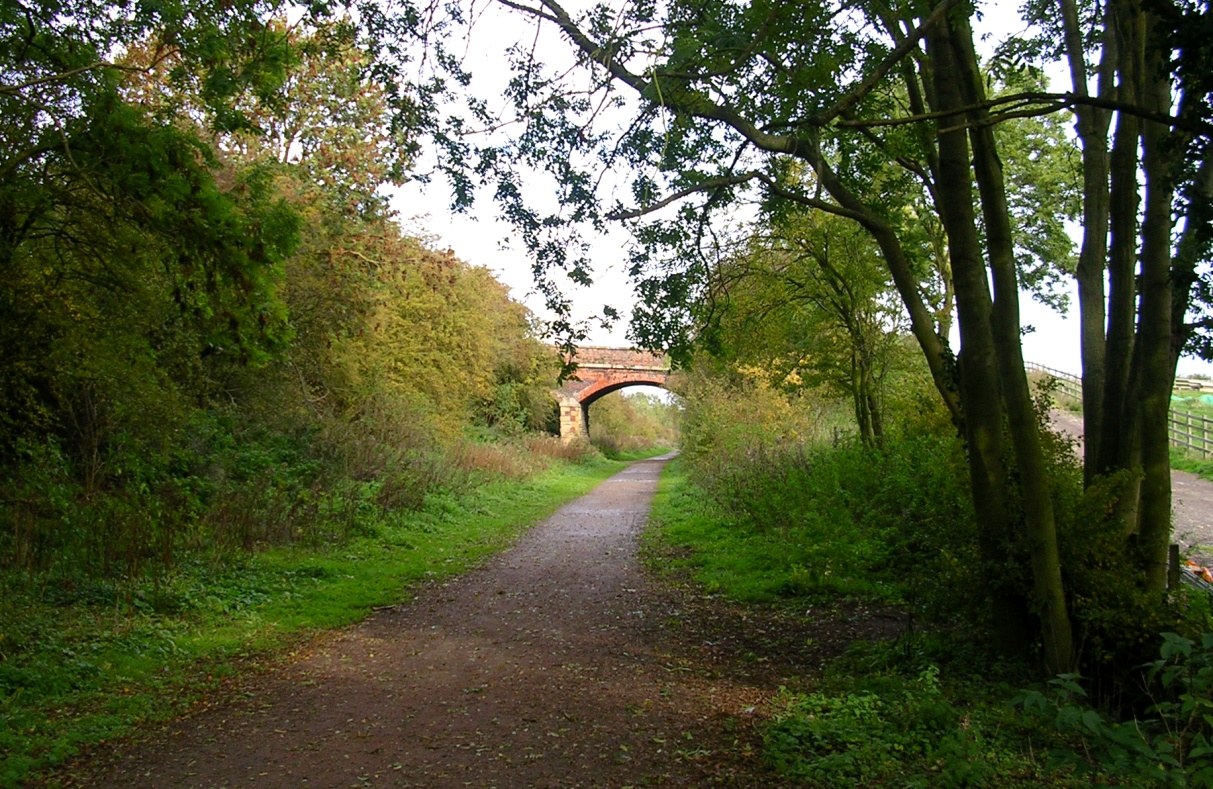
William had been born in Thrapston in 1813, the son of Charles John Leveratt and his wife Sarah. He was one of twelve children and often we see that some of the children of such large families have to leave home early and look away from their local area for work. We see in other biographies that many, such as the children of Daniel Ball, had to seek their fortunes in Canada, the USA and Australia. William did not travel so far. At the time of his marriage in St Giles Church, Northampton to Mary Agutter on 9th July 1838, he was a servant living in Whitechapel in Middlesex. His wife, Sarah is variously said to be born in Lowick and Islip. She is living in St Giles Street, close to the church and is not shown as having any occupation although her father is shown to be servant. As both groom and bride were from the Thrapston area, it is probable that they had met each other there, rather than in Northampton, but we cannot be sure..
By the 1841 Census the young couple are shown, with their two young daughters, Mary and Rebekah, staying with Thomas Agutter, a farm bailiff and his brother John, a labourer, at Ringstead Lodge, which is beside the road from Ringstead Mill and the future station. Thomas is probably Sarah’s brother and it may be that they are staying there between jobs as no occupation is shown for William.
In 1849 a History, Gazetteer and Directory of Northamptonshire has the entry, Leveratt, Wm. station master, so it looks possible that he was in the post from the very start. The 1851 Census has him as a ‘Station Clerk’ but it is likely that this is a misunderstanding of this new work title. He would now be working for the London & North Western Railway (LNWR) formed by a merger between the London and Birmingham Railway and a number of other companies in 1846. The line of his life was now set and a number of his children also followed along the same track.
In 1861 William is a stationmaster, probably living in the station house with Mary and their children, Ann, William, Martha, Samuel, Elizabeth and Charles.
The job of a stationmaster varied with the size and importance of the station. The smaller the station the more ‘hands-on’ and jack-of-all-trades he would have to be. John Farrington, in Life on the Lines, gives some idea of his duties.
In the case of the smaller stations as well as his duties in running the station and its goods yard, level crossing, etc., he was responsible for acting as the railway company’s agent and for securing traffic for his company in competition with other companies and, later, with road transport. His station would deal with both passengers and goods traffic.
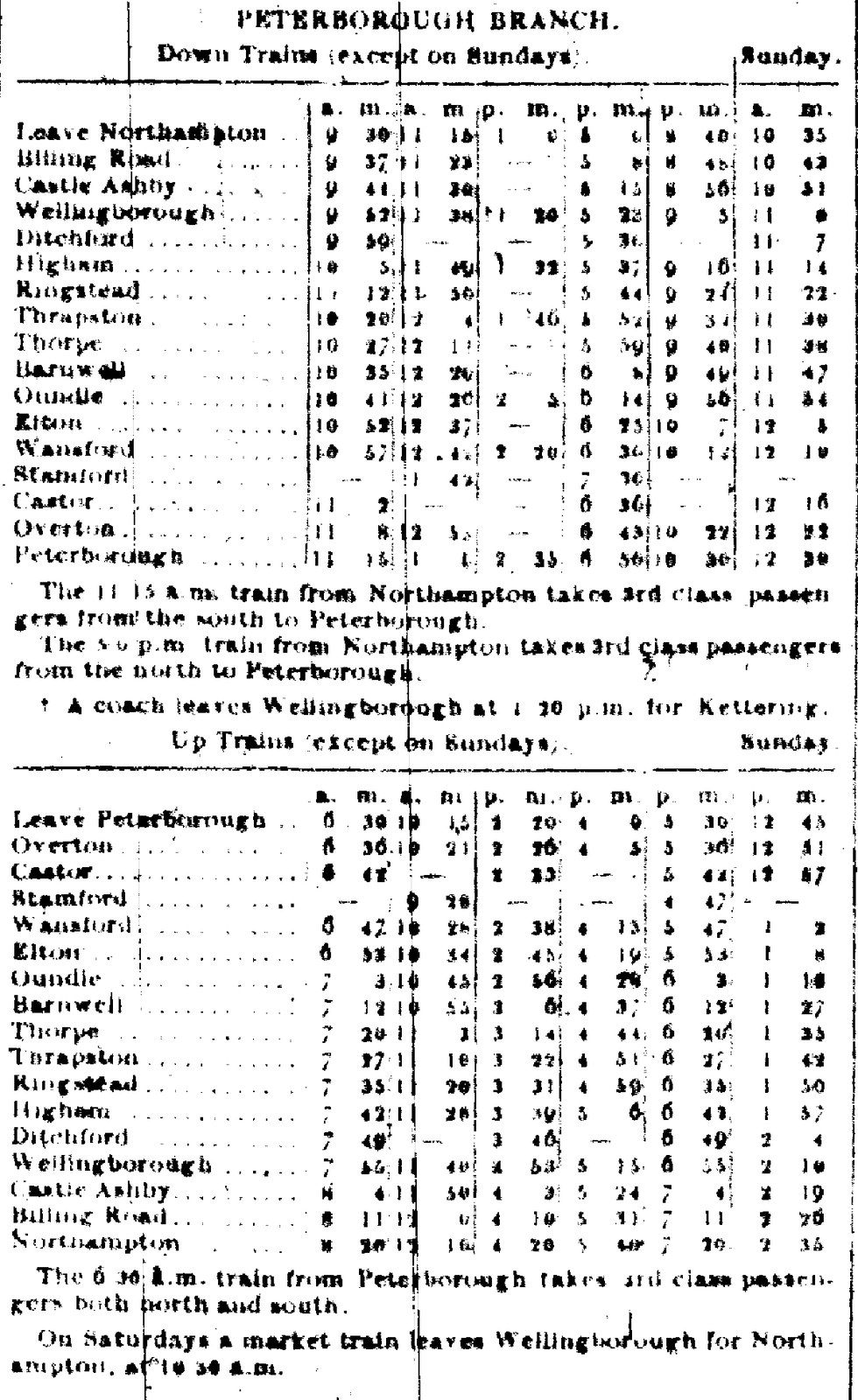
As we can see from the timetable shown above, there were basically only five ‘up’ trains and five ‘down’ passenger trains and one of these each way did not stop at Ringstead. There were, however, also goods trains and the station, in 1871 also gained a network of sidings on its south side. In The Nene Valley Railway, John Rhodes explains:
Butlin’s ironstone mines were near Ringstead village. At first, 1000 tons of ore a week were produced here and transported in horse-drawn trucks [i.e. on rails] where it was transferred to standard gauge wagons. The system closed down after 20 years and was then dismantled.
Other ironstone workings had sidings leading to the line between Ringstead and Denford which lasted for a short period in the last years of the nineteenth century.
Although it might have felt isolated and lonely, especially on wet winter days, it would have been a busy life and not always a quiet one. Besides the trains, the crossing gates, and the noisy, dusty loading of iron ore there was the call of his clients. The upper and middle classes would have expected preferential treatment and might also treat him as an equal – unless they did not get it. He was also ‘living on the job’ and people would tend to call on him when it suited them, with little regard to his nominal working hours. John Farrington quotes from Memoirs of a Station Master which was published in 1879 and shows, unintentionally, the view of many in society.
.... the clerks and stationmasters were for the most part supplied from the middle class of society and able to hold their own in a gentlemanly way…. At the present day they are, for the most part, the descendants of the porters and policemen who, having been educated at the British and Free schools, have been drafted into the Telegraph Office and thence to the clerk’s appointments. There is nothing sharpens the wit of a lad like a telegraph office, but it cannot be expected that the associations of their homes will make them conversant with the habits and manners of gentlemen.
Where did William sit in all this? He was the son of a shoemaker and his wife’s father is shown on the marriage register as a servant. Nevertheless one senses that the Agutters were of farming stock and many of her children are given the middle name Agutter. She may have been aware of her middle class associations. Whatever the truth, in his work, William would have had to walk the tightrope between authority and deference.
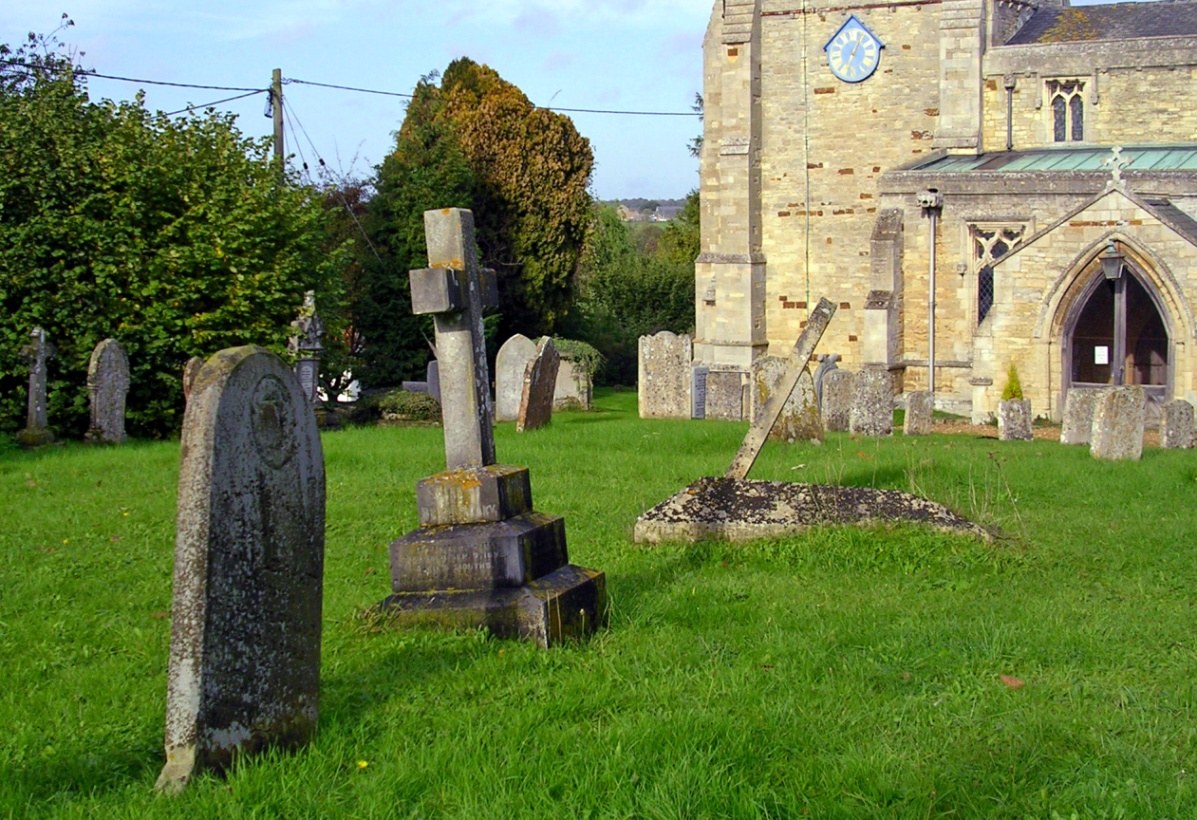
In the 1871 Census William and Mary are still in the Station House but only their nineteen-year-old daughter, Elizabeth, remains at home. On the 14th May 1878 Mary Leveratt died, aged sixty-five, and was buried in Ringstead churchyard. Her epitaph bears the text:
Blessed are the poor in spirit for theirs is the Kingdom of Heaven
While understanding that many Christians would believe that, before God, the best of us must recognize our inadequacy, it is not an obvious epitaph to put on a loved one’s gravestone.
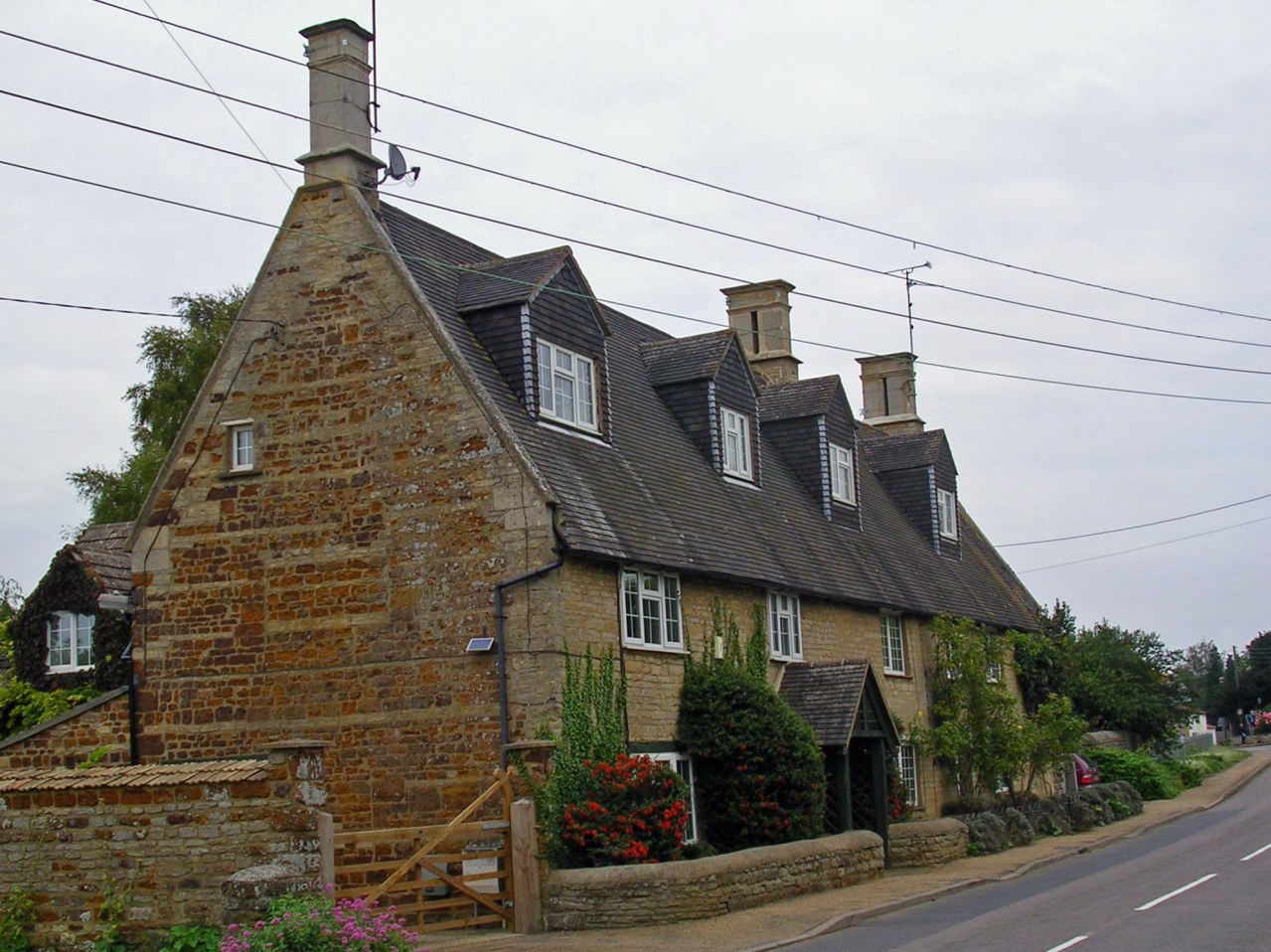
1881 finds William’s railway career over. He 68 years old and living in Chapel Road, Ringstead with his unmarried daughter, Rebecca (40), acting as his housekeeper. She seems to be also looking after her sister, Martha’s eight-year-old son, John C Hill. Martha had married a soldier and followed him to Aldershot. It appears that she had died, perhaps with complications after the birth of her second child.
William is now a 'poulterer'. It was not unusual for stationmasters to rent a small plot of land from the railway company to grow some vegetables and keep a few chickens to help their income, and the Agutters were local farmers, so perhaps he saw an opportunity to earn a little money in his retirement. Old age could be a difficult time for the poorer middle classes who were not of substantial independent means. By 1891 he is aged 78 and is just shown as a retired stationmaster, still living in Chapel Road and being looked after by Rebecca. He was obviously beginning to decline in health for on 4th June 1893 he died of ‘Senile Decay’ aged 81 years. Rebecca was present at his death and his occupation is given simply as 'house proprietor'.
Perhaps surprisingly, he was not buried with his wife in Ringstead but, rather, in Denford churchyard. It may be that the local churchyard had ceased to be used and only the public cemetery was now available. This would have been close to where he had lived his life but perhaps his daughters wanted him buried in a churchyard and the Agutter connection gave them the opportunity.
The ‘family business’ had continued, however, and his son, Charles Agutter Leveratt, had taken up the position of station master at Ringstead. Charles had been baptised in Ringstead church on 29th September 1866 aged thirteen but disappears from the Census some five years later. We learn from later railway records that he started work first at Northampton Station on 27th December 1868 as a (possibly ‘parcel’) porter. By 20th April 1869 he had moved to Harrow, still as a porter. There he met Elizabeth, ‘Betsey’, Johnson and on 10th January 1874, aged 21, he married her in the Harrow Parish Church.
He returned with his new wife to Northamptonshire and became the station master at Higham Ferrers. This may have happened as early as 1871 although the records are a little ambiguous. His sister, Elizabeth, worked with him there as a booking clerk at least from 5th May 1872. The staff records show him as earning £50 from 1st February 1877 and his sister, by July of the following year, £25. If this is a year it is very poor pay so could it be per quarter? This seems too much!
It is possible that Charles and his family moved back to Ringstead, while working at Higham but usually the stationmaster would need to live on the job. Certainly, he had moved back to Ringstead and taken over from his father by 1877. His daughter, Martha Eva, was baptised at Ringstead on March 17th 1877 and Charles is noted as the 'Station Master’ and this is reinforced by the 1877 Post Office Directory of Northamptonshire .
Although the 1881 Census does not give his residence, it is next to the miller, Richard Wadsworth. As Charles's father was earlier recorded as the neighbour of Thomas Wadsworth, it seems certain that he too was living in the station house. Betsey is there and, looking at the children, Elizabeth is six and born in Harrow and Annie is three and born in Ringstead so they moved back to Ringstead between 1875 and 1878. Probably, as William retired, his son took his place. Charles received a bonus for signalman’s duties, for which he required a police certificate of competency after May 1887.
Ten years later Charles, now thirty-eight, is still the stationmaster with Betsey (42) and the children Annie, Nellie, Frederick, Christopher and Florence. Also lodging with them is James Mayes (25), a signalman. Altogether the couple had twelve children three of whom died in infancy. It must have been a sad blow when the twins, Arthur and George died on 29th March 1890 aged just five months. The couple then, almost immediately, had another set of twins, Herbert and May, baptised in Ringstead on 27th May 1891, and this time they survived.
It would have been a hard and lonely life for Betsy in the station house with all her children and few close neighbours. Did she hanker for the life of the town again? We know that Charles was not well and that, when he improved, he transferred to Euston Station, between 26th December 1892 and 31st January 1893. He was once again ill and moved to Shilton.
William Bodger replaced Charles as station master on 23rd December 1893 so there may have been a temporary station master in the interim. Kelly’s Directory for 1898, records William as still the stationmaster.
Charles, at some point after 1893, gives up the railway, perhaps forced to do so by his ill-health. The 1901 Census shows Charles Leveratt, and his family, living in Queen’s Terrace in Harrow-on-the-Hill, Middlesex, running a ‘General Grocery Store’. This is where they were married so perhaps Betsy has inherited it from her parents or a relative. Of course, William Leveratt had died in 1893 so perhaps the links with the past were cut for Charles and he looked for a new life, and one not too strenuous, as he does not seem a well man.
By 1908, at his daughter Nellie’s wedding, Charles is 55 and the couple are running the Royal Oak Coffee Tavern in Crown Street, Harrow. By 1911 they had moved to 168 Cricklewood Lane in Hendon and are running a small boarding house. Just a month later, on 4th May 1911 Charles died of a heart attack: ('Morbus Cordis' on the death certificate, which was a catch-all medical term).
William and his son, Charles had worked at Ringstead station for some fifty years, possibly from its opening and almost to the end of the century. The railway had been an important part of the industrial transformation of England into the first modern industrial nation although it was already being superseded by the USA by the end of the century.
The other children of William and Mary had varied lives. Mary, the eldest, married a groom, Martha married a soldier and died young, Rebecca became a servant before moving back to the village to look after her father, William and Samuel probably emigrated to America and the first John and Edwin died in infancy. We will briefly look at the second John and Elizabeth who also followed their father onto the railway.
In 1893 William had left a will in which he was described as a ‘yeoman’. He had effects to the value of £233 19s. 7d. The two trustees were John Agutter, farmer and John Leveratt, railway guard.
John was born in about 1843 and is with his parents in 1851 but seems, like many young men, to have disappeared from the 1861 Census. He married Sarah Rebeccah Frankton, a dressmaker from Long Lawford, at Newbold on Avon in Warwickshire. His sister, Elizabeth, was one of the witnesses. He is noted as living in Peterborough and the 1871 Census confirms him as a railway porter and living at 4 Highbury Place, Peterborough. His wife, Sarah Rebecca and their seven-month year old son, Thomas William are living with her parents in Newbold-on-Avon in Warwickshire. It may be that she was there temporarily while her husband found suitable lodgings.
The Newbold on Avon Register has the christening of John Frankton Leveratt on 26th May 1872, [he probably dies in infancy], and shows that John has been promoted to Guard. Certainly, by 1881 they are together in 35 Delhi Street, Finsbury, Islington and Thomas has two sisters, Edith and Lizzie, both born in Islington. It confirms that John has been promoted to Railway Guard. Just before the Census, on 9th February 1881 John had been involved in a frightening accident. The early railways had many accidents and only gradually were signalling and braking improved. The Rail Inspector's Report, on April 30th 1881, tells us that:
In this case the 7.35 p.m. passenger train from Moorgate Street to High Barnet, - consisting of tank engine and 10 vehicles, - which left King's Cross suburban platform at 7.54 p.m. came into collision at 7.56 p.m. with a train of 12 empty carriages which had left King's Cross for Holloway at 7.50 p.m., and had been brought to a stand at Belle Isle starting-signal waiting until the line was clear, with the break-van at the rear of the train about 25 yards outside Maiden Lane tunnel.
The engine of the passenger train left the rails and the break-van of the train of empties was broken up.
John Leverett [sic] was the guard in that 'break-van' and gave evidence:
After standing at Belle Isle two or three minutes I looked out on the right-hand side, and saw the white head-light of a train coming from King's Cross on our line of rails. I said to Swan [a shunter driver getting a ride in the break-van], 'For God's sake, jump; here is a train coming.' I jumped and Swan followed.
The driver of the second train had gone through a signal which he had not seen change. John and Swan both escaped with minor injuries and ten passengers complained of being 'shaken'. John had had a lucky escape.
The Newbold on Avon Parish Register show a that as well as a John Frankton (Thomas ?) in 1872 Edith Ann was baptised on 1st September 1878 and Florence Nelly and Lily Frankton were christened on 14th September 1884 and 18th September 1887 respectively. The register records, for the last two christenings, that the couple were living in Leicester.
By 1891 they have moved to Doncaster, another great railway town, and are living at 36 North Street. He is still a guard. It also confirms that Florence and Lily were both born at Leicester.
1901 finds them still in Doncaster and living at 62 Somerset Road. All the family are still at home. Thomas, the eldest is 30 years old and a ‘Carriage Pickup Labourer’ which one would guess is a job on the railway, while Eliza and Florence are dressmakers. His life then follows the pattern of his brother, Charles, for he moves back to his wife’s parents’ area, in this case Long Lawford near Rugby and sets up as a greengrocer. By 1911 his wife has died and, aged 67, and he runs the shop with the help of his unmarried daughter, Edith, who is thirty-three. He dies in the Rugby area in 1917.
Perhaps the child of William, whose life most shows the new world that is coming, is his youngest daughter, Elizabeth Agutter Leveratt. She was baptised at the same time as her brother Charles on September 29th 1866, aged 15, and we learn, from her railway record, that she was born on the 1st September 1850. In 1871 she was the only child living at home and, at nineteen, has no occupation given. The February 10th 1877 edition of the Peterborough and Huntingdonshire Standard had the following short news item.
Some of our railway companies have it in contemplation to take a leaf out of the book of the Telegraph offices and employ respectable females as clerks at stations. The work is such that delicate females can perform it just as well as men. At several of the Metropolitan railway stations female clerks are already employed and the practice is found to answer.
Elizabeth was one of the trailblazers for these ‘delicate females’. As we have seen, it is likely that she started work as a booking clerk on 5th May 1872, first at Higham Ferrers and then at Ringstead with her brother, Charles, as the station master. In the 1881 Census her father has retired, her mother has died and her older sister, Rebecca is now looking after the house. Elizabeth is 29 and still a ‘Railway Station Clerk’.
Railway workers were considered among the aristocracy of the working classes. John Farringdon in Life on the Lines has pointed out that when a boy [or girl] applied for job as a railway clerk he [or she] had to show a keen intelligence and have references from persons of good standing such as a local clergyman or Justice of the Peace. He also makes clear that in the nineteenth century it was a demanding job and was not well paid. He tells us:
In the second half of the nineteenth century the nominal working day of the clerk might be from 9am to 6pm with a half day on Saturday and the pay might be between 15s and £1 per week.
In 1891 Elizabeth is staying with her widowed sister, Mary Ann Robins, a grocer in Wellingborough. She is still a booking clerk on the railway but whether this was now at Wellingborough is not clear.
In the Census she is thirty-seven years old and people must have presumed that she was a confirmed spinster. Then, a few months later, in the summer of 1891 Elizabeth Agutter Leveratt married John Agutter. She was now Elizabeth Agutter Agutter. John was probably her cousin and a farmer in Ringstead, not far from the railway station. Unfortunately their time together was limited and just before the next Census, on 4th February 1901 John died, in his fifty-first year. He was buried in Denford churchyard and the grave also remembers, ‘Bessie Mary, their infant daughter who died September 9th 1893 aged 5 months’. We understand now that her father, William Leveratt was buried next to what was to be an Agutter grave for his son-in-law and daughter.
The 1901 Census reveals Elizabeth as a widow aged 49 years, living at Tithe Farm, Ringstead, and with her only living child, Frances aged six years. She also has a farm manager and a general servant.
Elizabeth, too, died on February 1907 aged just fifty-five and was buried with her husband and infant child in Denford.
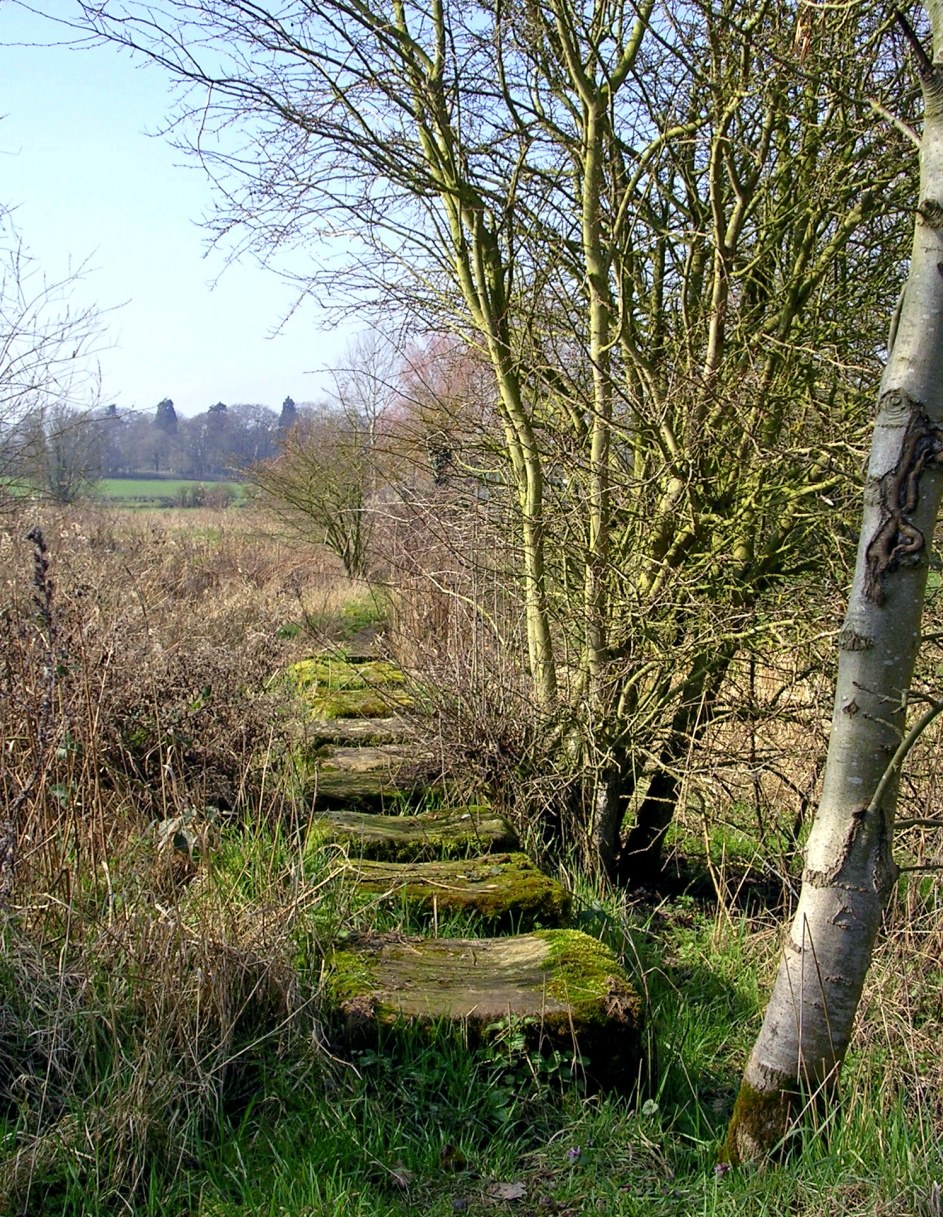
It was usual for children to follow their parents into work on the network so we would expect to see some of William and Mary’s grandchildren also working on the railway but we must leave the dynasty here. In the 1950’s Ringstead Station was described as ‘merely a couple of platforms, a hut and a cast-iron lavatory a few yards down the permanent way’. In 1964 the station and the line closed.
Postscript
We have seen in the story of Elizabeth how women were overcoming prejudice and were gradually gaining access into traditional male jobs. Although we are straying away from the railway, the story of another Elizabeth Leveratt, the eldest daughter of Charles and Betsey is worth the telling. Born in Harrow in 1875, Elizabeth Emma Leveratt was living in Ringstead with her parents in 1881. The family returned to Harrow and in March 1895, aged 20, Elizabeth travelled to the island of St. Vincent in the West Indies to work for the Governor-General, Sir Harry Thompson. She met Joseph Dopwell in the Botanical Gardens there and they were married in 1898 amid great scandal as it was a ‘mixed’ marriage.
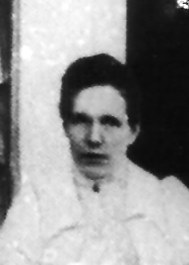
They had three children but Elizabeth died of Typhoid in 1903 aged 28. It is believed, in the family, that Elizabeth's parents had disowned her after her marriage but, at her death, they offered to look after the three children. Joseph Dopwell, with some reason, felt that they would not be treated well because of their mixed race. He went to Kenya to work and the children were raised by his mother in St Vincent. It seems likely that Joseph did go to visit his wife's mother in Cricklewood Lane in 1915 (her father had died by this time). One wonders just how that meeting went.
[My thanks to Liz DeCaul in Grenada for the photograph and the story of her great grandparents].
References.
My special thanks to Neil Leveratt of California who has allowed me access to his very authoritative family tree to back up my research (there are some incorrect ones on Ancestry.co.uk).
Memorial Inscriptions at The Church of the Nativity of the Blessed Virgin Mary and the Shared Church Ringstead. (NFHS 2005).
Memorial Inscriptions at The Church of the Holy Trinity Denford. (NFHS 2003).
The Nene Valley Railway. John Rhodes. (Turntable Publications 1983. First pub 1976).
Life on the Lines. John Farrington. (Moorland Publishing 1984).
Railways in Northamptonshire and the Soke of Peterborough. Andrew Swift. (Reflections of a Bygone Age 1999).
The Times 18th January 1843: 2nd June 1845: (via Cambridgeshire Libraries online).
Northampton Herald 7th June 1845; 17th Feb 1855. (Northampton Central Library).
History, Gazetteer & Directory of Northamptonshire 1849.
Post Office Directory for Northamptonshire 1877. (Peterborough Library).
Kelly’s Directory 1898. (Huntingdon Record Office).
Railway Inspectors Reports 1881. ().
UK Railway Employment Records 1833-1963.( ).