Final Stories · Story 1
Two Final WW1 Men
In the stories of the Ringstead men who served in the First World War I tried to record all those who served in any capacity. Since the books have been printed, I have found a few people who, for a variety of reasons, were missed. I have tried to correct this omission.
James Edward Austin (1880-1951)
Thomas Austin had been born in Podington in Bedfordshire but he moved some nine miles north to Ringstead and worked as a local carrier. In the Post Office Directory for 1869 he is shown as a carrier and shopkeeper. By the 1871 Census he had become a baker and grocer in Shop Street but in 1876 he had “petitioned for liquidation by petition”. He appears to have carried on in business, however, for in 1879 he was found guilty of selling bread “otherwise than by weight” and fined five shillings. His wife, Sarah, died and in the 1881 Census he was shown as a “baker and outdoor beer house” [off-licence], just two doors from the Black Horse Public House. Thomas died in 1890.
His son, Charles Edward Austin, had first followed his father into the bakery trade. In 1871, aged 17, he was lodging with master baker William Cook at 39 Bridge Street in Northampton and working in the bakery. Eight years later he married Mary Jane Kisbee from Barnwell (where the marriage may have taken place). She was over 30 years old (although she tended to underestimate her age in Censuses etc.). By this time Charles had become a railway employee and by 1881 was working as a railway porter. They were now living back in Ringstead and Mary Jane was a dressmaker and their son, James Edward, was just six months old.
By 1891 the family had moved to Mary’s home village of Barnwell and they were near to the castle and the station. Barnwell was only a couple of stops north-east of Ringstead, on the Northampton to Peterborough Line (London and North-West Railway Company). Charles was working as a railway policeman and James, aged ten, was still at school. The term “Railway Policeman” is a little confusing for originally this was a term used for a “Signalman” dating back to when he would use flags to control the rail traffic. By 1901 Charles and Mary Jane had moved to Titchmarsh, but James Edward, now 20, was working as a Brewer’s Clerk in Peterborough and lodging with John and Clara Sergeant at 233 Gladstone Street. We learn later that he had started work with the Northampton Brewery Company at Thrapston, straight from school. We also find out that he was an athlete and footballer as a young man.
Soon after this, he moved to Rugby where he was the assistant to Mr. T. Muffey, the brewer’s agent in Little Church Street. He moved again and he was living in Daventry High Street on the 13th October 1907 when he married Rhoda Amy Smith in Holy Trinity Church in Rugby. She was the daughter of Joseph Smith, a butcher in Dale Street, Rugby and his wife Maria.
She had been born in 1878 in Sawbridge, a small hamlet between Daventry and Rugby.
By the 1911 Census, James, aged 30, was a Brewer’s Agent. The couple were living at 8 High Street in Daventry. They had been married three years and had one daughter, Brenda Mary, who was two years old and born in Daventry. I believe that she was to be their only child.
War came in 1914 and on 15th December 1915 James enlisted in Daventry in the Army Service Corps (ASC) and was given service number M2/188290. It appears that he was not called up until the 16th of June 1916 when he was posted to Grove Park in London, which was the Number 1 Reserve Depot of the Mechanical Transport arm of the ASC. The ASC, among other things, supplied the troops with equipment and food and also transported them to and from the Front.
On the Imperial War Museum website, it records the memories of some of the men who served in the First World War. One of these was Walter Williams who joined the ASC as a driver in 1915: He remembered that:
Drivers in those days were not as they are today, ten a penny. It was quite an accomplishment to be able to drive. So, drivers were urgently required. I just went down to the recruiting office in Oxford Street, Weston-super-Mare, and went to the doctor. He passed me for the Army Service Corps. I had varicose veins and I don’t think I would have got through for the infantry, but I was okay for the Army Service Corps. I went to Grove Park in London, passed a pretty severe test on a four-ton lorry, going up a steep hill and not letting it run back and so on. I was judged okay and so was mobilised to 14th M.A.C. right away and in three weeks I was in France!
The medical that was taken when he enlisted showed that James was 5ft 6inches tall and weighed 191lbs (13½ stones or 86.6 kilos). He also had a 43inch chest with a four-inch expansion which was remarkable for the time.
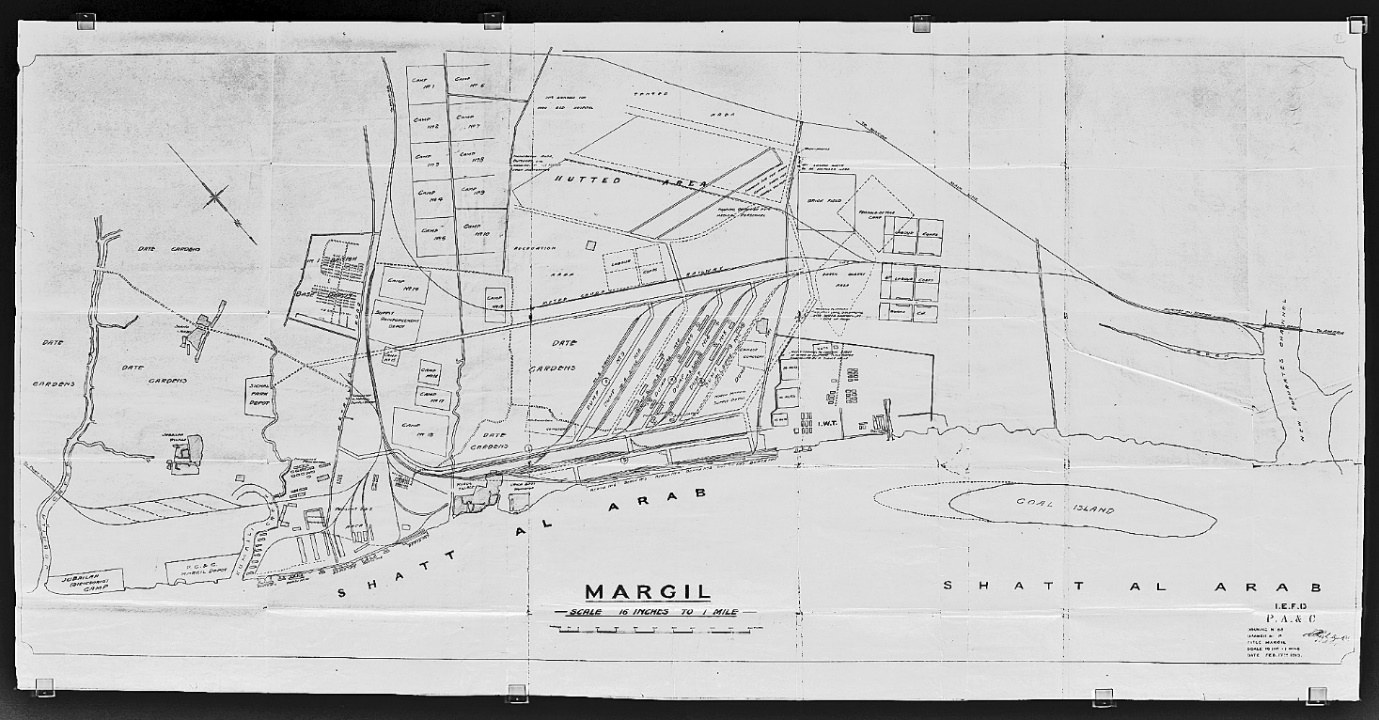
James Austin did not go to the Western Front but, on the 13th March 1917, he embarked at Devonport for the Middle East. It was not until the 22nd of May that he disembarked at Magil near Basrah (Basra), in present day Iraq. A vast dockyard was being constructed to build vessels to carry troops and supplies for the war in Mesopotamia. Much of the boat and pontoon building was carried out by skilled mechanics and labourers recruited from Singapore, Hong Kong and Shanghai.
As we have seen in other WW1 biographies, disease was often the biggest threat to the British troops, especially outside Europe. James had arrived in Basrah on the 22nd of May 1917 and just two months later, on the 22nd of July he was admitted to Basrah Hospital with malaria. He seems to have been immediately put on the hospital ship H.S. Ellora. It may be that he was treated on the ship before sailing to Bombay (Mumbai) to the Victoria War Hospital, arriving there on the 28th of August. He was in Mesopotamia for 136 days (which may have included the voyage)
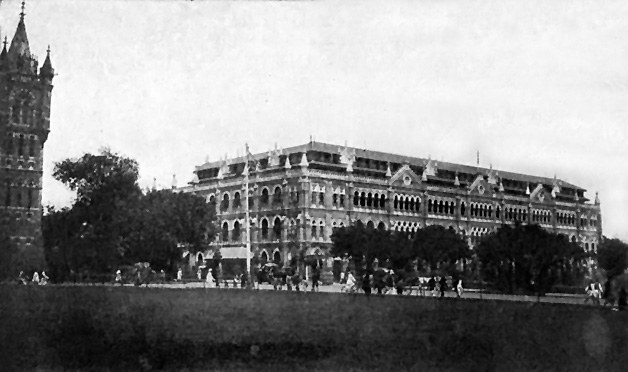
On the 17th of February 1918 he was posted to the ASC Personnel Depot at Bangalore. It is in the middle of southern India but, because it is on the Deccan Plateau over 900 metres above sea level, it is generally not too hot for Europeans. It may be that when he was deemed fit, he was taken on the strength of the 694th Company of the ASC at Peshawar on the 27th July 1918. This is on the North West Frontier some 100 miles east-north east of present-day Islamabad in Pakistan. James must have worked well for he was appointed an Acting Lance Corporal (without pay) on the 5th of November.
He remained in India after the war and moved up the ranks, finally becoming an Acting Sergeant (without pay) on the 29th of October 1919. On the 29th of November 1919 he embarked at Bombay for the UK on the HMHS Marama. He had been in India for 2 years 154 days and was finally demobilized at Woolwich Dockyard on the 20th of January 1920.
He returned to his small family in Daventry and his work as an Area Representative for the Northampton Brewery Company. He was now in his forties and all his working life was to be with the company. In 1957 it merged with the local Phipps Company and a few years later was taken over by Watney Mann and was closed soon after.
By 1927 the family had moved to Rugby and the 1939 Register of England and Wales shows them at 196 Hillmorton Road. It is still largely a road of detached houses hiding behind high hedges and trees. James retired when he was 65 and spent his retirement enjoying angling and gardening. On the 30th April 1951 he was taken ill in his garden and died a few hours later. Rhoda died in the Hospital of St Cross in Rugby on the 17th August 1960. Their daughter, Brenda, never married and died in 2001.
References
England Church of England Baptisms; Censuses 1851-1911; UK Railway Employees Records 1835-1956; Church of England Marriages; British Army Service Records 1914-20; WW1 Service Medal and Award Rolls 1914-20; UK British Army WW1 Medal Rolls Index Cards 1914-20. .
Rugby Advertiser 30th October 1909, 13th March 1936, 4th May 1951.
Map of Magil.
HHMS Ellora. .
HHMS Ellora.
England and Wales Electoral Registers 1920=32; 1939 Register of England and Wales. .
Alfred Percy Balderson (1880-1923)
In the Ringstead People books we told of the policemen who came into the village as part of the national service, organized county by county, that replaced the old village constables. One of these was Joseph Balderson who was the first Police Constable who was based in Ringstead following the establishment of the County Constabulary in 1840. There had been other constables who had Ringstead as part of their responsibility, but Joseph lived in the village. He had moved to the village to take up his duties in July 1868. He had been born in Spratton, some twenty miles west of Ringstead and, in the 1861 Census, he was living there with his parents and working as a farm labourer. Soon after arriving in the area he must have met Mary Elizabeth Boyfield from Raunds for they married there on 31st August 1869.
Mary’s father, John had been a miller from Byfield. He had married Mary Beeby in Raunds on the 25th October 1847 and we see from the birth places of their children that they had travelled the country from Upwell to Leeds. John had died and in the 1861 Census Mary Boyfield was a widow and working as a school mistress in Raunds. John may have died in Manchester in 1857 when working in the large School Flour Mills.
Joseph was some ten years older than his new wife and, although in the 1871 Census for Ringstead he was only shown as 27 years old, he was nearer to thirty. They were living in Sivers Row and had a son, Edgar. Some five more children were to follow, one of whom, Mary, was buried in the churchyard. It is one of these children, Alfred Percy, born in Ringstead in 1880, who is the subject of our story.
The 1881 Census shows the family in Crick where Joseph had been posted as the local Police Constable. By the following Census, the family had moved do Badby but Alfred, or Percy as he was usually known was, aged 11, was a visitor, staying with William Reeves, a butcher, and his wife Sarah, in Crick. It may be that the family were in the process of moving but we cannot be sure. By 1901 his father, Joseph, aged 61, had retired from the County Constabulary and had become the landlord of the Plume of Feathers in Everdon. Next door was the Police Station House. Percy, aged 21, was with his family and working as a butcher, as was his elder brother, Leonard.
The following year Joseph died, aged 62, and was buried in the churchyard in Everdon on the 11th July 1902. By 1911, his widow, Mary, aged 61 was the owner of a dairy farm in Everdon. Percy, 31 and unmarried, was still working as a butcher and his oldest brother, Edgar was also at home working as a carpenter.
There was another part of Percy’s working life not shown in the Census. On 28th March 1910 he had enlisted for four years with the Northamptonshire Yeomanry. This was a regiment that had been created in 1908 as part of the Territorial Force. It was attached for training to the Eastern Mounted Brigade and, like the other Territorial Regiments, was a volunteer force with weekly meetings and annual camps. He originally signed up for four years and was given Regimental Number 2298. On the 27th of March 1914 he signed up for another year. On the 25th of August of that same year Percy married Ellen Brown at Northampton Register Office
With the coming of war the Yeomanry had been formed into three full-time units and Percy was posted to “C” Squadron of the 2/1st which had been formed in September 1914. It appears that he had signed up for a further year’s extension to his contract for he was finally disembodied on the 27th of March 1916. At about this time the 2/1st, which had never been posted abroad, began to be absorbed by other units. Perhaps surprisingly, soldiers in the Regular Army who came to the end of their time could elect to finish their service even in the middle of the war. The unit had been based near St Albans and this explains why Percy had been discharged from nearby Luton.
That was not the end of his service however for, on the 14th of October 1916, he was recalled to the colours. He was now 36 years 8 months old and shown as a farm labourer living in Everdon. He was 5ft 4 inches tall and weighed 154 pounds. The record is rather smudged and faded but it appears that he needed further dental extractions and was deaf in his left ear. His medical classification was “C2” which meant that he was free from serious organic disease, able to stand service conditions in garrisons at home, and, in addition, able to walk to and from work a distance not exceeding five miles and hear sufficiently well for ordinary purposes. His category meant that he would never be called for active service abroad.
He was first posted to the 3/1st Regiment of the Northamptonshire Yeomanry which was absorbed into the 3rd Reserve Cavalry Regiment at Canterbury. He was posted again to the Scottish Cavalry Depot which was at Dunbar on the 22nd June 1917 before being transferred to the Machine Gun Corps on the 6th July and then to the Machine Gun Training Centre at Belton Park.
Finally, on the 9th October 1918 he was attached to 436 Agricultural Depot at Northampton before being transferred to the Labour Corps where he was allotted service number 662748. You get a picture of a man who was being moved around wherever some help was needed. Perhaps some reason for this can be seen from a comment made on his discharge in 1916 for he was said to be hardworking and a good butcher. Was he being used in this capacity in the different units?
He was examined at Northampton on the 20th of February 1919 and now given medical category “B2”. He was discharged and returned to life in Everdon. I think that the family had three children: John born in 1916 had died as a baby but Dorothy, born in 1920 and Percy, born in 1923 survived.
1923, however, was also a tragic year for the Baldersons. Percy’s mother, Mary, died on Sunday 13th May 1923 and he followed her the next day. They were buried together on the following Friday at Everdon. He was 43 years old and left £104 in his Will. His widow Ellen had to find work as a domestic help. She died in 1959.
References
Censuses; England & Wales Civil Registration of Births, Marriages and Deaths; Raunds Church Marriages; Everdon Church Burials; Army Records; England & Wales National Probate Calendar (Index of Wills and Administrations.
British Army Service Records 1914-20.
Northampton Mercury 18th May 1923. Northamptonshire Yeomanry. .