Final Stories · Story 6
Avis Fairey (c1804-1887) and Mary Ann Jenkinson (c1839-1919)
Lyn Watson recently e-mailed me to point out that there was an error in my account of Herbert Abington, the young son of the village grocer and chemist, who kept a diary detailing the last few years of his short life. Lyn also asked if I knew about the son of a Mary Ann Jenkinson who she believed was the illegitimate child of Leonard Joseph Abington, brother to the young Herbert.
This sent me looking through the records and I found an interesting family which was new to me although some of their stories have been well documented by others.
Avis Fairey was baptised in Ringstead Parish Church on 20th June 1813 (although born in about 1804), along with her sisters Phebe (Phoebe: born about 1801) and Pearcy (born about 1797). They were the children of John and Elizabeth Fairey (or Farey).
Pearcy (or Peacy) married John Cheney on 23rd February 1826 in Ringstead Church but died in 1830. Phoebe had married John Miller of Marefield in Leicestershire on 3rd April 1823 in Ringstead Church. In 1851 she, like her younger sister Lucy, was living in Mancetter, a small village in Warwickshire, where John was a small famer with 15 acres and no farmhands. We see that he had been born there and had been baptised in 1798 with his twin brother, Thomas, who was also living in the village. Lucy was with her husband Samuel Miller, also born in Mancetter and working as a Groom. They had married in Ringstead on the 31st May 1830. The brothers were the sons of George and Elizabeth Miller.
It is Avis Fairey with whom we are mainly concerned. She was married in Ringstead Church to Edward Jenkinson from Kettering on December 26th, 1827. The witnesses were Edward’s brother, John Jenkinson, and Lucy Fairey, Avis’s younger sister who had been born in about 1806 but I do not think was baptised until July 16th 1820.
Edward’s brother, John Jenkinson, wrote in his autobiography that Edward had been seriously ill in the February of the previous year with “Brain Fever” which was apparently cured by:
. . . shaving the head of the dear sufferer, applying a blister* thereto, assiduous nursing, the skill of the medical advisor and above all by the Lord’s blessing on the user of these means.
*The Victorians believed that the body could not have more than one illness at a time. They caused a blister by acid or burning to create this second “illness”.
John Jenkinson also tells of the wedding and the journey he and his brother made to Ringstead.
On December 26th 1827, my brother was married in Ringstead parish church (Dissenters being at that time precluded from having the marriage services performed in their churches).
I accompanied him for the purpose of giving away the bride. Our journey from Kettering was literally through the darkness and the deeps.
We started from home before daylight and after travelling nearly six miles, we met a person who told us the flood was so great he did not think we should be able to get across Ringstead meadows, but as we had not time to go round by Thrapston we kept on our way and as a consequence got nearly up to our waists in water. However, on reaching Ringstead we presently dried our clothes, and were at the church quite in time to have the marriage celebrated within the canonical hours. I preached at Ringstead Baptist Chapel in the evening and returned home on the following day.
John Jenkinson was born on 7th June 1799 and Edward on 13th February 1803 in Hallaton in Leicestershire. Although little mentioned in John’s autobiography there was also a sister, Lettice and. Their mother’s father, the Reverend John Ayer, was a Baptist preacher and certainly John did receive some basic education at Hallaton Free School. Their father, Stephen, was a boot and shoe maker employing some four journeymen and apprentices. He lost much time and money pursuing his belief, which was wrong according to his son John Jenkinson, that he had a claim to a Derbyshire estate. His son described him as ‘some times more enterprising than provident’.
The whole family was struck down by a fever, but they all survived except the father who died on 23rd June 1807 aged 32 years. John was eight and Edward four years old. All his stock in trade and the household furniture had to be sold to pay his debts and John states that an Uncle took this money to stave off his own insolvency.
The family were now very poor, and John went first to act as a “monitor” for his father’s younger brother who was the master of a charity school in Tilton, some six miles away. John relates that he, at nine years eight months old, ran the school almost single-handed, his uncle being often away at his shoemaking business. John was then apprenticed to another uncle as tailor but after being poorly treated, he left and was finally apprenticed to his great uncle, William Stafford, a blind seedsman and market gardener in Kettering. (The Safford and the Ayer family trees were twined together.) His uncle treated John as his own and left him the business in his will. John’s brother Edward then joined him in the enterprise.
They both attended the Little Meeting House in Kettering which was a renowned Baptist Church. It was famous for founding the Baptist Missionary Society in 1792 and in 1878, John Jenkinson’s daughter died of typhoid in Madagascar in its service. Andrew Fuller was the main preacher at this time. When he died in 1815, it was taken over by Robert Hall but, as was common at the time, theological differences opened up divisions in the congregation and John led a small secession from the Little Meeting House and set up the Ebenezer Chapel. He became the pastor and main preacher.
John soon decided that he wished to become a full-time pastor and as, in 1825 he had purchased the gardens at auction off the bankrupted John Cooper Gotch, he rented the orchard and market garden to Edward who carried on the business. When John took up a new post in Oakham in 1848 it was also his brother Edward who tried to keep the Ebenezer Chapel going.
It appears that Avis and Edward had moved to Kettering soon after their marriage. Adult baptism makes it more difficult to work this out from the children’s births but we know that daughter Caroline was born there on 2nd August 1831 (but baptised over 30 years later) In the 1841 Census they family were living there with Edward’s brother, John, who was a Baptist Minister. John was a gardener and the couple had six children Caroline 12, John 10, William 8, Henry 6, Mary 4, and Alfred 1.
By the 1851 Census we see that Edward and Avis were in Meeting House Yard in Kettering. Older brother John had married Selina Ashford (whom, he tells us, he first met on April 2nd 1838 and that it was love at first sight), the daughter of a Baptist Minister of Harpole, in her home village and he had moved in 1849 to Oakham in Rutland to take up the vacant post of Baptist Minister. With Edward (48) and Avis (47) are John (19) a gardener like his father, William (18) a tailor, Henry (16) also a gardener, Mary Ann (13) Alfred (11) and Edward (7).
Alfred died, aged 17 years, and was buried on the 24th August 1856 and Edward, aged 55, died quite suddenly, on February 9th 1858, after a very short illness. His brother, John, had been a leading light in the local Chartists, Anti Corn Law League, Universal Suffrage Association, the Co-operative Movement (in 1829 he helped start the first, short lived, Co-operative Society in Kettering, and the Temperance movement (he spoke at the Northampton Temperance Union meeting in Ringstead on May 14th 1867). Edward’s commitment to the Ebenezer Chapel and his membership of the Kettering Radical Association ((later Kettering Chartist Society), together with the warm relationship between the brothers suggests that they held similar views but we only know, from his brief obituary, that he was committed to the temperance cause. Perhaps his father’s early death meant that he, as the younger brother, did not have even the limited educational chances of his John, and was always in a supporting role to his older brother. It also seems that Edward’s son, John, was involved in the radical movement. He was a shoe manufacturer in a partnership which was dissolved in March 1874 and his life may have gone downhill after that. A John Jenkinson was involved in some fraud cases.
Life for Edward’s daughter Mary Ann, with whom we are most concerned, changed rapidly at this time. In early 1859 she gave birth to an illegitimate child, whom she named Albert Abington Jenkinson. It seems likely, but is as yet unproved, that the father was Leonard Joseph Abington, the grandson of his namesake who had been the Ringstead Baptist Minister until his death in 1849.
If this is the case, he did not stay and “do the honourable thing” but escaped to London where in 1861 we find him, aged 24, staying with his uncle and aunt, John and Eliza (nee Bull) Edmonds, in Trinity Street, St Mary’s, Islington and working as a journeyman butcher. Meanwhile Mary Ann had married John Plummer on the 19th November 1860 in Thorpe Malsor, near Kettering.
In the 1861 Census she was a milliner living with her new husband, a staymaker, in Job’s Yard, off the High Street in Kettering. Next door is her widowed mother Avis with sons John, Henry and Edward and 85-year-old widowed “mother”, (should be mother-in-law) Ann Whiting (she had remarried). There is also a grandson Albert A. Jenkinson aged two, who is Mary Ann’s son.
John Plummer, Mary Ann’s husband, was another radical, self-educated man who has written of his life and was an editor, pamphleteer and poet. He had been born in Aldgate and a childhood illness had left him partially deaf and lame. He lived with his parents in Royal Mint Street (then known as Rosemary Lane) where his father had a small business making stays (corsets). John writes with typical Victorian colour and prejudice about this area:
Near to the Tower of London exists a neighbourhood unequalled for squalidness, poverty and misery. I refer to the purlieus of Royal Mint Street as it is now ambitiously designated but which is better known by its ancient title of Rosemary Lane, although it is many, many years since it deserved a name which awakens the thoughts of sunny orchards, green meadows and all the glorious beauty of nature. Old clothes’ shops, kept by persons of unmistakably Jewish extraction; dirty low places by courtesy termed “grocery stores”, milkshops, potatoe[sic] sheds and flaunting handsome “gin palaces”, line the main street which forms the chief artery of the labyrinth of long, narrow, filthy courts inhabited by Irish labourers and the lowest and most poverty stricken of the London poor; and where scenes are daily, nay hourly, enacted, which are sufficient to “make the Angels weep”; and to mock the proud boast of our vaunted progress in the path of civilisation.
His father had a serious illness which left him unable to work for a time and his stay business failed so the family had to move into the attic of his grandmother and John was looked after by his uncle in St. Albans for a time. He had little education but taught himself to read from the old bookstalls in the East End, reading a few pages at a time. His father improved and became a foreman and then started up again with his own staymaking business and John worked for him as an errand boy. He started going to evening classes at the Spitalfields School of Design. He went straight from his work and was laughed at and bullied by the other students for his appearance but in spite of this did well and was presented with a prize by Earl Granville at Crosby Hall for “best online drawing from the flat”.
Unfortunately, his father’s business failed again, and he found a post in a Kettering factory.
John was offered the chance to continue his studies free of charge but could not afford to remain in London alone and so in 1853 he went with the family to Kettering. He found work in a factory on a steam cutting machine. He was offered a job as a local reporter on a penny newspaper, but his partial deafness meant that he could not hear well enough to follow meetings, but he did contribute verses and political letters to the local papers.
It was at about this time that he became acquainted with John Stuart Mill who was impressed by the way that he had educated himself. John also published Songs of Labour: Northamptonshire Rambles and other Poems in 1860 and, in the front, he gives an “Autobiographical Sketch” of himself...
He would not have been very popular locally because, when his brother was not allowed to work as a shoemaker, he wrote a pamphlet, called Freedom of Labour, attacking the monopoly of the union, and verses against the union were also printed in the Songs of Labour. It seems that he was a radical thinker but believing in self-help and co-operatives rather than trade unions. On the other hand, in a letter published in the Northampton Herald in 1863, which was the Tory newspaper, he stated that, ‘the public house forms the alpha and omega of a working man’s pleasure. “Most men went to the pub not to get drunk ‘but for the pleasure of joining in social converse and sharing the pleasure ‘of a bright fire, a joke, song or story.’” [A History of Kettering: R.L. Greenall.]
His mother died and John and Mary Ann moved back to London and, from a letter sent to him by J.S. Mill in 1864, it appears that John had become the London Correspondent of the Sydney Morning Herald. In 1866 the couple were living in Homer Terrace at the east end of Victoria Park. Homer Terrace was built on land leased by J.S. Mill to John James Homer in about 1858 so perhaps this was instrumental in the family’s move. Elizabeth Crawford on her website Woman and Her Sphere has told how John was leading a campaign supported by John Stuart Mill to preserve and extend Victoria Park and to prevent the erection of a large Gas Works. In 1866 a group of women had organised a petition demanding that women should have the same political rights as men and J. S. Mill, as an M.P. had added on their behalf an amendment to the Reform Bill going through Parliament to this effect. It was defeated by 196 votes to 73.
One of the women organising this petition was Mill’s stepdaughter Helen Taylor and she approached Mary Ann who signed it. May Ann also approached some her neighbours and some of them signed the petition. Thus, Mary Ann had a small part in the Women’s Suffrage movement.
There were many letters between John Stuart Mill and John Plummer and in Mill’s replies he almost always gives his (or his daughter’s) remembrances or kind regards to “Mrs Plummer”. The couple were also invited to dinner at Mill’s house on a number of occasions. We hear of John Plummer’s lectures and of his various journalistic work, often aimed at promoting the cause of the working man. One project was a newspaper called The Working Man which soon failed.
We can only sense that Mary Ann was an active part of this scene but the fact that John Stuart Mill’s daughter sent her regards via him seems to confirm that Mary Ann was well regarded, and perhaps particularly in the female suffrage movement. A typical reply, on February 9th 1867, from J.S Mill to John has information to show that it was a struggle for John and Mary Ann at times.
Dear Mr Plummer
I have to congratulate you on the birth of your daughter, and at the same time to condole with you on the failure of the Working Man and on the termination of your engagement with Messrs Cassell. What have you in view for your next employment? I wish it were in my power to help you to a position of profit and usefulness.
I am glad to hear of a local Jamaica Committee, and of your being a member of it. I think you should decidedly offer yourself as a witness to the Trades Union Commission. They will find few who know so much of the subject and feel so impartially on it. There must often be witnesses quite as hard of hearing as you are.
With our kind regards to Mrs Plummer, I am [etc]
In the 1871 Census John aged 39 was shown as a newspaper editor (possibly the London Figaro). Mary is 32 and there are two sons, Albert J (12) and George E[dward] (9). It looks as if, in Albert’s middle name, that “A” for Abington has been replaced by “J” for Jenkinson. The Plummers had also had a daughter but on the 16th December 1870, aged four years and two days, Ada Mary had died of Scarlet Fever.
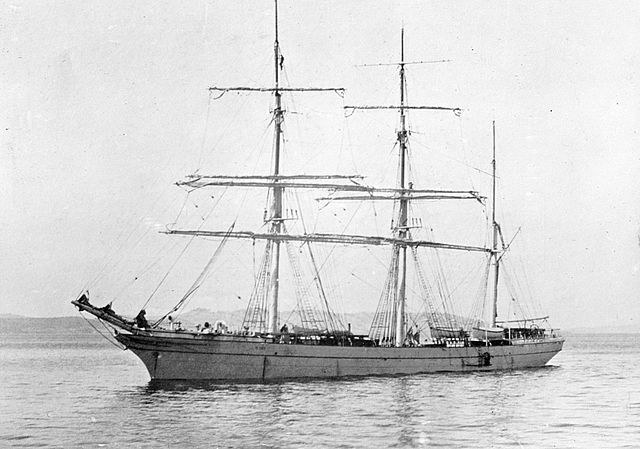
On 6th August 1879 the Auriga from Liverpool arrived in Sydney, Australia. The 1591 ton boat had a crew of thirty men and carried just one family, John and Mary Ann, together with sons Albert (19) and Edward (16) and one other passenger, a Mr Dixon. It seems likely, therefore, that this was basically a cargo vessel which also carried a few passengers.
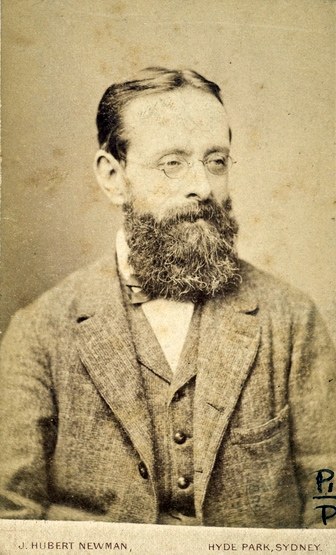
It would seem likely that John already had a position lined up in Australia and he continued a long life of vigorous and respected journalism. On 4th June 1906 the Adelaide newspaper The Register reported that he had just had his 75th birthday. It continued:
He resides at Northwood, a lovely spot, on Lane Cove River, and is one of the most remarkable of literary men in the Common wealth. Notwithstanding his advanced years, he is as vigorous as most men of 40 and gets through an enormous amount of journalistic work daily. . .
John Plummer died in March 1914 aged 84. His obituary in the Otago Daily Times records:
Johns’s Notable Australians states that Mr. Plummer was born in London in 1831. For several years he was a member of Charles Knight’s literary and statistical staff and one of the pioneers of the [Co-operative?] industrial movement. He joined John Cassell’s staff in 1862, assisting in founding and conducting the London Figaro, was two years sub-editor of the Morning Advertiser, for two years associate editor with Mr Stephen Fiske, on the Hornet and Home Journal, editor of several trade papers and for 20 years English Social Affairs correspondent of the Sydney Morning Herald. He wrote a cantata and several ballads for the Tonic Sol-fa Association.
He arrived in Sydney in 1879 and became editor of the Sydney Illustrated News and also of the Sydney Tribune and several minor papers. He was a member of the Town and Country Journal staff for some time and State drawing master for nine years [at Fort Street Training School, 1881 – 90].
For seventeen years he was a contributor to the Yearbook of Australia and other works of reference and was the Australian representative of various British and American commercial, mining, financial and
other journals. He was a member of the Japan Society, Royal Society of Arts and Institute of Journalists.
Obviously, we have only skimmed the surface of a very full (and this is a far from exhaustive list) and, considering his disabilities, an astonishing life. He was buried in the Anglican section of the Gore Hill Cemetery. The Australian Dictionary of Biography described him as a British Israelite but, if so, his Jewish faith does not seem to have been an important part of his life.
Mary Ann survived him. I believe that she died on 12th August 1919 in Sydney. The Australia Death Index 1787-1985 gives her father as William, which is wrong, but her mother’s name as Avis, which is correct and is so unusual a name as to seem to prove that it is our Mary Ann. As further proof she was buried in Plot C of E Section M grave 80b next to John in Gore Hill Cemetery in St Leonards Creek, Watcha Shire, NSW. Her son Albert J. (not A.) was buried in the same cemetery but in the Congregational Section.
Mary Ann’s mother Avis Jenkinson had remained at 1 Meeting Lane in Kettering and in 1881 she was there, aged 75, with her unmarried eldest son John (48) who was now a shoemaker. She died on September 3rd 1887 and some seven weeks after the event the Sydney Morning Herald carried the following announcement:
JENKINSON – September 3 at Kettering, England where she had resided over 60 years, beloved by all who knew her, Avis Jenkinson, mother of Mrs John Plummer, Northwood, Lane Cove River, Sydney aged 83.
From birth to death she had travelled ten miles. Unfortunately, however far the distance travelled, history rarely records the lives of radical women.
References:
My grateful thanks to Lyn Watson for starting me on this biography, providing information sources, and for correcting some large mistakes in the first draft.
Songs of Labour: Northamptonshire Rambles: And Other Poems. John Plummer. 1860. W. Tweedie London: T. Waddington Kettering. (Can be found on various download websites).
The Autobiography of Rev. John Jenkinson: Baptist Minister of Kettering and Oakham. Ed. R.L. Greenhall. (Northamptonshire Record Services 2010).
A History of Kettering. R.L. Greenall (Phillimore Co. Ltd. 2003)
(on the 1866 Suffrage Petition).
The Collected Works of John Stuart Mill (letters to John Plummer) on
.
.
has various Australian newspapers including The Register (Adelaide) 4th June 1906: Otago Daily Times 10th March 1914, (found via Google).
Blanca (ship 1875). On the Auriga:
The Collected Works of John Stuart Mill; Additional Letters on (via Google)
(details of Auriga crew and passengers). Australian Dictionary of Biography. .